
Senussi Order Dynasty Origin: Which Sovereign Region And Territory It Emerged From
The order was founded in 1837 by Grand Senussi Muhammad ibn Ali as-Senussi in Mecca, but its political and administrative heartland developed in the Cyrenaica region of modern-day Libya. The order established its primary religious and military centers across desert oases, moving from Al-Bayda to Jaghbub, and later south to Kufra to manage trans-Saharan trade networks.
Senussi Order Standard: Historical Insignia And Modern National Flags

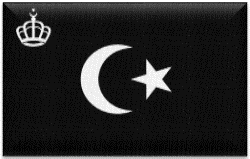
The Top Modern Countries That Were Part Of The Senussi Order
01
Libya covered 1,759,540 km² under full Senussi authority, serving as the political, administrative, and spiritual center.
Libya
02
Chad included 300,000 km² under control, encompassing the northern Saharan mountain strongholds of Tibesti.
Chad
03
Egypt contained 100,000 km² under control, securing crucial Western Desert oases like Siwa along the Libyan border.
Egypt
04
Sudan comprised 50,000 km² under control, linking trade routes through the northwestern Darfur frontier.
Sudan
05
Niger spanned 30,000 km² under control, managing isolated Saharan oasis channels in its far northeast.
Niger
The Territorial Reach Of The Senussi Order In Modern Terms
At its peak, the order extended from the Mediterranean coast of Cyrenaica and Tripolitania southward through the Libyan Desert into the Tibesti Mountains of Chad, stretching eastward into the Western Desert of Egypt and westward into northern Niger.
The Current Sovereign Nations Whose Areas Were Significantly Or Fully Under The Control Of The Senussi Order
Direct sovereign rule and political statehood were established across Libya (leading to the Kingdom of Libya), while Saharan borderlands in northern Chad, western Egypt, northwestern Sudan, and northeastern Niger were governed through networks of lodge-fortresses (zawiyas), religious leaders, and desert trade routes.
Geographic Distribution: Modern Territories Encompassed By The Senussi Realm
Senussi Order in Libya History
Senussi Sufi Teachings and Resistance Against Italy
Introduction
The Senussi Order, also known as the Sanusiyya or Sanusi movement, is an Islamic Sufi order that played a major role in the religious, social, and political history of Libya. Founded by the Muslim scholar Muhammad ibn Ali al-Sanusi in the nineteenth century, it developed a network of religious lodges, schools, and community centers across North Africa and the Sahara.
The order became especially influential in Cyrenaica, eastern Libya, where its lodges supported Islamic education, helped mediate disputes, and connected communities along desert trade routes. Over time, the Senussi movement developed from a religious brotherhood into a political force. It became an important center of resistance against Italian colonial rule, particularly under the leadership of Omar al-Mukhtar.
The Senussi family’s political influence continued into the twentieth century. Idris al-Sanusi, a leader of the movement, became king when Libya gained independence in 1951. The monarchy ended in 1969 following a military coup led by Muammar Gaddafi, but the Senussi Order remains an important part of Libya’s religious and historical heritage. <Cite refs={[“turn530440search1″,”turn530440search3″,”turn530440search2”]} />
At a Glance
| Feature | Details |
|---|---|
| Name | Senussi Order, Sanusiyya, or Sanusi Order |
| Founded | 1837 in Mecca; established its main Libyan base in 1843 |
| Founder | Muhammad ibn Ali al-Sanusi |
| Type | Sunni Islamic Sufi order and religious-social movement |
| Original religious center | Mecca |
| Early Libyan center | Al-Bayda in Cyrenaica |
| Later headquarters | Jaghbub, eastern Libya |
| Main area of influence | Libya, especially Cyrenaica, with networks extending into the Sahara and neighboring regions |
| Main activities | Islamic teaching, religious practice, education, mediation, community support, and trade-route assistance |
| Major resistance leader | Omar al-Mukhtar |
| Important political leader | Idris al-Sanusi |
| Key historical role | Religious revival, social organization, anti-colonial resistance, and the Libyan monarchy |
| Political turning point | Italian occupation beginning in 1911 |
| Libyan independence | 1951 |
| End of the monarchy | 1969 |
1. What Is the Senussi Order?
The Senussi Order is a Sunni Muslim Sufi tariqa, or spiritual path, named after its founder. It developed as a movement of religious revival and reform, emphasizing devotion, disciplined religious practice, Islamic learning, and the moral responsibilities of individuals and communities.
Unlike a conventional political dynasty, the Senussi Order began as a religious brotherhood. Its members were connected through spiritual instruction, allegiance to its leaders, and participation in local religious lodges known as zawiyas. These lodges became important institutions in parts of Libya and the wider Sahara.
The order’s influence grew because its institutions were not limited to prayer and religious teaching. Many lodges also provided accommodation for travelers, taught students, supported local communities, mediated disputes, and maintained relationships with merchants and tribal leaders. This combination of religious and practical services helped the movement establish lasting roots in eastern Libya. <Cite refs={[“turn530440search1″,”turn530440search22″,”turn530440search7”]} />
2. Founder: Muhammad ibn Ali al-Sanusi
<AsyncImage query=”Muhammad ibn Ali al-Sanusi Grand Senussi historical portrait illustration” aspectRatio=”5:4″ width=”100%” />
Muhammad ibn Ali al-Sanusi, often called the Grand Senussi, was born in the region of present-day Algeria in 1787. He studied Islamic scholarship in North Africa and traveled to important centers of learning, including Fez and Mecca.
His religious outlook was shaped by his studies and his association with the teachings of Ahmad ibn Idris al-Fasi. Al-Sanusi sought to strengthen Islamic religious practice, encourage scholarship, and build a disciplined community of followers.
In 1837, he established the Senussi Order in Mecca. As the movement expanded, tensions with established religious and political authorities contributed to his decision to relocate its main activities to North Africa.
In 1843, he established a major lodge at al-Bayda in Cyrenaica, in what is now northeastern Libya. This became a foundational center for the order’s growth in the region. In 1856, he moved the movement’s headquarters to the Jaghbub oasis, closer to the Egyptian frontier. He died in 1859, leaving an expanding network of followers and institutions to his successors. <Cite refs={[“turn530440search1″,”turn530440search22″,”turn530440search25”]} />
3. Expansion Across Libya and the Sahara
Following its establishment in Cyrenaica, the Senussi Order developed a network of lodges across Libya and neighboring regions. Its expansion was especially notable in areas where centralized government was weak, travel was difficult, and communities depended on local networks for education, security, and commerce.
The movement’s lodges could perform several roles at once:
- Religious education: Teaching Islamic beliefs, worship, and religious texts.
- Community support: Offering assistance and accommodation to travelers and people in need.
- Dispute resolution: Helping settle disagreements between individuals and communities.
- Commercial connections: Supporting routes used by merchants and caravan traders.
- Social organization: Connecting local communities through religious leadership and shared institutions.
These activities helped the Senussi leaders build influence beyond the immediate area of their headquarters. The order became particularly important among communities in Cyrenaica and developed connections into the Sahara, including areas of present-day Chad and Sudan. Its influence varied by region and did not always mean direct political control. <Cite refs={[“turn530440search1″,”turn530440search22″,”turn530440search25”]} />
4. The Senussi Order Under Muhammad al-Mahdi al-Sanusi
After the death of the founder in 1859, leadership passed to his son, Muhammad al-Mahdi al-Sanusi. Under him, the order continued to develop its network of religious lodges and strengthen its relationships with local communities.
Jaghbub became a major center of religious education and organization. The Senussi network helped connect remote settlements, scholars, traders, and tribal leaders. Its ability to operate across a wide geographical area gave it influence in regions where Ottoman authorities often exercised limited direct control.
The movement was not simply a political rebellion against the Ottoman Empire. Its relationship with Ottoman officials varied, combining periods of suspicion and tension with local accommodation. Its primary institutional foundations remained religious and social, although these later provided a framework for political mobilization and resistance to foreign occupation.
5. The Senussi Order and Italian Colonialism
Italy invaded Ottoman-controlled Libya in 1911, beginning a war that led to Italian occupation of the coastal territories. Although Ottoman resistance continued for a time, the conflict transformed the position of the Senussi Order. Its religious network and connections with local communities made it a major force in the struggle against Italian expansion.
The Senussi leadership initially combined armed resistance with negotiations. Different leaders and factions adopted different approaches depending on the military and political circumstances. Agreements with Italy in the 1910s and early 1920s attempted to establish arrangements for coexistence, but these did not produce a lasting settlement.
Under the Fascist regime, Italian colonial authorities increasingly pursued direct control over the interior. The destruction of local autonomy, military campaigns, and severe repression intensified resistance. The Senussi movement became a central symbol of Libyan opposition to colonial rule. <Cite refs={[“turn530440search3″,”turn530440search5″,”turn530440search0”]} />
6. Omar al-Mukhtar: The Lion of the Desert
<AsyncImage query=”Omar al-Mukhtar historical photograph Libyan resistance leader” aspectRatio=”5:4″ width=”100%” />
Omar al-Mukhtar (c. 1858–1931) was a Muslim teacher and resistance leader associated with the Senussi Order. He became the best-known figure in the Libyan struggle against Italian colonial rule.
Mukhtar had experience as a religious instructor and was familiar with the local terrain and communities of Cyrenaica. He used mobile forces, knowledge of the landscape, local support, and guerrilla tactics to resist the better-equipped Italian military.
His resistance continued despite Italian attempts to isolate the fighters from their supporters. Colonial authorities employed severe measures, including forced displacement and the establishment of concentration camps in Cyrenaica, which caused extensive civilian suffering.
In 1931, Italian forces captured Omar al-Mukhtar. He was tried by a colonial military tribunal and executed by hanging on 16 September 1931. His death became a defining moment in the history of Libyan resistance, and he remains widely remembered as a national hero. <Cite refs={[“turn530440search0″,”turn530440search3″,”turn530440search4”]} />
7. Major Events in the Senussi Resistance
| Year | Event | Historical significance |
|---|---|---|
| 1837 | Muhammad ibn Ali al-Sanusi establishes the order in Mecca. | Beginning of the Senussi religious movement. |
| 1843 | A major Senussi lodge is established at al-Bayda in Cyrenaica. | Establishes a lasting base in Libya. |
| 1856 | The movement’s headquarters moves to Jaghbub. | Strengthens its religious and organizational network. |
| 1859 | The founder dies, and leadership passes to Muhammad al-Mahdi al-Sanusi. | A new phase of institutional expansion begins. |
| 1911 | Italy invades Ottoman Libya. | The Senussi Order becomes increasingly involved in resistance and negotiations. |
| 1917 | Agreements are reached between Senussi leaders and Italian authorities. | A temporary effort to manage the conflict through negotiation. |
| 1920 | Idris al-Sanusi is recognized as Emir of Cyrenaica under an agreement with Italy. | The movement gains a formal political role, although sovereignty remains contested. |
| 1923 | Italian Fascist authorities intensify military operations against Senussi resistance. | Negotiated arrangements break down. |
| 1931 | Omar al-Mukhtar is captured and executed. | A major symbolic turning point in the anti-colonial struggle. |
| 1951 | Libya becomes independent under King Idris I. | The Senussi family becomes the country’s ruling royal house. |
| 1969 | A military coup overthrows the monarchy. | Ends the Senussi dynasty’s rule over Libya. |
8. Idris al-Sanusi and the Kingdom of Libya
<AsyncImage query=”King Idris I of Libya historical portrait” aspectRatio=”5:4″ width=”100%” />
Idris al-Sanusi (1889–1983), a grandson of the founder of the Senussi Order, became one of the movement’s most important political leaders. He succeeded to the leadership of the order in 1916 and increasingly became involved in negotiations over Libya’s political future.
As Italian colonial repression intensified, Idris spent much of the period outside Libya, including in Egypt. He continued to be an important figure in efforts to secure Libyan independence.
Following the Second World War, international negotiations and Libyan political developments led to independence on 24 December 1951. Idris became King Idris I, and Libya was established as a constitutional monarchy.
His government faced the difficult task of unifying regions with distinct histories and political interests. The discovery and development of oil transformed the country’s economy during his reign, but political opposition and dissatisfaction with the monarchy continued to grow.
On 1 September 1969, military officers led by Muammar Gaddafi overthrew Idris’s government while the king was abroad. The monarchy ended, and Libya became a republic under the new revolutionary government. <Cite refs={[“turn530440search2″,”turn530440search3″,”turn530440search24”]} />
9. Achievements of the Senussi Order
The Senussi Order’s historical achievements extended beyond its role in armed resistance.
Religious education and scholarship
The order established lodges that taught Islamic religious practices and supported networks of scholars. Its educational activities helped spread religious learning among communities across Libya and the Sahara.
Community services
Many Senussi lodges provided accommodation, assistance to travelers, and support for people in need. Their practical services helped establish trust and influence among local communities.
Mediation and local cooperation
Senussi leaders sometimes helped resolve disputes and build cooperation between communities. Their religious authority could serve as a source of legitimacy in areas where state institutions had limited reach.
Resistance to colonial rule
The order provided an important organizational framework for resistance to Italian colonial expansion. Omar al-Mukhtar’s struggle became an enduring symbol of Libyan opposition to foreign domination.
Contribution to Libyan independence
The Senussi family’s political leadership contributed to the transition from colonial rule to independence. King Idris I became Libya’s first monarch after independence in 1951.
10. Challenges and Controversies
A balanced history must also consider the limitations and political complications associated with the Senussi movement.
- Dependence on religious leadership: The order’s influence relied substantially on the authority of its leaders and the loyalty of local networks.
- Uneven regional influence: Its reach was strongest in some parts of Libya, especially Cyrenaica, and weaker or different elsewhere.
- Difficult political compromises: Negotiations with Ottoman, British, and Italian authorities created disagreements over how to preserve autonomy and pursue independence.
- Internal differences: Senussi leaders and local communities did not always agree on whether negotiation, accommodation, or armed resistance offered the best path forward.
- Colonial repression: Italian military campaigns caused severe harm to Libyan communities, including forced displacement and mass internment.
These challenges should not be confused with a claim that every action by the order or its members was identical. The Senussi movement changed over time, and its religious, social, and political roles were shaped by the circumstances of each period.
11. The Senussi Order’s Legacy in Modern Libya
The Senussi Order occupies a distinctive place in Libyan history because it linked religious life, community organization, anti-colonial resistance, and the country’s first period of independence.
Its historical importance is especially visible in three areas:
- Religious heritage: The order helped shape Islamic education and religious networks in eastern Libya and neighboring regions.
- National resistance: The struggle associated with Omar al-Mukhtar became an enduring symbol of opposition to Italian colonialism.
- The monarchy: Idris al-Sanusi’s accession to the throne connected the movement’s historical authority to the founding of independent Libya.
Although the monarchy ended in 1969, the Senussi family and the memory of the movement continue to feature in discussions of Libya’s national history and political identity. The order’s legacy is not simply that of a ruling family: it also includes religious institutions, local traditions, scholarship, and the experiences of communities affected by colonial conflict.
Frequently Asked Questions
When was the Senussi Order founded?
Muhammad ibn Ali al-Sanusi founded the order in Mecca in 1837. It established a major base in Cyrenaica, Libya, in 1843.
Who founded the Senussi Order?
The founder was Muhammad ibn Ali al-Sanusi, a Muslim scholar from present-day Algeria who developed a Sunni Sufi movement emphasizing religious learning, disciplined practice, and community organization.
Was the Senussi Order a Sufi movement?
Yes. It was a Sunni Islamic Sufi order, also known as the Sanusiyya, whose lodges combined religious instruction with social and community activities.
Why was the Senussi Order important in Libya?
It established religious and educational networks, connected local communities, mediated disputes, and became a major force in resistance to Italian colonial rule.
Who was Omar al-Mukhtar?
Omar al-Mukhtar was a Senussi-associated teacher and resistance leader who fought Italian colonial rule in Libya. He was captured and executed by Italian authorities in 1931.
Who was King Idris I?
Idris al-Sanusi was a leader of the Senussi Order who became Libya’s king after independence in 1951. His monarchy was overthrown in a military coup in 1969.
Did the Senussi Order rule Libya?
The order began as a religious movement rather than a conventional state. Its leadership later acquired political authority, and Idris al-Sanusi, a member of the Senussi family, became king of independent Libya from 1951 to 1969.
What happened to the Senussi Order after 1969?
The overthrow of King Idris ended the monarchy, but it did not erase the order’s historical legacy. The movement remains significant in studies of Libyan religion, society, colonial resistance, and national identity.
Conclusion
- The Senussi Order developed from a nineteenth-century Sufi movement into one of the most influential religious and political institutions in Libya. Through its lodges, educational activities, community services, and relationships with local leaders, it built a network that later became important in resistance to Italian colonial rule.
- Omar al-Mukhtar’s struggle and King Idris I’s role in independent Libya represent two different dimensions of this legacy: anti-colonial resistance and state-building. The history of the Senussi Order is therefore essential to understanding Libya’s religious heritage, colonial experience, and modern political development.
Sources
- E. E. Evans-Pritchard — The Sanusi of Cyrenaica
The Sanusi of Cyrenaica - Libyan Heritage House — The Senussi Order
The Senussis : Sanusiya or Sanusi’ is an Islamic religious and political order - Oxford University Press — Religion as Resistance: Negotiating Authority in Italian Libya, by Eileen Ryan
Negotiating Authority in Italian Libya - Journal of Middle Eastern and Islamic Studies in Asia — Italian Colonisation and Libyan Resistance to the Al-Sanusi of Cyrenaica (1911–1922)
Al-Sanusi of Cyrenaica - Encyclopaedia Britannica — Senussi
al-Sanūsī Islamic religious leader , Sanūsiyyah Muslim Sufi sect - Library of Congress — Libya: Turkish Rule; Rise of Senussi
Turkish Rule; Rise of Senussi - Islam Museum — Idris of Libya
Idris of Libya - Oxford Academic — Historical study of Omar al-Mukhtar and Italian colonial rule in Libya
THE MODERN JUGURTHA Omar al-Mukhta