
Roman Empire Historical Divisions And Imperial Expansion
The Roman Empire (27 BC – 476 AD in the West; continuing through 1453 AD in the East) stands as one of antiquity's most impactful Mediterranean civilizations. Originating from the Italian Peninsula under Augustus Caesar, the state reached an expanse of roughly 5,000,000 km² under Emperor Trajan in 117 AD, leaving a lasting mark on modern civil law, engineering, urban planning, and governance structures.
Roman Empire Origin and Foundational Transition
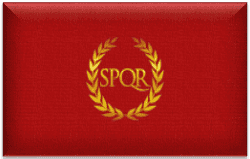
State Symbols and Military Heraldry Roman Empire

The Top Modern Countries Modern Geographic Zones Governed By The Realm
01
Algeria contained 600,000 km² under Roman governance, producing immense grain harvests and housing major civic sites like Timgad and Djémila.
Algeria
02
Spain comprised 505,990 aaokm² under 100% full sovereignty, serving as an economic pillar providing silver, olive oil, and imperial figures like Trajan and Hadrian.
Spain
03
France encompassed 500,000 qkm² under total provincial governance, integrated into the Roman world following Julius Caesar's Gallic Wars.
France
04
Turkey included 450,000 km² under complete administration, featuring prosperous urban nodes like Ephesus, Nicomedia, and Antioch.
Turkey
04
Egypt covered 400,000 km²p as a personal domain of the emperor, serving as the central granary for Rome.
Turkey
Exhaustive Sovereign Inventory: Modern Nation-States Encompassed By Roman Imperial Control
Historical Arc: Epochs Of Roman Power, Pax Romana, And Division
Peak Expanse & The Five Good Emperors (96–180 AD): 5,000,000 km² reached under Trajan (conquests of Dacia, Arabia Petraea, and Parthian Mesopotamia) and preserved during the Pax Romana under Hadrian, Antoninus Pius, and Marcus Aurelius.
Spatial Extent In Contemporary Geopolitical Terms
Roman Empire: History, Greatest Extent, Powerful Emperors, Achievements, and Fall
Introduction to the Roman Empire
The Roman Empire was one of the most influential political and military powers in world history. Emerging from the Roman Republic in 27 BCE, it expanded across Europe, North Africa, and western Asia, creating a vast political system that connected different civilizations, languages, religions, and economies.
At its height, the empire controlled territories surrounding much of the Mediterranean Sea. Its influence extended from Britain and the Atlantic coast to Egypt and parts of Mesopotamia. Roman armies, roads, legal institutions, cities, architecture, and administrative systems transformed the regions under its authority.
The Roman Empire also experienced serious internal problems, including civil wars, political instability, economic pressures, military rebellions, and invasions. The western imperial government ended in 476 CE, but the Eastern Roman Empire continued until the Ottoman conquest of Constantinople in 1453.
The Roman legacy remains visible in modern legal systems, languages, architecture, political institutions, engineering, literature, and religious history.
Roman Empire at a Glance
| Category | Details |
|---|---|
| Common name | Roman Empire |
| Beginning of imperial period | 27 BCE |
| End of Western Roman imperial government | 476 CE |
| End of Eastern Roman Empire | 1453 CE |
| First emperor | Augustus |
| Last western emperor | Romulus Augustulus |
| Greatest territorial extent | Under Emperor Trajan, around 117 CE |
| Main capital | Rome |
| Eastern imperial capital | Constantinople |
| Government | Imperial monarchy |
| Main languages | Latin and Greek |
| Major religions | Roman polytheism and Christianity |
| Main regions | Europe, North Africa, and western Asia |
| Famous achievements | Roman law, roads, aqueducts, architecture, military organization, and urban infrastructure |
Origins of the Roman Empire
The Founding of Rome
According to Roman tradition, Rome was founded in 753 BCE by Romulus, who was associated with the legendary story of Romulus and Remus. Although this traditional account is part of Roman mythology, archaeological evidence indicates that settlements developed on the hills surrounding the Tiber River during the early first millennium BCE.
Rome’s geographical position helped it become an important settlement. The Tiber River provided transportation and access to agricultural land, while the surrounding routes connected central Italy with other communities.
Early Roman society was influenced by Latin, Etruscan, and other Italian cultures. These influences contributed to the development of Roman political institutions, religious practices, architecture, and military organization.
The Roman Kingdom
Roman tradition describes the earliest period as a monarchy ruled by a succession of kings. The final king, Tarquinius Superbus, was supposedly expelled around 509 BCE.
According to traditional Roman history, the expulsion of the monarchy marked the beginning of the Roman Republic. Although details about the earliest kings are difficult to establish with certainty, the monarchy remained an important part of Rome’s historical identity.
The Roman Republic
The Roman Republic developed a political system in which several institutions shared governmental responsibilities. Two consuls were normally elected annually to serve as the chief magistrates. The Senate became an influential political body, while citizen assemblies participated in elections and legislation.
The Republic gradually expanded its control over the Italian Peninsula through military victories, treaties, alliances, and political agreements.
Rome’s expansion brought it into conflict with Carthage, a powerful commercial and maritime state based in North Africa. Their rivalry resulted in three major conflicts known as the Punic Wars.
The First Punic War established Roman influence in Sicily. The Second Punic War brought the Carthaginian commander Hannibal into Italy, where he won several major victories against Roman forces. However, Rome eventually recovered and defeated Carthage.
After the Third Punic War, Carthage was destroyed in 146 BCE. Rome became the dominant power in the western Mediterranean and continued expanding into Greece, Hispania, North Africa, and the eastern Mediterranean.
Crisis of the Roman Republic
The Republic’s growing territories created serious political and social challenges. Wealth from conquered lands increased the influence of powerful aristocratic families, while many ordinary citizens faced economic difficulties.
Military commanders also became increasingly powerful. Soldiers often developed personal loyalty to their generals, who could provide land, money, and political opportunities.
Political competition gradually turned into violence and civil conflict. The careers of Marius, Sulla, Pompey, and Julius Caesar demonstrated how military authority could undermine republican institutions.
Julius Caesar and the Transition to Imperial Rule
Julius Caesar became one of the most influential Roman commanders through his military campaigns in Gaul between 58 and 50 BCE. His victories expanded Roman territory and strengthened his political position.
His growing influence created opposition among senators who feared that he intended to establish permanent personal rule. Conflict between Caesar and Pompey eventually produced a civil war.
Caesar defeated his opponents and became dictator. In 44 BCE, a group of senators assassinated him, believing that his death would restore the Republic.
Instead, the assassination led to another period of civil war.
Octavian’s Rise
Octavian, Caesar’s adopted heir, emerged as a leading political and military figure. He formed an alliance with Mark Antony and Marcus Aemilius Lepidus, known as the Second Triumvirate.
The alliance eventually broke down. Octavian and Mark Antony became rivals, with Antony developing a political and military partnership with Cleopatra VII of Egypt.
In 31 BCE, Octavian defeated Antony and Cleopatra at the Battle of Actium. Egypt came under Roman control in 30 BCE, and Octavian became the undisputed master of Roman territories.
In 27 BCE, the Senate granted Octavian the title Augustus. This event is conventionally considered the beginning of the Roman Empire.
Augustus and the Foundation of the Empire
Augustus established a political system known as the Principate. Although republican institutions continued to exist, the emperor controlled the most important military, political, and administrative powers.
Augustus presented himself as the leading citizen rather than an openly declared monarch. This approach allowed him to maintain the appearance of republican government while establishing permanent imperial authority.
His reforms included reorganizing the army, strengthening provincial administration, improving public finances, developing infrastructure, and sponsoring major construction projects.
Augustus also promoted Roman religious traditions and supported literature and public monuments that presented his government as a period of stability and renewal.
His reign established the political framework that influenced the Roman Empire for centuries.
The Pax Romana: A Period of Relative Stability
The Pax Romana, meaning Roman Peace, describes a long period of relative stability that began under Augustus and continued through much of the second century CE.
It was not a period without wars. Roman armies continued fighting on the frontiers, and revolts occurred in several provinces. However, large-scale civil wars were less frequent than during the final decades of the Republic.
Trade expanded, cities developed, roads connected provincial centers, and Roman administration became more established.
The period helped strengthen economic and cultural connections across the Mediterranean world.
Greatest Territorial Extent of the Roman Empire
The Roman Empire reached its greatest territorial extent under Emperor Trajan, around 117 CE.
At this point, Roman authority extended across much of Europe, North Africa, and western Asia. The Mediterranean Sea became the central geographical area of the empire, connecting its provinces through maritime commerce and military transportation.
The Romans sometimes called the Mediterranean Mare Nostrum, meaning “Our Sea.”
Territories Under Roman Control
At its greatest extent, Roman territory included:
Western Europe: Italy, Hispania, Gaul, and much of Britain.
Central and Southeastern Europe: The Balkans, Dacia, and territories near the Danube frontier.
North Africa: Egypt and extensive Mediterranean coastal territories, including areas of modern Tunisia, Algeria, and Libya.
Eastern Mediterranean: Greece, Asia Minor, Syria, and Judea.
Western Asia: Armenia and parts of Mesopotamia during periods of expansion.
The empire’s borders changed throughout its history. Some territories were directly governed as provinces, while others were controlled through client kingdoms, military agreements, or temporary occupations.
Trajan’s Eastern Campaigns
Trajan expanded Roman authority through campaigns against Dacia and the Parthian Empire.
The conquest of Dacia strengthened Rome’s position along the Danube and provided access to valuable mineral resources. Trajan’s eastern campaigns brought Roman forces into Armenia and Mesopotamia and briefly extended imperial authority toward the Persian Gulf.
However, several eastern conquests were difficult to maintain. After Trajan’s death, his successor Hadrian abandoned much of the newly acquired eastern territory and concentrated on defending more manageable frontiers.
The maximum territorial extent of the Roman Empire should therefore be understood as a temporary geographical peak rather than a permanent political arrangement.
Most Powerful and Influential Roman Emperors
The Roman Empire was ruled by numerous emperors. Their achievements, decisions, military campaigns, and political struggles shaped the development of the imperial state.
Augustus (27 BCE–14 CE)
Augustus was the first Roman emperor and the founder of the imperial political system.
His most important achievements included ending the civil wars, reorganizing the army, strengthening provincial administration, improving infrastructure, and establishing a more stable government.
His reign created the foundations of the Roman imperial system.
Tiberius (14–37 CE)
Tiberius succeeded Augustus and maintained much of the administrative structure established by his predecessor.
His government generally avoided unnecessary territorial expansion and focused on maintaining the existing empire. However, relations between the emperor and the Senate became increasingly tense during his reign.
Claudius (41–54 CE)
Claudius strengthened imperial administration and expanded Roman territory through the conquest of much of Britain beginning in 43 CE.
He also supported public construction and increased the participation of provincial elites in Roman political life.
Nero (54–68 CE)
Nero’s reign became associated with political conflict, extravagant expenditure, and the Great Fire of Rome in 64 CE.
Ancient writers presented him as a controversial ruler, although some accounts were influenced by political hostility toward his government.
His downfall triggered a major succession crisis known as the Year of the Four Emperors.
Vespasian (69–79 CE)
Vespasian restored political stability after the civil wars of 69 CE and founded the Flavian dynasty.
He improved imperial finances and initiated the construction of the Flavian Amphitheatre, later known as the Colosseum.
Trajan (98–117 CE)
Trajan is remembered for expanding the Roman Empire to its greatest territorial extent.
His military campaigns secured Dacia and extended Roman influence into the eastern territories. He also sponsored major public construction projects and maintained a strong relationship with the Senate.
His reign became an important example of successful imperial leadership.
Hadrian (117–138 CE)
Hadrian focused on consolidating the empire rather than continuing Trajan’s expansion.
He abandoned several eastern conquests and strengthened frontier defenses. Hadrian’s Wall in Britain became one of the most recognizable examples of Roman frontier construction.
He also traveled extensively throughout the provinces and supported architecture, administration, and cultural development.
Antoninus Pius (138–161 CE)
Antoninus Pius presided over a comparatively peaceful and prosperous period.
His government emphasized administrative continuity, legal development, and provincial stability.
Marcus Aurelius (161–180 CE)
Marcus Aurelius was both a military ruler and a philosopher associated with Stoicism.
His reign faced serious challenges, including wars along the Danube frontier and a major epidemic. His philosophical writings, known as Meditations, remain influential.
His decision to pass imperial authority to his son Commodus rather than adopt a successor is often discussed in assessments of imperial succession.
Septimius Severus (193–211 CE)
Septimius Severus emerged victorious from civil war and founded the Severan dynasty.
He strengthened the army, increased military pay, and expanded imperial authority. However, the growing financial demands of the military placed pressure on the imperial economy.
Diocletian (284–305 CE)
Diocletian reorganized the empire after the Crisis of the Third Century.
He introduced the Tetrarchy, a system in which imperial authority was shared among two senior emperors and two junior emperors. He also introduced administrative, military, and financial reforms.
Although the Tetrarchy did not permanently solve the succession problem, Diocletian transformed the structure of imperial government.
Constantine the Great (306–337 CE)
Constantine became one of the most influential emperors in Roman history.
He reunited the empire after civil wars, supported Christianity, reorganized imperial administration, and founded Constantinople as a new imperial capital in 330 CE.
His reign transformed the religious and political direction of the Roman world.
Theodosius I (379–395 CE)
Theodosius I was the last emperor to rule both the eastern and western portions of the Roman Empire as a unified political entity.
He strengthened imperial support for Nicene Christianity and restricted several traditional religious practices.
After his death, his sons governed the eastern and western imperial courts separately.
Justinian I (527–565 CE)
Justinian I ruled the Eastern Roman Empire from Constantinople.
His major achievements included the codification of Roman law, the construction of Hagia Sophia, and military campaigns that recovered parts of former western territories.
His government temporarily restored Roman authority in North Africa, Italy, and parts of Hispania. However, these campaigns were expensive and placed significant pressure on imperial resources.
Roman Government and Administration
The Roman Empire developed an extensive administrative system to govern its enormous and culturally diverse territories.
The emperor held the highest political and military authority, but effective government depended on officials, governors, military commanders, local elites, and established institutions.
The Emperor
The emperor was the central political figure and supreme military commander.
Imperial authority could be established through inheritance, adoption, military support, Senate recognition, or victory in civil war.
Rome did not develop a consistently reliable succession system. This uncertainty contributed to political conflicts and repeated changes of government.
The Roman Senate
The Senate remained an influential institution throughout the imperial period, particularly during the early empire.
Senators served as advisers, provincial governors, military officials, and senior administrators. However, the emperor increasingly controlled major political decisions.
The Senate’s actual authority depended heavily on the individual emperor and the political conditions of each reign.
Provincial Administration
The empire was divided into provinces administered by appointed governors.
Governors were responsible for maintaining order, overseeing taxation, managing legal affairs, and communicating with imperial authorities.
Rome frequently preserved local customs and institutions when they did not challenge imperial control. This approach helped the empire govern communities with different traditions and languages.
Roman Army
The Roman army was one of the foundations of imperial power.
It included legions, auxiliary units, cavalry, fleets, and frontier forces. Soldiers defended the borders, conducted military campaigns, suppressed rebellions, and supported the authority of the emperor.
Military service offered opportunities for income, citizenship in certain periods, social advancement, and land or other rewards.
However, the army could also become a source of political instability when soldiers supported rival commanders seeking the throne.
Roman Law
Roman law developed through legislation, magistrates, imperial decisions, jurists, and established legal traditions.
It covered property, citizenship, contracts, inheritance, family matters, and criminal law.
Legal rights were not equal for everyone. Citizenship, wealth, gender, social position, and legal status influenced how individuals were treated.
Nevertheless, Roman legal principles became an important foundation for many later legal systems.
Roman Economy, Agriculture, and Trade
Agriculture formed the economic foundation of the Roman Empire. Most inhabitants lived in rural communities and worked in farming, livestock raising, or related occupations.
The empire also developed extensive commercial networks connecting cities, ports, and provincial markets.
Agriculture and Food Production
Wheat, olives, grapes, and other crops were cultivated across the empire.
Egypt and North Africa became particularly important agricultural regions because they supplied grain to major cities, including Rome.
Large estates existed alongside smaller farms, and landholding patterns differed across provinces.
Agricultural production supported the population, military forces, and imperial tax system.
Trade and Commerce
Roman trade connected the Mediterranean through shipping routes, ports, roads, and river transportation.
Major commercial products included grain, olive oil, wine, metals, pottery, textiles, glassware, and luxury goods.
Merchants transported goods between Italy, North Africa, Egypt, Greece, Asia Minor, Syria, and other regions.
The development of cities and commercial networks strengthened economic connections between distant provinces.
Currency and Taxation
The Roman government used taxation to finance its administration, military forces, public construction, and imperial activities.
Coins supported trade and state payments. Their metals, designs, and values changed over time, reflecting political and economic conditions.
Financial pressures became particularly serious during periods of civil war, military instability, and declining imperial revenue.
Slavery and Labor
Slavery was deeply embedded in Roman society.
Enslaved people worked in agriculture, mining, domestic service, workshops, and other sectors. Many were captured during military campaigns, while others were born into slavery.
Conditions varied considerably depending on occupation and ownership, but enslaved people generally lacked freedom and faced exploitation.
Slavery contributed to the wealth of parts of Roman society while representing one of the most severe injustices of the imperial system.
Religion and Cultural Transformation
Roman religious life changed significantly throughout the empire’s history.
Early Roman society followed polytheistic traditions involving gods, household spirits, public ceremonies, and religious festivals.
As Rome expanded, it encountered religious traditions from Greece, Egypt, Syria, Anatolia, and other regions. Some foreign deities and practices became part of Roman religious life.
Traditional Roman Religion
Roman religious practices were closely connected with family life, civic identity, public ceremonies, and the political system.
Important Roman deities included Jupiter, Juno, Mars, Venus, Minerva, and Neptune.
Emperors also used religious ceremonies and public monuments to strengthen their political legitimacy.
The Rise of Christianity
Christianity emerged in the eastern Roman provinces during the first century CE.
It gradually spread through urban communities, trade networks, and missionary activity. Early Christians sometimes faced persecution, although the intensity and geographical reach of these persecutions varied.
In 313 CE, Constantine and Licinius issued measures associated with religious toleration. Constantine subsequently supported Christian institutions and became involved in church affairs.
Under Theodosius I, Nicene Christianity received stronger imperial support and became increasingly dominant.
The religious transformation of the empire was gradual. Traditional religious practices continued in many communities even after Christianity gained official support.
Roman Architecture, Engineering, and Achievements
Roman architecture and engineering remain among the most recognizable achievements of the ancient world.
The Romans developed large public buildings, transportation networks, water systems, bridges, military installations, and urban infrastructure.
Roman Roads
Roman roads connected cities, military bases, ports, and provincial centers.
They helped armies move quickly, supported trade, and improved communication between distant regions.
Some Roman roads followed earlier routes, while others were constructed through extensive engineering projects.
Aqueducts
Roman aqueducts transported fresh water into cities and towns.
They supplied fountains, public baths, households, and other urban facilities. Their construction required careful surveying, channels, bridges, tunnels, and water-management systems.
Several Roman aqueducts survived for centuries and influenced later engineering traditions.
The Colosseum
The Colosseum was constructed during the Flavian dynasty and became one of the most famous monuments of imperial Rome.
It hosted gladiatorial contests, animal spectacles, and public events.
The amphitheatre demonstrated Roman engineering skills and the importance of public entertainment in imperial political culture.
The Pantheon
The Pantheon is one of the best-preserved monuments of ancient Rome.
Its enormous dome and central opening demonstrate the sophistication of Roman architectural design.
The building’s construction and later preservation made it an important example of Roman engineering.
Roman Bridges and Infrastructure
Roman engineers built bridges, harbors, roads, drainage systems, military forts, and public buildings throughout the empire.
These projects supported administration, transportation, commerce, and military activity.
Literature and Philosophy
Roman literature developed through poetry, history, philosophy, rhetoric, and political writing.
Important Roman writers included Virgil, Horace, Ovid, Livy, Tacitus, Seneca, and Cicero.
Roman intellectual culture was strongly influenced by Greek philosophy and literature, which Roman writers adapted to their own political and social traditions.
Major Wars and Military Conflicts
The Roman Empire expanded through conquest but also spent much of its history defending its borders and suppressing internal rebellions.
Roman–Parthian Wars
Rome and the Parthian Empire competed for influence over Armenia, Mesopotamia, and strategic territories in western Asia.
Their conflicts included major military campaigns and diplomatic struggles.
Neither empire permanently eliminated the other, and the eastern frontier remained a central strategic challenge for Rome.
Roman–Sasanian Wars
The Sasanian Empire replaced the Parthian Empire in 224 CE and became Rome’s major eastern rival.
Roman and Sasanian forces fought repeatedly over Armenia, Mesopotamia, Syria, and surrounding territories.
These wars consumed substantial military and financial resources and continued into the period of the Eastern Roman Empire.
Jewish Revolts
The First Jewish Revolt began in 66 CE and ended with the Roman destruction of Jerusalem and the Second Temple in 70 CE.
Another major revolt, led by Bar Kokhba, occurred between 132 and 135 CE and was also suppressed.
These conflicts had profound consequences for Jewish history and the political and religious development of the region.
Crisis of the Third Century
Between approximately 235 and 284 CE, the empire experienced political instability, frequent changes of emperor, military rebellions, invasions, and economic disruption.
Several regional leaders established breakaway political entities during this period.
The empire eventually recovered through reforms introduced by Diocletian and later rulers.
Battle of Adrianople (378 CE)
In 378 CE, Emperor Valens and his army were defeated by Gothic forces near Adrianople.
Valens was killed, and the defeat exposed serious weaknesses in Roman military planning and frontier management.
The battle was an important turning point in late Roman military history, although it did not independently cause the fall of the western empire.
Battle of the Catalaunian Plains (451 CE)
Roman forces under Aetius, supported by allied groups, confronted Attila’s Huns in Gaul.
The battle checked Attila’s campaign in the region but did not immediately eliminate the Hunnic threat.
It demonstrated the importance of military alliances in the later Roman world.
Division of the Roman Empire
The Roman Empire’s size and political difficulties encouraged emperors to divide administrative and military responsibilities.
Diocletian’s Tetrarchy
Diocletian introduced the Tetrarchy in the late third century.
Under this system, imperial authority was shared among two senior emperors and two junior emperors. The purpose was to improve administration, strengthen frontier defense, and create a more organized succession arrangement.
The system eventually collapsed because of political rivalry and civil war.
Constantine and Constantinople
Constantine reunited the empire after defeating his rivals.
In 330 CE, he inaugurated Constantinople as a new imperial capital on the site of the ancient Greek city of Byzantium.
Its location connected Europe and Asia and provided access to important commercial and military routes.
Constantinople later became the political and cultural center of the Eastern Roman Empire.
Permanent Separation of the Imperial Courts
After the death of Theodosius I in 395 CE, the eastern and western imperial courts increasingly operated separately under his sons.
The eastern empire was centered on Constantinople, while the western court moved between several cities, including Milan and Ravenna.
Both governments continued to identify as Roman, but their political and economic circumstances increasingly differed.
Decline and Fall of the Western Roman Empire
The western Roman Empire did not collapse because of one event or a single invasion. Its decline involved political instability, military challenges, financial pressures, territorial losses, and changing relationships with groups beyond its frontiers.
Political Instability
The western empire experienced frequent succession struggles and civil wars.
Powerful generals and military commanders increasingly influenced imperial politics. Some emperors depended heavily on these commanders, weakening the authority of the central government.
Short reigns and disputed successions made long-term planning difficult.
Military Pressures
The western empire faced military challenges from Goths, Vandals, Franks, Huns, and other groups.
These communities had different relationships with Rome. Some entered imperial territory through agreements or served in Roman armies, while others fought Roman forces and established independent kingdoms.
The government increasingly struggled to manage these relationships and defend distant provinces.
Economic and Financial Problems
Military campaigns and civil wars placed heavy pressure on imperial finances.
The loss of territories reduced tax revenue, while the cost of maintaining armies remained high.
The western empire also lost access to important agricultural and commercial regions, making it more difficult to support the imperial government.
Loss of North Africa
The Vandal conquest of North Africa during the fifth century was particularly damaging.
North Africa had been an important agricultural and financial region for the western empire. Losing control of its territories weakened the western government’s ability to fund its military and administration.
Sack of Rome in 410 CE
In 410 CE, Visigothic forces under Alaric entered and sacked Rome.
Although the city was no longer the permanent administrative capital of the western empire, its symbolic importance was enormous.
The event demonstrated the weakening of imperial authority and shocked the Roman world.
Sack of Rome in 455 CE
In 455 CE, Vandal forces under Geiseric sacked Rome.
The attack further damaged the prestige of the western imperial government and reflected the empire’s deteriorating military position.
Deposition of Romulus Augustulus in 476 CE
In 476 CE, the military leader Odoacer deposed Romulus Augustulus, conventionally regarded as the last western Roman emperor.
This event is commonly used to mark the end of the Western Roman Empire.
However, Roman institutions, laws, traditions, and cultural practices continued in the successor kingdoms that emerged across former western territories.
The Eastern Roman Empire and the Fall of Constantinople
The Eastern Roman Empire survived the end of the western imperial government.
Its capital, Constantinople, became one of the most important political, commercial, religious, and cultural centers of the medieval world.
Modern historians commonly call this state the Byzantine Empire, but its inhabitants continued to identify themselves as Romans.
Justinian’s Reconquests
Emperor Justinian I attempted to restore Roman authority over territories previously controlled by the western empire.
His armies recovered North Africa from the Vandals, much of Italy from the Ostrogoths, and parts of Hispania.
These campaigns temporarily restored Roman rule in several western regions, but the wars were expensive and placed heavy demands on the eastern government’s resources.
The Ottoman Conquest of Constantinople
The Eastern Roman Empire gradually lost territory over many centuries.
By the fifteenth century, its remaining territory was largely limited to Constantinople and nearby areas.
On 29 May 1453, Ottoman forces under Sultan Mehmed II conquered Constantinople. The last emperor, Constantine XI Palaiologos, died during the city’s defense.
The conquest ended the Eastern Roman Empire as a political state and marked the conclusion of the Roman imperial tradition that had continued in the east.
Roman Empire Timeline
| Date | Historical Event |
|---|---|
| 753 BCE | Traditional founding of Rome |
| c. 509 BCE | Traditional beginning of the Roman Republic |
| 264–146 BCE | Three Punic Wars against Carthage |
| 58–50 BCE | Julius Caesar’s campaigns in Gaul |
| 44 BCE | Assassination of Julius Caesar |
| 31 BCE | Octavian defeats Antony and Cleopatra at Actium |
| 27 BCE | Augustus becomes the first Roman emperor |
| 43 CE | Roman conquest of much of Britain begins |
| 64 CE | Great Fire of Rome |
| 70 CE | Roman forces destroy the Second Temple in Jerusalem |
| 98–117 CE | Reign of Trajan |
| 117 CE | Roman Empire reaches its greatest territorial extent |
| 212 CE | Caracalla extends citizenship to nearly all free inhabitants |
| 235–284 CE | Crisis of the Third Century |
| 284 CE | Diocletian becomes emperor |
| 313 CE | Measures associated with religious toleration under Constantine and Licinius |
| 330 CE | Constantinople inaugurated as an imperial capital |
| 378 CE | Roman defeat at the Battle of Adrianople |
| 395 CE | Eastern and western imperial courts become distinct after Theodosius I’s death |
| 410 CE | Visigoths sack Rome |
| 451 CE | Battle of the Catalaunian Plains |
| 455 CE | Vandals sack Rome |
| 476 CE | Romulus Augustulus is deposed |
| 527–565 CE | Reign of Justinian I |
| 1453 CE | Ottoman conquest of Constantinople |
Legacy of the Roman Empire
The Roman Empire left an enormous legacy in law, government, architecture, language, religion, engineering, and culture.
Its influence continued long after the western imperial government disappeared. Medieval kingdoms, religious institutions, legal scholars, and later political movements adopted and adapted Roman traditions.
Roman Law and Legal Traditions
Roman law influenced the development of civil-law systems in Europe and other regions.
Its legal traditions addressed citizenship, property, contracts, inheritance, family matters, and legal procedure.
Although Roman law changed significantly over time, its principles became an important foundation for later legal scholarship.
Languages and Literature
Latin developed into the Romance languages, including Italian, Spanish, Portuguese, French, and Romanian.
Latin also remained important in education, religious institutions, administration, and scholarship long after the western empire ended.
Roman literature and historical writing influenced generations of European and Mediterranean intellectual traditions.
Christianity
The Roman Empire played a central role in the spread and institutional development of Christianity.
Christianity emerged within the empire, expanded through its cities and transportation networks, and eventually became the dominant religion of the later Roman state.
The Eastern Roman Empire preserved a strong connection between imperial government and Christianity until 1453.
Architecture and Engineering
Roman roads, bridges, aqueducts, amphitheatres, baths, temples, and public buildings influenced later architecture and engineering.
Many surviving monuments remain important historical landmarks and provide evidence of Roman technical skills.
Political and Cultural Influence
Roman concepts of citizenship, republic, senate, empire, and public administration influenced later political thought.
The empire also contributed to the development of urban culture, public infrastructure, education, and artistic traditions across Europe and the Mediterranean.
A Complex Historical Legacy
The Roman Empire achieved remarkable accomplishments, but its history also involved conquest, enslavement, political violence, heavy taxation, and unequal treatment of different populations.
A balanced understanding of Roman history recognizes both its contributions to civilization and the human costs of imperial expansion and government.
Frequently Asked Questions About the Roman Empire
When did the Roman Empire begin?
The Roman Empire is conventionally dated from 27 BCE, when Octavian received the title Augustus and established the imperial political system.
Who was the first Roman emperor?
Augustus, formerly known as Octavian, was the first Roman emperor.
Who was the greatest Roman emperor?
There is no universally accepted answer. Augustus established the imperial system, Trajan expanded the empire to its greatest territorial extent, Diocletian reorganized the state, and Constantine transformed imperial government and religion.
When did the Roman Empire reach its greatest extent?
The empire reached its greatest territorial extent under Emperor Trajan around 117 CE.
What was the capital of the Roman Empire?
Rome was the original imperial capital. Constantinople became a major imperial capital in 330 CE and later served as the center of the Eastern Roman Empire.
How large was the Roman Empire at its peak?
The empire controlled approximately five million square kilometres at its greatest extent, although estimates vary according to how borders and temporary conquests are measured.
Why did the Roman Empire fall?
The western empire declined through a combination of political instability, civil wars, military pressures, loss of provinces, financial problems, and changing relationships with groups beyond its borders.
Did the Roman Empire end in 476 CE?
The western imperial government ended in 476 CE, but the Eastern Roman Empire continued until the Ottoman conquest of Constantinople in 1453.
Was the Byzantine Empire part of the Roman Empire?
Yes. The Byzantine Empire is the modern historical name commonly used for the Eastern Roman Empire. Its inhabitants continued to identify themselves as Romans.
What religion did the Roman Empire follow?
Early Roman society followed polytheistic traditions. Christianity spread during the imperial period and eventually became the dominant religion of the later empire.
What were the greatest achievements of the Roman Empire?
Major achievements included Roman law, roads, aqueducts, bridges, architecture, urban infrastructure, military organization, literature, and administrative systems.
Who conquered the Roman Empire?
There was no single conqueror of the entire Roman Empire. The western imperial government ended after Odoacer deposed Romulus Augustulus in 476 CE. The Eastern Roman Empire ended when Ottoman Sultan Mehmed II conquered Constantinople in 1453.
Conclusion
- The Roman Empire transformed the Mediterranean world through military expansion, administration, trade, engineering, law, and cultural exchange. Its development from a small Italian city-state into a vast imperial power remains one of the most important stories in world history.
- Under emperors such as Augustus, Trajan, Hadrian, Diocletian, and Constantine, Rome developed institutions and infrastructure that influenced societies for centuries.
- The western imperial government ended in 476 CE, but Roman traditions continued through successor kingdoms and the Eastern Roman Empire, which survived until 1453.
- The Roman Empire should therefore be understood not simply as a powerful state that rose and fell, but as a civilization whose political, cultural, legal, and religious influence continued long after its imperial government disappeared.
Roman Empire – Sources
- Encyclopaedia Britannica – Roman Empire
- Christopher Kelly – The Roman Empire: A Very Short Introduction, Oxford University Press
- Matthew Bunson – A Dictionary of the Roman Empire, Oxford University Press
- The Cambridge Ancient History – The Augustan Empire, 43 BC–AD 69
- Peter Garnsey and Richard Saller – The Roman Empire: Economy, Society and Culture
- Encyclopaedia Iranica – Trajan
- World History Encyclopedia – Roman Empire
- University of Cambridge – Roman Empire Reading List
- Library of Congress – Byzantine Empire: Research Guide
- Princeton University Press – The Ancient World: Rome