
Safavid Dynasty Origin: Which Sovereign Region And Territory It Emerged From
The dynasty traces its roots to Sheikh Safi al-Din (1252–1334) in the Caspian Sea region of Azerbaijan and Iranian Kurdistan. Operating initially as a religious order, it transformed into a militant political movement under Shah Ismail I, who captured Tabriz in 1501 and declared it the first capital of the unified Persian state.
Safavid Empire Standard: Historical Insignia And Modern National Flags
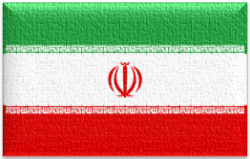
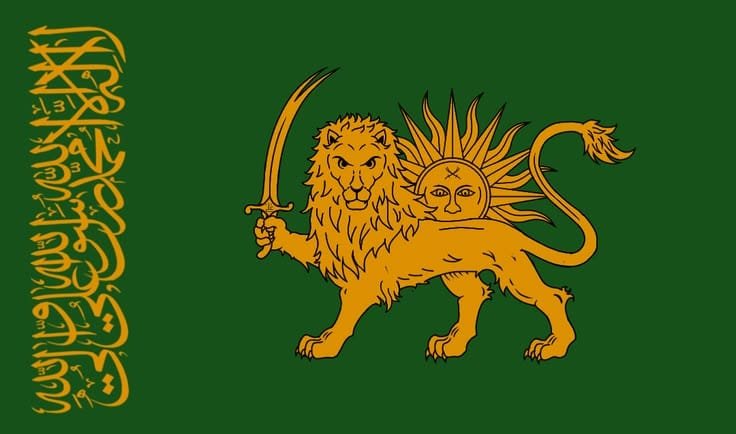
The Top Modern Countries That Were Part Of The Safavid Empire
01
Iran comprised 1,648,195 km² under full control, serving as the central demographic, political, and cultural core.
Iran
02
Iraq contributed 350,000 km² incorporating crucial Mesopotamian urban and religious centers.
Iraq
03
Afghanistan contained 300,000 km² along the eastern frontier, securing trans-Asian trade junctions.
Afghanistan
04
Azerbaijan covered 86,600 km² of the imperial base, housing the ancestral roots of the Safavid order.
Azerbaijan
05
Armenia spanned 29,743 km² under complete administration, linking Caucasian trade channels.
Armenia
The Current Sovereign Nations Whose Areas Were Significantly Or Fully Under The Control Of The Safavid Empire
Sovereign control was absolute across modern Iran, Armenia, and Azerbaijan, while outer border provinces in Iraq, Georgia, Afghanistan, and eastern Turkey were governed through provincial governors, military outposts, or tributary alliances.
The Current Sovereign Nations Whose Areas Were Significantly Or Fully Under The Control Of The Safavid Empire
The Safavid Empire governed a vast multi-ethnic realm utilizing centralized bureaucratic structures, military governors (beglerbegis), and state-sponsored religious institutions.
From Shahs To Sovereignty: Tracking The Safavid Empire's Peak And Last Century
Safavid Empire
The Safavid Empire was one of the most influential Islamic empires of early modern West and Central Asia. Founded by Shah Ismail I in 1501, it ruled a large territory centered on present-day Iran until its effective collapse in the 18th century. The Safavids are particularly important because they established Twelver Shiism as the state religion of Iran, helping shape the religious and political identity of the country for centuries.
The empire emerged from a Sufi religious order based in Ardabil, in present-day northwestern Iran. Under Shah Ismail I, the Safavid movement changed from a religious order into a powerful state. At its greatest extent, Safavid authority covered much of modern Iran and extended into parts of the Caucasus, Iraq, Afghanistan, Central Asia and the Persian Gulf region.
The Safavid period is also remembered for its achievements in architecture, Persian literature, miniature painting, carpet production, trade and urban development. The reign of Shah Abbas I, particularly from the late 16th to early 17th century, is widely regarded as the empire’s political, economic and cultural high point.
The Safavids competed continuously with the Ottoman Empire in the west and the Uzbek states in the east. Their wars helped define the political boundaries and religious landscape of the region.
Safavid Empire at a Glance
| Feature | Details |
|---|---|
| Empire | Safavid Empire |
| Also known as | Safavid Iran |
| Period | 1501–1736 |
| Founder | Shah Ismail I |
| Origin | Ardabil, northwestern Iran |
| Ruling dynasty | Safavid dynasty |
| Main religion | Twelver Shiism |
| State religion | Twelver Shiism |
| Major capitals | Tabriz, Qazvin, Isfahan |
| Greatest ruler | Shah Abbas I |
| Major rivals | Ottoman Empire, Uzbek states |
| Famous battle | Battle of Chaldiran |
| Cultural center | Isfahan |
| Major language | Persian |
| Military elite | Qizilbash |
| Peak period | Shah Abbas I’s reign |
| Effective collapse | 1722 |
| Dynasty formally ended | 1736 |
| Final Safavid ruler | Abbas III, nominally |
| Successor power | Afsharid Empire under Nader Shah |
What Was the Safavid Empire?
The Safavid Empire was a Persianate imperial state that dominated Iran and surrounding territories for more than two centuries.
It was founded by Shah Ismail I, who united several territories under Safavid authority.
The dynasty transformed Iran in three major ways:
- It established a centralized monarchy.
- It made Twelver Shiism the state religion.
- It created a powerful Persian imperial state that competed with the Ottomans and Uzbeks.
The Safavid period is therefore a fundamental part of Iranian history.
Country and Region of Origin
The Safavid dynasty originated in Ardabil, a city in present-day Iran.
The Safavid movement began as a Sufi order associated with Sheikh Safi al-Din Ishaq Ardabili in the 13th and 14th centuries.
The dynasty’s name comes from Safī al-Dīn.
Origin
Modern country: Iran
Historic region: Azerbaijan/Ardabil region
Founding center: Ardabil
Founder of the empire: Shah Ismail I
The Safavids had complex Turkic and Persian cultural connections. The early Qizilbash military elite was heavily Turkoman, while the state increasingly developed a Persian administrative and cultural character.
Origins of the Safavid Dynasty
The history of the Safavids began long before the creation of their empire.
The dynasty originated from a Sufi order founded by Safī al-Dīn Ardabīlī.
Over generations, the order became increasingly political and militarized.
Its leaders gained followers among Turkoman tribes in Anatolia, Azerbaijan and surrounding regions.
Eventually, the Safavid movement developed into a militant political organization.
Sheikh Safi al-Din Ardabili
Safī al-Dīn Ardabīlī lived from approximately 1252 to 1334.
He established the Safavid Sufi order at Ardabil.
Initially, the order was primarily religious rather than imperial.
His successors gradually expanded the order’s influence.
Safavid Sufi Order
The Safavid order attracted followers across parts of:
- Iran
- Azerbaijan
- Anatolia
- Caucasus
- Iraq
Over time, the order became increasingly involved in politics.
Its religious authority gave its leaders a powerful base of support.
Rise of the Qizilbash
The Qizilbash became the principal military supporters of the early Safavid rulers.
The name means “Red Heads”, referring to the distinctive red headgear associated with their movement.
They were drawn largely from Turkoman tribal groups.
The Qizilbash provided Shah Ismail with the military power necessary to conquer large parts of Iran.
Shah Ismail I
Shah Ismail I was the founder of the Safavid Empire.
He was born in 1487 and became the dominant Safavid leader while still very young.
By the beginning of the 16th century, he had gathered a powerful Qizilbash following.
Safavid Conquests
Shah Ismail launched a series of military campaigns.
He captured:
- Tabriz
- Shirvan
- Baghdad
- Much of Iran
- Parts of eastern Anatolia
- Territories in the Caucasus
In 1501, he captured Tabriz and proclaimed himself Shah.
This event is generally regarded as the foundation of the Safavid Empire.
Capture of Tabriz
Tabriz became Shah Ismail’s first major capital.
The city was strategically important because it connected Iran with:
- Anatolia
- The Caucasus
- Iraq
- Central Asian trade routes
Tabriz also possessed a long tradition as a political and commercial center.
Safavid Conquest of Iran
Shah Ismail rapidly conquered much of Iran.
He defeated competing local rulers and absorbed territories previously divided among several political powers.
By the early 16th century, much of the Iranian plateau had come under Safavid authority.
Establishment of Twelver Shiism
One of Shah Ismail’s most consequential decisions was to establish Twelver Shiism as the state religion.
This marked a major transformation in Iran’s religious history.
The Safavid government promoted Shiite institutions and religious scholarship.
Over subsequent generations, Twelver Shiism became deeply established within Iranian society.
Why Did the Safavids Adopt Shiism?
The adoption of Twelver Shiism helped distinguish the Safavid state from its major Sunni rivals.
The Ottoman Empire to the west was predominantly Sunni.
The Uzbek states to the northeast were also Sunni.
A distinct Shiite state identity helped the Safavids consolidate political legitimacy and differentiate themselves from neighboring powers.
Battle of Chaldiran
The Battle of Chaldiran was fought on 23 August 1514.
It was one of the most important battles in Safavid history.
The opposing powers were:
Safavid Empire — Shah Ismail I
against
Ottoman Empire — Sultan Selim I
The Ottomans possessed powerful artillery and firearms.
The Safavid forces relied heavily on cavalry and traditional battlefield tactics.
The Ottomans won the battle.
Importance of the Battle of Chaldiran
Chaldiran had long-term consequences.
The Safavids lost control of eastern Anatolian territories and temporarily lost Tabriz.
The battle also demonstrated the growing importance of gunpowder weapons in early modern warfare.
Most importantly, it established the Ottoman-Safavid rivalry as one of the defining geopolitical conflicts of the region.
Shah Ismail After Chaldiran
The defeat at Chaldiran affected Shah Ismail deeply.
Although the Safavid state survived, its expansion westward was significantly constrained.
Shah Ismail died in 1524.
His son Tahmasp I succeeded him.
Shah Tahmasp I
Shah Tahmasp I ruled from 1524 to 1576.
His reign was one of the longest in Safavid history.
Tahmasp inherited an empire facing serious threats.
He fought:
- Ottoman invasions
- Uzbek attacks
- Internal Qizilbash conflicts
Ottoman-Safavid Wars
The Safavids and Ottomans fought repeatedly throughout the 16th and 17th centuries.
Major areas of conflict included:
- Iraq
- Eastern Anatolia
- Armenia
- Azerbaijan
- Georgia
- Kurdistan
- Caucasus
The frontier shifted repeatedly.
Safavid Policy in the Caucasus
The Caucasus became an important source of military manpower and political influence.
Safavid rulers fought for control over:
- Georgia
- Armenia
- Azerbaijan
- Shirvan
- Dagestan
The Caucasus also became an important source of administrators, soldiers and court officials.
Safavid–Uzbek Wars
The Safavids also faced the Uzbeks in the east.
The main contested region was Khorasan.
Cities such as Herat and Mashhad were strategically important.
Shah Ismail defeated the Uzbek ruler Muhammad Shaybani Khan at the Battle of Marv in 1510.
This victory secured much of Khorasan for the Safavids.
Battle of Marv
The Battle of Marv took place in 1510.
Shah Ismail defeated the Uzbek leader Muhammad Shaybani Khan.
The victory expanded Safavid authority into Khorasan.
It was one of Shah Ismail’s greatest military achievements.
Safavid Expansion
At various points, the Safavid Empire controlled or claimed territories corresponding to parts of:
- Modern Iran
- Iraq
- Azerbaijan
- Armenia
- Georgia
- Afghanistan
- Pakistan
- Turkmenistan
- Uzbekistan
- Turkey
- Russia’s Caucasus region
The exact extent changed substantially over time.
The empire reached some of its greatest territorial dimensions under Shah Abbas I.
Safavid Empire at Its Greatest Extent
During periods of Safavid expansion, the empire extended from the Caucasus and eastern Anatolia to Afghanistan and from Central Asia toward Iraq and the Persian Gulf.
However, Safavid borders were rarely fixed.
Military campaigns frequently changed control of frontier regions.
Shah Abbas I
Shah Abbas I, also known as Abbas the Great, ruled from 1588 to 1629.
He is the most famous Safavid ruler.
His reign is generally regarded as the political, military and cultural high point of the empire.
Rise of Shah Abbas
When Abbas became Shah, the Safavid state was facing serious difficulties.
The Ottomans controlled important western territories.
Uzbeks threatened the eastern frontier.
Qizilbash factions competed for political influence.
Abbas gradually reorganized the state.
Military Reforms of Shah Abbas
Abbas reduced the political dominance of the Qizilbash tribal military elite.
He created a more centralized military system.
This included:
- Standing troops
- Firearm units
- Artillery
- Ghulam soldiers
- Central royal forces
The reforms strengthened the authority of the Shah.
Ghulam System
The Safavid government recruited soldiers and officials from populations originating largely in the Caucasus.
These ghulams could rise to important positions within the military and administration.
This provided the Shah with a counterweight to powerful Qizilbash chiefs.
Recapture of Safavid Territories
Shah Abbas successfully recovered several territories lost to the Ottomans and Uzbeks.
He also expanded Safavid authority into parts of the Caucasus and Mesopotamia.
His campaigns strengthened the empire considerably.
Baghdad and Iraq
Shah Abbas reconquered Baghdad from the Ottomans in 1623.
Baghdad was strategically and religiously important.
Its capture represented a major Safavid victory.
However, Ottoman forces later recovered Baghdad in 1638.
Safavid Control of Kandahar
Kandahar was another important strategic territory.
The Safavids and Mughals repeatedly competed for the city.
Shah Abbas captured Kandahar from the Mughals in 1622.
The city remained a major point of rivalry between the Safavids and Mughals.
Safavid Empire and Mughal Empire
The Safavids maintained diplomatic and military relations with the Mughal Empire.
The two empires shared Persian cultural traditions but competed over territories in Afghanistan.
The central issue was Kandahar.
Kandahar changed hands several times.
Isfahan Becomes Capital
Shah Abbas moved the capital from Qazvin to Isfahan in 1598.
This was one of the most important decisions of his reign.
Isfahan was centrally located within the empire and could be developed into a magnificent imperial capital.
Isfahan: The Safavid Capital
Shah Abbas transformed Isfahan into one of the greatest cities of the early modern world.
The city became famous for:
- Mosques
- Palaces
- Bridges
- Gardens
- Bazaars
- Squares
- Caravanserais
The famous Naqsh-e Jahan Square became the centerpiece of the imperial city.
Safavid Golden Age
The reign of Shah Abbas I from 1588 to 1629 represents the Safavid Empire’s golden age.
During this period:
- Military power increased
- Central government strengthened
- Trade expanded
- Isfahan flourished
- Architecture reached new heights
- Persian art developed
- Diplomacy expanded
- Ottoman and Uzbek threats were reduced
Naqsh-e Jahan Square
Naqsh-e Jahan Square, also called Imam Square, became the center of Safavid Isfahan.
The enormous square was surrounded by major buildings.
Important monuments include:
- Shah Mosque
- Sheikh Lotfollah Mosque
- Ali Qapu Palace
- Qeysarieh Bazaar
The complex represents one of the greatest achievements of Safavid urban planning.
Safavid Architecture
Safavid architecture developed a distinctive Persian-Islamic style.
Important features included:
- Large domes
- Iwan entrances
- Blue and turquoise tiles
- Geometric designs
- Calligraphy
- Gardens
- Monumental squares
The use of colorful tilework became especially prominent.
Shah Mosque
The Shah Mosque, now commonly called the Imam Mosque, is one of the most famous monuments of Safavid Iran.
It was built during the reign of Shah Abbas I.
Its architecture demonstrates the sophistication of Safavid religious and artistic culture.
Sheikh Lotfollah Mosque
The Sheikh Lotfollah Mosque in Isfahan was built during the reign of Shah Abbas.
Unlike the Shah Mosque, it was associated with the royal court rather than functioning primarily as a large public congregational mosque.
Its dome and tile decoration are among the best-known examples of Safavid architecture.
Ali Qapu Palace
The Ali Qapu Palace stood beside Naqsh-e Jahan Square.
It served as a royal residence and ceremonial structure.
Its elevated position provided views over the enormous square.
Safavid Persian Art
Safavid Iran became a major center of artistic production.
Important artistic fields included:
- Miniature painting
- Calligraphy
- Carpet weaving
- Ceramics
- Metalwork
- Textile production
Persian artistic traditions reached international markets.
Safavid Miniature Painting
Safavid miniature painting developed from earlier Persian traditions.
Artists produced highly detailed manuscripts and court paintings.
The Safavid period also saw increasing interest in individual portraiture and album art.
Persian Carpets
Safavid carpets became internationally famous.
Royal workshops produced highly sophisticated carpets featuring:
- Floral designs
- Hunting scenes
- Garden patterns
- Medallions
- Intricate geometric motifs
Carpet production became an important part of Safavid cultural and economic life.
Safavid Economy
The Safavid economy depended heavily on:
- Agriculture
- Silk production
- Trade
- Taxation
- Crafts
- Urban markets
Silk was particularly important to international commerce.
Silk Trade
Persian silk was exported to major markets.
European merchants became increasingly interested in Safavid silk.
The empire’s location allowed it to participate in trade connecting:
Europe → Ottoman lands → Iran → Central Asia and India
European Relations
The Safavids developed diplomatic relations with several European powers.
European states were interested in the Safavids partly because they were a major rival of the Ottoman Empire.
Diplomatic contacts involved countries such as:
- England
- Portugal
- Spain
- The Dutch Republic
- Venice
European merchants also sought access to Persian trade.
Safavid and Portuguese Rivalry
The Portuguese controlled important positions around the Persian Gulf.
Safavid rulers sought to challenge Portuguese influence.
In 1622, with English assistance, Shah Abbas’s forces captured Hormuz from the Portuguese.
This strengthened Safavid control over Gulf commerce.
Safavid Military
The Safavid military evolved considerably over two centuries.
Early armies relied heavily on:
- Qizilbash cavalry
- Tribal forces
- Local levies
Later rulers increasingly relied on:
- Firearms
- Artillery
- Ghulam infantry and cavalry
- Royal standing forces
Qizilbash
The Qizilbash were essential to the rise of the Safavid state.
They provided the military force that allowed Shah Ismail to conquer Iran.
However, their political influence eventually became a challenge to central authority.
Shah Abbas therefore reduced their independence.
Safavid Administration
The Safavid state combined Persian bureaucratic traditions with Turkoman military structures.
The government included:
- Provincial governors
- Tax officials
- Military commanders
- Court officials
- Religious scholars
- Royal administrators
Persian became increasingly dominant as the language of administration.
Safavid Provinces
The empire was divided into provinces governed by officials appointed by the central government.
Provincial administration allowed the Shah to collect taxes and maintain military forces.
The degree of central control varied over time.
Religion and the Safavid State
Religion was one of the defining features of the Safavid Empire.
The rulers promoted Twelver Shiism throughout their territories.
They established:
- Shiite seminaries
- Religious endowments
- Mosques
- Shrines
- Religious courts
- Networks of scholars
Shiite Scholars
Safavid rulers invited scholars from other parts of the Islamic world, particularly Arab Shiite scholarly centers.
Important scholars contributed to the development of Shiite legal and theological institutions.
This helped institutionalize Twelver Shiism in Iran.
Sunni Communities
The Safavid Empire contained substantial Sunni populations, particularly in frontier areas.
Policies toward Sunni communities varied between rulers and regions.
Conversion to Shiism was promoted in many areas, sometimes through state pressure.
The transformation was gradual and uneven rather than instantaneous.
Safavid Society
Safavid society contained many ethnic, linguistic and religious communities.
These included:
- Persians
- Azerbaijanis
- Kurds
- Georgians
- Armenians
- Circassians
- Arabs
- Turkmen
- Afghans
This diversity was one of the characteristics of the empire.
Armenian Communities
Armenian merchants became particularly important in Safavid international trade.
Shah Abbas relocated many Armenians from Julfa to a new district of Isfahan known as New Julfa.
Armenian merchants developed extensive commercial networks reaching Europe and Asia.
Safavid Culture
The Safavid era is one of the great periods of Persian cultural history.
The period witnessed important achievements in:
- Poetry
- Philosophy
- Calligraphy
- Architecture
- Painting
- Carpet weaving
- Urban planning
Persian cultural influence extended across neighboring regions.
Safavid Literature
Persian remained the principal literary language of the court.
Poetry continued to flourish.
Safavid Iran also became an important center of philosophical and theological scholarship.
Safavid Science and Scholarship
Scholars worked in:
- Philosophy
- Theology
- Astronomy
- Mathematics
- Medicine
- History
Shiite intellectual institutions expanded during the period.
Safavid Empire and Sufism
The dynasty’s origins were deeply connected to Sufism.
However, after the establishment of the state, the Safavid rulers increasingly emphasized Twelver Shiite orthodoxy.
The relationship between the ruling dynasty and Sufi traditions therefore changed considerably over time.
Safavid Decline
After Shah Abbas I died in 1629, later rulers generally struggled to maintain the same level of political and military effectiveness.
The empire remained powerful for decades, but several problems gradually developed.
These included:
- Weak rulers
- Court factionalism
- Military problems
- Economic pressures
- Provincial unrest
- External invasions
Later Safavid Rulers
Important later rulers included:
- Shah Safi
- Shah Abbas II
- Shah Suleiman
- Shah Sultan Husayn
Some were capable administrators, but none reproduced the overall combination of military leadership and political authority associated with Shah Abbas I.
Shah Abbas II
Shah Abbas II ruled from 1642 to 1666.
His reign is often considered another relatively stable period.
The empire recovered Kandahar for a time and maintained significant economic and cultural prosperity.
Shah Suleiman
Shah Suleiman ruled from 1666 to 1694.
During this period, the empire experienced increasing administrative and military problems.
The royal court became increasingly isolated from provincial affairs.
Shah Sultan Husayn
Shah Sultan Husayn ruled from 1694 to 1722.
His reign witnessed the final major crisis of the Safavid state.
Afghan forces rose in rebellion.
Afghan Invasion
The most serious threat came from Afghan rebels under Mir Mahmud Hotak.
The rebels captured major territories in eastern Iran.
They eventually marched toward Isfahan.
Siege of Isfahan
In 1722, Afghan forces besieged Isfahan.
The city suffered severe shortages.
Shah Sultan Husayn eventually surrendered.
This event effectively destroyed the central Safavid government.
Fall of Isfahan
The fall of Isfahan in 1722 is generally considered the effective collapse of the Safavid Empire.
However, Safavid royal claims continued afterward.
Different forces competed for control of Iran.
Ottoman and Russian Intervention
The collapse of Safavid authority encouraged neighboring powers to seize territory.
The Ottoman Empire occupied parts of western Iran.
The Russian Empire also expanded into northern Persian territories.
Iran entered a period of political fragmentation.
Nader Shah
A powerful military leader named Nader Qoli Beg, later known as Nader Shah, emerged during this period.
He supported the restoration of the Safavid dynasty under Tahmasp II for political legitimacy.
Nader Shah eventually became the dominant power.
End of the Safavid Dynasty
Nader Shah deposed Tahmasp II and placed the infant Abbas III on the throne.
In 1736, Nader Shah formally ended the Safavid dynasty and established the Afsharid Empire.
Thus:
Safavid Empire → Afsharid Empire
Safavid Empire Timeline
| Year | Event |
|---|---|
| 1252 | Approximate birth of Safi al-Din Ardabili |
| 1334 | Death of Safi al-Din |
| 15th century | Safavid order becomes increasingly political |
| 1487 | Birth of Shah Ismail I |
| 1501 | Shah Ismail captures Tabriz and establishes Safavid rule |
| 1510 | Battle of Marv; Safavid victory over Uzbeks |
| 1514 | Battle of Chaldiran; Ottoman victory |
| 1524 | Shah Ismail I dies |
| 1524 | Tahmasp I becomes Shah |
| 1555 | Treaty of Amasya temporarily stabilizes Ottoman-Safavid frontier |
| 1588 | Shah Abbas I becomes ruler |
| 1598 | Capital moved to Isfahan |
| 1622 | Hormuz captured from Portuguese |
| 1623 | Baghdad captured by Shah Abbas |
| 1629 | Shah Abbas I dies |
| 1638 | Ottomans recapture Baghdad |
| 1642 | Shah Abbas II becomes ruler |
| 1666 | Shah Suleiman becomes ruler |
| 1694 | Shah Sultan Husayn becomes ruler |
| 1722 | Isfahan falls to Afghan forces |
| 1722 | Effective collapse of Safavid central government |
| 1736 | Nader Shah ends Safavid dynasty |
Safavid Rulers
| Ruler | Reign | Major Significance |
|---|---|---|
| Shah Ismail I | 1501–1524 | Founder of the empire |
| Shah Tahmasp I | 1524–1576 | Long reign and defense against Ottomans |
| Ismail II | 1576–1577 | Brief and turbulent reign |
| Mohammad Khodabanda | 1578–1587 | Period of internal weakness |
| Shah Abbas I | 1588–1629 | Greatest expansion and golden age |
| Shah Safi | 1629–1642 | Continued empire amid external pressure |
| Shah Abbas II | 1642–1666 | Period of relative stability |
| Shah Suleiman | 1666–1694 | Increasing administrative weakness |
| Shah Sultan Husayn | 1694–1722 | Afghan invasion and fall of Isfahan |
| Tahmasp II | 1722–1732 | Safavid restoration attempt |
| Abbas III | 1732–1736 | Nominal final Safavid ruler |
Major Safavid Battles and Wars
| Conflict | Date | Main Opponents | Outcome |
|---|---|---|---|
| Battle of Marv | 1510 | Safavids vs Uzbeks | Safavid victory |
| Battle of Chaldiran | 1514 | Safavids vs Ottomans | Ottoman victory |
| Ottoman-Safavid Wars | 16th–17th centuries | Safavids vs Ottomans | Territory changed repeatedly |
| Safavid-Mughal conflicts | 16th–17th centuries | Safavids vs Mughals | Kandahar changed hands |
| Capture of Hormuz | 1622 | Safavids and English allies vs Portuguese | Safavid victory |
| Capture of Baghdad | 1623 | Safavids vs Ottomans | Safavid victory |
| Ottoman recapture of Baghdad | 1638 | Ottomans vs Safavids | Ottoman victory |
| Afghan capture of Isfahan | 1722 | Hotak Afghans vs Safavids | Safavid defeat |
Safavid Empire at Its Peak
The Safavid Empire reached its greatest political strength during the reign of Shah Abbas I.
The empire had:
- A stronger central government
- A reorganized military
- Control over important trade routes
- A prosperous capital at Isfahan
- Stronger western and eastern frontiers
- Significant influence in the Caucasus
- Major commercial connections with Europe and Asia
Safavid Empire and the Ottoman Empire
The Safavids and Ottomans were among the most powerful empires of the early modern Islamic world.
Their rivalry involved:
- Territory
- Religion
- Trade
- Political influence
- Control of Iraq
- Caucasian territories
- Eastern Anatolia
The Ottoman-Safavid frontier became one of the most important political boundaries in the Middle East.
Safavid Empire and Mughal Empire
The Safavids and Mughals shared strong Persian cultural connections.
Mughal rulers frequently employed Persian as their court language and maintained diplomatic relationships with Safavid Iran.
Nevertheless, the two empires competed over Kandahar.
The city was strategically important because it connected Iran, Afghanistan and northern India.
Safavid Empire and Central Asia
The eastern frontier was dominated by competition with Uzbek rulers.
Khorasan was particularly important.
Cities such as Herat, Mashhad and Balkh were strategically significant.
The frontier repeatedly shifted between Safavid and Uzbek control.
Safavid Trade Routes
Safavid Iran occupied a strategic position between several major commercial zones.
Trade routes connected Iran with:
- Ottoman territories
- Central Asia
- India
- The Caucasus
- Persian Gulf ports
- European markets
This geographical position contributed to Safavid prosperity.
Safavid Empire and the Persian Gulf
The Persian Gulf was strategically important for international commerce.
Portuguese influence was significant in the region during the early Safavid period.
Shah Abbas challenged Portuguese control and captured Hormuz in 1622 with English naval assistance.
Safavid Administrative Legacy
The Safavids created institutions that strengthened the political unity of Iran.
Their most important long-term contributions included:
- Centralized monarchy
- Persian bureaucratic traditions
- Twelver Shiite institutions
- Provincial administration
- Military reorganization
- Development of major cities
- Integration of diverse regions
Why the Safavid Empire Is Important
The Safavid Empire is important for several reasons.
Formation of Modern Iranian Identity
The Safavids united much of the Iranian plateau under a single long-lasting dynasty.
Establishment of Shiism
They made Twelver Shiism the state religion.
Persian Cultural Development
They sponsored architecture, art, literature and scholarship.
Geopolitical Importance
They created a powerful state between the Ottoman, Mughal and Central Asian worlds.
Architectural Legacy
Safavid Isfahan remains one of the greatest examples of Persian Islamic urban architecture.
Safavid Empire and Modern Iran
The Safavid period is closely connected with the historical development of modern Iran.
Although modern Iran is a nation-state rather than an empire, several characteristics associated with Safavid rule remain important to Iranian historical identity.
The most significant is the establishment of Twelver Shiism as the dominant religious tradition.
Key Takeaways
- The Safavid Empire was founded in 1501 by Shah Ismail I.
- It originated from a Sufi order based in Ardabil.
- The dynasty’s origin was in present-day Iran.
- Shah Ismail captured Tabriz and established Safavid rule.
- The Safavids made Twelver Shiism the state religion.
- The empire competed with the Ottoman Empire in the west.
- It fought the Uzbek states in Central Asia.
- The Battle of Marv in 1510 secured important eastern territories.
- The Battle of Chaldiran in 1514 was a major Ottoman victory.
- Shah Tahmasp I successfully defended the empire during a difficult period.
- Shah Abbas I was the most powerful Safavid ruler.
- Abbas moved the capital to Isfahan in 1598.
- Isfahan became a major center of architecture, commerce and culture.
- Safavid forces captured Baghdad in 1623.
- The Safavids captured Hormuz from the Portuguese in 1622 with English assistance.
- Safavid art became famous for miniature painting and carpets.
- Persian silk became an important international export.
- The empire declined after the death of Shah Abbas I.
- Afghan forces captured Isfahan in 1722.
- The Safavid dynasty was formally ended by Nader Shah in 1736.
- The Safavid legacy remains central to the history of Iran and Twelver Shiism.
Frequently Asked Questions
When was the Safavid Empire founded?
The Safavid Empire was founded in 1501, when Shah Ismail I captured Tabriz and proclaimed himself Shah.
Who founded the Safavid Empire?
Shah Ismail I founded the Safavid Empire.
Where did the Safavid dynasty originate?
The Safavid dynasty originated in Ardabil, in present-day northwestern Iran.
Were the Safavids Persian or Turkic?
The Safavid dynasty had complex Persian and Turkic cultural connections. The early Qizilbash military base was predominantly Turkoman, while the empire’s administrative and literary culture was strongly Persian.
What religion did the Safavids follow?
The Safavid state followed Twelver Shiite Islam.
Why is the Safavid Empire important to Iran?
The Safavids unified much of the Iranian plateau under a centralized state and established Twelver Shiism as the state religion, developments that had lasting effects on Iranian history.
Who was the greatest Safavid ruler?
Shah Abbas I, also known as Abbas the Great, ruled from 1588 to 1629 and presided over a major period of military, economic, political and cultural development.
What was the capital of the Safavid Empire?
The Safavid capital changed over time. Major capitals included Tabriz, Qazvin and Isfahan.
When did Isfahan become the Safavid capital?
Shah Abbas I moved the capital from Qazvin to Isfahan in 1598.
What was the golden age of the Safavid Empire?
The reign of Shah Abbas I from 1588 to 1629 is generally regarded as the Safavid golden age.
What happened at the Battle of Chaldiran?
The Ottoman army defeated Shah Ismail I’s Safavid forces at Chaldiran in 1514. Ottoman artillery and firearms played an important role in the battle.
Who were the Qizilbash?
The Qizilbash were predominantly Turkoman tribal military supporters who played a crucial role in establishing the Safavid state.
What does Qizilbash mean?
Qizilbash means “Red Heads”, referring to the distinctive red headgear associated with the movement.
Did the Safavids fight the Ottomans?
Yes. The Safavids and Ottomans fought numerous wars over territories including Iraq, eastern Anatolia, Armenia, Azerbaijan and the Caucasus.
Did the Safavids fight the Mughals?
Yes. The Safavids and Mughals competed particularly over Kandahar, which changed hands several times.
Did the Safavids fight the Uzbeks?
Yes. The Safavids fought Uzbek rulers for control of Khorasan and other eastern territories.
What happened at the Battle of Marv?
In 1510, Shah Ismail defeated the Uzbek ruler Muhammad Shaybani Khan at Marv, allowing the Safavids to expand their control over Khorasan.
Why was Baghdad important to the Safavids?
Baghdad was strategically and religiously important. Shah Abbas captured it from the Ottomans in 1623, although the Ottomans recaptured it in 1638.
When did the Safavids capture Hormuz?
Safavid forces captured Hormuz in 1622 from the Portuguese with assistance from the English East India Company.
What was the Safavid Empire famous for?
The empire was famous for Persian architecture, carpets, miniature painting, silk production, Isfahan’s urban development, Shiite religious institutions and its rivalry with the Ottoman Empire.
What happened to the Safavid Empire in 1722?
Afghan forces under Mir Mahmud Hotak captured Isfahan in 1722, effectively destroying the central Safavid government.
Who ended the Safavid dynasty?
Nader Shah formally ended the Safavid dynasty in 1736 and established the Afsharid Empire.
Who ruled Iran after the Safavids?
After the Safavids, Nader Shah established the Afsharid Empire. Later Iranian dynasties included the Zands and Qajars.
How long did the Safavid Empire last?
The Safavid dynasty ruled from 1501 to 1736, although effective centralized Safavid control collapsed in 1722 and was only partially restored afterward.
What was the Safavid Empire’s greatest contribution?
One of its most consequential contributions was the establishment of Twelver Shiism as the state religion of Iran, alongside the political consolidation and cultural development of the Iranian state.
What is Safavid architecture?
Safavid architecture is a Persian-Islamic architectural tradition characterized by monumental domes, iwans, colorful tilework, calligraphy, gardens and carefully planned urban spaces.
What is the most famous Safavid city?
Isfahan is the most famous surviving Safavid imperial city, particularly for Naqsh-e Jahan Square and its surrounding monuments.
Sources:
- Encyclopaedia Britannica — Safavid Dynasty
Britannica — Safavid Dynasty - Encyclopaedia Britannica — Shah Ismail I
Britannica — Shah Ismail I - Encyclopaedia Britannica — Shah Abbas I
Britannica — Shah Abbas I - Encyclopaedia Britannica — Battle of Chaldiran
Britannica — Battle of Chaldiran - The Metropolitan Museum of Art — Safavid Art
The Metropolitan Museum of Art - The British Museum — Safavid Iran
The British Museum - Encyclopaedia Iranica — Safavid Period
Encyclopaedia Iranica