
Europe Area And Continent Population Statistics
Europe by Countries & Regions
Countries & Regions: Europe spans 4 major regions and has 44 sovereign countries, with broader counts reaching 50 when territories and disputed states are included. Source: UN Statistics Division.
Population: Europe’s population is approximately 743,197,704, based on UN World Population Prospects estimates. Source: Our World in Data and UN WPP.
Area: Europe covers about 10.19 million km², making it the second-smallest continent by area. Source: Encyclopaedia Britannica.
How Many Countries Are There in Europe
European countries by population
| Rank | Country | Population |
|---|---|---|
| 1 | Russia | 143,394,458 |
| 2 | Germany | 83,644,258 |
| 3 | United Kingdom | 69,931,528 |
| 4 | France | 66,746,401 |
| 5 | Italy | 58,926,166 |
| 6 | Spain | 47,850,793 |
| 7 | Ukraine | 39,535,849 |
| 8 | Poland | 37,843,188 |
| 9 | Romania | 18,800,605 |
| 10 | Netherlands | 18,448,775 |
| 11 | Belgium | 11,774,642 |
| 12 | Sweden | 10,701,047 |
| 13 | Czechia | 10,527,781 |
| 14 | Portugal | 10,395,362 |
| 15 | Greece | 9,897,115 |
| 16 | Hungary | 9,585,818 |
| 17 | Austria | 9,107,266 |
| 18 | Switzerland | 9,007,798 |
| 19 | Belarus | 8,937,018 |
| 20 | Bulgaria | 6,667,659 |
| 21 | Serbia | 6,641,964 |
| 22 | Denmark | 6,023,520 |
| 23 | Norway | 5,652,989 |
| 24 | Finland | 5,621,739 |
| 25 | Slovakia | 5,451,342 |
| 26 | Ireland | 5,356,950 |
| 27 | Croatia | 3,822,345 |
| 28 | Bosnia and Herzegovina | 3,114,242 |
| 29 | Moldova | 2,961,253 |
| 30 | Lithuania | 2,797,338 |
| 31 | Albania | 2,751,025 |
| 32 | Slovenia | 2,114,573 |
| 33 | Latvia | 1,835,935 |
| 34 | North Macedonia | 1,804,063 |
| 35 | Cyprus | 1,382,334 |
| 36 | Estonia | 1,331,062 |
| 37 | Luxembourg | 687,448 |
| 38 | Montenegro | 626,233 |
| 39 | Malta | 549,011 |
| 40 | Iceland | 402,329 |
| 41 | Jersey | 104,106 |
| 42 | Isle of Man | 84,055 |
| 43 | Andorra | 83,753 |
| 44 | Guernsey | 64,609 |
| 45 | Faroe Islands | 56,526 |
| 46 | Gibraltar | 40,867 |
| 47 | Liechtenstein | 40,368 |
| 48 | Monaco | 38,087 |
| 49 | San Marino | 33,605 |
| 50 | Vatican City | 506 |
| Source: | WorldPopulationReview | Europe Countries | |
Regions of Europe
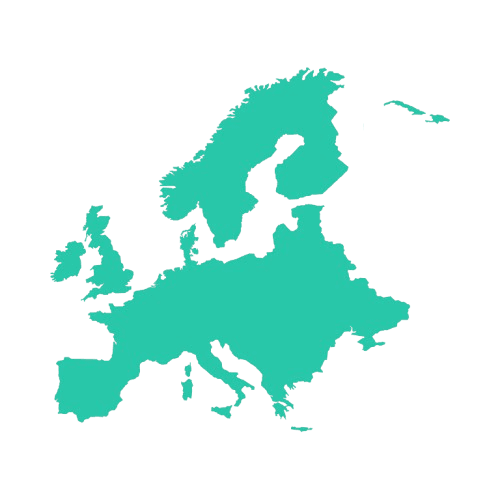
Europe Continent Overview
Introduction to Europe
Europe is the world’s second-smallest continent, covering approximately 10.19 million km² — about 2% of Earth’s land area. It comprises 44 sovereign countries across 4 regions and is home to roughly 743 million people, representing about 9% of the global population. Europe has the world’s oldest population by median age, with population growth slowing and overall numbers declining in recent years. Source: UN World Population Prospects
Capital Cities of Europe by Population
| S no. | country | city | population |
|---|---|---|---|
| 1 | Russia | Moscow | 13,399,945 |
| 2 | United Kingdom | London | 9,188,200 |
| 3 | Germany | Berlin | 3,775,697 |
| 4 | Spain | Madrid | 3,543,630 |
| 5 | Greece | Athens | 3,134,884 |
| 6 | Ukraine | Kiev | 2,995,010 |
| 7 | Italy | Rome | 2,746,472 |
| 8 | Romania | Bucharest | 2,117,843 |
| 9 | France | Paris | 2,059,821 |
| 10 | Belarus | Minsk | 1,991,934 |
| 11 | Austria | Vienna | 1,925,213 |
| 12 | Poland | Warsaw | 1,863,578 |
| 13 | Hungary | Budapest | 1,685,165 |
| 14 | Serbia | Belgrade | 1,681,182 |
| 15 | Czechia | Prague | 1,438,705 |
| 16 | Ireland | Dublin | 1,327,053 |
| 17 | Belgium | Brussels | 1,264,392 |
| 18 | Bulgaria | Sofia | 1,205,833 |
| 19 | Netherlands | Amsterdam | 1,193,995 |
| 20 | Norway | Oslo | 1,127,502 |
| 21 | Sweden | Stockholm | 1,004,498 |
| 22 | Croatia | Zagreb | 755,938 |
| 23 | Finland | Helsinki | 696,374 |
| 24 | Denmark | Copenhagen | 671,714 |
| 25 | Albania | Tirana | 608,364 |
| 26 | Lithuania | Vilnius | 607,842 |
| 27 | Portugal | Lisbon | 596,952 |
| 28 | North Macedonia | Skopje | 593,932 |
| 29 | Latvia | Riga | 590,260 |
| 30 | Moldova | Chisinau | 582,979 |
| 31 | Slovakia | Bratislava | 485,917 |
| 32 | Estonia | Tallinn | 461,452 |
| 33 | Slovenia | Ljubljana | 291,825 |
| 34 | Bosnia and Herzegovina | Sarajevo | 270,585 |
| 35 | Iceland | Reykjavik | 249,228 |
| 36 | Montenegro | Podgorica | 177,878 |
| 37 | Switzerland | Bern | 139,624 |
| 38 | Luxembourg | Luxembourg | 139,241 |
| 39 | Cyprus | Nicosia | 57,226 |
| 40 | Jersey | St. Helier | 37,030 |
| 41 | Andorra | Andorra la Vella | 26,658 |
| 42 | Isle of Man | Douglas | 26,361 |
| 43 | Guernsey | St. Peter Port | 20,065 |
| 44 | Faroe Islands | Torshavn | 14,242 |
| 45 | Liechtenstein | Vaduz | 6,087 |
| 46 | Malta | Valletta | 5,169 |
| 47 | San Marino | San Marino | 4,180 |
| 48 | Gibraltar | Gibraltar | 4,013 |
| 49 | Monaco | Monaco | 645 |
| 50 | Vatican City | Vatican City | 461 |
Population History of Europe




religion Population in Europe

Christianity in Europe
Christianity remains Europe’s largest religious group, accounting for about 67.1% of the continent’s population in 2020, although its share has declined over the past decade. Source: Pew Research Center

Atheist & Unaffiliated
Religiously unaffiliated people represent about 25.3% of Europe’s population, making them the continent’s second-largest religious category in 2020. Source: Pew Research Center

Islam in Europe
Islam represents approximately 6% of Europe’s population, making Muslims the continent’s largest religious minority, with communities across Western, Southern and Eastern Europe. Source: Pew Research Center

Judaism in Europe
Judaism accounts for less than 1% of Europe’s population, with Jewish communities concentrated mainly in several Western, Central and Eastern European countries. Source: Pew Research Center
Most Spoken Languages in Europe
Languages Spoken Across the Continent
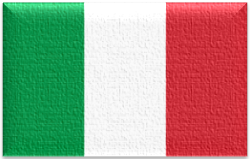
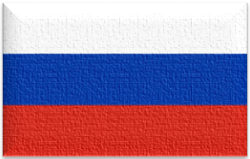
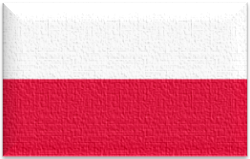
Europe is home to over 200 languages, with Russian having the largest native-speaker population at approximately 150 million, followed by German with 95 million, French with 68 million, English with 67 million, Italian with 65 million, Spanish with 47 million, Polish with 38 million, Ukrainian with 33 million, Romanian with 24 million, and Dutch with approximately 23 million native speakers. Source: Ethnologue.
German with 95 million native speakers
French with 68 million speakers
English 67 million native speakers
Italian speakers with 65 million
Europe by Countries & Regions , Europe is one of the world’s major continental regions and contains a remarkable concentration of countries, cultures, languages, historical centers, economic powers, and geographic landscapes. For statistical purposes, the United Nations Statistics Division (UNSD) divides Europe into four subregions: Eastern Europe, Northern Europe, Southern Europe, and Western Europe.
The four UN M49 European regions provide a standardized way to organize countries and areas for international statistics. They are especially useful when comparing population, economic indicators, demographic trends, development measures, trade, and other country-level data. The classification is statistical rather than a political or cultural definition of Europe.
The four regions are Eastern Europe, Northern Europe, Southern Europe, and Western Europe. Together, they contain 44 country entries that correspond to sovereign states in the four subregions, while the broader UN M49 framework also lists several additional European areas and territories.
Because definitions of Europe can vary depending on geography, politics, history, culture, and statistics, specifying the classification is important. This guide uses the United Nations M49 geographic classification wherever it refers to European regions and countries.
Europe’s Four Regions
According to the United Nations M49 classification, Europe is divided into:
- Eastern Europe
- Northern Europe
- Southern Europe
- Western Europe
Each region has its own geographic character and contains a different combination of countries and statistical areas.
| Europe Region | Sovereign Countries |
|---|---|
| Eastern Europe | 10 |
| Northern Europe | 10 |
| Southern Europe | 15 |
| Western Europe | 9 |
| Total | 44 |
The figures above represent the sovereign countries included within the four European subregions. The complete M49 classification also includes areas such as Gibraltar, the Åland Islands, the Faroe Islands, Guernsey, the Isle of Man, Jersey, and Svalbard and Jan Mayen.
Eastern Europe
Eastern Europe contains 10 countries under the UN M49 classification:
Belarus, Bulgaria, Czechia, Hungary, Poland, Republic of Moldova, Romania, Russian Federation, Slovakia, and Ukraine.
The region occupies a broad part of the European landmass and includes extensive plains, river basins, agricultural areas, forests, and major urban centers. Its geography extends from Central European landscapes toward the eastern reaches of the continent.
Eastern Europe’s history has been shaped by numerous political and cultural influences. Byzantine, Slavic, Polish-Lithuanian, Habsburg, Ottoman, Russian, and Soviet influences have all contributed to the region’s complex historical development.
Poland and Romania are among the region’s larger population centers, while Ukraine has historically been one of Europe’s largest countries by territory. Russia is particularly important in European statistics because its territory extends across both Europe and Asia.
Eastern Europe Countries
| Country | UN M49 Region |
|---|---|
| Belarus | Eastern Europe |
| Bulgaria | Eastern Europe |
| Czechia | Eastern Europe |
| Hungary | Eastern Europe |
| Poland | Eastern Europe |
| Republic of Moldova | Eastern Europe |
| Romania | Eastern Europe |
| Russian Federation | Eastern Europe |
| Slovakia | Eastern Europe |
| Ukraine | Eastern Europe |
Eastern Europe is often discussed together with Central Europe in geographical and historical contexts, but the two concepts are not identical. The UN M49 system specifically places the countries above in its Eastern Europe subregion.
Northern Europe
Northern Europe contains 10 countries under the UN M49 classification:
Denmark, Estonia, Finland, Iceland, Ireland, Latvia, Lithuania, Norway, Sweden, and the United Kingdom.
The region also includes several areas classified separately by the United Nations, including the Åland Islands, Faroe Islands, Guernsey, Isle of Man, Jersey, and Svalbard and Jan Mayen. These are country-or-area entries in the statistical system and should not automatically be counted as additional sovereign countries.
Northern Europe combines Nordic, Baltic, British Isles, and North Atlantic environments. Its physical geography ranges from lowland and coastal landscapes to mountains, fjords, forests, lakes, islands, and Arctic environments.
The Nordic countries—Denmark, Finland, Iceland, Norway, and Sweden—are particularly well known for their northern climates and extensive natural landscapes. The Baltic countries of Estonia, Latvia, and Lithuania occupy the eastern side of the Baltic Sea, while Ireland and the United Kingdom form a major part of the British Isles.
Northern Europe Countries
| Country | UN M49 Region |
|---|---|
| Denmark | Northern Europe |
| Estonia | Northern Europe |
| Finland | Northern Europe |
| Iceland | Northern Europe |
| Ireland | Northern Europe |
| Latvia | Northern Europe |
| Lithuania | Northern Europe |
| Norway | Northern Europe |
| Sweden | Northern Europe |
| United Kingdom | Northern Europe |
Northern Europe is geographically diverse despite its northern position. Oceanic influences moderate temperatures in some western areas, while continental and Arctic influences produce much colder conditions farther north and inland.
Southern Europe
Southern Europe contains 15 countries under the UN M49 classification:
Albania, Andorra, Bosnia and Herzegovina, Croatia, Greece, Italy, Malta, Montenegro, North Macedonia, Portugal, San Marino, Serbia, Slovenia, Spain, and the Holy See.
The UN M49 classification also places Gibraltar in Southern Europe as an area.
Southern Europe includes the Iberian Peninsula, Italian Peninsula, Balkan Peninsula, Mediterranean islands, and numerous coastal areas. The region has played a central role in European history, with ancient Greek and Roman civilizations leaving major influences on philosophy, government, architecture, law, literature, science, and art.
Mediterranean conditions dominate much of the region, although the interior and mountainous areas can have substantially different climates.
Southern Europe Countries
| Country | UN M49 Region |
|---|---|
| Albania | Southern Europe |
| Andorra | Southern Europe |
| Bosnia and Herzegovina | Southern Europe |
| Croatia | Southern Europe |
| Greece | Southern Europe |
| Italy | Southern Europe |
| Malta | Southern Europe |
| Montenegro | Southern Europe |
| North Macedonia | Southern Europe |
| Portugal | Southern Europe |
| San Marino | Southern Europe |
| Serbia | Southern Europe |
| Slovenia | Southern Europe |
| Spain | Southern Europe |
| Holy See | Southern Europe |
Southern Europe includes several of Europe’s smallest sovereign states, including Andorra, San Marino, and the Holy See, alongside much larger countries such as Spain and Italy.
Western Europe
Western Europe contains 9 countries under the UN M49 classification:
Austria, Belgium, France, Germany, Liechtenstein, Luxembourg, Monaco, the Netherlands, and Switzerland.
Western Europe contains some of the continent’s most densely populated areas and several major economic, financial, industrial, transportation, and political centers.
Germany and France are among the region’s largest countries by population and economic scale. The Netherlands and Belgium have important transportation and commercial networks, while Switzerland and Luxembourg are major international financial centers. Austria connects Central European markets with the wider European economic area.
Western Europe Countries
| Country | UN M49 Region |
|---|---|
| Austria | Western Europe |
| Belgium | Western Europe |
| France | Western Europe |
| Germany | Western Europe |
| Liechtenstein | Western Europe |
| Luxembourg | Western Europe |
| Monaco | Western Europe |
| Netherlands | Western Europe |
| Switzerland | Western Europe |
Western Europe is characterized by highly urbanized landscapes, major river systems, industrial corridors, densely settled lowlands, Alpine environments, and extensive transportation networks.
Europe Countries by Region
The following table provides a straightforward overview of Europe’s 44 sovereign countries according to their UN M49 subregions.
| UN Region | Number of Countries | Countries |
|---|---|---|
| Eastern Europe | 10 | Belarus, Bulgaria, Czechia, Hungary, Poland, Moldova, Romania, Russia, Slovakia, Ukraine |
| Northern Europe | 10 | Denmark, Estonia, Finland, Iceland, Ireland, Latvia, Lithuania, Norway, Sweden, United Kingdom |
| Southern Europe | 15 | Albania, Andorra, Bosnia and Herzegovina, Croatia, Greece, Italy, Malta, Montenegro, North Macedonia, Portugal, San Marino, Serbia, Slovenia, Spain, Holy See |
| Western Europe | 9 | Austria, Belgium, France, Germany, Liechtenstein, Luxembourg, Monaco, Netherlands, Switzerland |
| Total | 44 | European sovereign countries represented in the four UN M49 subregions |
This table is useful for country-based comparisons because every listed sovereign country is assigned to one of the four UN European subregions. The UN M49 system itself is broader because it includes countries and areas for statistical purposes.
Europe Countries and Statistical Areas
A common source of confusion when counting European countries is the difference between a country and a country or area.
The UN M49 system was developed primarily for statistical use. It provides country and area codes and organizes them into geographic regions. The assignment of a country or area to a grouping is intended for statistical convenience and does not express a political position or determine legal status.
This distinction matters because the UN European classification includes areas that are not separate sovereign countries.
For example, Northern Europe includes the Åland Islands, Faroe Islands, Guernsey, Isle of Man, Jersey, and Svalbard and Jan Mayen. Southern Europe includes Gibraltar.
Therefore, a page describing the number of European countries should clearly state whether it is counting sovereign states, UN country-or-area entries, or another geographic definition.
Europe Population
Europe has a population of roughly 743 million people, according to recent United Nations population estimates. Its population is distributed unevenly, with major concentrations in Western, Southern, Central, and Eastern parts of the continent.
Population figures can differ slightly depending on the year, dataset, geographic boundaries, and treatment of transcontinental countries. The United Nations World Population Prospects is one of the major international sources used for comparable population estimates and projections.
Germany, the United Kingdom, France, Italy, Spain, Poland, Romania, and Ukraine are among Europe’s important population centers. Russia requires particular care in continental comparisons because its territory spans Europe and Asia.
Europe’s population structure is also changing. Many European countries have relatively high levels of urbanization, while several face population aging, low fertility, or population decline. At the same time, migration continues to influence the size and composition of populations across the continent.
Source: United Nations World Population Prospects.
Europe Area
Europe covers approximately 10.2 million km², making it the second-smallest continent by area after Australia when continents are compared using commonly accepted geographic definitions.
Despite its relatively limited area, Europe contains an exceptionally varied physical landscape. Its territory includes Arctic environments, Atlantic coastlines, continental plains, Mediterranean shores, major mountain systems, forests, lakes, islands, and extensive river networks.
The continent’s compact size has also contributed to close geographic relationships between neighboring countries. Major cities and economic centers are often connected by dense road, rail, maritime, and aviation networks.
Source: Encyclopaedia Britannica.
Europe’s Population Distribution
Europe’s population is not spread evenly across the continent.
Some of the highest population concentrations occur in Western and Central European urban corridors, major river valleys, coastal regions, and industrial areas. Germany, the Netherlands, Belgium, northern France, and parts of the United Kingdom contain highly urbanized and densely settled areas.
Southern Europe has substantial concentrations along Mediterranean coastlines and around major metropolitan areas. Spain and Italy have large urban populations, while coastal areas attract significant residential, commercial, and tourism activity.
Northern Europe generally has lower population density across large parts of Scandinavia. Norway, Sweden, Finland, and Iceland contain extensive areas with relatively sparse settlement because of mountainous terrain, forests, cold climates, lakes, and northern latitudes.
Eastern Europe presents a mixed pattern. Large metropolitan centers coexist with agricultural regions, smaller towns, forests, and sparsely populated areas.
Major European Population Centers
Some of Europe’s most important metropolitan areas include:
- London
- Paris
- Moscow
- Madrid
- Berlin
- Rome
- Istanbul’s European metropolitan area
- Vienna
- Warsaw
- Amsterdam
The size and boundaries of metropolitan areas vary between statistical systems, so city rankings should always identify the dataset and geographic definition being used.
Europe’s Geographic Diversity
Europe’s physical geography is unusually varied for a relatively compact continent.
From the Arctic north to the Mediterranean south, the continent contains substantial differences in climate, terrain, vegetation, and settlement patterns.
North European Plain
The North European Plain is one of the continent’s major lowland regions. It extends across large portions of northern and central Europe and has historically supported agriculture, settlement, transportation, and industrial development.
Its relatively accessible terrain has contributed to the movement of people, goods, and armies throughout European history.
The Alps
The Alps form one of Europe’s most prominent mountain systems. They extend across several countries and contain high peaks, valleys, glaciers, forests, and major tourism destinations.
The mountain range also influences transportation, climate, water resources, and economic activity in surrounding regions.
The Pyrenees
The Pyrenees form a major natural mountain barrier between the Iberian Peninsula and the rest of continental Europe.
The range stretches between Spain and France and also includes Andorra. Its landscape varies from deep valleys and forests to high mountain environments.
The Carpathian Mountains
The Carpathians form an extensive mountain arc across Central and Eastern Europe. They pass through or near several countries and contain forests, mountain valleys, wildlife habitats, and important river headwaters.
Mediterranean Europe
Southern Europe includes a large portion of the Mediterranean environment. The region contains peninsulas, islands, coastal plains, mountains, and warm-season climates.
The Mediterranean has also played a major role in trade and cultural exchange for thousands of years.
Europe’s Four Regions and Their Geographic Character
The four UN regions provide a useful statistical framework, but each region contains substantial internal diversity.
Eastern Europe is characterized by broad plains, continental climates, major rivers, agricultural landscapes, forests, and large urban centers.
Northern Europe includes Nordic and Baltic environments, North Atlantic islands, Scandinavian mountains, forests, lakes, fjords, and Arctic landscapes.
Southern Europe contains Mediterranean coastlines, major peninsulas, islands, mountain systems, historic cities, and diverse climates.
Western Europe contains densely settled lowlands, major river valleys, industrial regions, coastal ports, financial centers, and some of Europe’s largest metropolitan economies.
These descriptions are broad geographic summaries and should not be interpreted as rigid cultural boundaries.
Europe and Transcontinental Countries
Europe’s country list can vary because several countries are associated geographically or historically with both Europe and Asia.
The Russian Federation is the clearest example. Its enormous territory stretches across both continents, and the Ural Mountains are commonly used as part of the traditional geographic boundary between Europe and Asia.
Other countries near the Europe-Asia boundary may be classified differently by different organizations. Countries such as Türkiye, Georgia, Armenia, Azerbaijan, and Kazakhstan are frequently discussed in relation to Europe and Asia depending on the geographic or institutional framework being used.
The UN M49 system places Türkiye, Cyprus, Armenia, Azerbaijan, Georgia, Kazakhstan, and several other countries in Asia rather than Europe. This demonstrates why a consistent classification is essential when producing country rankings.
A page using the UN M49 definition should not move between different continental definitions without clearly identifying the change.
Why Europe Does Not Have One Universal Country Count
There is no single country count that works for every definition of Europe.
The answer depends on what is being counted and which geographic framework is selected.
A list may differ because of:
- The treatment of transcontinental countries
- The inclusion or exclusion of territories
- The status of disputed areas
- Whether sovereign states or statistical areas are counted
- The geographic boundary chosen between Europe and Asia
Whether political or geographic definitions are being used
For statistical comparisons, the UN M49 classification provides a consistent framework. The United Nations itself notes that its country and area assignments are intended for statistical use and do not imply a political or legal judgment concerning the status of countries or territories.
Europe’s Regional Structure for Statistical Comparisons
A standardized regional structure is especially valuable for websites that publish country rankings.
For example, a population dataset can be organized as:
Country → UN Region → Population → Population Rank
An economic dataset can use:
Country → UN Region → GDP → GDP Rank
A demographic dataset could include:
Country → UN Region → Population Growth → Fertility Rate → Median Age
Environmental datasets can follow:
Country → UN Region → CO₂ Emissions → Emissions per Capita
This structure allows readers to compare countries while maintaining a consistent geographic framework throughout different pages.
Using one regional system also makes it easier to connect Europe pages with broader continent pages covering Africa, Asia, North America, South America, Oceania, and other world regions.
Europe by Region: Quick Comparison
| Region | Countries | General Geographic Character |
|---|---|---|
| Eastern Europe | 10 | Broad plains, continental landscapes, forests, agricultural areas and major river systems |
| Northern Europe | 10 | Nordic, Baltic, North Atlantic, Scandinavian and Arctic environments |
| Southern Europe | 15 | Mediterranean landscapes, peninsulas, islands, mountains and coastal regions |
| Western Europe | 9 | Densely populated lowlands, river valleys, industrial areas and major economic centers |
The regional descriptions are broad geographic summaries, while the country assignments follow the UN M49 statistical framework.
Why the Four Europe Regions Are Useful
Dividing Europe into four regions makes large datasets easier to understand.
A European population table containing dozens of countries can be difficult to interpret when countries are presented only in alphabetical order. Grouping them by Eastern, Northern, Southern, and Western Europe provides geographic context and makes regional patterns more visible.
The same approach is useful for:
- Population rankings
- GDP comparisons
- GDP per capita
- HDI rankings
- Military expenditure
- Exports and imports
- Life expectancy
- Fertility rates
- Population density
- Urbanization
- Energy production
- Renewable energy
- CO₂ emissions
- Tourism
- Agricultural production
- Because the UN M49 classification is designed for international statistical work, it is particularly suitable for datasets that compare multiple countries and regions.
Europe’s Economic Geography
Europe has some of the world’s most developed and interconnected economies.
Western Europe contains major financial and industrial centers, while Northern Europe includes advanced economies with strong maritime, energy, technology, manufacturing, and service sectors. Southern Europe has important tourism, manufacturing, agriculture, shipping, and service industries. Eastern Europe contains major manufacturing, agricultural, technology, energy, and logistics sectors.
The European economy is not uniform. Differences in population size, natural resources, industrial specialization, infrastructure, income, productivity, and demographics create significant variation between countries.
Large economies such as Germany, France, Italy, the United Kingdom, Spain, and Russia have major effects on European economic statistics, while smaller countries contribute highly specialized financial, manufacturing, technology, tourism, and trade activities.
Europe’s Languages and Cultures
Europe is home to hundreds of languages and a large number of cultural traditions.
Major language families represented across the continent include Indo-European, Uralic, and Turkic, alongside many individual languages and regional linguistic traditions.
English, German, French, Italian, Spanish, Polish, Russian, Ukrainian, Dutch, Romanian, Greek, Portuguese, Swedish, Czech, Hungarian, Finnish, and many other languages are used across European countries.
Language boundaries do not always follow national borders. Some languages are spoken across several countries, while many countries contain significant linguistic minorities.
Europe’s cultural diversity is also reflected in architecture, literature, music, food, religion, festivals, traditional crafts, and historical heritage.
Europe’s Historical Importance
Europe has had a profound influence on world history.
Ancient Greek civilization contributed extensively to philosophy, political thought, mathematics, science, literature, architecture, and the arts. Roman civilization shaped legal systems, infrastructure, government, language, and urban development across a vast area.
Later periods brought major changes through Christianity, the Byzantine Empire, Islamic-European interactions, medieval kingdoms, Renaissance culture, maritime exploration, the Reformation, scientific developments, industrialization, and modern political movements.
The Industrial Revolution transformed parts of Europe into major manufacturing and commercial centers. European states also played major roles in global exploration, trade, imperial expansion, and international politics.
Modern Europe is shaped by the legacy of these historical developments as well as by contemporary institutions, migration, economic integration, technological change, and demographic transformation.
Europe’s Major Geographic Features
Europe contains numerous important physical features, including:
- Alps
- Pyrenees
- Carpathian Mountains
- Scandinavian Mountains
- Ural Mountains
- North European Plain
- Mediterranean Sea
- Baltic Sea
- North Sea
- Black Sea
- Atlantic Ocean
- Danube River
- Rhine River
- Volga River
- Iberian Peninsula
- Italian Peninsula
- Balkan Peninsula
These features influence transportation, climate, agriculture, settlement, trade, tourism, and national boundaries.
Europe and the European Union Are Not the Same Thing
Europe as a geographic continent should not be confused with the European Union (EU).
Europe contains more countries than the European Union, and not every European country is an EU member.
The European Union is a political and economic organization with its own membership rules. Europe, by contrast, is a geographic and continental concept.
This distinction is important when researching European countries because a dataset titled “Europe” may include countries that are not members of the European Union.
Likewise, a list of “EU countries” should not be presented as a complete list of European countries.
Europe, the Euro Area and Schengen Area
Several other European groupings are also different from the geographic definition of Europe.
The euro area refers to countries using the euro as their official currency within the relevant institutional framework. The Schengen Area concerns passport-free travel arrangements among participating countries.
Neither grouping represents all European countries.
Therefore, terms such as Europe, European Union, Eurozone, and Schengen Area should be used carefully because they describe different geographic, political, economic, or legal groupings.
Europe by Countries and Regions: Key Facts
Europe is divided into four UN M49 subregions:
- Eastern Europe
- Northern Europe
- Southern Europe
- Western Europe
The four regions contain 44 sovereign countries represented in the UN M49 European subregions.
- Eastern Europe contains 10 countries.
- Northern Europe contains 10 countries.
- Southern Europe contains 15 countries.
- Western Europe contains 9 countries.
The broader UN M49 system also includes European areas and territories that should not automatically be counted as separate sovereign countries.
Europe has a population of approximately 743 million people, although the precise figure changes with each population estimate and reference year.
The continent covers roughly 10.2 million km² and contains a wide range of physical environments, from Arctic landscapes to Mediterranean coastlines.
For international statistical comparisons, the UN M49 classification provides a consistent framework for organizing European countries and areas.
Frequently Asked Questions About Europe by Countries & Regions
How many regions are there in Europe?
The United Nations M49 classification divides Europe into four subregions: Eastern Europe, Northern Europe, Southern Europe, and Western Europe.
What are the four regions of Europe?
The four UN M49 regions of Europe are Eastern Europe, Northern Europe, Southern Europe, and Western Europe.
How many countries are in Europe?
Using the sovereign countries represented within the four UN M49 European subregions, the total is 44 countries. The broader UN M49 framework also lists additional areas and territories, so other country counts can be found under different definitions.
Which countries are in Eastern Europe?
UN M49 places Belarus, Bulgaria, Czechia, Hungary, Poland, Republic of Moldova, Romania, Russian Federation, Slovakia, and Ukraine in Eastern Europe.
Which countries are in Northern Europe?
Northern Europe includes Denmark, Estonia, Finland, Iceland, Ireland, Latvia, Lithuania, Norway, Sweden, and the United Kingdom. The UN classification also lists several Northern European areas separately.
Which countries are in Southern Europe?
Southern Europe includes Albania, Andorra, Bosnia and Herzegovina, Croatia, Greece, Italy, Malta, Montenegro, North Macedonia, Portugal, San Marino, Serbia, Slovenia, Spain, and the Holy See. Gibraltar is also classified as an area in Southern Europe.
Which countries are in Western Europe?
Western Europe includes Austria, Belgium, France, Germany, Liechtenstein, Luxembourg, Monaco, the Netherlands, and Switzerland.
What is the UN M49 classification?
UN M49 is a United Nations statistical classification that assigns countries and areas to standardized geographic regions and provides numerical codes for statistical use.
Is UN M49 a political definition of Europe?
No. UN M49 is primarily a statistical geographic classification. The United Nations states that assigning countries or areas to geographic groupings is for statistical convenience and does not imply political or other affiliation.
Is Russia part of Europe or Asia?
Russia is a transcontinental country extending across Europe and Asia. Under the UN M49 classification, the Russian Federation is included in Eastern Europe.
Is Turkey part of Europe?
Turkey is a transcontinental country with territory in both Europe and Asia. However, in the UN M49 statistical classification, Türkiye is placed in Western Asia rather than Europe.
Is Cyprus part of Europe?
Cyprus has strong political, cultural, and institutional connections with Europe, including membership in the European Union. In the UN M49 geographic classification, however, Cyprus is listed in Western Asia rather than the European region.
Are the United Kingdom and Ireland in Northern Europe?
Yes. Both Ireland and the United Kingdom are classified under Northern Europe in UN M49.
Are the Nordic countries part of Northern Europe?
Yes. Denmark, Finland, Iceland, Norway, and Sweden are all included in Northern Europe under the UN M49 classification.
Are the Baltic countries part of Northern Europe?
Yes. Estonia, Latvia, and Lithuania are classified as Northern European countries under UN M49.
Are Spain, Italy and Greece in Southern Europe?
Yes. Spain, Italy, and Greece are all included in Southern Europe under the UN M49 system.
Is Germany in Western Europe?
Yes. Germany is classified as part of Western Europe under UN M49.
Is Poland in Eastern Europe?
Yes. Poland is classified in Eastern Europe under the UN M49 system.
Why do different websites show different numbers of European countries?
Different websites may use different definitions. Some count sovereign states, some include territories, some use political organizations, and others use geographic or cultural definitions. Transcontinental countries and disputed areas can also affect the total.
What is the difference between Europe and the European Union?
Europe is a geographic continent, while the European Union is a political and economic organization. The EU does not include every European country.
What is the largest region of Europe?
The answer depends on whether “largest” refers to land area, population, number of countries, or another measure. Eastern Europe covers a very large geographic area largely because the European part of Russia is included in the region.
What is the smallest region of Europe by number of countries?
Western Europe has 9 sovereign countries under the UN M49 classification, making it the smallest of the four European subregions by country count.
Which European region has the most countries?
Southern Europe has the highest number of sovereign countries among the four UN M49 European subregions, with 15 countries.
Sources and References
The geographic classification in this article is based primarily on the United Nations Statistics Division’s Standard Country or Area Codes for Statistical Use (UN M49). The UN M49 database provides the geographic regions, subregions, country or area names, and statistical codes used in the classification.
Primary sources:
- United Nations Statistics Division — UN M49 Classification
- United Nations Statistics Division — M49 Overview
- United Nations World Population Prospects
- Encyclopaedia Britannica — Europe
The UN M49 classification should be treated as the controlling geographic framework for the regional and country grouping used throughout this article.