
Durrani Empire Founded In Which Country Or Country Of Origin
The Durrani Empire was founded in 1747 at Kandahar, in modern-day Afghanistan, by Ahmad Shah Durrani (also known as Ahmad Shah Abdali) , Durrani Empire Historical And Modern Day Flags
Durrani Empire Historical And Modern Day Flags
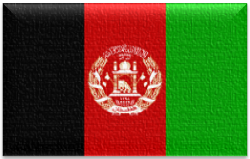

The Top Modern Countries That Were Part Of The Durrani Empire
01
Afghanistan was the core of the empire, covering 100% of its land (652,864 km2) with Kabul.
Afghanistan
02
Pakistan formed 720,000 km2 (90.44%) of the empire, with Peshawar as its winter capital.
Pakistan
03
Eastern Iran covered 360,000 km2 (21.84%), centered around the historic Khorasan region.
Iran
04
Durrani rule spanned 220,000 km2 (6.69%) of India, including Kashmir and upper Punjab.
India
05
Southern Turkmenistan made up 160,000 km2 (32.78%), controlling trade south of Amu Darya.
Turkmenistan
The Territorial Reach Of The Durrani Empire In Modern Terms
Peripheral northern domains in Uzbekistan and Tajikistan secured vital river ports along the Amu Darya and protected trade routes.
The Current Sovereign Nations Whose Areas Were Significantly Or Fully Under The Control Of The Durrani Empire
Sovereign control covered Afghanistan and Pakistan, while parts of India, Iran, Turkmenistan, Uzbekistan, and Tajikistan were held via administration or tribute.
From Shahs To Sovereignty: Tracking The Durrani Empire’s Peak And Last Century
Durrani Empire Expansion and Fall
The Durrani Empire, also known as the Afghan Empire, was one of the most powerful Muslim empires of the 18th century. Founded by Ahmad Shah Durrani in 1747, it emerged from the political vacuum created after the death of the Persian ruler Nader Shah Afshar.
At its height, the Durrani Empire controlled a vast territory stretching across much of present-day Afghanistan and Pakistan, as well as parts of Iran, Central Asia and northern India. It became a major power between the Persian, Central Asian and Indian worlds.
Ahmad Shah Durrani is widely regarded as the founder of the modern Afghan state. His military campaigns brought many Afghan tribes and territories under a single imperial authority, while his repeated invasions of northern India made the Durrani Empire a decisive force in South Asian politics.
The empire is particularly remembered for the Third Battle of Panipat in 1761, where Ahmad Shah Durrani’s coalition defeated the Maratha Confederacy. The victory temporarily halted Maratha expansion toward northern India and dramatically changed the political balance of the subcontinent.
However, the empire was difficult to hold together. After Ahmad Shah’s death, succession disputes, tribal rivalries, regional revolts and the growing power of neighboring states gradually weakened Durrani authority. By the early 19th century, the empire had fragmented, eventually giving way to the rise of the Sikh Empire in Punjab and the Barakzai-led Afghan state.
Durrani Empire at a Glance
| Feature | Details |
|---|---|
| Empire | Durrani Empire |
| Also known as | Afghan Empire |
| Founded | 1747 |
| Founder | Ahmad Shah Durrani |
| Original name of founder | Ahmad Khan Abdali |
| Dynasty | Durrani / Sadozai dynasty |
| Origin | Kandahar region, Afghanistan |
| Main capital | Kandahar; later Kabul became an important political center |
| Religion | Sunni Islam |
| Major ethnic-political base | Pashtun Abdali/Durrani tribes |
| Major territories | Afghanistan, Pakistan, parts of Iran, Central Asia and northern India |
| Greatest ruler | Ahmad Shah Durrani |
| Most famous battle | Third Battle of Panipat, 1761 |
| Major rivals | Marathas, Sikhs, Mughal factions, Persians and Central Asian powers |
| Peak | Mid-18th century |
| Decline | Late 18th–early 19th century |
| End of Durrani dominance | Early 19th century |
| Successor Afghan dynasty | Barakzai dynasty |
Country of Origin of the Durrani Empire
The Durrani Empire originated in Afghanistan, particularly around Kandahar.
The dynasty emerged from the Abdali Pashtun tribal confederation, which was renamed or increasingly identified as Durrani under Ahmad Shah.
The empire’s foundation is closely connected with the political events that followed the assassination of Nader Shah Afshar in 1747.
Ahmad Khan Abdali, one of Nader Shah’s former commanders, returned to Afghanistan and established himself as an independent ruler.
He was crowned at Kandahar in 1747, marking the beginning of the Durrani Empire.
Who Was Ahmad Shah Durrani?
Ahmad Shah Durrani was the founder of the Durrani Empire and one of the most important military and political leaders in 18th-century South and Central Asian history.
He was born around 1722 and belonged to the Sadozai clan of the Popalzai branch of the Abdali Pashtuns.
As a young man, Ahmad Khan entered the service of Nader Shah Afshar.
Nader Shah recognized his military abilities and promoted him.
When Nader Shah was assassinated in 1747, Ahmad Khan seized the opportunity to establish an independent Afghan kingdom.
He was crowned Ahmad Shah Durrani and began building an empire.
How Did the Durrani Empire Rise?
The rise of the Durrani Empire resulted from several interconnected developments.
Collapse of Nader Shah’s Empire
Nader Shah’s death created a political vacuum across Iran, Afghanistan and surrounding regions.
Afghan Tribal Support
Ahmad Shah successfully united important Afghan tribal groups behind his leadership.
Military Experience
His experience under Nader Shah gave him knowledge of large-scale warfare and imperial administration.
Weakness of Neighboring States
The Mughal Empire was declining, while regional powers competed for influence in northern India.
Strategic Geography
Afghanistan occupied a strategic position between:
- Central Asia
- Iran
- India
This allowed Ahmad Shah to project military power in several directions.
Foundation of the Durrani Empire — 1747
In 1747, Ahmad Khan Abdali was selected as the leader of the Afghan tribal confederation.
He adopted the title Ahmad Shah Durrani.
The term “Durrani” became associated with the dynasty and the wider political identity of the Abdali tribes.
The establishment of the Durrani state marked the emergence of a major independent Afghan power following the collapse of Nader Shah’s empire.
Ahmad Shah Durrani’s Early Conquests
Ahmad Shah first concentrated on consolidating Afghanistan.
His early campaigns brought several important regions under Durrani authority.
These included areas around:
- Kandahar
- Kabul
- Ghazni
- Herat
- Peshawar
He subsequently expanded toward Punjab, Kashmir, Sindh and northern India.
Expansion into Punjab
Punjab became one of the most important contested regions between the Durrani Empire, local Afghan and Mughal forces, the Sikhs and eventually the Marathas.
Ahmad Shah repeatedly invaded the region.
His campaigns established Durrani influence over Lahore and surrounding territories for significant periods.
However, Durrani control was often challenged by local Sikh groups.
Durrani Empire and the Mughal Empire
By the 18th century, the Mughal Empire had lost much of its earlier power.
Delhi remained symbolically important, but real authority had increasingly shifted to regional powers.
Ahmad Shah Durrani intervened repeatedly in northern Indian politics.
He sometimes supported Mughal factions while also extracting tribute and establishing Durrani influence.
The weakened Mughal state could no longer prevent external powers from competing for control of northern India.
Ahmad Shah Durrani’s Invasions of India
Ahmad Shah launched several campaigns into India.
His invasions were motivated by a combination of:
- Strategic interests
- Political alliances
- Control of Punjab
- Competition with the Marathas
- Regional power politics
- Revenue and tribute
The campaigns eventually brought him into direct conflict with the rapidly expanding Maratha Confederacy.
Conflict With the Marathas
By the late 1750s, the Marathas had expanded northward from their base in western and central India.
They sought to extend their political influence over the declining Mughal heartland.
This brought them into conflict with Ahmad Shah Durrani.
The struggle eventually produced one of the most important battles in South Asian history.
Third Battle of Panipat — 1761
The Third Battle of Panipat took place on 14 January 1761 near Panipat in northern India.
Ahmad Shah Durrani commanded a coalition that included Afghan forces and several Indian allies.
The Maratha army was commanded by Sadashivrao Bhau.
The battle was extraordinarily large and extremely bloody.
The Durrani coalition achieved a decisive victory.
Why Was Panipat Important?
The victory had major consequences.
It:
- Halted major Maratha expansion into northern India
- Strengthened Durrani influence
- Preserved the position of several northern Indian powers
- Deepened the political fragmentation of the Mughal world
- Changed the balance of power in India
However, the battle did not result in permanent Durrani control over the entire Indian subcontinent.
Ahmad Shah returned to Afghanistan, and the Marathas eventually recovered much of their strength.
Durrani Empire at Its Greatest Extent
At its greatest extent, the Durrani Empire controlled or dominated territories across a huge area of South and Central Asia.
Its influence extended across parts of present-day:
- Afghanistan
- Pakistan
- Iran
- India
- Tajikistan
- Uzbekistan
- Turkmenistan
The exact borders changed frequently because the empire depended heavily on military power, tribute and relationships with local rulers.
Therefore, maps showing the Durrani Empire should be understood as representations of maximum political influence, rather than permanent administrative borders.
Territories Associated With the Durrani Empire
Important regions under Durrani control or influence included:
Afghanistan
The political heartland of the empire.
Punjab
A strategically important frontier region repeatedly contested with Sikh and Maratha forces.
Kashmir
A valuable mountainous territory that became part of the wider Durrani sphere.
Sindh
The Durranis exercised varying degrees of influence over Sindh.
Peshawar
An important military and political center connecting Afghanistan with the Indian plains.
Lahore
One of the most important cities in Punjab and a major prize in Afghan-Sikh-Maratha competition.
Herat
An important western Afghan city connected to Persian political affairs.
Delhi
Ahmad Shah intervened repeatedly in Delhi politics but did not transform northern India into a permanently administered Durrani province.
Durrani Empire and the Sikhs
One of Ahmad Shah’s most persistent challenges came from the Sikh misls in Punjab.
Sikh groups gradually expanded their territorial and military power.
Ahmad Shah launched repeated campaigns into Punjab to suppress them.
Despite several Durrani victories, Sikh resistance continued.
After Ahmad Shah’s death, Sikh power expanded rapidly.
Ahmad Shah Durrani and Sikh Resistance
The struggle in Punjab was not a single war.
It consisted of repeated campaigns involving:
- Afghan armies
- Sikh misls
- Local governors
- Mughal factions
- Maratha forces
The Durranis could capture major cities, but maintaining permanent control over the countryside proved considerably more difficult.
This became one of the central weaknesses of the empire.
Battle of Amritsar — 1757
Ahmad Shah’s campaigns brought his forces into conflict with Sikh forces around the Punjab and Amritsar region.
The Sikhs increasingly used guerrilla-style warfare, mobility and local knowledge to challenge Afghan authority.
The continued resistance demonstrated the difficulty of maintaining Durrani control over Punjab.
Battle of Lahore and Punjab Campaigns
Lahore repeatedly changed hands among competing powers.
The city became a major strategic center because of its:
- Economic importance
- Position on routes between Afghanistan and India
- Political significance
- Agricultural wealth
Durrani control was therefore repeatedly challenged by Sikh and other regional forces.
Ahmad Shah Durrani’s Later Years
After the victory at Panipat, Ahmad Shah continued to manage a large and increasingly difficult empire.
He faced challenges from:
- Sikhs
- Marathas
- Persian rulers
- Central Asian powers
- Internal Afghan factions
Despite these challenges, he remained the dominant Afghan ruler until his death.
Death of Ahmad Shah Durrani
Ahmad Shah Durrani died in 1772.
He had suffered from illness during the later part of his life.
His death removed the central personality who had held together the expanding empire.
His son Timur Shah Durrani succeeded him.
Timur Shah Durrani
Timur Shah Durrani ruled from 1772 to 1793.
He inherited an enormous but politically fragile empire.
One of his most important decisions was moving the capital from Kandahar to Kabul.
Kabul offered a more central position for managing the empire’s different regions.
Timur Shah also faced repeated rebellions and challenges from Afghan tribal leaders.
Although he maintained much of his father’s empire, the state became increasingly decentralized.
Why Did Timur Shah Move the Capital to Kabul?
Kabul had several strategic advantages.
It was:
- Centrally positioned
- Connected to Central Asia
- Connected to northern India
- Easier to use for military campaigns
- A major commercial center
The move strengthened Kabul’s importance in Afghan political history.
Durrani Rulers
| Ruler | Reign | Major Significance |
|---|---|---|
| Ahmad Shah Durrani | 1747–1772 | Founded the empire and created its greatest expansion |
| Timur Shah Durrani | 1772–1793 | Maintained much of the empire and moved the capital to Kabul |
| Zaman Shah Durrani | 1793–1801 | Attempted to strengthen authority and intervene in India |
| Mahmud Shah Durrani | 1801–1803; 1809–1818 | Ruled during severe internal instability |
| Shah Shuja Durrani | 1803–1809; 1839–1842 | Lost much of the remaining Durrani political power |
| Sultan Ali Shah | 1818–1819 | Brief and largely ineffective reign |
| Ayub Shah Durrani | 1819–1823 | Generally regarded as the last Durrani ruler |
Because succession was frequently contested, different Durrani claimants sometimes controlled different parts of the former empire.
Zaman Shah Durrani
Zaman Shah Durrani became ruler in 1793.
He attempted to restore centralized authority and considered campaigns toward India.
However, he faced powerful internal opposition.
His reign became entangled in rivalries between members of the Durrani royal family and Afghan political elites.
These conflicts weakened the dynasty.
Mahmud Shah Durrani
Mahmud Shah Durrani came to power after Zaman Shah’s overthrow.
His reign illustrates the instability of the late Durrani state.
Political power shifted between rival branches of the royal family and powerful regional figures.
Shah Shuja Durrani
Shah Shuja Durrani ruled at different times during the early 19th century.
His reign occurred after the empire had already lost much of its former territory.
He eventually became involved in British-backed efforts to regain the Afghan throne during the period that led to the First Anglo-Afghan War.
His story connects the decline of the Durrani dynasty with the emergence of British influence in Afghanistan.
Golden Age of the Durrani Empire
Unlike the Timurid or Mughal empires, the Durrani Empire is not usually described as having a long cultural golden age characterized by monumental scientific or artistic achievements.
Its golden age was primarily political and military, particularly during the reign of Ahmad Shah Durrani.
The period from approximately 1747 to 1772 represented the empire’s greatest phase of territorial expansion and political influence.
During this period:
- Afghanistan was politically unified under a powerful monarchy
- Durrani authority extended deep into South Asia
- Kandahar became an important imperial center
- Kabul grew in political importance
- Afghan military power reached its regional peak
Economy of the Durrani Empire
The Durrani economy depended on several sources.
These included:
- Agriculture
- Livestock
- Trade
- Customs duties
- Tribute
- Taxation
- Control of commercial routes
Afghanistan’s geography placed the empire near important routes linking:
Central Asia ↔ Afghanistan ↔ Persia ↔ India
Cities such as Kabul, Kandahar, Herat and Peshawar benefited from regional trade.
Durrani Empire Trade Routes
The empire occupied a strategic position between several major economic zones.
Trade moved through routes connecting:
- India and Afghanistan
- Persia and Afghanistan
- Central Asia and South Asia
Horses, textiles, agricultural products and other goods moved through these commercial networks.
Military Strength of the Durrani Empire
The Durrani military was heavily based on cavalry.
Important strengths included:
- Mounted warfare
- Tribal military organization
- Experienced commanders
- Rapid movement
- Cavalry archery traditions
- Firearms and artillery
- Alliances with regional powers
Ahmad Shah’s military experience under Nader Shah also influenced the organization and tactics of his forces.
Durrani Army and Afghan Tribal Forces
The empire did not operate like a highly centralized modern nation-state.
Much of its military power depended on mobilizing Afghan tribal contingents.
This system was highly effective during major campaigns.
However, it also created a long-term problem:
The same tribal autonomy that helped Ahmad Shah conquer territory made it difficult for later rulers to maintain centralized control.
Administration of the Durrani Empire
The Durrani state combined:
- Afghan tribal political structures
- Islamic institutions
- Persian administrative traditions
- Military authority
- Local governors
Regional rulers often retained significant autonomy.
This made the empire flexible but also vulnerable to fragmentation.
Religion in the Durrani Empire
The Durrani rulers were Sunni Muslims, generally associated with the Hanafi legal tradition.
Islam played an important role in political legitimacy and public institutions.
The empire contained diverse religious communities, particularly in the territories of Punjab, Kashmir and northern India.
Durrani Empire and Pashtun Identity
The Durrani dynasty emerged from the Abdali Pashtun tribal confederation.
Under Ahmad Shah, the term Durrani became increasingly associated with the ruling political group.
The empire therefore played an important role in the development of Afghan political identity.
However, it should not be understood as an ethnically uniform state.
Its territories contained numerous ethnic, linguistic and religious communities.
Durrani Architecture and Culture
The Durrani period did not produce an architectural legacy on the scale of the Mughals or Timurids, but it contributed to the development of Afghan urban centers.
Important cultural and architectural developments included:
- Mosques
- Fortifications
- Tombs
- Urban development
- Persianate court culture
- Islamic scholarship
Ahmad Shah Durrani’s Tomb
Ahmad Shah Durrani’s tomb is located in Kandahar.
The monument is an important symbol of the city’s connection with the founding of the Durrani Empire.
Decline of the Durrani Empire
The decline was not caused by one single battle.
It developed through a combination of political, military and economic pressures.
Weak Successors
After Ahmad Shah, later rulers generally lacked his military authority and political influence.
Succession Disputes
Royal family members repeatedly competed for the throne.
Tribal Rivalries
Powerful tribal leaders resisted centralization.
Sikh Expansion
The Sikh misls gradually became stronger in Punjab.
Persian Pressure
The empire faced challenges from rulers in Persia, particularly in the western regions.
Maratha Recovery
The Marathas recovered from the defeat at Panipat and regained influence in northern India.
Loss of Provincial Control
Regional governors increasingly operated independently.
Rise of the Sikh Empire
The rise of the Sikh Empire under Maharaja Ranjit Singh was one of the most important developments in the final decline of Durrani power.
Ranjit Singh gradually consolidated the Sikh misls.
He captured Lahore in 1799 and established a powerful Sikh state.
During the early 19th century, Sikh forces expanded across Punjab and captured important territories formerly associated with Durrani authority.
Loss of Peshawar
Peshawar was strategically important to the Durranis because it controlled access between Afghanistan and the Punjab plains.
Sikh expansion eventually brought Peshawar under Sikh control.
Its loss was a major blow to the remaining Durrani political system.
Loss of Kashmir
Kashmir also moved away from Afghan control as regional powers expanded.
The weakening of Durrani authority in Kashmir demonstrated the broader territorial fragmentation of the empire.
End of the Durrani Empire
By the early 19th century, the Durrani Empire had lost most of its former territories.
Its political structure was increasingly limited to Afghanistan and contested by rival Afghan factions.
The old Sadozai Durrani dynasty eventually lost effective power to the Barakzai dynasty.
Dost Mohammad Khan, a member of the Barakzai family, became the dominant Afghan ruler in the 1820s.
This marked the end of the Durrani era and the beginning of a new phase in Afghan history.
Durrani Empire Timeline
| Year | Event |
|---|---|
| 1722 | Approximate birth of Ahmad Khan Abdali |
| 1730s–1740s | Ahmad Khan rises under Nader Shah |
| 1747 | Nader Shah is assassinated |
| 1747 | Ahmad Shah Durrani establishes the Durrani Empire |
| 1740s–1750s | Consolidation of Afghanistan |
| 1750s | Durrani expansion into Punjab and northern India |
| 1757 | Durrani intervention in Delhi and northern India |
| 1758–1759 | Maratha-Durrani confrontation intensifies |
| 1761 | Third Battle of Panipat |
| 1772 | Ahmad Shah Durrani dies |
| 1772–1793 | Reign of Timur Shah |
| 1770s–1790s | Increasing internal political tensions |
| 1793 | Timur Shah dies |
| 1793–1801 | Zaman Shah’s reign |
| 1799 | Ranjit Singh captures Lahore |
| 1801–1803 | Mahmud Shah’s first reign |
| 1803–1809 | Shah Shuja’s first reign |
| Early 1800s | Durrani territories rapidly contract |
| 1818 | Mahmud Shah’s second reign ends |
| 1819–1823 | Ayub Shah rules briefly |
| 1820s | Barakzai power rises |
| 1823 | Durrani dynasty loses effective control |
Major Battles of the Durrani Empire
| Battle/Campaign | Year | Main Opponent | Outcome |
|---|---|---|---|
| Durrani campaigns in Punjab | 1750s | Mughal/local forces | Durrani expansion |
| Delhi campaign | 1757 | Mughal and regional forces | Durrani victory |
| Battle of Panipat | 1761 | Maratha Confederacy | Decisive Durrani coalition victory |
| Punjab campaigns | 1760s–1770s | Sikh misls | Mixed results |
| Sikh-Afghan conflicts | Late 18th century | Sikh misls | Increasing Sikh resistance |
| Afghan-Sikh struggle | Early 19th century | Sikh Empire | Durrani territories lost |
Third Battle of Panipat vs Battle of Plassey
Both were crucial 18th-century South Asian battles, but they had very different consequences.
| Feature | Third Battle of Panipat | Battle of Plassey |
|---|---|---|
| Year | 1761 | 1757 |
| Main conflict | Durrani coalition vs Marathas | East India Company vs Bengal’s forces and allies |
| Region | Northern India | Bengal |
| Major consequence | Checked Maratha expansion | Strengthened British East India Company power |
| Long-term significance | Changed northern Indian politics | Major step toward British political expansion |
Durrani Empire vs Mughal Empire
| Feature | Durrani Empire | Mughal Empire |
|---|---|---|
| Founded | 1747 | 1526 |
| Founder | Ahmad Shah Durrani | Babur |
| Origin | Afghanistan | Central Asian Timurid dynasty |
| Political center | Kandahar/Kabul | Delhi/Agra |
| Main period | 18th century | 16th–19th centuries |
| Major religion | Sunni Islam | Sunni Islam |
| Military base | Afghan tribal forces | Central Asian, Indian and regional forces |
| Famous ruler | Ahmad Shah Durrani | Akbar |
| Major Indian role | Northern Indian interventions | Long-term imperial rule |
Durrani Empire vs Mughal Empire: Political Relationship
The Durranis did not simply replace the Mughal Empire.
Instead, the two existed within a complicated political environment.
By Ahmad Shah’s time, the Mughal emperor remained an important symbolic ruler, but effective political authority was divided among:
- Marathas
- Afghans
- Sikhs
- Regional governors
- Rajput states
- Other Indian powers
Ahmad Shah became one of the strongest external powers intervening in this fragmented political landscape.
Durrani Empire vs Sikh Empire
| Feature | Durrani Empire | Sikh Empire |
|---|---|---|
| Main region | Afghanistan and wider South/Central Asia | Punjab and surrounding regions |
| Founder | Ahmad Shah Durrani | Ranjit Singh |
| Peak | Mid-18th century | Early 19th century |
| Political base | Afghan/Pashtun elites | Sikh Khalsa political tradition |
| Major rival | Sikh misls | Durrani/Afghan forces |
| Important city | Kandahar/Kabul | Lahore |
| Major expansion | Under Ahmad Shah | Under Ranjit Singh |
Historical Importance of the Durrani Empire
The Durrani Empire was important because it:
- Created a major unified Afghan monarchy
- Became a leading power in 18th-century South Asia
- Challenged Maratha expansion
- Intervened in Mughal politics
- Controlled major parts of Punjab and Kashmir at different times
- Connected Central Asian, Persian and Indian political systems
- Helped shape the territorial and political development of Afghanistan
Ahmad Shah Durrani and the Modern Afghan State
Ahmad Shah’s legacy is particularly important in Afghan historical memory.
His empire brought large areas under a common Afghan monarchy.
For this reason, he is often remembered as a founding figure of the Afghan state.
The modern borders of Afghanistan were not identical to the Durrani Empire, but the dynasty’s political institutions and territorial core played an important role in later Afghan state formation.
What Happened to the Durrani Empire?
The empire gradually fragmented after Ahmad Shah’s death.
Punjab became increasingly controlled by Sikh forces.
Western territories faced Persian pressure.
Internal Afghan politics became increasingly divided.
The Sadozai dynasty weakened, while the Barakzai family gained influence.
By the 1820s, the Durrani Empire had effectively disappeared as a major imperial power.
Who Replaced the Durranis?
The Barakzai dynasty eventually became the dominant political house in Afghanistan.
Dost Mohammad Khan emerged as one of the most important early Barakzai rulers.
His rise marked the beginning of a new political era in Afghanistan.
Legacy of the Durrani Empire
The Durrani Empire left several lasting legacies.
Afghan State Formation
It established a powerful Afghan monarchy centered on Kandahar and later Kabul.
Pashtun Political History
The dynasty became one of the most important political expressions of Pashtun power in the 18th century.
South Asian History
Its interventions contributed to the political fragmentation of the Mughal world.
Panipat
The 1761 victory became one of the defining military events of 18th-century India.
Central and South Asian Connections
The empire linked political and commercial networks between Afghanistan, Central Asia, Persia and India.
Frequently Asked Questions About the Durrani Empire
What was the Durrani Empire?
The Durrani Empire was an 18th-century Afghan Muslim empire founded by Ahmad Shah Durrani in 1747.
Who founded the Durrani Empire?
Ahmad Shah Durrani, formerly known as Ahmad Khan Abdali, founded the empire in 1747.
Where did the Durrani Empire originate?
The empire originated in Kandahar and the surrounding Afghan region.
What is the country of origin of the Durrani Empire?
The Durrani Empire originated in present-day Afghanistan.
Who was Ahmad Shah Durrani?
Ahmad Shah Durrani was an Afghan military commander who founded the Durrani Empire after the death of Nader Shah in 1747.
What was Ahmad Shah Durrani’s original name?
He was born Ahmad Khan Abdali and later became known as Ahmad Shah Durrani.
Why was Ahmad Khan called Durrani?
The Abdali tribal confederation became increasingly associated with the name Durrani during Ahmad Shah’s rise to power.
What religion did the Durrani Empire follow?
The Durrani rulers were predominantly Sunni Muslims, generally following the Hanafi tradition.
What was the capital of the Durrani Empire?
Kandahar was Ahmad Shah’s principal capital. Kabul became the main political center after Timur Shah moved the capital there.
How large was the Durrani Empire?
At its maximum extent, Durrani power stretched across much of Afghanistan and Pakistan and extended into parts of Iran, Central Asia and northern India.
Did the Durrani Empire rule India?
The Durranis did not permanently rule the whole of India. Ahmad Shah repeatedly invaded northern India and exercised influence over parts of Punjab and Delhi politics.
Did Ahmad Shah Durrani conquer Delhi?
Ahmad Shah entered Delhi during his campaigns and exercised political influence there, but Delhi was not transformed into the permanent administrative capital of a Durrani India-wide empire.
Who did Ahmad Shah Durrani defeat at Panipat?
Ahmad Shah Durrani’s coalition defeated the Maratha Confederacy at the Third Battle of Panipat in 1761.
When was the Third Battle of Panipat?
The Third Battle of Panipat was fought on 14 January 1761.
Why was the Third Battle of Panipat important?
The battle halted the Marathas’ major northward expansion for a time and strengthened Durrani influence in northern India.
Did the Durrani Empire defeat the Maratha Empire?
Ahmad Shah Durrani defeated the Marathas at Panipat in 1761, but the Marathas later recovered much of their political and military strength.
Who was Ahmad Shah Durrani’s biggest rival?
His most important regional rivals included the Marathas, Sikh forces and Persian rulers, depending on the period and region.
Who were the main enemies of the Durrani Empire?
The empire faced competition from the Marathas, Sikh misls, Persian powers, Mughal factions and Central Asian rulers.
What happened to the Durrani Empire after Ahmad Shah died?
The empire became increasingly unstable because of succession disputes, tribal rivalries and regional rebellions.
Who succeeded Ahmad Shah Durrani?
His son Timur Shah Durrani succeeded him in 1772.
Why did Timur Shah move the capital to Kabul?
Kabul offered a more central strategic location for managing the empire’s Afghan, Central Asian and Indian connections.
Who defeated the Durrani Empire?
There was no single conqueror who destroyed the empire. Its decline resulted from internal succession struggles and the gradual expansion of rival powers, especially the Sikhs in Punjab.
Did Ranjit Singh defeat the Durrani Empire?
Maharaja Ranjit Singh and the Sikh Empire captured important former Durrani territories in Punjab during the early 19th century, contributing significantly to the collapse of Durrani power.
When did the Durrani Empire fall?
The empire gradually collapsed during the late 18th and early 19th centuries, with Durrani political power largely displaced by the 1820s.
Who replaced the Durrani dynasty?
The Barakzai dynasty, particularly under Dost Mohammad Khan, became the dominant political power in Afghanistan.
What was the Durrani Empire known for?
It was best known for Afghan political unification, Ahmad Shah Durrani’s military campaigns and the decisive victory at the Third Battle of Panipat.
Was the Durrani Empire an Afghan empire?
Yes. It was founded by an Afghan/Pashtun dynasty and was centered on Afghanistan, although the empire ruled a highly diverse population across several regions.
Was Ahmad Shah Durrani a Pashtun?
Yes. Ahmad Shah belonged to the Abdali/Durrani Pashtun tribal confederation.
Was the Durrani Empire Persian?
No. It was an Afghan-led empire, although Persian language and administrative culture remained important throughout the region.
What languages were used in the Durrani Empire?
Pashto and Persian were especially important, while numerous other languages were spoken across the empire’s diverse territories.
What was the golden age of the Durrani Empire?
The period of Ahmad Shah Durrani’s reign from 1747 to 1772 can be regarded as the empire’s political and military golden age.
What was the greatest battle of the Durrani Empire?
The Third Battle of Panipat in 1761 was the most famous and strategically significant Durrani battle.
What was the Durrani Empire’s greatest extent?
Its maximum influence covered Afghanistan and large parts of present-day Pakistan, while extending into parts of Iran, Central Asia and northern India.
Is the Durrani Empire the same as the Afghan Empire?
Yes. Durrani Empire and Afghan Empire are commonly used names for the same historical state.
What was the relationship between the Durrani and Mughal empires?
The Durranis emerged after Mughal power had weakened and repeatedly intervened in northern Indian politics. Ahmad Shah sometimes supported Mughal rulers while also imposing his own political influence.
What was the relationship between the Durrani Empire and the Sikhs?
They were major rivals, particularly in Punjab. Sikh resistance gradually grew stronger and eventually resulted in the loss of major Durrani territories.
What is the legacy of Ahmad Shah Durrani?
Ahmad Shah is remembered as the founder of the Durrani Empire and a key figure in Afghan state formation and 18th-century South Asian history.
Key Takeaways
- The Durrani Empire was founded in 1747 by Ahmad Shah Durrani in Kandahar, Afghanistan.
- It emerged following the collapse of Nader Shah Afshar’s empire and became the dominant Afghan power of the 18th century.
- At its height, Durrani authority extended across Afghanistan, much of present-day Pakistan, parts of Iran and Central Asia, and large areas of northern India.
- Ahmad Shah Durrani’s most famous achievement was his victory over the Maratha Confederacy at the Third Battle of Panipat in 1761.
- The empire’s power was based heavily on Afghan tribal alliances, cavalry and military campaigns.
- After Ahmad Shah died in 1772, the empire became increasingly difficult to control.
- His successor Timur Shah preserved much of the empire but faced growing internal resistance.
- The rise of Sikh power under Ranjit Singh was particularly important in the loss of Durrani territories in Punjab.
- By the early 19th century, the Durrani Empire had fragmented.
- The Barakzai dynasty eventually replaced the Durrani rulers as the dominant political family in Afghanistan.
- The Durrani Empire remains historically important because it helped establish a durable Afghan political center and played a decisive role in the transformation of 18th-century South Asian politics.
Reliable Sources
Encyclopaedia Britannica — Ahmad Shah Durrani
A useful reference for Ahmad Shah’s life, empire and military campaigns.
Britannica — Ahmad Shah Durrani
Encyclopaedia Britannica — Durrani Dynasty
Useful background on the Durrani dynasty and Afghan political history.
Britannica — Durrani Dynasty
Encyclopaedia Britannica — Third Battle of Panipat
Reference for the 1761 conflict between Ahmad Shah Durrani’s coalition and the Marathas.
Britannica — Third Battle of Panipat
Encyclopaedia Britannica — Ranjit Singh
Useful for understanding the rise of Sikh power and the decline of Afghan influence in Punjab.
Britannica — Ranjit Singh
Encyclopaedia Iranica — Afghanistan
A specialist scholarly resource for Afghan political and historical developments.
Encyclopaedia Iranica
Library of Congress — Afghanistan: Country Study
Useful historical background on Afghan political development.
Library of Congress — Afghanistan Country Study