
Asia Continent Statistics
Asia by the Numbers: Countries, population Explained
Countries & Regions: Asia spans 5 regions and has 51 countries and territories, including 49 sovereign states. Source: World Population Review
Population: Asia’s population is approximately 4,780,000,000, based on UN World Population Prospects data. Source: Our World in Data
Area: Asia covers about 44.58 million km², ranking first among continents by land area. Source: Encyclopaedia Britannica
how many countries are there in Asia
Asia countries by population
| Rank | Country | Population |
|---|---|---|
| 1 | India | 1,476,625,576 |
| 2 | China | 1,412,914,089 |
| 3 | Indonesia | 287,886,782 |
| 4 | Pakistan | 259,299,791 |
| 5 | Bangladesh | 177,818,044 |
| 6 | Russia | 143,394,458 |
| 7 | Japan | 122,427,731 |
| 8 | Philippines | 117,724,471 |
| 9 | Vietnam | 102,177,431 |
| 10 | Iran | 93,168,497 |
| 11 | Turkey | 87,926,082 |
| 12 | Thailand | 71,559,614 |
| 13 | Myanmar | 55,184,819 |
| 14 | South Korea | 51,600,388 |
| 15 | Iraq | 48,007,437 |
| 16 | Afghanistan | 45,047,069 |
| 17 | Yemen | 42,961,653 |
| 18 | Uzbekistan | 37,724,223 |
| 19 | Malaysia | 36,385,115 |
| 20 | Saudi Arabia | 35,165,787 |
| 21 | Nepal | 29,629,410 |
| 22 | North Korea | 26,633,691 |
| 23 | Syria | 26,472,497 |
| 24 | Sri Lanka | 23,348,315 |
| 25 | Taiwan | 23,011,292 |
| 26 | Kazakhstan | 21,083,626 |
| 27 | Cambodia | 18,051,219 |
| 28 | Jordan | 11,589,532 |
| 29 | United Arab Emirates | 11,574,682 |
| 30 | Tajikistan | 10,978,599 |
| 31 | Azerbaijan | 10,454,855 |
| 32 | Israel | 9,647,689 |
| 33 | Laos | 7,974,017 |
| 34 | Turkmenistan | 7,736,632 |
| 35 | Kyrgyzstan | 7,400,465 |
| 36 | Hong Kong | 7,378,602 |
| 37 | Singapore | 5,905,748 |
| 38 | Lebanon | 5,897,467 |
| 39 | Palestine | 5,692,790 |
| 40 | Oman | 5,671,458 |
| 41 | Kuwait | 5,102,773 |
| 42 | Georgia | 3,804,642 |
| 43 | Mongolia | 3,556,798 |
| 44 | Qatar | 3,173,559 |
| 45 | Armenia | 2,930,915 |
| 46 | Bahrain | 1,675,572 |
| 47 | Timor-Leste | 1,436,923 |
| 48 | Bhutan | 802,214 |
| 49 | Macau | 723,188 |
| 50 | Maldives | 531,517 |
| 51 | Brunei | 469,775 |
| Source: | worldpopulationreview | Asia Countries | |
how many regions make up Asia
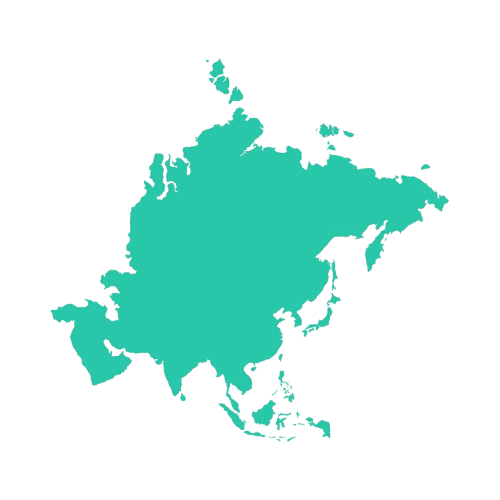
Asia Continent Overview
Introduction to Asia
Asia is the world’s largest continent, covering 44.58 million km² — about 30% of Earth’s land area. It comprises 49 countries across 5 regions and is home to 4.78 billion people, roughly 60% of the global population. Average density sits around 107 people per km², though growth has slowed compared to past decades, according to UN World Population Prospects.
Capital Cities of Asia Continent With Population
| S no. | Afghanistan | Kabul |
|---|---|---|
| 1 | Armenia | Yerevan |
| 2 | Azerbaijan | Baku |
| 3 | Bahrain | Manama |
| 4 | Bangladesh | Dhaka |
| 5 | Benin | Porto-Novo |
| 6 | Bhutan | Thimphu |
| 7 | British Indian Ocean Territory | Diego Garcia |
| 8 | Brunei | Bandar Seri Begawan |
| 9 | Cambodia | Phnom Penh |
| 10 | China | Beijing |
| 11 | Christmas Island | Flying Fish Cove |
| 12 | Cocos (Keeling) Islands | West Island |
| 13 | Cyprus | Nicosia |
| 14 | Georgia | Tbilisi |
| 15 | Guam | Hagåtña |
| 16 | Hong Kong | City of Victoria |
| 17 | India | New Delhi |
| 18 | Indonesia | Jakarta |
| 19 | Iran | Tehran |
| 20 | Iraq | Baghdad |
| 21 | Israel | Jerusalem |
| 22 | Japan | Tokyo |
| 23 | Jordan | Amman |
| 24 | Kazakhstan | Astana |
| 25 | Kuwait | Kuwait City |
| 26 | Kyrgyzstan | Bishkek |
| 27 | Laos | Vientiane |
| 28 | Lebanon | Beirut |
| 29 | Macau | NA |
| 30 | Malaysia | Kuala Lumpur |
| 31 | Maldives | Malé |
| 32 | Mongolia | Ulan Bator |
| 33 | Myanmar | Nay Pyi Taw |
| 34 | Nepal | Kathmandu |
| 35 | North Korea | Pyongyang |
| 36 | Oman | Muscat |
| 37 | Pakistan | Islamabad |
| 38 | Palestine | Ramallah |
| 39 | Philippines | Manila |
| 40 | Qatar | Doha |
| 41 | Russia | Moscow |
| 42 | Saudi Arabia | Riyadh |
| 43 | Singapore | Singapore |
| 44 | South Korea | Seoul |
| 45 | Sri Lanka | Colombo |
| 46 | Syria | Damascus |
| 47 | Taiwan | Taipei |
| 48 | Tajikistan | Dushanbe |
| 49 | Thailand | Bangkok |
| 50 | Timor-Leste | Dili |
| 51 | Turkey | Ankara |
| 52 | Turkmenistan | Ashgabat |
| 53 | United Arab Emirates | Abu Dhabi |
| 54 | Uzbekistan | Tashkent |
| 55 | Vietnam | Hanoi |
| 56 | Yemen | Sanaa |
| Source: | Pitt Libguides | |
what percentage of the world's population lives in Asia - Asia population History

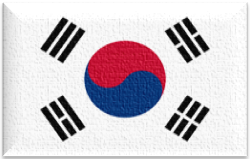


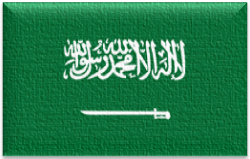
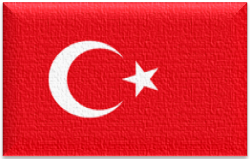
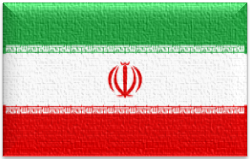
religion Population in Asia

Islam in Asia
Islam 28.0% Islam Symbol Islam in Asia Islam is the largest religion in Asia, representing about 28% of the region’s population, concentrated across West, Central, South, and Southeast Asia.

Hinduism in Asia
22.8% Hinduism Symbol Hinduism in Asia Hinduism accounts for roughly 23% of Asia’s population, overwhelmingly concentrated in India and Nepal, where it remains the majority faith.

Buddhism in Asia
11.1% Buddhism Symbol Buddhism in Asia Buddhism is practiced by about 11% of Asia’s population, with strongholds across East and Southeast Asia, including Thailand, Myanmar, and Sri Lanka.

atheists in Asia
13.9% Unaffiliated Symbol Unaffiliated Population in Asia Religiously unaffiliated people — including atheists, agnostics, and those with no formal religion — account for about 14% of Asia’s population, concentrated heavily in China and Japan.
Most Spoken Languages in Asia
Languages Spoken Across the Continent
Asia is one of the world’s most linguistically diverse continents, with Chinese being the most spoken language at approximately 1.3 billion speakers, followed by Hindi with around 600 million, Bengali with about 280 million, Russian with 160 million, Japanese with 125 million, Punjabi with 120 million, Indonesian with 200 million, Urdu with 230 million, Arabic with 370 million, and Turkish with approximately 90 million speakers.
Mandarin Chinese 941,000,000 native speakers
Hindi 345 Million native speakers
Bengali 237,000,000 native speakers
Japanese 123,000,000 native speakers
Asia: Population, Regions, Religion & Geography Explained ,Asia is a continent shaped as much by geological force as by human history. Stretching nearly 9,000 kilometers from the Arctic coastline of Siberian Russia to the tropical islands of Indonesia, and from the Bosphorus in the west to the Bering Strait in the east, it holds the widest range of terrain, climate, and population density found on any single landmass. Asia is not just the largest continent — it is the birthplace of most of the world’s major religions, the origin point of the earliest known writing systems, and today the center of gravity for global manufacturing, trade, and population growth. While population figures and country lists tell you the “what” of Asia, this guide goes further into the “how” and “why” — how the continent’s landscape formed, how its climate varies so dramatically across latitude and altitude, how its economies rose to global prominence, and how thousands of years of human settlement shaped the cultures that exist there today.
| Metric | Figure |
|---|---|
| Regions | 5 |
| Sovereign Countries | 49 |
| Number of Countries (incl. territories) | 51 |
| Population | 4,782,347,910 |
| Area | ~44.58 million km² |
| Population Density (avg.) | ~107 people/km² |
| Median Age | ~32 years |
How Many Countries Are There in Asia
Asia has 49 UN member states — more sovereign countries than any other continent. Including territories, special administrative regions, and partially-recognized states (Taiwan, Hong Kong, Macau, Palestine), the total reaches 51. The UN Statistics Division’s M49 geoscheme is the standard reference for how this count is drawn. A handful of countries are transcontinental — Russia, Turkey, Kazakhstan, Georgia, and Azerbaijan all straddle the Europe-Asia boundary along the Ural Mountains, Caucasus range, and Bosphorus Strait — which is why continental country counts vary slightly depending on the classification convention used.
Regions of Asia
South Asia — No. of Countries: 9 West Asia — No. of Countries: 18 Southeast Asia — No. of Countries: 11 East Asia — No. of Countries: 6 Central Asia — No. of Countries: 5
1. East Asia
Includes China, Japan, South Korea, North Korea, Mongolia, and Taiwan. Home to some of the world’s largest economies and most densely populated urban centers, East Asia is also the source of Confucian, Buddhist, and Taoist philosophical traditions that continue to shape governance and culture across the region. It is the world’s manufacturing core, with China and South Korea alone accounting for a substantial share of global electronics and shipbuilding output.
2. South Asia
India, Pakistan, Bangladesh, Nepal, Sri Lanka, Bhutan, the Maldives, and Afghanistan — the most densely populated region on the continent, shaped by the Indian subcontinent’s monsoon climate. South Asia is home to more than a fifth of humanity within a landmass smaller than Russia alone, and its monsoon cycle — arriving each June and retreating by October — governs agriculture, water supply, and daily life for well over a billion people.
3. Southeast Asia
Eleven countries across mainland and island Southeast Asia, including Indonesia, the Philippines, Vietnam, and Thailand — known for tropical climates, extraordinary biodiversity, and a mix of Buddhist, Muslim, and Christian-majority nations. The region straddles the Pacific “Ring of Fire,” giving it some of the most volcanically and seismically active terrain on Earth, and its position along historic maritime trade routes made it a crossroads of Indian, Chinese, Arab, and later European influence.
4. Central Asia
The five post-Soviet republics — Kazakhstan, Uzbekistan, Turkmenistan, Kyrgyzstan, and Tajikistan — landlocked, historically tied to the Silk Road, and predominantly Muslim. The region’s economy remains heavily dependent on natural resource extraction, particularly Kazakhstan’s oil and Turkmenistan’s natural gas reserves, and its position between China, Russia, and the Middle East has made it a renewed focus of infrastructure investment in recent years.
5. West Asia (the Middle East)
Turkey, Iran, Iraq, Saudi Arabia, Israel, and the Gulf states — the historical crossroads of Europe, Africa, and Asia, and the birthplace of three major world religions: Judaism, Christianity, and Islam. The region holds a disproportionate share of the world’s proven oil reserves, and its geography ranges from the fertile river valleys of Mesopotamia to some of the driest deserts on Earth across the Arabian Peninsula.
Geographic Regions and Countries
East Asia — China (~1.42 billion), Japan (~124 million), South Korea (~52 million), North Korea (~26 million), Mongolia (~3.4 million), Taiwan (~23 million)
South Asia — India (~1.44 billion), Pakistan (~249 million), Bangladesh (~173 million), Afghanistan (~42 million), Nepal (~30 million), Sri Lanka (~22 million), Bhutan (~780,000), Maldives (~520,000)
Southeast Asia — Indonesia (~286 million), Philippines (~117 million), Vietnam (~102 million), Thailand (~72 million), Myanmar (~55 million), Malaysia (~35 million), Cambodia (~17 million), Laos (~7.7 million), Singapore (~6 million), Timor-Leste (~1.4 million), Brunei (~460,000)
Central Asia — Uzbekistan (~37 million), Kazakhstan (~20 million), Tajikistan (~10.5 million), Kyrgyzstan (~7 million), Turkmenistan (~6.5 million)
West Asia — Iran (~91 million), Turkey (~87 million), Iraq (~46 million), Yemen (~40 million), Saudi Arabia (~37 million), Syria (~23 million), Jordan (~11.5 million), UAE (~10 million), Israel (~9.9 million)
Source: UN World Population Prospects.
Physical Geography and Landforms of Asia
Asia’s terrain is defined by extremes on every axis. The Himalayas, running roughly 2,400 km along the border of India, Nepal, Bhutan, and China, contain all fourteen of the world’s peaks above 8,000 meters, including Mount Everest — the highest point on Earth. To the north, the Siberian Plain and Central Asian steppe stretch across thousands of kilometers of largely flat, sparsely populated terrain, while the Tibetan Plateau, often called the “Roof of the World,” sits at an average elevation above 4,500 meters and feeds the headwaters of most of Asia’s major rivers.
Asia’s river systems have shaped civilization on the continent for millennia. The Yangtze and Yellow River in China, the Ganges and Indus in South Asia, the Mekong flowing through six Southeast Asian countries, and the Tigris and Euphrates in Mesopotamia all supported some of the earliest large-scale agricultural societies in human history. To the southwest, the Arabian Desert and the Gobi Desert in the north represent some of the driest, least hospitable environments on the continent, while Indonesia and the Philippines sit atop the Pacific Ring of Fire, giving them some of the highest concentrations of active volcanoes anywhere on Earth.
Climate Zones of Asia
Because Asia spans nearly the full range of Earth’s latitudes and a vast range of elevations, it contains almost every climate type found on the planet:
- Arctic and subarctic climates across Siberian Russia and northern Mongolia, with winter temperatures regularly falling below -40°C
- Continental climates through Central Asia, Mongolia, and northern China, marked by hot summers and severe winters
- Temperate climates across Japan, the Korean Peninsula, and eastern China
- Monsoon and tropical climates across South and Southeast Asia, where a single wet season can deliver most of a region’s annual rainfall in a few months
- Arid and desert climates across the Arabian Peninsula, Iran, and the Gobi and Taklamakan deserts
- Highland/alpine climates through the Himalayas and Tibetan Plateau, where elevation overrides latitude entirely
This diversity supports correspondingly varied ecosystems — from Siberian taiga, the largest forest biome on Earth, to Bornean and Sumatran rainforest holding some of the highest biodiversity concentrations on the planet, including orangutans, Sumatran tigers, and thousands of endemic plant species found nowhere else.
Major Cities of Asia Beyond the Capitals
Several of Asia’s largest urban centers are not national capitals at all — a distinction that trips up many general knowledge quizzes. Shanghai, China’s largest city and financial hub, holds a metro population above 29 million despite Beijing being the capital. Mumbai, India’s financial and entertainment center, exceeds 21 million residents in its metro area. Karachi, Pakistan’s largest city and former capital, holds over 17 million people despite Islamabad’s status as the current seat of government. Guangzhou and Shenzhen in China’s Pearl River Delta, along with Istanbul — Turkey’s largest city, though Ankara is the capital — round out the list of major non-capital metropolises whose economic weight often exceeds that of their respective national capitals.
Asia Continent Population History
| Year | Population |
|---|---|
| 2026 | 4,782,347,910 |
| 2020 | 4,641,054,775 |
| 2010 | 4,209,725,442 |
| 2000 | 3,741,932,890 |
| 1990 | 3,211,483,762 |
| 1980 | 2,632,847,915 |
| 1970 | 2,142,893,671 |
| 1960 | 1,701,584,203 |
| 1950 | 1,402,371,846 |
Source: UN World Population Prospects, 2024 Revision. Asia’s population has more than tripled since 1950, though growth has slowed markedly in East Asia while remaining relatively strong across South and Southeast Asia. China’s population has already begun to decline, while India’s continues to grow, a divergence expected to reshape the continent’s demographic balance over the coming decades.
Economy of Asia
Asia is home to the world’s second and third-largest economies by nominal GDP — China and Japan — and the fastest-growing major economy, India, alongside some of the highest per-capita income nations on Earth in the Gulf states and Singapore. The continent’s economic geography is sharply uneven: East and West Asia hold concentrated wealth in manufacturing, technology, and energy exports, while parts of South and Central Asia remain among the world’s lowest-income regions. Key economic patterns include:
- China as the world’s manufacturing hub, though shifting toward higher-value technology and services
- India as a rapidly growing services and technology economy, alongside a still-large agricultural base
- Japan and South Korea as advanced, innovation-driven economies specializing in electronics, automotive, and precision manufacturing
- Gulf states (Saudi Arabia, UAE, Qatar, Kuwait) built substantially on oil and gas exports, now diversifying into finance, tourism, and logistics
- Singapore and Hong Kong functioning as major global financial and trade hubs despite small physical size
- Southeast Asian “Tiger Cub” economies (Vietnam, Indonesia, Philippines) attracting significant manufacturing investment as production diversifies away from China
Source: World Bank and International Monetary Fund country-level economic data.
Nation-by-Nation Comparison: Asia Countries Performance by Indicator
Asia’s HDI leader — Singapore
- HDI Score: 0.946
- World Rank: 13
- Continent Rank: 01
- Capital: Singapore
- Location: Asia
- Abbreviation: SGP
Which country in Asia has the highest HDI?
Singapore ranks first in Asia on the Human Development Index (HDI) with a score of 0.946, placing 13th globally. Its capital is Singapore itself — a city-state — reflecting exceptional performance in income, education, and life expectancy, according to UNDP Human Development Reports. Hong Kong scores marginally higher (0.955) but is a Special Administrative Region of China, not a sovereign country, so it’s excluded from country-level rankings. South Korea, Japan, and Israel follow closely behind Singapore among Asia’s highest-ranked nations.
Population in Asia by religion
Islam 28.0% Islam Symbol Islam in Asia Islam is the largest religion in Asia, representing about 28% of the region’s population, concentrated across West, Central, South, and Southeast Asia. Indonesia alone is home to the world’s largest Muslim population of any single country.
Hinduism 22.8% Hinduism Symbol Hinduism in Asia Hinduism accounts for roughly 23% of Asia’s population, overwhelmingly concentrated in India and Nepal, where it remains the majority faith and continues to shape social structure, festivals, and daily life for well over a billion people.
Buddhism 11.1% Buddhism Symbol Buddhism in Asia Buddhism is practiced by about 11% of Asia’s population, with strongholds across East and Southeast Asia, including Thailand, Myanmar, and Sri Lanka, and remains deeply intertwined with cultural identity even in officially secular states like China.
Religiously Unaffiliated 13.9% Unaffiliated Symbol Unaffiliated Population in Asia Religiously unaffiliated people — including atheists, agnostics, and those with no formal religion — account for about 14% of Asia’s population, concentrated heavily in China and Japan, where religious practice is often more cultural and ritual-based than a matter of formal affiliation.
Christianity 8.4% Christianity Symbol Christianity in Asia Christianity represents about 8% of Asia’s population, with significant communities in the Philippines, South Korea, and parts of India and Indonesia. The Philippines is Asia’s only majority-Christian nation.
Source: Pew Research Center — Religion in Asia
Most Spoken Languages in Asia
Languages Spoken Across the Continent
Asia is home to well over 2,000 languages. According to Ethnologue, the ten most widely spoken by native speakers are Mandarin Chinese, Hindi, Bengali, Japanese, Punjabi, Vietnamese, Turkish, Telugu, Marathi, Tamil, Korean, and Urdu.
Mandarin Chinese 941,000,000 native speakers
Hindi 345,000,000 native speakers
Bengali 237,000,000 native speakers
Japanese 123,000,000 native speakers
Punjabi 113,000,000 native speakers (India & Pakistan combined)
Vietnamese 86,000,000 native speakers
Turkish 85,000,000 native speakers
Telugu 83,000,000 native speakers
Marathi 83,000,000 native speakers
Korean 82,000,000 native speakers
Tamil 78,000,000 native speakers
Urdu 70,000,000 native speakers
Highlights:
- Mandarin Chinese — 941,000,000 speakers
- Hindi — 345,000,000 speakers
- Bengali — 237,000,000 speakers
- Japanese — 123,000,000 speakers
- Punjabi — 113,000,000 speakers
- Vietnamese — 86,000,000 speakers
- Turkish — 85,000,000 speakers
- Telugu — 83,000,000 speakers
- Marathi — 83,000,000 speakers
- Korean — 82,000,000 speakers
- Tamil — 78,000,000 speakers
- Urdu — 70,000,000 speakers
English and Arabic serve as major second-language and administrative lingua francas across South Asia, the Gulf states, and former colonial territories, despite not leading the native-speaker count. India alone recognizes 22 official languages at the national level, a scale of official multilingualism unmatched by any other Asian country.
Asia’s Oldest Historical Civilizations
Asia is home to the two oldest continuous civilizations on record, both still reflected in the borders and cultures of modern countries:
1. Mesopotamia (modern-day Iraq) Widely regarded as the “Cradle of Civilization,” Mesopotamia’s Sumerian city-states emerged in the Tigris-Euphrates river valley roughly 6,000 years ago, producing the world’s earliest known writing system (cuneiform), codified law (the Code of Hammurabi), and the first known urban governments. Cities such as Uruk and Ur were, by some estimates, the largest human settlements on Earth at their peak.
2. Ancient China (Yellow River Civilization) China’s continuous civilizational record stretches back over 4,000 years to the Xia and Shang dynasties along the Yellow River, making it one of the longest unbroken cultural and political traditions on Earth, still directly connected to the modern nation today. The Chinese writing system, in continuous use for more than three millennia, remains one of the oldest writing systems still actively used anywhere in the world.
Beyond these two, Asia’s other ancient centers of civilization include the Indus Valley Civilization (modern Pakistan and northwest India, c. 3300 BCE), one of the world’s earliest urban societies with sophisticated water and sanitation systems, and Persia (modern Iran), whose Achaemenid Empire around 550 BCE became the largest empire the ancient world had yet seen.
Wildlife and Biodiversity
Asia’s ecological range mirrors its climatic diversity. The Siberian taiga is the largest continuous forest on Earth, home to the Siberian tiger — the largest cat species alive. The Indian subcontinent holds the Bengal tiger, Asian elephant, and one-horned rhinoceros, many concentrated in protected reserves across India and Nepal. Southeast Asia’s rainforests — among the oldest on the planet, older even than the Amazon in some regions — shelter orangutans, found only on the islands of Borneo and Sumatra, alongside Sumatran tigers and thousands of endemic plant and insect species found nowhere else on Earth. The Tibetan Plateau supports high-altitude specialists like the snow leopard, while the deserts of Central Asia and Mongolia are home to the last truly wild horse population, the Przewalski’s horse.
Quick Facts Summary
| Category | Details |
|---|---|
| Continent Rank (by size) | 1st largest |
| Continent Rank (by population) | 1st most populous |
| Approximate Area | ~44.58 million km² |
| Approximate Population | 4,782,347,910 |
| Major Regions | East Asia, South Asia, Southeast Asia, Central Asia, West Asia |
| Sovereign Countries | 49 (51 including territories) |
| Dominant Religion | Islam and Hinduism (largest shares); highest overall diversity |
| Most Spoken Language | Mandarin Chinese, followed by Hindi |
| Highest HDI | Singapore (0.946) |
| Bordering Oceans | Arctic, Pacific, Indian |
| Highest Point | Mount Everest, Nepal/China (8,849 m / 29,032 ft) |
| Longest River | Yangtze River, China (~6,300 km) |
| Largest Country by Area | Russia (Asian portion) / China (largest fully-Asian country) |
| Largest Metro Area | Tokyo, Japan (~37 million) |
| Largest Economy | China (nominal GDP), followed by Japan and India |
| Oldest Civilizations | Mesopotamia (Iraq) and Ancient China (Yellow River) |
| Number of Living Languages | Over 2,000 |
| Number of Official Languages in India Alone | 22 |
Conclusion
Asia’s blend of extreme geography, the largest population of any continent, deep religious and linguistic diversity, and a rapidly shifting economic landscape make it the most consequential continent to understand — for trade, geopolitics, and culture alike. From the Siberian tundra to the Indonesian archipelago, and from the world’s oldest continuous civilizations to some of its newest global financial centers, Asia’s story is one of contrast: ancient tradition sitting directly alongside some of the fastest-changing economies and cities on the planet.
Frequently Asked Questions (FAQs)
1. What countries are part of Asia? Asia includes 49 UN member states, from China, India, and Japan in the east to Turkey, Israel, and Saudi Arabia in the west, along with Central Asian republics like Kazakhstan and Uzbekistan.
2. What is the population of Asia? Asia has a population of roughly 4.78 billion people, making it the most populous continent, accounting for about 60% of the world’s total population.
3. What is the main religion in Asia? Islam (~28%) and Hinduism (~23%) hold the largest shares, but Asia is the most religiously diverse continent overall, also home to large Buddhist, Christian, and unaffiliated populations.
4. What languages are spoken in Asia? Mandarin Chinese has the most native speakers, followed by Hindi and Bengali, with English and Arabic widely used as second languages across the continent.
5. How many regions does Asia have? Asia is generally divided into five regions: East Asia, South Asia, Southeast Asia, Central Asia, and West Asia.
6. What is the largest country in Asia by area? Russia, though roughly 75% of its territory lies in Asia; China is the largest fully-Asian country by area.
7. What is the largest country in Asia by population? India, which overtook China as the world’s most populous country in 2023.
8. Which country in Asia has the highest HDI? Singapore, with a score of 0.946 — 13th globally.
9. What are Asia’s oldest civilizations? Mesopotamia (modern-day Iraq) and Ancient China’s Yellow River civilization are widely regarded as Asia’s — and among the world’s — oldest continuous civilizations.
10. What is Asia’s largest economy? China, the world’s second-largest economy by nominal GDP, followed by Japan and a rapidly growing India.
11. What is the largest rainforest in Asia? The rainforests of Borneo and Sumatra in Southeast Asia, among the oldest continuous rainforest ecosystems on Earth.
12. Which Asian country is the only Christian-majority nation? The Philippines, where roughly 90% of the population identifies as Christian, mostly Roman Catholic.
Sources
- UN World Population Prospects — Asia Population
- UN Statistics Division, M49 Geoscheme — Asian Regions and Countries
- Pew Research Center — Religious Composition by Country
- Ethnologue — The Most Spoken Languages in Asia
- UNDP Human Development Reports — HDI Rankings
- UN World Urbanization Prospects — Capital and City Population Data
- World Bank Open Data — Economic Indicators
- International Monetary Fund — GDP and Economic Data