
Ilkhanate Dynasty Origin: Which Sovereign Region And Territory It Emerged From
The dynasty was founded by Hulagu Khan, a grandson of Genghis Khan, following his campaigns across Southwestern Asia. Its political core developed across northern Iran and Azerbaijan, with imperial capitals established successively at Maragheh, Tabriz, and Sultaniyya, controlling critical trans-Eurasian trade routes and urban centers.
Ilkhanate Standard: Historical Insignia And Modern National Flags
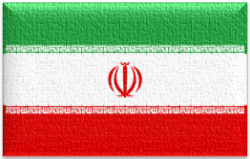

The Top Modern Countries That Were Part Of The Ilkhanate
01
Iran comprised 1,648,195 km² under full Ilkhanid rule, serving as the central political, administrative, and cultural heartland.
Iran
02
Iraq included 438,317 km² under complete control, housing the historic administrative center of Baghdad along the Tigris.
Iraq
03
Turkey contained 350,000 km² under control, encompassing key eastern and central Anatolian trade cities.
Turkey
04
Afghanistan encompassed 300,000 km² under control, securing crucial eastern frontier trade corridors.
Afghanistan
05
Azerbaijan covered 86,600 km² under full rule, functioning as the early capital zone around Maragheh and Tabriz.
Azerbaijan
The Territorial Reach Of The Ilkhanate In Modern Terms
At its peak, the khanate extended from the Oxus River and Afghan frontiers in the east across the Iranian plateau to central Anatolia in the west, and from the Caucasus Mountains in the north down to the Persian Gulf.
From Khans To Sovereignty: Tracking The Ilkhanate's Peak And Last Century
Islamic Golden Age Phase (1295–1316): ~3,750,000 km² under Ghazan (who declared Islam the official state religion) and Öljaitü, featuring major administrative reforms, patronization of arts and sciences, and the construction of Sultaniyya.
Geographic Distribution and Regional Administration
Ilkhanate Islamic Phase Conversion to Islam And Achievements
Ilkhanate Islamic Phase Relations with Neighboring Empires
Introduction
The Ilkhanate was a Mongol-ruled empire that governed much of Persia, Azerbaijan, Iraq, and surrounding territories from the mid-13th century until the collapse of its central government in the 1330s. Founded by Hülegü Khan, a grandson of Genghis Khan, it began as a non-Muslim Mongol state ruling over a population in which Muslims formed a large and influential part of society.
The Ilkhanate’s relationship with Islam changed dramatically during the late 13th century. Ghazan Khan (1295–1304) embraced Islam in 1295 and adopted the Muslim name Mahmud. His conversion marked a decisive turning point in the state’s religious identity. Islam became the principal foundation of royal legitimacy, Muslim institutions received greater patronage, and Persian administrative and cultural traditions became increasingly important.
The transformation was not entirely peaceful or immediate. An earlier ruler, Ahmad Tegüder (1282–1284), had already converted to Islam, but his reign was short-lived. Ghazan’s conversion had a much more lasting impact. His successors continued the Islamic direction of the state, although Öljeitü (1304–1317) later adopted Twelver Shi’a Islam after initially being associated with Sunni Islam. <Cite refs={[“turn172525search0″,”turn172525search2″,”turn172525search5”]} />
The Islamic Ilkhanate made important contributions to architecture, historical writing, astronomy, administration, and Persianate culture. It also carried forward the legacy of Mongol conquest, including earlier mass killings, destruction, forced displacement, and heavy economic disruption. Understanding the Ilkhanate therefore requires examining both its achievements and its harmful actions, as well as its complicated relations with neighboring powers.
1. At a Glance: The Ilkhanate
| Detail | Information |
|---|---|
| Name | Ilkhanate, also written as Il-Khanate |
| Dynasty | Hülegüid dynasty |
| Founder | Hülegü Khan |
| Political period | Approximately 1256–1335 |
| Main territories | Persia, Azerbaijan, Iraq, and parts of the Caucasus and Anatolia at different times |
| Major political centers | Maragha, Tabriz, and later Soltaniyeh |
| First Muslim Ilkhan | Ahmad Tegüder, 1282–1284 |
| Decisive conversion | Ghazan Khan, 1295 |
| Muslim name of Ghazan | Mahmud |
| Important adviser in Ghazan’s conversion | Amir Nawruz |
| Major later ruler | Öljeitü, 1304–1317 |
| Dominant religion after Ghazan | Islam, with continuing differences among religious communities |
| Important cultural language | Persian, alongside Mongolian, Arabic, and Turkic languages in different settings |
| Main rival | Mamluk Sultanate of Egypt and Syria |
| End of central rule | 1335, following the death of Abu Sa’id Khan and subsequent fragmentation |
2. Origins of the Ilkhanate
2.1 Mongol expansion into Persia and Iraq
The Mongol invasion of the Islamic world began before the Ilkhanate formally emerged. During the early 13th century, Mongol armies invaded territories ruled by the Khwarazmian Empire and other Muslim powers. These campaigns caused widespread destruction and major demographic and economic changes.
Hülegü Khan, a grandson of Genghis Khan, led a major westward campaign in the 1250s. He defeated the Nizari Ismaili strongholds in Persia and advanced into Iraq. In 1258, his forces captured Baghdad, ending the Abbasid caliphate’s political rule in the city. The conquest caused catastrophic loss of life and damage to one of the Islamic world’s most important centers of learning and government.
Hülegü subsequently established a Mongol state in western Asia. His descendants became known as the Ilkhans, and their state became the Ilkhanate. Although Mongol rulers retained political and military authority, they relied increasingly on Persian officials, local administrators, tax specialists, and scholars to govern a large and complex population. <Cite refs={[“turn172525search0″,”turn172525search4″,”turn172525search6”]} />
2.2 Why was it called the Ilkhanate?
The name derives from the Mongol title Ilkhan, commonly interpreted as a subordinate or regional khan within the broader Mongol imperial order. The Ilkhans initially maintained connections with the Great Khans and the Yuan rulers in eastern Asia, although the practical relationship changed over time.
The Ilkhanate was therefore both a Mongol successor state and a government increasingly shaped by the Persian and Islamic societies it ruled.
3. Religion Before the Ilkhanate’s Conversion
The early Ilkhans did not follow one consistent religious policy or tradition. Mongol rulers and their courts encountered Buddhism, Christianity, Islam, and older Mongol religious practices. Members of the wider Mongol ruling family could patronize more than one religious community.
The Mongol tradition associated with the Eternal Sky and ancestral customs remained important to many elites. Buddhism also had influence among some Mongol rulers, while Christians and Muslims maintained communities, institutions, and links to international networks.
Muslims were already numerous and influential in the Ilkhanate’s territories before Ghazan’s conversion. Persian officials, Muslim soldiers, merchants, scholars, and religious leaders played important roles in everyday government and society. The conversion of the ruler thus occurred in a setting where Islam was already deeply established among much of the population.
Scholars debate how much of the Mongol elite had converted before Ghazan’s accession. Some accounts emphasize the mass conversion that followed his decision, while other evidence suggests that Islam was already spreading among Mongol soldiers and officials. The safest conclusion is that Ghazan accelerated a process that had begun earlier. <Cite refs={[“turn172525search3″,”turn172525search5″,”turn172525search23”]} />
4. Ahmad Tegüder: The First Muslim Ilkhan
Ahmad Tegüder, who ruled from 1282 to 1284, was the first Ilkhan to adopt Islam. He took the Muslim name Ahmad and attempted to improve relations with Muslim powers, including the Mamluk Sultanate.
His conversion was historically significant, but it did not permanently establish Islam as the state’s dominant ruling ideology. Tegüder faced opposition from Mongol nobles who supported his rival Arghun. He was defeated and executed in 1284, and Arghun succeeded him.
Tegüder’s short reign demonstrates that an individual ruler’s conversion did not automatically settle religious and political disputes within the Mongol elite. The lasting transformation of the Ilkhanate required a ruler who could secure the throne, build a durable political coalition, and make Islam central to government. Ghazan would accomplish this more successfully. <Cite refs={[“turn172525search0″,”turn172525search5”]} />
5. Ghazan Khan: The Decisive Conversion to Islam
5.1 Who was Ghazan Khan?
Ghazan Khan ruled the Ilkhanate from 1295 to 1304. He was a descendant of Hülegü and inherited a state divided by dynastic rivalry, competing Mongol nobles, and the challenge of governing a predominantly Muslim population.
Before becoming Muslim, Ghazan had been associated with Buddhism. His conversion took place amid a struggle for the throne against Baydu, another claimant to Ilkhanid authority.
On 17 June 1295, Ghazan embraced Islam and adopted the name Mahmud. The conversion helped him secure support from Muslim officials and military leaders and became a defining moment in the political history of the Ilkhanate. <Cite refs={[“turn172525search2″,”turn172525search3”]} />
5.2 Who guided Ghazan Khan toward Islam?
One of the most important figures in Ghazan’s conversion was Amir Nawruz, a powerful Mongol commander and political adviser who had already embraced Islam.
Nawruz encouraged Ghazan to accept Islam and helped him build support among Muslim officers. His role was both religious and political: he provided guidance within a court where many influential figures were Muslim and where religious identity could strengthen a ruler’s legitimacy.
However, Ghazan’s conversion should not be explained as the work of Nawruz alone. Muslim communities and soldiers were already influential, and Ghazan was facing a struggle for power. His decision combined personal religious commitment, political strategy, and the need to govern a largely Muslim society. Historians differ over the relative importance of these motives. <Cite refs={[“turn172525search2″,”turn172525search3″,”turn172525search20”]} />
5.3 Where did Ghazan convert?
The conversion is dated to 2 Sha’ban 694 AH, corresponding to 17 June 1295. Historical accounts place the event during the campaign against Baydu, but they do not provide a single universally accepted modern location for the ceremony. It is therefore more accurate to give the date and political context than to claim a specific city without qualification.
5.4 Why did Ghazan accept Islam?
Several factors help explain the conversion:
Personal religious influence: Muslim advisers and religious leaders encouraged Ghazan to adopt Islam.
Support among the military: Many of the soldiers and commanders whose support mattered to Ghazan were already Muslim.
Political legitimacy: Islam helped Ghazan present himself as a legitimate ruler of the Muslim-majority lands under his control.
Social integration: Adopting the religion of much of the population strengthened the relationship between the Mongol court and established Muslim institutions.
State-building: Islam provided a framework for royal patronage, public religious institutions, and the presentation of political authority.
These factors do not prove that Ghazan’s faith was insincere. They show that religious belief and political interests could operate together. His conversion became the foundation for a broader transformation of the state. <Cite refs={[“turn172525search2″,”turn172525search3″,”turn172525search8”]} />
6. How Did Ghazan Make the Ilkhanate an Islamic State?
Ghazan’s conversion was followed by significant changes in government and religious policy.
6.1 Support for Islamic institutions
Ghazan promoted mosques, religious institutions, and Islamic public practices. Muslim scholars and officials gained greater standing in the political system, while Islamic symbols and titles became more important in royal legitimacy.
6.2 Administrative reforms
Ghazan’s government introduced reforms intended to regulate taxation, land revenue, and the conduct of officials. The reforms sought to reduce abuses and improve the predictability of state revenue, although their effects varied and they did not eliminate corruption or coercion.
Persian administrative traditions became increasingly important. Mongol military and political practices nevertheless remained part of the system, so the state was not transformed into a wholly new government overnight.
6.3 Religious pressure and intolerance
Ghazan’s conversion also had a coercive dimension. Some accounts describe pressure on non-Muslim communities and the destruction or closure of certain religious establishments, particularly Buddhist institutions. The extent and local implementation of these policies varied.
It would be misleading to portray the conversion as an entirely peaceful transition. While Ghazan promoted Islam and strengthened the position of Muslim communities, his government could also impose religious pressure on people who did not share the ruler’s faith. <Cite refs={[“turn172525search2″,”turn172525search10″,”turn172525search20”]} />
7. Achievements of the Islamic Ilkhanate
7.1 Administrative and fiscal reform
Ghazan attempted to strengthen government by regulating taxation, clarifying responsibilities, and addressing abuses by officials. His reforms became an important part of the Ilkhanate’s administrative legacy.
These measures did not produce a perfectly fair or stable system, but they demonstrate an effort to manage a large empire through more regular procedures rather than relying entirely on the demands of individual commanders.
7.2 Persian literature and historical writing
The Ilkhanid court patronized scholars and administrators who helped develop Persian historical writing. One of the most important was Rashid al-Din Hamadani, a physician, statesman, and historian who served under Ghazan and later rulers.
Rashid al-Din’s Jamiʿ al-Tawarikh (Compendium of Chronicles) became a major work of world history. It brought together information about the Mongols, Persian rulers, and other peoples, reflecting the Ilkhanate’s connections with a wide geographical and cultural world.
The work remains an important source for the history of the Mongol Empire, although historians assess its political context and the purposes it served at court. <Cite refs={[“turn172525search0″,”turn172525search4”]} />
7.3 Architecture and urban development
Ilkhanid rulers invested in major building projects. Öljeitü established and developed Soltaniyeh as an important royal center and constructed an imposing mausoleum there. Its monumental architecture is among the most celebrated surviving achievements of the Ilkhanid period.
Royal patronage supported mosques, religious complexes, and other urban projects. These buildings reflected a combination of Mongol political authority, Persian architectural traditions, and Islamic artistic forms.
7.4 Science and intellectual life
The Ilkhanate inherited a strong tradition of scholarship. Under Hülegü, the astronomer and polymath Nasir al-Din al-Tusi was associated with the Maragha Observatory, an important center of astronomical research.
The observatory was established before Ghazan’s conversion, so it should be understood as an achievement of the wider Ilkhanid era rather than a direct result of the Islamic phase. Nevertheless, it illustrates the dynasty’s capacity to support scientific work across religious and cultural boundaries.
7.5 Integration of Mongol and Persian traditions
The Ilkhanate did not simply discard its Mongol identity after adopting Islam. Its rulers retained dynastic traditions and military practices while increasingly relying on Persian administrative culture and Islamic symbols of authority.
This combination influenced later Persianate courts and helped shape the political culture of western and central Asia. The Ilkhanate’s legacy was therefore one of adaptation: Mongol rulers became integrated into the societies they governed while retaining parts of their original political heritage. <Cite refs={[“turn172525search4″,”turn172525search6″,”turn172525search9”]} />
8. The Harmful and Controversial Actions of the Ilkhanate
A balanced history must recognize that the Ilkhanate’s cultural achievements followed a period of devastating conquest and that its rulers continued to use coercion.
8.1 The destruction of Baghdad in 1258
Hülegü’s capture of Baghdad was one of the most consequential events in medieval Islamic history. The Abbasid caliphate’s political rule in the city ended, and the conquest caused severe destruction and loss of life. Baghdad’s institutions, neighborhoods, and cultural resources suffered greatly.
This event occurred before the Ilkhanate’s decisive conversion to Islam. It should not be attributed to Ghazan or presented as a policy of the later Islamic phase. However, it formed part of the dynasty’s historical legacy and helps explain why the Mongol conquest remained deeply painful in Muslim memory.
8.2 Mass violence and destruction during conquest
Mongol campaigns across Persia, Iraq, and neighboring regions caused deaths, displacement, destruction of settlements, and disruption of irrigation and agriculture. The scale of damage varied by place and campaign, but the human cost was substantial.
The later conversion of Mongol rulers to Islam did not erase these consequences. It also did not mean that the state ceased using military violence against its enemies.
8.3 Religious coercion
Ghazan’s promotion of Islam could involve pressure against Buddhist and other non-Muslim communities. Religious conversion and state-building were therefore not always voluntary or tolerant processes.
At the same time, the Ilkhanate’s earlier history included patronage of different religious groups, and policies changed between rulers and regions. The state should not be described as uniformly tolerant before Ghazan or uniformly intolerant afterward.
8.4 Warfare with the Mamluks
The Ilkhanate repeatedly fought the Mamluk Sultanate over Syria and the eastern Mediterranean approaches. These wars caused destruction and instability in border regions. Ghazan’s Muslim identity did not end the conflict; instead, both sides used Islamic language to justify their positions.
8.5 Court rivalries and executions
The Ilkhanid court was marked by competition among princes, commanders, and ministers. Political struggles resulted in purges and executions, including the execution of Amir Nawruz in 1297 after Ghazan suspected him of disloyalty and possible contact with the Mamluks.
The elimination of potential rivals could strengthen a ruler in the short term but also weakened the dynasty over generations by reducing the number of experienced and legitimate successors. <Cite refs={[“turn172525search0″,”turn172525search2″,”turn172525search10”]} />
9. Öljeitü: From Sunni Islam to Twelver Shi’a Islam
Öljeitü, who ruled from 1304 to 1317, continued the Ilkhanate’s Islamic transformation but introduced an important religious change of his own.
He initially followed Sunni Islam, but in the later part of his reign he adopted Twelver Shi’a Islam. This decision was influenced by religious debate and the court’s interaction with Shi’a scholars. Öljeitü supported Shi’a positions and attempted to promote them among his subjects.
His change of religious allegiance did not mean that the entire population of the Ilkhanate became Shi’a. Sunni Muslims remained numerous, and efforts to enforce a preferred religious position encountered resistance in some places. Reports that Öljeitü returned to Sunnism near the end of his life exist, but the evidence is debated.
Öljeitü’s reign illustrates an important distinction: the Ilkhanate’s adoption of Islam under Ghazan did not settle every theological question. Islam included different traditions, and royal preferences could change the relationship between the court and its subjects. <Cite refs={[“turn172525search0″,”turn172525search10”]} />
10. Relations With Neighboring Empires and States
The Ilkhanate’s foreign relations were shaped by territory, trade, dynastic rivalry, and religion. It fought major wars against the Mamluks, competed with the Golden Horde, maintained ties with the Yuan Empire, and interacted with the Chagatai Khanate and regional powers in the Caucasus and Anatolia.
10.1 The Mamluk Sultanate of Egypt and Syria
The Mamluk Sultanate was the Ilkhanate’s principal non-Mongol rival. It controlled Egypt and Syria and defended the region against Mongol expansion.
The Mamluks defeated a Mongol army at the Battle of Ain Jalut in 1260, before the Ilkhanate’s conversion to Islam. This defeat prevented the Mongols from establishing lasting control over Egypt and helped preserve Mamluk power in Syria and the eastern Mediterranean.
After Ghazan became Muslim, the conflict continued. Ghazan invaded Syria in 1299 and won a major battle near Homs, then occupied Damascus for a limited period. His subsequent campaigns failed to secure lasting control of Syria, and the Mamluks defeated an Ilkhanid army at Marj al-Saffar in 1303.
The rivalry is historically significant because both sides were Muslim during Ghazan’s reign, yet they continued to fight over territory and political supremacy. Shared religion did not automatically overcome strategic competition. Eventually, diplomatic efforts under Abu Sa’id helped bring the long conflict to an end through a peace agreement in the 1320s. <Cite refs={[“turn172525search0″,”turn172525search2″,”turn172525search3”]} />
10.2 The Golden Horde
The Golden Horde controlled much of the western Eurasian steppe and was a major rival of the Ilkhanate. Its rulers competed with the Ilkhans over the Caucasus, Azerbaijan, trade routes, and the wider political legacy of the Mongol Empire.
Berke Khan, the Muslim ruler of the Golden Horde, opposed Hülegü after the destruction of Baghdad and the killing of the Abbasid caliph. Their conflict combined political rivalry with religious disagreement, although territorial and dynastic interests were also central.
Relations remained tense in later generations. Ghazan faced pressure from the Golden Horde, and Abu Sa’id died in 1335 while preparing to respond to reports of a threat from that direction.
The Golden Horde’s Islamization did not create unity between the two Mongol successor states. Their competing interests continued to produce hostility despite their rulers’ shared Muslim identity. <Cite refs={[“turn172525search0″,”turn172525search5″,”turn172525search6”]} />
10.3 The Chagatai Khanate
The Chagatai Khanate controlled parts of Central Asia and was another branch of the Mongol imperial inheritance. Its relations with the Ilkhanate involved territorial competition, border warfare, and struggles over influence in regions connecting Iran with Central Asia.
The two states’ religious histories developed on different timelines. The Ilkhanate’s decisive conversion came under Ghazan in 1295, while Islamization in the Chagatai realm advanced unevenly and became more prominent under later rulers.
The comparison shows that the Mongol successor states did not adopt Islam simultaneously. Each had its own political circumstances and relationships with Muslim populations, scholars, and regional elites. <Cite refs={[“turn172525search1″,”turn172525search23”]} />
10.4 The Yuan Empire and the Great Khans
The Ilkhans descended from Hülegü, whose family belonged to the larger Mongol imperial dynasty. The Yuan rulers in China, founded by Kublai Khan, represented another major branch of that dynasty.
The Ilkhanate maintained connections with the Yuan court, including diplomatic and commercial exchanges. These links helped preserve the idea of a wider Mongol political world even as the successor states increasingly governed themselves.
Ghazan’s conversion to Islam did not end all relations with the Yuan. Instead, the Ilkhanate combined Islamic political legitimacy with parts of its Mongol dynastic inheritance.
10.5 The Kingdoms of Armenia and Georgia
The Ilkhanate exercised influence over Armenia and Georgia, whose rulers and populations included Christian communities. At different times, local rulers became tributaries, allies, or military partners of the Mongols.
Caucasian forces could be drawn into Ilkhanid campaigns, including wars against the Mamluks. Relations varied according to local politics and military circumstances; they cannot be reduced to a simple conflict between Muslims and Christians.
The Ilkhanate’s conversion did, however, change the religious environment of the court. The balance between Muslim institutions and Christian communities depended on the policies of individual rulers and regional circumstances.
10.6 The Sultanate of Rum and Anatolian powers
The Ilkhanate extended its influence into Anatolia, where the Seljuk Sultanate of Rum became increasingly dependent on Mongol power after its defeat at Köse Dağ in 1243. Local rulers and officials operated under changing levels of Mongol supervision.
Anatolia remained politically fragmented, and the Ilkhans did not administer every area directly. Their influence nevertheless shaped the region’s political development during the 13th and early 14th centuries.
10.7 The Delhi Sultanate
The Delhi Sultanate, based in northern India, was another important Muslim power in the wider region. The Mongol world and the Delhi Sultanate had a history of conflict and diplomacy, particularly along the northwestern approaches to India.
However, the Ilkhanate did not share a direct, continuous border with the Delhi Sultanate throughout its existence. Their relationship is best understood within the broader history of Mongol expansion, Central Asian politics, and competing regional interests rather than as one of the Ilkhanate’s central bilateral rivalries.
11. Why Did the Ilkhanate Eventually Collapse?
The Ilkhanate did not fall because of one single defeat. Its decline resulted from dynastic problems, elite rivalries, political fragmentation, and the weakening of central authority.
11.1 The death of Abu Sa’id
Abu Sa’id Khan, who ruled from 1316 to 1335, was the last effective ruler of the unified Ilkhanate. He died in 1335 without a surviving male heir capable of maintaining the dynasty’s authority.
11.2 Competition among commanders
Powerful Mongol nobles and regional leaders backed rival claimants. The central government lost the ability to coordinate the empire’s military and administrative institutions.
11.3 Fragmentation of the territory
After 1335, the Ilkhanate broke into rival successor regimes. The Jalayirids, Chobanids, and other regional powers controlled different areas, and no ruler restored the former empire in its entirety.
11.4 The lasting legacy
Although the unified Ilkhanate disappeared, its Persianate administrative practices, artistic traditions, and historical scholarship influenced later states. Its rulers had become deeply connected with the Muslim societies of western Asia, and the state’s conversion helped shape the region’s political and religious history. <Cite refs={[“turn172525search0″,”turn172525search4″,”turn172525search6”]} />
12. Timeline of the Ilkhanate and Its Islamic Phase
| Year | Event |
|---|---|
| 1256 | Hülegü’s campaigns established the foundations of the Ilkhanate. |
| 1258 | Baghdad was captured by Mongol forces; Abbasid political rule in the city ended. |
| 1260 | Mamluk forces defeated the Mongols at Ain Jalut. |
| 1282–1284 | Ahmad Tegüder ruled as the first Muslim Ilkhan. |
| 1284 | Arghun defeated Tegüder and became ruler. |
| 1295 | Ghazan embraced Islam, took the name Mahmud, and secured the throne. |
| 1299 | Ghazan’s forces defeated the Mamluks near Homs and briefly occupied Damascus. |
| 1303 | Mamluk forces defeated the Ilkhanid army at Marj al-Saffar. |
| 1304–1317 | Öljeitü ruled, developed Soltaniyeh, and later adopted Twelver Shi’a Islam. |
| 1320s | Diplomatic negotiations led to peace with the Mamluks. |
| 1335 | Abu Sa’id died, and the unified Ilkhanate entered a period of fragmentation. |
13. Historical Assessment: The Good and the Bad
The Ilkhanate’s history cannot be judged only by its conversion to Islam or its cultural achievements. Its legacy combines conquest and destruction with political adaptation, scholarship, and architectural innovation.
Major contributions
- Ghazan’s conversion helped integrate the Mongol ruling elite with the Muslim-majority society it governed.
- Persian administration and historical writing flourished under Ilkhanid patronage.
- Rashid al-Din’s historical scholarship preserved valuable information about the Mongols and other peoples.
- Monumental architecture, including Öljeitü’s mausoleum at Soltaniyeh, became part of Iran’s lasting cultural heritage.
- Scientific institutions such as the Maragha Observatory demonstrate the dynasty’s earlier patronage of intellectual life.
- The Ilkhanate helped establish a political culture that combined Mongol, Persian, and Islamic traditions.
Major harms and controversies
- Mongol conquest brought mass killing, destruction, displacement, and economic disruption.
- The capture of Baghdad in 1258 devastated a major center of Islamic political and intellectual life.
- Ghazan’s religious policies placed pressure on some non-Muslim communities.
- Dynastic wars and court purges caused instability and weakened the ruling house.
- The prolonged conflict with the Mamluks brought repeated warfare to Syria and its borderlands.
The Islamic phase was a major turning point, but it did not erase the violence of the earlier conquest or remove the political ambitions that drove the Ilkhans’ wars. Their most enduring achievement was the gradual integration of Mongol political traditions into the Persian and Islamic world they ruled.
Conclusion
- The Ilkhanate’s conversion to Islam was a gradual process with a decisive moment in 1295, when Ghazan Khan embraced the faith under the influence of advisers such as Amir Nawruz. Ahmad Tegüder had converted earlier, but Ghazan made Islam central to the state’s political identity and encouraged the wider Islamization of the Mongol elite.
- The Islamic Ilkhanate contributed to Persian literature, historical scholarship, administration, and architecture. At the same time, its history included conquest, religious pressure, political purges, and prolonged wars with neighboring powers. Its relations with the Mamluks and the Golden Horde show that religious similarity did not necessarily end political rivalry.
- After Abu Sa’id’s death in 1335, the empire fragmented, but its cultural and political legacy continued. The Ilkhanate remains an important example of how a Mongol dynasty became integrated into the Muslim world while retaining elements of its own imperial heritage.
Sources:
1. Encyclopaedia Britannica — Il-Khanid Dynasty
Il-Khanid Dynasty — Overview of the dynasty, its rulers, and its decline.
2. Encyclopaedia Iranica — Ḡāzān Khan, Maḥmūd
Ghazan Khan and His Conversion to Islam — Details of Ghazan Khan’s conversion, religious policies, and patronage of Islamic institutions.
3. Reuven Amitai-Preiss — Ghazan, Islam and Mongol Tradition: A View from the Mamlūk Sultanate
Ghazan, Islam and Mongol Tradition — Academic study of Ghazan Khan’s conversion and its historical significance.
4. Oxford Academic — Power, Politics, and Tradition in the Mongol Empire and the Ilkhanate of Iran, by Michael Hope
The Patrimonialist Revival and the Fight for Political Primacy (1284–1304) — Examines political authority and the relationship between Mongol traditions and Islamic governance.
5. Mustafa Uyar — The Role of Turkish Sufis in the Conversion of Ilkhanid Rulers to Islam: During the Reigns of Ilkhan Tegüder and Ghazan Khan
Turkish Sufis and the Conversion of Ilkhanid Rulers — Scholarly research into the role of Sufi figures in the Islamization of Ilkhanid rulers.
6. Hanifi Şahin — The Conversion of Ghazan Khan to Islam and Its Reflections on Ilkhanid Society According to Jāmiʿ al-Tawārīkh
The Conversion of Ghazan Khan to Islam — Research on Ghazan Khan’s conversion and its effects on Ilkhanid society and institutions.
7. Encyclopaedia Iranica — Mongols
Mongols — Background on Mongol religious policies and the gradual conversion of the Ilkhanid ruling elite to Islam.
8. Fırat Umanç — Ilkhanid Ruler Sultan Öljeitü’s Conversion to Islam: Is It His Own Choice? His Wife’s Suggestion? Influence of His Elder Brother Ghazan?
Öljeitü’s Conversion to Islam — Examines Öljeitü’s religious development, including his later adoption of Twelver Shiʿism.