
ottoman empire country of origin
modern day and historical flags Of ottoman empire
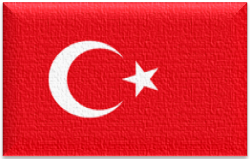
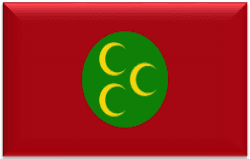
top 5 most powerful sultan of ottoman empire
01
Sultan Osman - The Founding Father
Reigned 1299–1323/4
02
Sultan Mehmed II - The Clever Conqueror
Reigned 1444-1446 & 1451-1481
03
Sultan Bayezid II - The Pragmatic Padishah
Reigned 1481-1512
04
Sultan Suleiman I - The Splendid Sultan
Reigned 1520-1566
04
Sultan Abdul Hamid I - The Saintly Sultan
Reigned 1774-1789
Modern Nations Overlapping with the Peak Territory of the Ottoman Empire
longest reigning sultans in the history of the Ottoman Empire
| Rank | Sultan | Reign Period | Duration Years | Notes |
|---|---|---|---|---|
| 1 | Süleyman I | 1520–1566 | 46 | Longest reigning Sultan |
| 2 | Mehmed IV | 1648–1687 | 39 | |
| 3 | Orhan | 1324–1360 | 36 | |
| 4 | Abdülhamid II | 1876–1909 | 33 | |
| 5 | Mehmed II | 1444–1446, 1451–1481 | 32 | Reigned Twice: (2+30 yrs) |
| 6 | Bayezid II | 1481–1512 | 31 | |
| 7 | Mahmud II | 1808–1839 | 31 | |
| 8 | Murad I | 1360–1389 | 29 | |
| 9 | Murad II | 1421–1444, 1446–1451 | 28 | Twice: 23+5 Years |
| 10 | Ahmed III | 1703–1730 | 27 | |
| 11 | Osman I | 1300–1324 | 24 | Approximate Start 1300 |
| 12 | Mahmud I | 1730–1754 | 24 | |
| 13 | Abdülmecid I | 1839–1861 | 22 | |
| 14 | Murad III | 1574–1595 | 21 | |
| 15 | Selim III | 1789–1807 | 18 | |
| 16 | Murad IV | 1623–1640 | 17 | |
| 17 | Mustafa III | 1757–1774 | 17 | |
| 18 | Abdülhamid I | 1774–1789 | 15 | |
| 19 | Abdülaziz | 1861–1876 | 15 | |
| 20 | Ahmed I | 1603–1617 | 14 | |
| 21 | Bayezid I | 1389–1402 | 13 | |
| 22 | Mehmed V | 1909–1918 | 9 | |
| 23 | Mehmed I | 1413–1421 | 8 | Followed Interregnum (1402–1413) |
| 24 | Selim I | 1512–1520 | 8 | |
| 25 | Selim II | 1566–1574 | 8 | |
| 26 | Mehmed III | 1595–1603 | 8 | |
| 27 | İbrahim | 1640–1648 | 8 | |
| 28 | Mustafa II | 1695–1703 | 8 | |
| 29 | Osman II | 1618–1622 | 4 | |
| 30 | Süleyman II | 1687–1691 | 4 | |
| 31 | Ahmed II | 1691–1695 | 4 | |
| 32 | Mehmed VI | 1918–1922 | 4 | Last Ottoman Sultan |
| 33 | Osman III | 1754–1757 | 3 | |
| 34 | Mustafa I | 1617–1618, 1622–1623 | 2 | Reigned twice: 1+1 Years |
| 35 | Mustafa IV | 1807–1808 | 1 | |
| 36 | Murad V | 1876 | 0.25 | Ruled for 93 days Quarter |
| Source : britannica.com | Ottoman Sultan Time Duration Of Rules | ||||
Major Ottoman Sultans and Their Reign Durations
Ottoman Empire History And Conquests
The Ottoman Empire was one of the longest-lasting and most influential empires in world history. It emerged from a small Turkic principality in northwestern Anatolia around the end of the 13th century and gradually developed into a vast imperial state spanning parts of Europe, Asia, and Africa. The Ottoman dynasty ruled for more than six centuries, producing 36 sultans, and the Ottoman Sultanate finally ended in 1922.
The empire played a major role in the history of the Middle East, Balkans, Mediterranean, Black Sea, North Africa, and southeastern Europe. Its most famous turning point came in 1453, when Sultan Mehmed II conquered Constantinople, ending the Byzantine Empire and making the city the center of Ottoman imperial power.
The 16th century brought the empire to its classical height, particularly during the reign of Suleiman I, while later centuries brought military competition, economic challenges, territorial losses, political reform, nationalism, and eventually the pressures of World War I.
The Ottoman story was not simply a straightforward rise followed by an immediate decline. The empire repeatedly adapted to changing circumstances and remained a major international power for centuries after its celebrated Golden Age.
Ottoman Empire at a Glance
| Feature | Details |
|---|---|
| Empire | Ottoman Empire |
| Dynasty | House of Osman |
| Founder | Osman I |
| Origin | Northwestern Anatolia |
| Modern country of origin | Türkiye |
| Conventional foundation | c. 1299 |
| First major capital | Bursa |
| Later capital | Edirne |
| Imperial capital | Constantinople, later Istanbul |
| Major conquest | Constantinople, 1453 |
| Golden Age | Mainly 16th century |
| Most famous ruler | Suleiman I |
| Number of sultans | 36 |
| Main imperial religion | Sunni Islam |
| Major rival powers | Byzantines, Safavids, Habsburgs, Venice, Russia and others |
| Final sultan | Mehmed VI |
| Sultanate abolished | 1922 |
| Republic of Turkey | 1923 |
| Caliphate abolished | 1924 |
The Library of Congress describes the Ottoman Empire as one of the world’s longest-lived empires, lasting approximately six centuries under 36 sultans.
Where Did the Ottoman Empire Originate?
The Ottoman Empire originated in northwestern Anatolia, in the region that is now part of Türkiye.
During the late 13th century, Anatolia was politically fragmented. The Byzantine Empire controlled parts of the region, while numerous Turkic principalities, often called beyliks, competed for territory and influence.
The early Ottoman state was one of these frontier principalities.
Its geographic position was extremely important. Ottoman territory lay near the boundary between the Islamic world of Anatolia and the Christian Byzantine territories of southeastern Europe. This gave the Ottoman rulers opportunities to expand in both directions.
Over time, the Ottomans moved from controlling a relatively small frontier territory to ruling one of the largest empires of the early modern world.
Who Founded the Ottoman Empire?
The Ottoman dynasty was founded by Osman I, whose name became the basis for the English word “Ottoman.”
Osman was a Turkoman frontier ruler who established his authority in northwestern Anatolia around the end of the 13th century.
The exact date of the Ottoman state’s foundation is debated because the transformation from a frontier principality into an independent state occurred gradually. 1299 is commonly used as the conventional foundation date, but it should not be interpreted as a precisely documented declaration of empire.
Osman’s early political community was much smaller than the later Ottoman Empire.
Its initial strength came from a combination of military leadership, frontier politics, alliances, migration, economic opportunities, and the weakening of Byzantine authority in Anatolia.
Osman I and the Beginning of Ottoman Power
Osman I established the political and dynastic foundations of the Ottoman state.
The frontier environment of northwestern Anatolia was characterized by frequent conflict between Byzantine forces and Turkic Muslim groups.
Ottoman forces gradually captured Byzantine settlements and expanded their influence.
The early Ottoman rulers also benefited from their ability to incorporate different groups into their growing political structure.
Rather than simply destroying every conquered community, the Ottomans frequently retained local administrative and economic institutions while bringing them under Ottoman authority.
This flexibility became one of the characteristics of Ottoman imperial expansion.
Orhan and the Capture of Bursa
Osman’s son Orhan continued the expansion of the Ottoman state.
One of his most important achievements was the capture of Bursa in 1326.
Bursa became the first major Ottoman capital and developed into an important center of government, trade, Islamic scholarship and architecture.
The capture of Bursa represented a major transition in Ottoman history.
The Ottomans were moving beyond the character of a small frontier principality and beginning to establish the institutions of a territorial state.
The city remained important even after the Ottoman capital moved elsewhere.
Ottoman Expansion into Europe
The Ottoman Empire’s expansion into Europe was one of the most important developments of the 14th century.
Ottoman forces crossed into southeastern Europe and established permanent bases in the Balkans.
The political fragmentation of the region provided opportunities for expansion.
The Byzantine Empire had been weakened by internal conflict and territorial losses, while several Balkan states competed with each other.
The Ottomans eventually captured Edirne, known historically as Adrianople.
Edirne became the major Ottoman capital in Europe before the conquest of Constantinople.
From the Balkans, Ottoman power continued to expand toward Serbia, Bulgaria, Greece, Hungary and other parts of southeastern Europe.
Murad I and Balkan Expansion
Murad I was one of the most important early Ottoman rulers.
His reign witnessed significant expansion into the Balkans.
Ottoman armies fought Serbian, Bulgarian and other regional forces while strengthening Ottoman administrative control over conquered territories.
The Battle of Kosovo in 1389 became one of the most important events in Ottoman and Balkan history.
Murad I was killed during the campaign, but his death did not stop Ottoman expansion.
The dynasty continued to strengthen its position in southeastern Europe.
Bayezid I and Rapid Ottoman Expansion
Bayezid I, known as Yıldırım Bayezid, meaning “Bayezid the Thunderbolt,” succeeded Murad I.
Bayezid expanded Ottoman territory rapidly in both Anatolia and the Balkans.
His growing power brought him into conflict with European coalitions and rival rulers in Anatolia.
His most serious challenge came from the Central Asian conqueror Timur, also known as Tamerlane.
Battle of Ankara
The Battle of Ankara in 1402 was one of the greatest crises in early Ottoman history.
Ottoman forces under Bayezid I confronted Timur’s army.
The Ottomans were decisively defeated, and Bayezid was captured.
The defeat temporarily shattered Ottoman political unity.
Bayezid’s sons subsequently fought over control of the state.
This period became known as the Ottoman Interregnum.
Ottoman Interregnum
The Ottoman Interregnum lasted from approximately 1402 to 1413.
Several of Bayezid’s sons competed for the throne.
The conflict threatened the survival of the Ottoman dynasty.
Eventually, Mehmed I emerged victorious and reunited the Ottoman territories.
The successful restoration demonstrated the resilience of the Ottoman dynasty.
The state recovered from one of the most dangerous crises in its early history and resumed its expansion under Mehmed’s successors.
Murad II and the Recovery of Ottoman Power
Murad II continued the restoration of Ottoman strength.
He fought major campaigns against European coalitions and consolidated Ottoman authority in the Balkans and Anatolia.
His reign prepared the way for the transformation of the Ottoman state into a major imperial power.
That transformation occurred under his son, Mehmed II.
Mehmed II and the Conquest of Constantinople
Mehmed II, known as Mehmed the Conqueror, became one of the most important rulers in Ottoman history.
His greatest achievement was the conquest of Constantinople in 1453.
At the time, Constantinople was the capital of the Byzantine Empire and one of the world’s most strategically important cities.
The city had survived numerous sieges for centuries because of its massive defensive walls and strategic location.
Mehmed prepared carefully for the campaign.
The Ottoman army used large artillery pieces, infantry, cavalry and naval forces.
After a siege lasting several weeks, Constantinople fell on 29 May 1453.
The Byzantine Empire came to an end as an independent political entity.
The conquest transformed the Ottoman state into a major imperial power.
Why Was the Conquest of Constantinople Important?
The conquest had consequences far beyond the city itself.
It:
- Ended the Byzantine Empire
- Gave the Ottomans control of Constantinople
- Established a powerful imperial capital
- Strengthened Ottoman control over strategic waterways
- Increased Ottoman influence in Europe
- Created a major center of trade and culture
- Strengthened the prestige of the Ottoman dynasty
The city gradually became known as Istanbul in common usage, although Constantinople remained an important historical name for centuries.
The Ottoman capital became the political, economic, religious and cultural heart of the empire.
UNESCO recognizes Istanbul’s historic areas for their exceptional Byzantine and Ottoman heritage.
Mehmed II as an Empire Builder
Mehmed II did much more than conquer Constantinople.
He reorganized the city and the imperial government around his new capital.
Population transfers helped repopulate the city, while new markets, mosques, administrative buildings and institutions were established.
The construction of Topkapı Palace and major religious and civic complexes reflected the emergence of a powerful imperial capital.
Mehmed also expanded Ottoman territory in the Balkans and Anatolia.
His reign laid the foundations for the centralized imperial structure that later reached its classical height under Suleiman I.
Ottoman Expansion After Constantinople
After 1453, Ottoman expansion continued.
The empire strengthened its control over:
- Serbia
- Bosnia
- Albania
- Greece
- Anatolia
- Black Sea territories
- Eastern Mediterranean territories
Mehmed II also challenged Venice and other European powers.
By the end of his reign, the Ottoman Empire had become one of the most powerful states in the region.
Bayezid II
Bayezid II succeeded Mehmed II in 1481.
His reign was less aggressively expansionist than his father’s, but the empire continued to consolidate its territories.
Bayezid also strengthened the Ottoman state and supported religious, cultural and architectural development.
The Ottoman Empire entered the 16th century in a strong position.
Its next ruler would dramatically expand its territory.
Selim I and the Expansion into the Middle East
Selim I, commonly called Selim the Grim, ruled from 1512 to 1520.
His reign lasted only eight years, but it produced one of the most significant territorial transformations in Ottoman history.
Selim’s major rival in the east was the Safavid Empire, led by Shah Ismail I.
The Safavids had established a powerful state in Iran and promoted Twelver Shiism.
The Ottoman-Safavid rivalry involved territory, political power, trade and religious differences.
Battle of Chaldiran
The Battle of Chaldiran in 1514 was a major Ottoman victory over the Safavids.
Ottoman artillery and firearms played an important role in the battle.
The victory strengthened Ottoman control in eastern Anatolia and established the basis for a long-lasting rivalry with the Safavid Empire.
The Ottoman-Safavid conflict continued for generations.
Ottoman Conquest of Syria and Egypt
After confronting the Safavids, Selim turned south.
Ottoman forces defeated the Mamluk Sultanate in campaigns in 1516 and 1517.
The Ottomans gained control over:
- Syria
- Palestine
- Egypt
- Parts of Arabia
- The Red Sea approaches
This was a transformative moment.
The Ottoman Empire was no longer primarily an Anatolian-Balkan power.
It had become a major Middle Eastern and Islamic imperial power.
Ottoman Control of Mecca and Medina
Ottoman control eventually extended over the Islamic holy cities of Mecca and Medina.
This greatly increased the religious prestige of the Ottoman sultans.
The rulers increasingly presented themselves as defenders of the holy places and leaders of a major Sunni Muslim empire.
The political history of the Ottoman caliphate is complex, however, and should not be reduced to the simplistic statement that a formal ceremony automatically transferred the caliphate to Selim in 1517.
What is clear is that Ottoman rulers increasingly associated their authority with the protection of the Islamic holy places and the wider Muslim world.
Suleiman the Magnificent and the Ottoman Golden Age
Suleiman I, known in Europe as Suleiman the Magnificent and in Ottoman tradition as Kanuni, was the longest-serving and most famous Ottoman sultan of the empire’s classical period.
He ruled from 1520 to 1566.
His reign is widely regarded as the Golden Age or classical peak of the Ottoman Empire.
The Library of Congress identifies Suleiman’s reign as the Ottoman zenith.
The empire during this period was powerful in:
- Military affairs
- Law
- Administration
- Diplomacy
- Architecture
- Literature
- Trade
- Naval warfare
- International politics
Suleiman’s reign therefore represents much more than territorial expansion.
It was also a period of cultural and institutional development.
Suleiman’s Major Conquests
During Suleiman’s reign, Ottoman forces campaigned across Europe, Asia and the Mediterranean.
Major achievements included:
- Capture of Belgrade
- Conquest of Rhodes
- Victory at Mohács
- Expansion into Hungary
- Campaigns against the Safavids
- Expansion in Iraq
- Naval expansion in the Mediterranean
- Increased influence in North Africa
The empire became one of the dominant powers of the 16th century.
Battle of Mohács
The Battle of Mohács in 1526 was one of Suleiman’s most important European victories.
The Ottoman army defeated the Kingdom of Hungary.
The battle dramatically changed Central European politics.
Hungarian territory subsequently became divided among Ottoman, Habsburg and Transylvanian spheres of influence.
This brought the Ottoman Empire into a prolonged rivalry with the Habsburg monarchy.
First Siege of Vienna
In 1529, Suleiman’s army reached Vienna.
The Ottoman siege failed, but the campaign demonstrated the enormous military reach of the empire.
The Habsburg-Ottoman rivalry continued for generations.
The Ottomans returned to Vienna in 1683, but that second siege also failed.
Ottoman Naval Power
The Ottoman Empire was not only a land empire.
It became a major naval power in the Mediterranean, Red Sea and surrounding waters.
One of the most famous Ottoman admirals was Hayreddin Barbarossa.
Ottoman fleets competed against:
- Venice
- Spain
- Genoa
- Portugal
- The Habsburgs
- Other Mediterranean powers
Control of maritime routes was essential to Ottoman imperial strategy.
Battle of Lepanto
The Battle of Lepanto in 1571 was one of the most famous naval battles of the 16th century.
The Ottoman fleet was defeated by the Holy League, a coalition of European Catholic states.
The defeat was a major symbolic setback.
However, Lepanto did not destroy Ottoman naval power.
The Ottoman fleet was rebuilt relatively quickly, and the empire continued to remain an important Mediterranean power.
This illustrates why the post-Suleiman period should not simply be described as an immediate collapse.
Ottoman Empire at Its Greatest Extent
At its greatest territorial reach, the Ottoman Empire controlled or influenced territories across Europe, Asia and Africa.
Its lands included large portions of:
Europe
- Balkans
- Greece
- Bulgaria
- Serbia
- Bosnia
- Albania
- Hungary
- Romania and surrounding territories
- Parts of Ukraine
- Areas around the Black Sea
Asia
- Anatolia
- Syria
- Iraq
- Palestine
- Western Arabia
- Parts of the Caucasus
- Mesopotamia
Africa
- Egypt
- Libya
- Tunisia
- Algeria
- Parts of the Red Sea region
The exact maximum size is difficult to express with a single number because Ottoman control ranged from directly administered provinces to tributary and temporarily occupied territories.
For an evergreen historical article, it is more accurate to distinguish between direct imperial territory and areas under Ottoman influence.
Ottoman Empire Government and Administration
The Ottoman state developed a sophisticated administrative system.
At the center stood the sultan, who possessed dynastic, political and military authority.
The imperial government included:
- Grand Vizier
- Imperial Council
- Provincial governors
- Military commanders
- Religious scholars
- Judges
- Financial officials
- Palace administrators
The Grand Vizier could exercise extensive authority on behalf of the sultan.
As the empire expanded, the central government developed methods for governing distant territories.
Ottoman Provinces
The empire was divided into administrative units that changed over time.
Governors were appointed by the central government and were responsible for administration, taxation and security.
This system allowed the Ottoman government to manage territories stretching from Central Europe to the Arabian Peninsula and North Africa.
Ottoman Legal System
Ottoman governance combined several legal traditions.
These included:
- Islamic law
- Imperial decrees
- Administrative regulations
- Local customs
Suleiman became particularly associated with the development and codification of imperial law.
This contributed to his Ottoman title Kanuni, meaning the Lawgiver.
Janissaries and the Ottoman Military
The Janissaries were one of the most famous military institutions of the Ottoman Empire.
They began as an elite infantry force closely connected to the sultan.
The Janissaries were particularly effective because of:
- Professional organization
- Military training
- Central control
- Infantry discipline
- Firearms
- Artillery support
- Direct connection with the imperial government
Over time, however, the Janissaries gained substantial political influence.
Their resistance to military and administrative reforms became increasingly problematic.
Sultan Mahmud II abolished the Janissary corps in 1826 during the event known as the Auspicious Incident.
Devshirme System
The devshirme was an Ottoman recruitment system in which Christian boys from certain parts of the Balkans were periodically recruited by the state.
Those selected were converted to Islam and trained for military or administrative service.
Some entered the Janissary corps, while others were educated for positions within the imperial administration.
The system helped the Ottoman government create a class of officials whose careers were closely connected to the sultan.
However, its operation changed significantly over time and should not be treated as a completely uniform institution throughout Ottoman history.
Ottoman Economy and Trade
The Ottoman economy benefited greatly from the empire’s strategic position.
Ottoman territory connected major commercial regions between:
- Europe
- Anatolia
- Central Asia
- The Middle East
- North Africa
- Mediterranean ports
- Black Sea markets
Agriculture was the foundation of the economy.
Other important economic activities included:
- Textile manufacturing
- Metalworking
- Livestock
- Caravan trade
- Maritime commerce
- Urban crafts
- Taxation
- International trade
Istanbul became one of the major commercial centers of the early modern world.
Ottoman Society and Population
The Ottoman Empire was highly diverse.
Its population included numerous ethnic, linguistic and religious communities.
Among them were:
- Turks
- Arabs
- Greeks
- Armenians
- Kurds
- Albanians
- Bosniaks
- Serbs
- Bulgarians
- Jews
- Circassians
- Georgians
- Other regional communities
The empire should therefore not be understood as a modern nation-state.
It was a multiethnic and multireligious dynastic empire ruled by the House of Osman.
Religion in the Ottoman Empire
Islam played a central role in Ottoman political and social life.
The sultans were Muslim rulers, and Sunni Islam became closely connected to imperial legitimacy.
At the same time, the Ottoman Empire governed large Christian and Jewish populations.
Non-Muslim communities had various forms of religious and communal organization.
Millet System
The term millet system is commonly used to describe the organization of certain non-Muslim religious communities under Ottoman rule.
Recognized communities could maintain aspects of their religious institutions, education and communal affairs.
The system changed considerably over the centuries.
It is therefore more accurate to view it as an evolving collection of arrangements rather than a single standardized institution operating identically throughout Ottoman history.
Ottoman Culture and Architecture
Ottoman civilization produced a distinctive architectural and artistic tradition.
Ottoman architecture combined influences from:
- Byzantine architecture
- Islamic traditions
- Persianate culture
- Turkic traditions
- Regional Balkan and Arab styles
The result was one of the most recognizable architectural traditions in the Islamic world.
Mimar Sinan
Mimar Sinan was the greatest architect of the Ottoman classical period.
He served under several sultans and designed or supervised hundreds of structures.
His most famous works include:
- Şehzade Mosque
- Süleymaniye Mosque
- Selimiye Mosque
The Süleymaniye Mosque in Istanbul is one of the greatest monuments associated with the Ottoman Golden Age.
UNESCO’s documentation on Istanbul recognizes the importance of Ottoman architectural monuments and the city’s combined Byzantine and Ottoman heritage.
Ottoman Istanbul
Istanbul became the greatest symbol of Ottoman civilization.
Major landmarks include:
- Hagia Sophia
- Topkapı Palace
- Süleymaniye Mosque
- Blue Mosque
- Grand Bazaar
- Fatih Mosque complex
- New Mosque
- Numerous imperial fountains, baths and public complexes
UNESCO describes the Historic Areas of Istanbul as containing monuments representing both the Byzantine and Ottoman periods.
Ottoman Empire and the Safavid Empire
The Safavid Empire was one of the Ottoman Empire’s most important eastern rivals.
Their rivalry involved:
- Eastern Anatolia
- Iraq
- Caucasus
- Mesopotamia
- Trade routes
- Political influence
- Religious differences
The Safavids promoted Twelver Shiism, while the Ottoman Empire was predominantly Sunni.
This gave the rivalry a significant religious dimension, although territorial and political interests were equally important.
Ottoman-Safavid Wars
The Ottoman and Safavid empires fought repeatedly over territories in the Caucasus, Anatolia and Iraq.
Neither empire permanently eliminated the other.
Their competition helped shape the political geography of the Middle East.
The rivalry continued through multiple treaties and wars into the early modern period.
Ottoman Empire and European Powers
The Ottoman Empire was deeply involved in European international politics.
Its major rivals and competitors included:
- Habsburg Austria
- Venice
- Russia
- Poland-Lithuania
- Spain
- Portugal
- Various Balkan states
At the same time, Ottoman diplomacy could involve cooperation with European powers.
For example, France sometimes cooperated with the Ottoman Empire against the Habsburgs.
This demonstrates that Ottoman-European relations were not simply a continuous religious conflict.
They were also shaped by diplomacy, trade and strategic alliances.
Ottoman Empire in the 17th Century
The 17th century was a period of both challenges and adaptation.
The empire faced growing military competition from European powers.
At the same time, Ottoman institutions continued functioning and changing.
The empire remained a major military and diplomatic power.
The period also witnessed increased political influence by members of the imperial household, including powerful royal women.
Second Siege of Vienna
The Ottoman siege of Vienna in 1683 was a major turning point.
The Ottoman army failed to capture the city and was defeated by a relief force led by John III Sobieski of Poland and allied European forces.
The defeat was followed by the Great Turkish War.
The resulting Ottoman territorial losses were formalized by the Treaty of Karlowitz in 1699.
Karlowitz is often regarded as an important milestone in the changing balance between the Ottoman Empire and European powers.
Ottoman Empire in the 18th Century
The 18th century brought increasing military and technological competition with European powers.
Ottoman rulers became increasingly aware of the need for military and administrative modernization.
European diplomatic and cultural influences also became more visible.
One notable period was the Tulip Era, during the reign of Ahmed III.
It was associated with increased interest in:
- European diplomacy
- Architecture
- Printing
- Gardens
- Literature
- Science
- Cultural exchange
The reforms were not sufficient to solve all of the empire’s structural problems, but they demonstrated Ottoman efforts to adapt to a changing international environment.
Ottoman Empire in the 19th Century
The 19th century was one of the most challenging periods in Ottoman history.
The empire faced pressure from:
- Russia
- European powers
- Balkan nationalist movements
- Egypt
- Internal political movements
At the same time, Ottoman leaders launched major reform programs.
The goal was to create a stronger, more centralized and modern state capable of competing with European powers.
Tanzimat Reforms
The Tanzimat reforms began in 1839.
They attempted to modernize many aspects of the Ottoman state.
Reforms affected:
- Military organization
- Taxation
- Education
- Administration
- Law
- Provincial government
- Citizenship
The Tanzimat represented one of the most ambitious attempts to transform the empire from within.
Crimean War
The Crimean War of 1853–1856 was fought primarily between Russia and the Ottoman Empire and its European allies, particularly Britain and France.
The Ottoman coalition defeated Russia.
The war temporarily strengthened the Ottoman diplomatic position.
However, the empire continued to face financial, military and political challenges.
Ottoman Constitution
In 1876, the Ottoman Empire adopted its first constitution.
It created a parliament and represented an important step toward constitutional government.
However, Sultan Abdulhamid II suspended the parliament and centralized political authority.
Constitutional government was restored after the Young Turk Revolution of 1908.
Young Turks and Constitutional Government
The Young Turk movement sought political reform and restoration of constitutional government.
The Committee of Union and Progress became increasingly powerful.
The restoration of the constitution in 1908 did not solve the empire’s territorial and political problems.
Instead, the empire entered a period of rapid change characterized by:
- Political factionalism
- Nationalism
- Military intervention
- Territorial losses
- Constitutional politics
- European pressure
Balkan Wars
The Balkan Wars of 1912–1913 were devastating for the Ottoman Empire.
The empire lost most of its remaining European territories.
These wars dramatically reduced Ottoman territory in Europe and intensified political instability.
After centuries of expansion in the Balkans, the Ottoman presence in Europe was reduced to a much smaller area around eastern Thrace.
Ottoman Empire in World War I
The Ottoman Empire entered World War I in 1914 on the side of the Central Powers.
Its principal allies included Germany and Austria-Hungary.
Ottoman forces fought on several fronts.
Major theaters included:
- Gallipoli
- Caucasus
- Mesopotamia
- Sinai
- Palestine
- Arabia
World War I placed enormous military, economic and political pressure on the empire.
Gallipoli Campaign
The Gallipoli Campaign of 1915–1916 became one of the Ottoman Empire’s most important military successes during World War I.
Ottoman forces defended the Dardanelles against an Allied invasion.
The campaign was extremely costly for all sides.
It also helped establish the military reputation of Mustafa Kemal, who later became the founder of modern Turkey.
Arab Revolt
During World War I, the Ottoman Empire also faced the Arab Revolt, which began in 1916.
Arab forces, supported by Britain, challenged Ottoman authority in parts of the Arabian Peninsula and the Arab provinces.
The revolt was one of several factors contributing to the collapse of Ottoman control in the region.
However, the wartime collapse resulted from a combination of military defeat, internal political tensions, nationalist movements and foreign intervention.
Defeat and Fall of the Ottoman Empire
The Ottoman Empire was defeated in World War I.
The Armistice of Mudros was signed in October 1918.
Allied forces subsequently occupied strategic Ottoman territories.
The empire’s political future became increasingly uncertain.
The proposed Treaty of Sèvres in 1920 would have dramatically reduced Ottoman territory.
The Turkish nationalist movement rejected the settlement.
Turkish War of Independence
Mustafa Kemal led the Turkish nationalist movement based in Anatolia.
The movement challenged the authority of the Ottoman government in Istanbul and fought occupying forces.
Nationalist forces eventually established control over most of Anatolia and eastern Thrace.
This movement ultimately created the political foundations of the modern Republic of Turkey.
Abolition of the Ottoman Sultanate
The Ottoman Sultanate was abolished on 1 November 1922.
This ended the Ottoman monarchy.
The final Ottoman sultan, Mehmed VI, left the country shortly afterward.
The abolition of the sultanate is generally regarded as the formal political end of the Ottoman Empire.
The Library of Congress identifies 1922 as the end of the Ottoman Sultanate.
Treaty of Lausanne
The Treaty of Lausanne was signed on 24 July 1923.
It replaced the Treaty of Sèvres and established the international framework for the modern Turkish state.
On 29 October 1923, the Republic of Turkey was proclaimed.
The transition from Ottoman imperial rule to the Turkish Republic represented a fundamental transformation from a multinational dynasty-centered empire into a modern nation-state.
Abolition of the Ottoman Caliphate
The Ottoman caliphate survived the abolition of the sultanate for a short time.
It was abolished by the Turkish Grand National Assembly on 3 March 1924.
This ended the remaining formal Ottoman imperial institution.
Ottoman Empire Timeline
| Year | Event |
|---|---|
| c. 1299 | Ottoman state conventionally founded under Osman I |
| 1326 | Bursa captured |
| 14th century | Ottoman expansion into the Balkans |
| 1389 | Battle of Kosovo |
| 1402 | Bayezid I defeated at Ankara |
| 1402–1413 | Ottoman Interregnum |
| 1413 | Mehmed I reunifies the state |
| 1453 | Mehmed II conquers Constantinople |
| 1514 | Battle of Chaldiran |
| 1516–1517 | Ottoman conquest of Syria and Egypt |
| 1520 | Suleiman I becomes sultan |
| 1526 | Battle of Mohács |
| 1529 | First siege of Vienna |
| 1566 | Death of Suleiman I |
| 1571 | Battle of Lepanto |
| 1683 | Second siege of Vienna fails |
| 1699 | Treaty of Karlowitz |
| 1826 | Janissary corps abolished |
| 1839 | Tanzimat reforms begin |
| 1853–1856 | Crimean War |
| 1876 | First Ottoman constitution |
| 1908 | Young Turk Revolution |
| 1912–1913 | Balkan Wars |
| 1914 | Ottoman Empire enters World War I |
| 1915–1916 | Gallipoli Campaign |
| 1918 | Ottoman defeat and Armistice of Mudros |
| 1920 | Treaty of Sèvres |
| 1922 | Sultanate abolished |
| 1923 | Treaty of Lausanne and Republic of Turkey |
| 1924 | Ottoman caliphate abolished |
Major Ottoman Battles and Wars
The Ottoman Empire participated in hundreds of military campaigns across Europe, Asia and Africa. Some of the most historically significant include:
| Battle/War | Date | Importance |
|---|---|---|
| Battle of Kosovo | 1389 | Strengthened Ottoman position in the Balkans |
| Battle of Ankara | 1402 | Major defeat by Timur |
| Conquest of Constantinople | 1453 | Ended Byzantine rule |
| Battle of Chaldiran | 1514 | Major Ottoman-Safavid victory |
| Ottoman-Mamluk War | 1516–1517 | Brought Syria and Egypt under Ottoman rule |
| Battle of Mohács | 1526 | Transformed Central European politics |
| First Siege of Vienna | 1529 | Demonstrated Ottoman reach into Central Europe |
| Battle of Lepanto | 1571 | Major Ottoman naval defeat |
| Second Siege of Vienna | 1683 | Major Ottoman defeat in Europe |
| Great Turkish War | 1683–1699 | Produced major territorial losses |
| Crimean War | 1853–1856 | Ottoman victory with European allies |
| Balkan Wars | 1912–1913 | Massive territorial losses |
| Gallipoli Campaign | 1915–1916 | Major Ottoman defensive victory |
| World War I | 1914–1918 | Ended with Ottoman defeat |
Why Did the Ottoman Empire Rise?
- The Ottoman rise resulted from several interconnected factors.
- Strategic geography gave the early Ottomans access to Anatolia and the Balkans.
- Byzantine weakness created opportunities for expansion.
- Military organization gave Ottoman armies advantages in siege warfare, cavalry, infantry and firearms.
- Political flexibility allowed the Ottomans to incorporate conquered territories and local elites.
- Economic resources increased as the empire gained cities, farmland and trade routes.
- Dynastic continuity gave the Ottoman state an unusually durable ruling house.
- Administrative institutions allowed the empire to govern increasingly diverse populations.
- Adaptability helped the empire survive major crises, including the defeat at Ankara.
Why Did the Ottoman Empire Decline?
The Ottoman decline was gradual and complex.
Several long-term factors contributed to weakening imperial power.
European Military Competition
European states increasingly developed advanced firearms, military organization, naval technology and industrial capabilities.
Russian Expansion
Russia became a major Ottoman rival and gradually expanded toward the Black Sea, Caucasus and Balkans.
Nationalism
Nationalist movements challenged Ottoman authority, particularly in the Balkans.
Economic Pressure
The empire faced increasing financial difficulties and became more dependent on European economic and financial systems.
Territorial Losses
Repeated wars resulted in the loss of important territories.
Internal Political Conflict
Competition between political factions, military groups and reformers complicated efforts to modernize the state.
Administrative Challenges
Governing a huge and diverse empire became increasingly difficult as communication and military technology changed.
World War I
World War I placed unprecedented pressure on the empire and ultimately accelerated its collapse.
Did the Ottoman Empire Really Decline After Suleiman?
Not in the simple way often presented in popular history.
The Ottoman Empire continued to be a major power for centuries after Suleiman’s death in 1566.
It fought successful wars, rebuilt its navy after Lepanto, expanded in some regions and introduced important political and administrative changes.
The more accurate interpretation is that the empire entered a long period of transformation.
Its problems became more serious as European military and economic power increased.
By the 18th and 19th centuries, the gap between the Ottoman state and some European powers became increasingly difficult to overcome.
Therefore, Ottoman history is better described as adaptation, transformation and gradual weakening, followed by a rapid final collapse during and immediately after World War I.
Ottoman Empire Legacy
The Ottoman Empire left a profound legacy across several modern regions.
Its influence remains visible in:
- Türkiye
- The Balkans
- The Middle East
- North Africa
- Islamic architecture
- Cuisine
- Music
- Literature
- Urban development
- Religious institutions
- Administrative traditions
- Historical borders
- Archaeological sites
Istanbul provides perhaps the clearest physical representation of this legacy.
The city contains monuments from both Byzantine and Ottoman civilization, including Hagia Sophia, Topkapı Palace, Süleymaniye Mosque and other imperial structures. UNESCO recognizes the Historic Areas of Istanbul as a World Heritage Site.
Frequently Asked Questions About the Ottoman Empire
When was the Ottoman Empire founded?
The Ottoman state is conventionally dated to around 1299, although its development was gradual and historians debate the exact date.
Who founded the Ottoman Empire?
Osman I founded the Ottoman dynasty’s state in northwestern Anatolia.
Where did the Ottoman Empire originate?
It originated in northwestern Anatolia, in present-day Türkiye.
What was the original country of the Ottoman Empire?
The Ottoman state originated in the Anatolian region that is now part of Türkiye. It later expanded into a multinational empire spanning Europe, Asia and Africa.
What was the first Ottoman capital?
Bursa became the first major Ottoman capital after its capture in 1326.
What was the Ottoman Empire’s capital?
The empire’s major capitals were Bursa, Edirne, and finally Constantinople/Istanbul after 1453.
Who conquered Constantinople?
Mehmed II, known as Mehmed the Conqueror, captured Constantinople on 29 May 1453.
Why was Constantinople important to the Ottoman Empire?
Its strategic position connected Europe and Asia and gave the Ottomans control of one of the most important cities and waterways in the region.
Who was the greatest Ottoman sultan?
Suleiman I is widely regarded as the most famous Ottoman sultan and ruler of the empire’s classical Golden Age. Mehmed II and Selim I were also among the dynasty’s most consequential rulers.
When was the Ottoman Empire at its peak?
The empire’s classical political and cultural peak occurred during the 16th century, particularly under Suleiman I. Its territorial maximum is more complicated because the empire controlled some regions directly and others through tributary or temporary arrangements.
How many Ottoman sultans were there?
There were 36 Ottoman sultans according to the standard dynastic succession.
How long did the Ottoman Empire last?
The Ottoman state lasted roughly six centuries, from its emergence around the late 13th century until the abolition of the sultanate in 1922.
Was the Ottoman Empire an Islamic empire?
Yes. It was a Muslim-ruled empire whose political identity was closely connected with Islam. It also governed large Christian, Jewish and other communities.
Who was Suleiman the Magnificent?
Suleiman I ruled from 1520 to 1566 and presided over the Ottoman Empire’s classical Golden Age.
Did the Ottomans conquer Egypt?
Yes. Sultan Selim I defeated the Mamluk Sultanate and brought Egypt under Ottoman control in 1517.
Did the Ottoman Empire control Mecca and Medina?
Yes. The Ottoman Empire controlled the major Islamic holy cities of Mecca and Medina for much of the early modern and modern periods.
What was the Ottoman Empire’s biggest rival?
The answer varied by period. Major rivals included the Safavid Empire, Habsburg monarchy, Russia, Venice, and the Byzantine Empire.
What was the Battle of Chaldiran?
The Battle of Chaldiran in 1514 was a major Ottoman victory over the Safavid Empire under Sultan Selim I.
What happened at the Battle of Mohács?
In 1526, Suleiman’s Ottoman army defeated the Kingdom of Hungary, dramatically changing the political balance of Central Europe.
Did the Ottomans capture Vienna?
The Ottoman army besieged Vienna in 1529 and again in 1683, but neither siege resulted in the city’s capture.
What happened at Lepanto?
The Ottoman fleet was defeated by the Holy League at the Battle of Lepanto in 1571. The Ottomans subsequently rebuilt their fleet.
Why was the Ottoman Empire so powerful?
Its rise was supported by strategic geography, military organization, political flexibility, administrative institutions, economic resources and dynastic continuity.
Why did the Ottoman Empire fall?
The final collapse resulted from a combination of military competition, economic difficulties, nationalist movements, territorial losses, political instability, European intervention and the devastating impact of World War I.
Who was the last Ottoman sultan?
Mehmed VI was the last Ottoman sultan.
When did the Ottoman Empire end?
The Ottoman Sultanate was abolished on 1 November 1922.
What replaced the Ottoman Empire?
The Republic of Turkey was established in 1923 as the successor state centered on Anatolia, while former Ottoman territories elsewhere developed into different states and political entities.
When was the Ottoman caliphate abolished?
The Ottoman caliphate was abolished on 3 March 1924.
What is the Ottoman Empire famous for?
It is famous for its six-century history, conquest of Constantinople, expansion across three continents, powerful sultans, military institutions, Ottoman architecture, Islamic heritage, multicultural society and major influence on the history of Europe, Asia and Africa.
Key Takeaways
- The Ottoman Empire originated in northwestern Anatolia around the end of the 13th century under Osman I.
- From a small frontier principality, it expanded into a vast multinational empire spanning parts of Europe, Asia and Africa.
- The conquest of Constantinople in 1453 by Mehmed II transformed Ottoman history and ended the Byzantine Empire as an independent state.
- Under Selim I, the empire expanded into Syria and Egypt and became one of the dominant powers of the Islamic world.
- Under Suleiman I, Ottoman military, administrative, legal, cultural and architectural achievements reached their classical peak.
- The empire did not immediately collapse after Suleiman. It remained a major international power for centuries, although its relationship with increasingly powerful European states gradually changed.
- The 19th century brought major reforms, including the Tanzimat, constitutional experiments and military modernization.
- The Balkan Wars and World War I accelerated the final breakdown of Ottoman imperial power.
- The Ottoman Sultanate was abolished in 1922, the Republic of Turkey was established in 1923, and the Ottoman caliphate was abolished in 1924.
- Today, Ottoman heritage remains visible throughout Türkiye, the Balkans, the Middle East and North Africa, particularly through architecture, historical cities, religious institutions, art, cuisine and cultural traditions.
Sources :
Library of Congress — Ottoman Turkish Collections
A reliable institutional source for Ottoman history, reference materials, historical documents and collections.
Library of Congress — Ottoman Turkish Collections
UNESCO World Heritage Centre — Historic Areas of Istanbul
Useful for the historical development, architecture and heritage of Ottoman Istanbul.
UNESCO — Historic Areas of Istanbul
Encyclopaedia Britannica — Ottoman Empire
A useful reference for Ottoman rulers, political development, military history and the empire’s transformation.
Encyclopaedia Britannica — Ottoman Empire
Encyclopaedia Britannica — Suleyman the Magnificent
Useful for the reign and historical significance of Suleiman I.
Encyclopaedia Britannica — Suleyman the Magnificent
Source
- history.co.uk | five fantastic sultans of ottoman empire