
population of Pakistan provinces
Rankings Provinces Of Pakistan By Population
01
Punjab
127.6 Million
02
Sindh
55.69 Million
03
KPK
40.85 Million
04
Balochistan
14.89 Million
05
Gilgit Baltistan
1.49 Million Year : 2017
06
Azad Kashmir
4.04 Million Year : 2017
07
Islamabad Capital Territory
2.36 Million
Pakistan provinces population ranking
| S no. | Name | Status | Population 2023 | 2017 | 1998 |
|---|---|---|---|---|---|
| 1 | Balochistan | Prov | 14,894,402 | 12,335,129 | 6,565,885 |
| 2 | Islamabad | Cap | 2,363,863 | 2,003,368 | 805,235 |
| 3 | KPK - (N.W.F - FATA ) | Prov | 40,856,097 | 35,519,927 | 20,919,976 |
| 4 | Punjab | Prov | 127,688,922 | 109,989,655 | 73,621,290 |
| 5 | Sindh | Prov | 55,696,147 | 47,854,510 | 30,439,893 |
| 6 | Pakistan | Total | 241,499,431 | 207,684,626 | 132,352,279 |
| Source : Provinces Population Of Pakistan - citypopulation.de | |||||
which is the most populous province in Pakistan
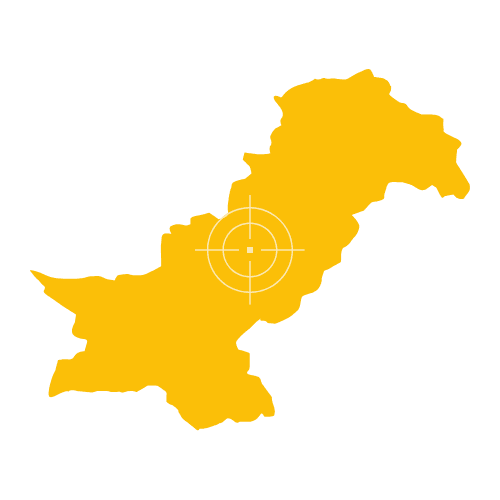
Punjab With The 127+ Million Population Is The Largest Province Of Pakistan

Pakistan Provinces by Population 2023 Census Data, Rankings & Analysis
Introduction
Pakistan’s population map is a study in extremes. One province alone holds more people than most countries on the planet. Another, nearly half the country’s total land area, remains one of the emptiest corners of South Asia. Between the 1998 and 2023 censuses, the country’s headcount climbed from roughly 132 million to almost 241.5 million — an addition of over 109 million people in a single generation. That growth hasn’t landed evenly across Pakistan’s four provinces and one capital territory, and the gaps between them say as much about the country’s economic geography as any budget report ever could.
This piece walks through the province-by-province numbers across three census years, then looks honestly at what that growth is buying each region — and what it’s costing.
Punjab: Carrying Half the Country on Its Back
Punjab isn’t just Pakistan’s most populous province — it’s operating on a scale most nations never reach. Close to 127.7 million people live there as of 2023, which works out to a little over half of everyone in the country. Stack that number against the world’s other nations and Punjab alone would edge into the global top ten, ahead of Russia, Mexico, and Japan.
The province added close to 18 million people between 2017 and 2023, a stretch of just six years. Since 1998 its population has grown by more than 73%. Lahore, Faisalabad, Rawalpindi, and Multan absorb most of that growth, and Punjab’s status as the country’s agricultural backbone keeps pulling in workers from provinces with fewer opportunities on offer.
What that scale buys Punjab:
- A labor force big enough to run the country’s largest industrial and agricultural base without relying heavily on imported workers
- Political and economic weight that keeps federal investment, infrastructure, and university placement disproportionately flowing toward the province
- Enough urban density in Lahore and Faisalabad to support a genuine service economy, not just farming and factories
What it costs Punjab:
- Land pressure around every major city, pushing housing prices and informal settlements outward faster than planning departments can keep pace
- Water stress across the agricultural belt, since a growing population competes with irrigation demand from the same river systems
- Traffic and air quality problems in Lahore that now rank among the worst of any city in the region during winter months
Sindh: A Province Defined by One City
Sindh sits second with just under 55.7 million residents, and Karachi does most of the heavy lifting in that figure. Pakistan’s largest city and financial capital pulls in such a disproportionate share of the province’s population that Sindh’s numbers barely resemble its rural interior, which remains sparsely settled by comparison.
Growth here has tracked Punjab’s pace almost exactly in percentage terms — roughly doubling since 1998, climbing from 30.4 million to 47.9 million by 2017, then to 55.7 million by 2023. Karachi keeps absorbing migrants chasing port-city jobs, banking, and manufacturing work that simply doesn’t exist in the same volume elsewhere in the country.
What that concentration buys Sindh:
- Karachi functions as Pakistan’s financial and trade gateway, generating a share of national tax revenue far out of proportion to the province’s population share
- A deep, diverse labor pool covering everything from heavy industry to finance to textiles
- Direct access to Pakistan’s main deep-water port, giving the province an economic advantage no landlocked region can replicate
What it costs Sindh:
- Karachi’s infrastructure — water supply, sewage, public transit — was built for a fraction of its current population and shows it daily
- The rural-urban divide within the province has widened, with interior Sindh lagging badly behind Karachi on almost every development indicator
- Periodic ethnic and political tension in Karachi, tied partly to competition over jobs and housing among a population growing faster than the city can absorb
Khyber Pakhtunkhwa: The Fastest Climber Nobody Talks About
KPK, formerly the North-West Frontier Province and now folded together with the former FATA tribal areas, ranks third with just over 40.8 million people. What’s remarkable isn’t the total — it’s the trajectory. The province’s population nearly doubled between 1998 and 2023, a growth rate that actually outpaces Punjab’s in percentage terms.
Part of that surge comes from genuinely high fertility rates across the province. Part of it comes from the formal merger of the tribal areas into KPK’s administrative structure, which brought previously under-counted populations properly into the national census for the first time.
What that growth buys KPK:
- A young, expanding workforce at a moment when much of the developed world is aging
- Stronger political representation and federal resource allocation tied directly to population share
- Fuller, more accurate statistical inclusion of formerly marginalized tribal districts, which should translate into better long-term service delivery
What it costs KPK:
- Rapid population growth in a province with limited flat, arable land creates real strain on food security and rural livelihoods
- Public services — schools, clinics, roads — are struggling to expand fast enough to match the birth rate
- Security and development challenges in the newly merged tribal districts remain far behind the rest of the province, even as their population is now fully counted
Balochistan: Enormous Land, Tiny Population
This is where Pakistan’s population map gets genuinely lopsided. Balochistan covers close to half the country’s total land area — by far the largest of any province — yet holds just under 14.9 million people, the smallest population of the four. That mismatch gives Balochistan the lowest population density anywhere in Pakistan, a direct result of terrain that’s mostly arid, mountainous, and inhospitable to large-scale farming or settlement.
Still, growth here hasn’t been slow. The province’s population has more than doubled since 1998, up from 6.6 million to nearly 14.9 million — a percentage increase that actually beats the national average, even though the absolute numbers remain small next to Punjab or Sindh.
What its emptiness buys Balochistan:
- Vast untapped mineral and natural gas reserves that remain relatively undeveloped compared to more densely populated provinces
- Room for large-scale infrastructure and energy projects, including the Gwadar port development, without the land-acquisition battles that plague denser regions
- Lower environmental and infrastructure strain per capita than any other province
What it costs Balochistan:
- Chronic underinvestment in schools, hospitals, and roads, since a small population spread across enormous distances is expensive to serve
- Persistent underdevelopment relative to the rest of the country, despite sitting on some of Pakistan’s richest natural resources
- Political friction over how revenue from provincial resources like natural gas gets distributed nationally versus reinvested locally
Islamabad: Small Territory, Outsized Momentum
Islamabad isn’t a province, but its numbers earn it a place at this table. The capital territory’s population has nearly tripled since 1998, climbing from about 805,000 to over 2.36 million by 2023. That kind of growth reflects Islamabad’s pull as the seat of federal government, its reputation for cleaner streets and lower crime than most other major cities, and steady inflows of civil servants, professionals, and their families.
What that growth buys Islamabad:
- Some of the best-planned urban infrastructure in the country, since the city was purpose-built rather than grown organically
- A relatively high standard of living and lower crime rate compared to Karachi or Lahore
- Proximity to federal decision-making that draws talent and investment disproportionate to its size
What it costs Islamabad:
- Housing costs that have climbed sharply as demand outpaces the city’s originally planned capacity
- Growing sprawl into neighboring Rawalpindi, blurring the line between the two cities and straining shared infrastructure
- A widening gap between Islamabad’s living standards and those of the rest of the country, which occasionally fuels resentment from other provinces
The Bigger Picture: Growth Without Balance
Line up all five regions and a clear pattern emerges. Every single one has grown substantially since 1998, but not evenly. Balochistan and Islamabad both more than doubled their populations in percentage terms, yet their absolute numbers remain dwarfed by Punjab and Sindh, which keep adding tens of millions of people each census cycle despite already carrying the bulk of the national population.
That imbalance is the real story behind Pakistan’s population data. It’s not simply that the country is growing — it’s that growth keeps concentrating in the same two provinces that already strain hardest under it, while a province like Balochistan, sitting on some of the country’s richest natural resources, remains too sparsely populated and underserved to fully capitalize on them.
Frequently Asked Questions
Which province in Pakistan has the highest population? Punjab, with nearly 127.7 million people as of the 2023 census — just over half of Pakistan’s total population.
Which province in Pakistan has the lowest population? Balochistan, with just under 14.9 million people, despite being the largest province by land area.
What is Pakistan’s total population as of 2023? 241,499,431, according to the 2023 census.
How much has Pakistan’s population grown since 1998? By more than 109 million people, rising from roughly 132.4 million to 241.5 million — an increase of over 82% in 25 years.
Why is Balochistan so sparsely populated compared to other provinces? Its terrain is mostly arid and mountainous, which limits large-scale farming and settlement, resulting in the lowest population density in the country despite covering the most land.
Is Islamabad a province of Pakistan? No. It’s a federal capital territory, counted separately from Pakistan’s four provinces in national statistics.
Conclusion
Pakistan’s population figures aren’t just a headcount — they’re a map of where opportunity, strain, and untapped potential all sit side by side. Punjab and Sindh carry the country’s economic weight and its heaviest infrastructure burden in the same breath. KPK is growing faster than almost anywhere else, testing how quickly public services can keep up. Balochistan holds the resources but not the people to fully develop them, while Islamabad shows what happens when a city is built for growth rather than catching up to it after the fact. None of these five stories cancel each other out — together, they’re what makes Pakistan’s population picture so difficult to sum up in a single number.
Source:
- Pakistan Provinces With Population | citypopulation.de