
What are 7 countries in South Asia
top 10 most populated country in south asia
01
India
1476 Million
02
Pakistan
259 Million
03
Bangladesh
177 Million
04
Afghanistan
45 Million
05
Nepal
29 Million
06
Sri Lanka
23 Million
07
Bhutan
802 K
08
Maldives
531 K
most populated country in south asia
| S no. | country | population | density |
|---|---|---|---|
| 1 | India | 1,476,625,576 | 449 |
| 2 | Pakistan | 259,299,791 | 294 |
| 3 | Bangladesh | 177,818,044 | 1,205 |
| 4 | Iran | 93,168,497 | 57 |
| 5 | Afghanistan | 45,047,069 | 69 |
| 6 | Nepal | 29,629,410 | 201 |
| 7 | Sri Lanka | 23,348,315 | 356 |
| 8 | Bhutan | 802,214 | 21 |
| 9 | Maldives | 531,517 | 1,772 |
| Source : worldpopulationreview.com | South Asia | |||
which country has largest population in south asia
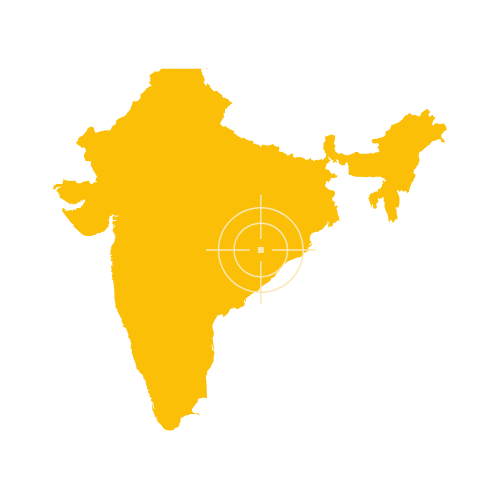
India has the largest population in South Asia, with an estimated population of over 1.46 billion people
South Asia Countries By Population Distribution
South Asia: Population And Geography
Introduction
South Asia is a region of Asia known for its large population, diverse cultures, ancient civilizations, and varied landscapes. It includes India, Pakistan, Bangladesh, Afghanistan, Nepal, Sri Lanka, Bhutan, the Maldives, and Iran under the regional classification used by World Population Review.
The region stretches from the high mountains of the Himalayas and Hindu Kush to the fertile plains of the Indus and Ganges river systems, the deserts of western South Asia, and the tropical islands of the Indian Ocean. Its countries share historical connections while differing in language, religion, political systems, economic development, and traditions.
According to World Population Review’s 2026 estimates, Southern Asia has a population of approximately 2.11 billion people across nine countries. It accounts for about 25.38% of the world’s population, making it one of the most populous regions on Earth.
Countries of South Asia
South Asia includes nine countries in the World Population Review classification:
- Afghanistan
- Bangladesh
- Bhutan
- India
- Iran
- Maldives
- Nepal
- Pakistan
- Sri Lanka
Regional definitions can differ between organizations. For example, some commonly used definitions of South Asia focus on the eight countries of the Indian subcontinent and do not include Iran. For accurate comparisons, it is important to follow the classification used by the chosen source.
Population of South Asia
South Asia is one of the world’s largest population centers. Its population has grown substantially over the past several decades because of improvements in healthcare, declining mortality, and continuing demographic growth.
India is the region’s most populous country by a wide margin, followed by Pakistan and Bangladesh. Iran and Afghanistan also have populations of tens of millions, while Nepal and Sri Lanka have populations in the tens of millions. Bhutan and the Maldives have comparatively small populations.
Population growth has important implications for housing, education, healthcare, employment, transportation, food security, and water resources. At the same time, a large and increasingly urban population can provide substantial economic opportunities when supported by education, infrastructure, and productive employment.
Geography of South Asia
South Asia contains some of the world’s most varied geographical environments. Its northern boundaries include the Himalayas, Hindu Kush, and other mountain ranges. These mountains influence regional climate, river systems, agriculture, and settlement patterns.
The Indus, Ganges, and Brahmaputra river systems support extensive agricultural plains and densely populated communities. The Thar Desert occupies parts of India and Pakistan, while dry and mountainous landscapes characterize much of Afghanistan and Iran.
The Maldives consists of low-lying coral islands in the Indian Ocean, whereas Sri Lanka is an island nation with coastal plains and central highlands. Bhutan and Nepal contain mountainous terrain, including sections of the Himalayas.
This geographical diversity influences economic activity, transportation, agriculture, tourism, and access to natural resources across the region.
Climate and Natural Environment
South Asia experiences several climate types, including tropical monsoon, subtropical, arid, semi-arid, and high-altitude climates. Seasonal monsoon rainfall is especially important for agriculture and water supplies in much of the region.
Rainfall patterns vary considerably. Some areas receive heavy seasonal precipitation, while desert and highland regions experience much drier conditions. Changes in rainfall, temperature, glaciers, and river flows can affect farming, drinking water, and energy production.
The region also contains forests, wetlands, grasslands, coral reefs, mountain ecosystems, and coastal habitats. These environments support diverse wildlife and provide important resources, but they face pressure from urbanization, pollution, deforestation, habitat loss, and climate change.
Major Religions of South Asia
South Asia is one of the world’s most religiously diverse regions and the historical birthplace of several major religious traditions.
Hinduism originated in the Indian subcontinent and remains a major religion in India and Nepal. Islam is the predominant religion in Pakistan, Bangladesh, Afghanistan, and the Maldives, and it has a significant presence in India and Sri Lanka.
Buddhism originated in South Asia and continues to play an important role in Sri Lanka and Bhutan, as well as in communities throughout the region. Sikhism originated in Punjab, while Jainism also has deep historical roots in the Indian subcontinent.
Christianity has long-standing communities in India, Sri Lanka, and other parts of the region. Zoroastrianism has historical connections to Iran and continues to be practiced by communities including Parsis in India. These traditions contribute to South Asia’s religious heritage, architecture, festivals, literature, and cultural practices.
Languages of South Asia
South Asia contains hundreds of languages and numerous language families. Indo-Aryan languages are widely spoken across northern and central parts of the region, while Dravidian languages are prominent in southern India and parts of neighboring areas.
Hindi and Bengali are among the region’s most widely spoken languages. Urdu is an official national language of Pakistan and is widely understood in parts of India. Punjabi, Marathi, Telugu, Tamil, Gujarati, Kannada, Malayalam, Odia, and Assamese are among the other major languages of the region.
Pashto and Dari are important languages in Afghanistan, while Persian is the principal language of Iran. Nepali is the official language of Nepal, Dzongkha is the national language of Bhutan, and Dhivehi is spoken in the Maldives. Sinhala and Tamil are major languages of Sri Lanka.
English is also used in education, administration, business, and international communication in several South Asian countries.
Economy of South Asia
South Asia includes large and diverse economies based on agriculture, manufacturing, services, trade, technology, tourism, and natural resources.
India has a major services sector and significant industries in information technology, manufacturing, pharmaceuticals, agriculture, and finance. Pakistan has important agricultural, textile, industrial, and service sectors. Bangladesh is a major exporter of garments and textiles, while Afghanistan’s economy includes agriculture, trade, and natural resources.
Iran’s economy is strongly influenced by energy resources and industrial activity. Nepal and Bhutan rely partly on agriculture, tourism, and hydropower, while tourism, fisheries, and services are important in the Maldives and Sri Lanka.
Economic development varies across the region. Countries face shared challenges involving employment, infrastructure, education, public health, energy security, poverty reduction, and resilience to climate-related risks. Regional trade and cooperation could support greater connectivity and economic opportunity.
Agriculture and Food Production
Agriculture remains important to employment, food supplies, and rural livelihoods across South Asia. Major crops include rice, wheat, cotton, sugarcane, tea, jute, pulses, and a wide variety of fruits and vegetables.
The fertile plains of India, Pakistan, and Bangladesh support intensive agricultural production. Tea is important in parts of India, Sri Lanka, and Bangladesh, while rice cultivation is widespread in areas with suitable water supplies.
Agriculture is vulnerable to floods, droughts, heatwaves, water scarcity, soil degradation, and changing seasonal rainfall. Irrigation systems, improved crop varieties, efficient water management, and agricultural research can help strengthen food security.
Major Cities of South Asia
South Asia contains some of the world’s largest urban areas and rapidly growing cities. Delhi, Mumbai, Kolkata, Bengaluru, and Chennai are major urban centers in India. Karachi, Lahore, and Islamabad are important cities in Pakistan, while Dhaka and Chattogram are major centers in Bangladesh.
Kabul is Afghanistan’s capital and a significant urban center. Tehran is the largest city in Iran, while Kathmandu serves as Nepal’s capital. Colombo is Sri Lanka’s principal commercial center, Thimphu is Bhutan’s capital, and Malé is the capital and principal urban center of the Maldives.
These cities support government, industry, education, trade, finance, transportation, and cultural life. However, rapid urbanization also creates challenges involving housing, traffic congestion, air pollution, sanitation, and public services.
History and Cultural Heritage
South Asia has a long history of urban civilization, trade, empire-building, religious scholarship, and cultural exchange. Ancient settlements in the Indus Valley developed sophisticated urban systems, while later periods saw the growth of kingdoms, empires, religious movements, and major trading networks.
The region was shaped by Hindu, Buddhist, Jain, Islamic, Sikh, and other intellectual and religious traditions. Trade across the Indian Ocean connected South Asian ports with East Africa, the Middle East, Southeast Asia, and beyond.
Persianate, Central Asian, and European influences also contributed to the region’s languages, architecture, food, literature, and political history. South Asia’s heritage includes historic temples, mosques, monasteries, forts, palaces, archaeological sites, and traditional arts.
Tourism in South Asia
South Asia offers a broad range of tourism experiences, from Himalayan trekking and mountain landscapes to beaches, wildlife reserves, religious pilgrimage sites, historic cities, and archaeological monuments.
India is known for its historic architecture, diverse landscapes, and cultural attractions. Pakistan offers mountain scenery, historic cities, and archaeological heritage. Nepal and Bhutan attract visitors interested in Himalayan landscapes and Buddhist cultural sites.
Sri Lanka is known for beaches, wildlife, tea-growing regions, and ancient cities. The Maldives is internationally recognized for island tourism, while Bangladesh offers river landscapes, historic sites, and the Sundarbans region. Afghanistan and Iran also possess significant historical and cultural heritage, although travel conditions and safety considerations vary by location and time.
Environmental Challenges
South Asia faces environmental challenges related to air pollution, water stress, deforestation, waste management, land degradation, and climate change. Dense populations and rapid urban growth can increase pressure on natural resources and public infrastructure.
Flooding affects parts of Bangladesh, India, Pakistan, Nepal, and other areas, while drought and heat stress threaten communities and agricultural production in several countries. Coastal areas and low-lying islands face additional risks from rising sea levels and extreme weather.
Addressing these challenges requires effective planning, resilient infrastructure, improved pollution control, sustainable water management, ecosystem protection, and cooperation across borders where rivers and environmental systems are shared.
Frequently Asked Questions
How many countries are in South Asia?
World Population Review’s Southern Asia classification includes nine countries: Afghanistan, Bangladesh, Bhutan, India, Iran, Maldives, Nepal, Pakistan, and Sri Lanka.
What is the population of South Asia?
World Population Review estimates the region’s 2026 population at approximately 2.11 billion people. Population estimates vary by year and source.
Which is the most populous country in South Asia?
India is the most populous country in the region, followed by Pakistan and Bangladesh.
Which is the smallest country in South Asia by population?
The Maldives has the smallest population among the nine countries in the cited classification.
Is South Asia a continent?
No. South Asia is a subregion of Asia, not a separate continent.
What are the major religions of South Asia?
The region includes Hinduism, Islam, Buddhism, Sikhism, Jainism, Christianity, and other religious traditions. Their prevalence varies by country.
What languages are spoken in South Asia?
Major languages include Hindi, Bengali, Urdu, Punjabi, Tamil, Telugu, Marathi, Gujarati, Nepali, Pashto, Dari, Persian, Sinhala, Dhivehi, and Dzongkha, among many others.
What are South Asia’s main economic activities?
Major activities include agriculture, manufacturing, textiles, information technology, energy, trade, finance, and tourism. Their relative importance differs among countries.
Conclusion
South Asia is a populous and geographically diverse region with a rich cultural heritage and a wide range of economic activities. Its nine countries in the World Population Review classification include some of the world’s largest population centers, major agricultural regions, important industrial economies, and distinctive mountain and island environments.
The region’s future will depend on how effectively its countries address employment, education, public health, infrastructure, environmental protection, and sustainable economic development. Despite differences among its countries, South Asia remains an important region in global demographics, culture, trade, and history.