
Afsharid Dynasty Origin: Which Sovereign Region And Territory It Emerged From
The dynasty originated in the northeastern province of Khorasan in Iran. Nader Shah rose through the military ranks by expelling Afghan Ghilzai invaders from Persia and restoring the nominal Safavid Shahs before seizing the imperial throne himself in 1736 at the Mughan Council, establishing his capital at Mashhad.
Afsharid Empire Standard: Historical Insignia And Modern National Flags

The Top Modern Countries That Were Part Of The Afsharid Empire
01
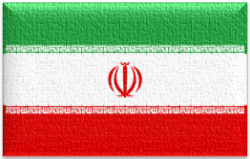
Iran comprised 1,648,195 km2 under full Afsharid control, serving as the political center, with Mashhad operating as Nader Shah's imperial capital.
Iran
02
Afghanistan included 652,864 km2 under complete administration, serving as a vital recruitment ground for Nader’s elite cavalry forces.
Afghanistan
03
Turkmenistan covered 488,100 km2 under control, incorporating key Central Asian oasis networks and securing northern trade borders.
Turkmenistan
04
Pakistan contributed 500,000 km2 across the Indus Basin, annexed following Nader's famous 1739 invasion of Mughal India and the capture of Delhi.
Pakistan
05
Azerbaijan spanned 86,600 km2 under full control, functioning as the primary base for military campaigns in the Caucasus.
Azerbaijan
The Current Sovereign Nations Whose Areas Were Significantly Or Fully Under The Control Of The Afsharid Empire
Direct sovereign control and imperial administration were established across Iran, Afghanistan, Turkmenistan, Azerbaijan, Armenia, and Georgia, while temporary suzerainty and tribute were extracted from Mughal India, parts of Central Asian khanates (Bukhara and Khiva), and western Ottoman border provinces.
From Shahs To Sovereignty: Tracking The Afsharid Empire's Peak And Last Century
Rise & Expansion Phase (1736–1747): ~2,500,000 \text{km}^2 established under Nader Shah, marked by lightning campaigns defeating the Hotakis, expelling the Ottomans and Russians, invading Mughal India (taking the Peacock Throne and Koh-i-Noor diamond), and subduing Central Asia.
Geographic Distribution and Regional Administration
Afsharid Empire: History, Nader Shah, Greatest Extent, Major Battles, and Decline
Introduction
The Afsharid Empire was an Iranian empire founded by Nader Shah Afshar in 1736 after the decline of Safavid rule. Known for its powerful army and ambitious military campaigns, the empire became one of the major political and military powers of eighteenth-century Asia. At its height, it controlled Iran and extended its influence into parts of the Caucasus, Central Asia, Afghanistan, and the Indian subcontinent.
Nader Shah is remembered as one of the most formidable military commanders of his era. He expelled Afghan forces from much of Iran, fought the Ottoman and Mughal empires, and captured Delhi in 1739. However, heavy taxation, destructive campaigns, rebellions, and the absence of a stable succession weakened his empire after his assassination in 1747.
The Afsharid state continued in a reduced form in Khorasan after Nader’s death, but much of his wider empire fragmented among rival powers.
At a Glance
| Feature | Details |
|---|---|
| Empire | Afsharid Empire |
| Founded | 1736 |
| Founder | Nader Shah Afshar |
| Main capital | Mashhad |
| Major imperial center | Isfahan |
| Ruling dynasty | Afsharid |
| Main territory | Iran and surrounding regions at different times |
| Official religious background | Twelver Shia Islam, inherited from the Safavid state; Nader also pursued religious reconciliation |
| Major rivals | Ottoman Empire, Mughal Empire, Afghan powers, and regional rivals |
| Famous campaign | Invasion of the Mughal Empire, 1738–1739 |
| Famous battle | Battle of Karnal, 1739 |
| Nader Shah’s death | 1747 |
| End of the remaining Afsharid state | 1796, when the Qajars conquered Khorasan |
Origins and Rise of Nader Shah
The Afsharid Empire emerged during a period of political instability following the collapse of effective Safavid authority. In 1722, Afghan forces captured Isfahan, the Safavid capital, and the Iranian territories became divided among competing claimants and foreign powers.
Nader, a military leader from the Afshar tribal confederation of northeastern Iran, rose to prominence by supporting the Safavid claimant Tahmasp II. His military successes helped drive Afghan forces from important Iranian territories and restore much of the country’s political unity.
Nader subsequently defeated or pressured rival regional powers and recovered territories lost during the crisis. As his military influence increased, he became the dominant political figure in Iran.
In 1736, Nader was proclaimed shah, establishing the Afsharid dynasty and ending the Safavid monarchy as the effective ruling house.
Nader Shah’s Reign and Imperial Expansion
Nader Shah ruled from 1736 until his assassination in 1747. His reign was dominated by military expansion, efforts to secure Iran’s borders, and campaigns intended to strengthen the state’s finances and international position.
His forces campaigned in the Caucasus, against the Ottoman Empire, in Afghanistan, and across Central Asia. His invasion of northern India produced an extraordinary victory over the Mughal Empire and brought immense wealth to his treasury.
Yet the empire’s expansion depended heavily on Nader’s personal authority and military organization. Its enormous distances, costly campaigns, and uneven administrative foundations made it difficult to preserve unity after his death.
Greatest Territorial Extent
The Afsharid Empire reached its greatest extent during Nader Shah’s reign, particularly in the late 1730s and early 1740s. Its territories and spheres of control changed over time, so its maximum reach should not be treated as a set of stable, continuously administered borders.
Its core included Iran, while military campaigns and temporary conquests extended Afsharid power into neighboring regions.
Iran: The central territory and political foundation of the empire.
The Caucasus: Nader campaigned in areas including Georgia, Armenia, and Azerbaijan, where Ottoman, Iranian, and local interests frequently collided.
Afghanistan: His forces defeated Afghan rivals and brought important Afghan territories under Afsharid control.
Central Asia: Campaigns extended Afsharid influence into areas around Bukhara and Khiva.
The Indian subcontinent: Nader invaded the Mughal Empire and occupied Delhi in 1739, extracting enormous wealth. This was a major conquest but did not establish long-term Afsharid administration over the whole Mughal Empire.
Major Battles and Military Campaigns
Battle of Damghan (1729)
Nader’s victory over Afghan forces at Damghan was a crucial step in his rise. It weakened the Afghan position in Iran and helped open the way for the restoration of Safavid authority in important territories.
Campaigns Against the Ottoman Empire
Nader fought the Ottoman Empire over contested territories in western Iran and the Caucasus. His campaigns recovered some lands and demonstrated the strength of his reformed army, although the wars were costly and did not eliminate Ottoman power in the region.
Conquest of Kandahar (1738)
Nader captured Kandahar after a prolonged campaign. The victory strengthened his position in Afghanistan and helped prepare the way for his invasion of the Mughal Empire.
Battle of Karnal (1739)
The Battle of Karnal was one of Nader Shah’s most famous victories. His army defeated the forces of Mughal emperor Muhammad Shah, exposing the weakness of the Mughal military leadership.
Nader then entered Delhi. The invasion brought him enormous wealth, including celebrated jewels and other treasures, but the occupation also resulted in severe violence and destruction. The campaign further weakened the Mughal Empire at a time when its central authority was already declining.
Campaigns in Central Asia
Nader conducted campaigns against regional rulers in Central Asia, including the khanates of Bukhara and Khiva. These operations extended his influence but required considerable military resources and did not produce a permanently unified Central Asian empire.
Government, Army, and Administration
The Afsharid state depended heavily on Nader Shah’s army. He recruited soldiers from various tribal and regional backgrounds and used disciplined cavalry, firearms, and artillery to defeat larger or less effectively coordinated opponents.
His government inherited administrative practices from the Safavid state, but military requirements increasingly shaped taxation and public expenditure. Revenue was needed to maintain troops, supply campaigns, and defend distant territories.
This militarized system helped Nader achieve remarkable conquests. However, heavy taxation and the harsh treatment of resisting communities created resentment. The empire lacked sufficiently durable political institutions to manage the succession and maintain the same degree of control after its founder’s death.
Religion and Relations with Neighboring Powers
The Afsharids inherited Iran’s Twelver Shia religious institutions from the Safavid period. Nader, however, sought to reduce sectarian tensions, particularly in relations with the Sunni Ottoman Empire. He pursued proposals for religious accommodation, including recognition of a distinct Ja’fari school of Islamic law, but these efforts did not resolve the political and religious rivalry between the two empires.
Afsharid foreign policy was shaped by competition with several major powers:
Ottoman Empire: A principal western rival over territory and regional influence.
Mughal Empire: Defeated during Nader’s Indian campaign, especially at Karnal in 1739.
Afghan powers: Initially major opponents during the struggle to restore Iranian unity; later, Afghan territories became important parts of Nader’s campaigns.
Central Asian khanates: Targets of campaigns intended to secure northeastern frontiers and project power.
Russia: A northern power with interests in the Caucasus and Caspian region, requiring diplomacy as well as military calculation.
Achievements and Negative Consequences
The Afsharid Empire restored much of Iran’s political unity after a period of invasion and fragmentation. Nader’s military reforms and victories strengthened the country’s international standing, while his campaigns recovered territories and accumulated vast quantities of wealth.
However, the empire’s achievements came at a high cost. Nader’s wars demanded substantial revenue, and the resulting taxes placed pressure on ordinary people. His campaigns could involve severe destruction, while his later reign became increasingly associated with coercion, suspicion, and repression.
The empire’s political weakness was also evident after 1747: its vast conquests could not be held together without Nader’s personal command.
Decline and Fall
Nader Shah’s later years were marked by increasing unrest, financial pressure, and resistance to his rule. In 1747, members of his own military circle assassinated him.
His death triggered a struggle among rival commanders and royal claimants. The wider empire rapidly fragmented, with the Zand dynasty gaining power in western and central Iran and the Durrani state emerging in Afghanistan. Afsharid rule survived in Khorasan under Nader’s descendants, especially Shahrokh Shah, but it no longer controlled the empire’s former territories.
In 1796, Agha Mohammad Khan Qajar conquered Khorasan, bringing the remaining Afsharid state to an end.
Timeline of the Afsharid Empire
| Year | Event |
|---|---|
| 1722 | Afghan forces capture Isfahan, accelerating the collapse of effective Safavid authority. |
| 1729 | Nader wins a major victory over Afghan forces at Damghan. |
| 1736 | Nader becomes shah and establishes the Afsharid dynasty. |
| 1738 | Nader captures Kandahar. |
| 1739 | Nader defeats the Mughal army at Karnal and occupies Delhi. |
| 1740s | Campaigns continue in the Caucasus and Central Asia amid growing costs and resistance. |
| 1747 | Nader Shah is assassinated; his empire fragments. |
| 1747–1796 | Afsharid rule continues in a reduced form in Khorasan. |
| 1796 | Agha Mohammad Khan Qajar conquers Khorasan, ending the remaining Afsharid state. |
Legacy of the Afsharid Empire
The Afsharid Empire occupies an important place in Iranian, Central Asian, and South Asian history. Nader Shah’s military campaigns reshaped regional power relations and exposed the vulnerability of the declining Mughal Empire. His victories also demonstrated how a highly capable military leader could reunify a fractured state and project power across vast distances.
Nevertheless, the rapid collapse of the empire after his assassination illustrates the limits of conquest without durable institutions and a stable succession. The Afsharid legacy is therefore both one of exceptional military achievement and a warning about the political and human costs of an empire built around continuous warfare.
Frequently Asked Questions
Who founded the Afsharid Empire?
Nader Shah Afshar founded the Afsharid Empire in 1736 after ending effective Safavid rule.
What was the capital of the Afsharid Empire?
Mashhad was Nader Shah’s principal capital. Isfahan remained an important political and administrative center in Iran.
When was the Afsharid Empire at its greatest extent?
Its widest territorial reach occurred during Nader Shah’s reign, especially in the late 1730s and early 1740s, when campaigns extended Afsharid power into Afghanistan, the Caucasus, Central Asia, and northern India.
Which was the Afsharid Empire’s most famous battle?
The Battle of Karnal in 1739 is among its most famous victories. Nader’s defeat of the Mughal army led to his occupation of Delhi.
Why did Nader Shah invade India?
His campaign followed his consolidation of power in Iran and Afghanistan. It was driven by strategic aims, the pursuit of wealth, and conflict involving Afghan forces and the Mughal frontier.
What happened to the Afsharid Empire after Nader Shah died?
The empire fragmented after his assassination in 1747. Afsharid rulers retained a reduced state in Khorasan while other dynasties controlled much of the former imperial territory.
When did the Afsharid dynasty end?
The remaining Afsharid state in Khorasan ended in 1796, when Agha Mohammad Khan Qajar conquered the region.
Conclusion
The Afsharid Empire was a short-lived but influential power founded by Nader Shah in 1736. Its armies reunited much of Iran, defeated powerful rivals, and reached as far as Delhi. Yet heavy taxation, devastating warfare, internal opposition, and an unstable succession undermined its foundations. The empire’s rise and fall remain central to understanding eighteenth-century Iranian history and the shifting balance of power across western, central, and southern Asia.
Sources
- Encyclopaedia Iranica — Afsharids
- Encyclopaedia Iranica — Nader Shah
- Encyclopaedia Iranica — India: Relations During the Afsharid and Zand Periods
- Encyclopaedia Iranica — Army During the Afsharid and Zand Periods
- Cambridge History of Iran — Nadir Shah and the Afsharid Legacy
- Encyclopaedia Iranica — Historiography: Afsharid and Zand Periods
- Cambridge University Press — The Hero of the “Noble Afshar People”: Reconsidering Nader Shah’s Claims to Lineage and Legitimacy