
Golden Horde Dynasty Origin: Which Sovereign Region And Territory It Emerged From
The khanate originated as the northwestern division of the Mongol Empire allocated to Jochi, the eldest son of Genghis Khan. Its political core developed along the lower Volga River region in modern-day Russia, with Sarai (near modern Astrakhan and Volgograd) serving as its imperial capital, controlling vital trade corridors between Europe, the Middle East, and Asia.
Golden Horde Standard: Historical Insignia And Modern National Flags

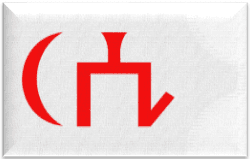
The Top Modern Countries That Were Part Of The Golden Horde
01
Russia comprised 3,500,000 km² under Golden Horde rule, containing the imperial capital of Sarai along the Volga River.
Afghanistan
02
Kazakhstan included 2,200,000 km² under control, forming the vast nomadic heartland and western steppe corridors.
Pakistan
03
Ukraine contained 500,000 km² under control, securing crucial Black Sea ports and agricultural river basins.
Iran
04
Uzbekistan covered 200,000 km² under control, encompassing the wealthy Islamic urban center of Khwarizm.
India
05
Moldova spanned 25,000 km² along its eastern steppe frontiers, serving as the western outpost of the khanate.
Turkmenistan
The Current Sovereign Nations Whose Areas Were Significantly Or Fully Under The Control Of The Golden Horde
At its peak, the khanate extended from the Danube and Dniester rivers in Eastern Europe across the Eurasian steppes to the Irtysh River in Western Siberia, and from the northern forests of Rus to the Black and Caspian Seas and Khwarizm.
From Khans To Sovereignty: Tracking The Golden Horde's Peak And Last Century
Direct sovereign rule was exercised over the Eurasian steppes, the Volga basin, Crimea, and Khwarizm, while the East Slavic principalities of Rus were managed through tributary vassalage and tax collection administered by local princes under Mongol-Tatar oversight.
Geographic Distribution and Regional Administration
Golden Horde: The Islamic Phase, Berke Khan’s Conversion, and the Spread of Islam
Introduction
The Golden Horde was one of the most powerful Mongol successor states, controlling vast territories across the Eurasian steppes, including parts of present-day Russia, Ukraine, Kazakhstan, and the North Caucasus. Established by descendants of Jochi, the eldest son of Genghis Khan, it gradually transformed from a predominantly Mongol-led political power with diverse religious traditions into a major Muslim state.
The Islamization of the Golden Horde began during the reign of Berke Khan (1257–1267) and advanced considerably under Uzbeg Khan (Öz Beg Khan, 1313–1341), whose reign is widely associated with Islam becoming the dominant state religion. This transformation was not the result of one ruler or one event alone. Muslim scholars, Sufi shaykhs, merchants, urban communities, political alliances, and the changing religious identity of Turkic-speaking populations all contributed to the process. <Cite refs={[“turn798029search1″,”turn798029search5”]} />
One of the most important figures in this history was Shaykh Sayf al-Din al-Bakharzi, a respected Sufi master based in Bukhara. Historical accounts connect him with Berke Khan’s acceptance or affirmation of Islam. However, historians do not agree that Berke first became Muslim during his meeting with the shaykh: one early account suggests that Berke was already Muslim when he visited Bukhara. This distinction is important when separating historical evidence from later conversion stories. <Cite refs={[“turn798029search0″,”turn798029search3″,”turn798029search6”]} />
At a Glance: The Golden Horde’s Islamic Phase
| Detail | Information |
|---|---|
| State | Golden Horde, also known as the Ulus of Jochi |
| Dynasty | Jochid dynasty, descendants of Jochi |
| Foundation | Developed from the western territories of the Mongol Empire during the 13th century |
| Principal political center | Sarai on the lower Volga; later New Sarai became an important center |
| Early Muslim khan | Berke Khan, ruler from approximately 1257 to 1267 |
| Important Sufi scholar | Shaykh Sayf al-Din al-Bakharzi of Bukhara |
| Major Islamization ruler | Uzbeg Khan, reigning from 1313 to 1341 |
| Religious transition | Gradual, with stronger Muslim political institutions under Uzbeg |
| Major religious influences | Sunni Islam, Muslim scholars, Sufi networks, merchants, and urban communities |
| Main legacy | Development of Muslim political and cultural traditions among the peoples of the western Eurasian steppes |
1. What Was the Golden Horde?
The Golden Horde emerged from the western territories assigned to Jochi’s descendants following the expansion of the Mongol Empire. Its political foundations were established through the conquests and administration of Batu Khan, a son of Jochi and grandson of Genghis Khan.
During the 13th century, the Golden Horde controlled or exercised authority over extensive territories north of the Black Sea and Caspian Sea, the Volga region, and parts of the Eurasian steppe. Its relationship with the principalities of Rus varied over time and generally involved tribute, political supervision, and military pressure rather than uniform direct administration everywhere.
Its population was religiously and ethnically diverse. Mongol ruling elites lived alongside Turkic-speaking communities, Muslim merchants, Christian populations, and peoples who maintained older religious practices. The khanate’s cities and trading networks connected the Black Sea region with Central Asia, the Caucasus, the Islamic world, and other parts of Eurasia.
The Golden Horde was therefore not Muslim from its foundation. Its Islamic identity developed over generations, shaped by both rulers and the societies they governed. <Cite refs={[“turn798029search1″,”turn798029search5”]} />
2. What Religion Did the Mongols Follow Before Islam?
Before many Mongol rulers adopted Islam, their religious world included Tengri-oriented beliefs, ancestral traditions, and shamanic practices. Tengri referred to the Eternal Sky or supreme heavenly power in several Inner Asian traditions. These beliefs did not form one uniform religious system, and Mongol religious life could vary between communities and periods.
The wider Mongol Empire also contained Buddhists, Christians, Muslims, and followers of other traditions. Mongol rulers often permitted several religions to operate within their territories, and members of the same ruling family could follow different religious paths.
Islam was already established in many cities and trading centers of Central Asia before the Golden Horde emerged. Muslim merchants, scholars, and Sufi teachers helped connect the Mongol world to established Islamic learning and devotional networks.
The spread of Islam among the Golden Horde’s ruling elite consequently took place in a society where religious pluralism was common. Conversion could be personal, political, or connected with wider social change, and it did not automatically mean that every subject abandoned older beliefs. <Cite refs={[“turn798029search5″,”turn798029search31”]} />
3. Berke Khan: The First Major Muslim Ruler of the Golden Horde
<text><strong>Berke Khan</strong> was a son of Jochi and a grandson of Genghis Khan. He ruled the Golden Horde from approximately 1257 to 1267 and is widely recognized as the first prominent Muslim khan of the Jochid realm.</text>
Berke’s importance goes beyond his personal religious identity. His reign helped strengthen relations between the Golden Horde and the wider Muslim world. He maintained diplomatic contacts with Muslim powers, including the Mamluk Sultanate of Egypt, and became a major opponent of his cousin Hülegü, the Mongol ruler of the Ilkhanate in Iran.
Berke’s Muslim identity is well established in historical tradition, but the precise circumstances and date of his conversion remain uncertain. Some narratives describe him as accepting Islam through a Sufi shaykh, while other evidence suggests that he may have been Muslim before his visit to Bukhara. <Cite refs={[“turn798029search0″,”turn798029search1″,”turn798029search7”]} />
3.1 Who Guided Berke Khan Toward Islam?
The Sufi scholar most closely associated with Berke Khan’s Islamization was Shaykh Sayf al-Din al-Bakharzi, also written as Bākharzī or Baharzi.
Al-Bakharzi was a prominent Muslim spiritual teacher associated with the Kubrawiyya Sufi tradition. He lived in Bukhara, an important center of Islamic scholarship and religious life in Central Asia. His influence extended beyond ordinary students and local residents; his reputation attracted visitors from distant regions and included people connected with political elites.
Accounts linking Berke to al-Bakharzi have made the shaykh an important figure in the history of Islam in the Golden Horde. Nevertheless, the evidence does not establish beyond doubt that al-Bakharzi was the person who first introduced Berke to Islam. A source closer to the events indicates that Berke was already Muslim when he visited the shaykh to receive his blessing. The safest historical conclusion is that al-Bakharzi was an important spiritual influence on Berke, whether through conversion itself or through reinforcing the khan’s Muslim faith. <Cite refs={[“turn798029search0″,”turn798029search3″,”turn798029search6”]} />
3.2 Where Did Berke Khan Meet the Sufi Shaykh?
The meeting associated with Berke Khan and Sayf al-Din al-Bakharzi is connected with Bukhara, in present-day Uzbekistan.
Bukhara was one of Central Asia’s leading centers of Muslim learning. Its religious institutions, scholars, merchants, and Sufi communities provided a setting in which Islamic teachings could reach political figures from the wider Mongol world.
Al-Bakharzi’s religious establishment and the network surrounding him helped make Bukhara an important center of spiritual influence. Berke’s reported visit illustrates how a city far from the Golden Horde’s principal political center could play a role in the religious transformation of its ruling elite.
The exact circumstances of the encounter should not be overstated. The evidence supports the association between Berke, Bukhara, and al-Bakharzi, but it does not securely settle every detail of the story. <Cite refs={[“turn798029search0″,”turn798029search6”]} />
3.3 Who Was Sayf al-Din al-Bakharzi?
Sayf al-Din al-Bakharzi was a respected Sufi master associated with the spiritual tradition of Najm al-Din Kubra. He became known for religious teaching and for maintaining connections with people from different regions.
His importance in the Golden Horde’s history lies in the wider influence of Muslim religious networks. Sufi teachers could offer instruction, spiritual guidance, and access to established communities of Islamic learning. Their influence was not limited to one ruler: their students and associates helped transmit religious practices and ideas across cities and regions.
Al-Bakharzi died in 1261, during Berke’s reign. His descendants and religious establishment remained influential in Bukhara, and his mausoleum and associated religious complex became important places of visitation.
It is reasonable to describe al-Bakharzi as one of the principal spiritual figures connected with Berke’s Islamization. It would be less accurate to claim that all Islamization in the Golden Horde resulted from his work alone. <Cite refs={[“turn798029search0″,”turn798029search3″,”turn798029search6”]} />
3.4 Was Berke Khan Already Muslim Before Meeting Al-Bakharzi?
Possibly. This is one of the most important historical qualifications in the story.
Some later accounts present al-Bakharzi as the person who converted Berke to Islam. However, the scholar Jamal al-Din Qarshi, whose account is considered relatively close to the events, is cited as reporting that Berke was already Muslim when he visited Bukhara.
This means there are at least two interpretations:
Conversion interpretation: Berke accepted Islam through the teaching and spiritual influence of al-Bakharzi.
Confirmation interpretation: Berke was already Muslim and visited the shaykh for a blessing or spiritual association.
The surviving evidence does not allow complete certainty about which version describes the original event. Both interpretations recognize the significance of the connection between the khan and the Bukhara Sufi tradition. <Cite refs={[“turn798029search0″,”turn798029search6”]} />
4. How Did Berke Khan’s Islam Influence the Golden Horde?
Berke’s conversion did not immediately transform every part of the Golden Horde into a fully Islamic society. The khanate was enormous, its population was diverse, and religious change depended on local conditions.
Nevertheless, Berke’s Muslim identity had important consequences.
4.1 Greater Contact With the Muslim World
Berke developed relations with the Mamluk Sultanate, whose rulers governed Egypt and Syria. These contacts had both religious and strategic significance.
Berke and the Mamluks shared opposition to Hülegü’s Ilkhanate, particularly after Hülegü’s campaigns against Muslim territories and the destruction of Baghdad in 1258. Their relationship demonstrated how religious affiliation could reinforce a strategic alliance, although political interests were also central to it.
4.2 Muslim Officials and Religious Communities
Muslim communities were present in the Golden Horde before Berke’s reign. During his rule, Muslim religious figures and members of his military and administrative environment gained greater visibility.
Accounts of Berke’s court describe Muslim practices among members of his entourage. Such evidence suggests that the khan’s faith was connected with a broader Muslim presence among sections of the elite.
4.3 The Role of Sufi Networks
Sufi scholars helped transmit Islam through teaching, personal relationships, and links between urban religious centers and political elites. Their influence was particularly important in a region where nomadic political traditions existed alongside settled Muslim communities.
Sufism was not the only means by which Islam spread. Trade, migration, family relationships, urban life, and political connections also contributed to the process.
4.4 A Beginning Rather Than a Completed Transformation
Berke’s reign marked an important early stage in the Islamization of the Golden Horde. It did not establish an immediate, uniform Islamic state across every territory under Jochid authority.
The process continued through the late 13th and early 14th centuries, reaching a decisive stage under Uzbeg Khan. <Cite refs={[“turn798029search5″,”turn798029search7″,”turn798029search31”]} />
5. Uzbeg Khan: The Ruler Who Consolidated Islam
Uzbeg Khan, also written as Öz Beg Khan, ruled from 1313 to 1341. His reign is central to the Golden Horde’s transformation into a predominantly Muslim political order.
Berke had demonstrated that a Jochid khan could be Muslim while maintaining Mongol dynastic authority. Uzbeg took the process further by strengthening Islam’s public and political position.
Under his rule, Muslim institutions and religious scholars became increasingly influential. Islam spread more widely among the ruling elite and the broader population, although the pace of change differed across the khanate’s territories.
5.1 Who Guided Uzbeg Khan to Islam?
Accounts of Uzbeg’s conversion differ. Some historical traditions associate his conversion with a Muslim religious figure known as Qazi Nur, while other accounts connect it with a Bukharan shaykh named Ibn Abd al-Hamid.
The evidence does not provide a definitive, universally accepted account of the precise circumstances. It is therefore better to identify these figures as part of the historical traditions surrounding Uzbeg’s conversion than to assert that one individual’s role is conclusively established.
The distinction between Berke and Uzbeg is important: Berke is associated with the early adoption of Islam by a Golden Horde ruler, while Uzbeg is associated with its wider consolidation as a state religion. <Cite refs={[“turn798029search7″,”turn798029search31″,”turn798029search33”]} />
5.2 Why Was Uzbeg Khan’s Reign So Important?
Uzbeg’s long reign provided time for Islamic institutions to become more firmly embedded in the khanate’s political and social life. His rule strengthened the position of Muslim elites and helped make Islam a defining feature of Golden Horde identity.
This development did not erase the Mongol foundations of the state. The ruling dynasty remained Jochid, and the khanate retained many political traditions inherited from the Mongol Empire. Instead, Islamic beliefs and institutions increasingly became part of the way the state governed and understood itself.
Uzbeg’s reign is therefore often treated as the decisive period in the official Islamization of the Golden Horde, while Berke’s reign represents an earlier and highly significant turning point. <Cite refs={[“turn798029search1″,”turn798029search5″,”turn798029search34”]} />
6. Who Opposed Islam or Chose Not to Convert?
The question of who “rejected Islam” requires care. The Mongol world did not have a single religious policy shared by every ruler, and the absence of conversion does not automatically prove that a ruler personally hated Islam.
Several rulers and groups illustrate the religious diversity of the period.
6.1 Batu Khan: The Founder of the Golden Horde’s Political Power
Batu Khan, Berke’s brother and predecessor, established the Golden Horde’s power in the western Mongol territories. He is not generally identified as the ruler who transformed the khanate into a Muslim state.
However, the evidence does not justify presenting Batu simply as an anti-Muslim ruler. His religious position is less clearly documented than Berke’s, and the Golden Horde’s early political order accommodated a range of religious communities.
The key distinction is that Batu’s reign preceded the more visible Islamic transformation associated with Berke and the later consolidation under Uzbeg.
6.2 Möngke Khan: A Ruler of the Wider Mongol Empire
Möngke Khan, the Great Khan from 1251 to 1259, belonged to the wider Mongol imperial dynasty rather than serving as a Golden Horde ruler. His reign is relevant because it demonstrates the religious diversity of the broader Mongol ruling family.
Mongol imperial elites could maintain different religious affiliations, and rulers often engaged with religious representatives from several traditions. Möngke should not be described simply as someone who rejected Islam; his religious outlook and the empire’s policies were more complex than that.
6.3 Hülegü Khan: A Non-Muslim Rival of Berke
Hülegü Khan, founder of the Ilkhanate in Iran, is especially important because he became Berke’s political and military rival. Hülegü did not convert to Islam and is associated with a court in which Buddhist and Christian influences were significant, alongside other religious traditions.
Hülegü’s forces captured Baghdad in 1258 and ended the Abbasid caliphate’s political rule there. The destruction and killing associated with the conquest caused lasting devastation and made Hülegü a deeply controversial figure in Muslim historical memory.
Berke’s opposition to Hülegü was shaped by political and territorial competition as well as religious differences. The conflict should not be reduced to religion alone, and it is not accurate to claim that every Mongol ruler opposed Islam because of Hülegü’s actions. <Cite refs={[“turn798029search1″,”turn798029search32”]} />
6.4 Mongol Nobles Who Resisted Religious Change
Some Mongol nobles remained attached to older political and religious customs. The spread of Islam could affect court practices, alliances, and the distribution of influence among elite groups.
A ruler who favored Muslim officials or Islamic norms might encounter resistance from nobles who feared losing status or influence. Such resistance was not necessarily a formal campaign against Islam; it could reflect a struggle over power, tradition, and governance.
Historians caution against treating conversion as a single event that instantly changed an entire society. Even when a khan became Muslim, his subjects could continue practicing different religions, and the political elite could remain divided over how much religious change was desirable. <Cite refs={[“turn798029search5″,”turn798029search31”]} />
7. Why Did Some Mongol Rulers Accept Islam While Others Did Not?
The religious choices of Mongol rulers were shaped by several factors.
7.1 Personal Religious Guidance
Muslim scholars and Sufi teachers offered instruction and spiritual relationships that could influence rulers. The reported connection between Berke and al-Bakharzi illustrates how a respected scholar in a major Islamic city could become connected with a distant ruler.
7.2 Muslim Populations and Trade
The Golden Horde governed territories linked to established Muslim trading centers. Merchants, scholars, and urban communities helped sustain Islamic religious life and made Islam familiar to members of the ruling elite.
7.3 Political Alliances
Religious identity could strengthen diplomatic relationships. Berke’s contacts with the Mamluks were strategically useful in his conflict with Hülegü, though shared religion was only one part of a wider political calculation.
7.4 Existing Religious Traditions
Some Mongol rulers and nobles maintained traditional Mongol beliefs or followed other religions. Religious change was therefore uneven across different branches of the Mongol dynasty.
7.5 State-Building and Social Integration
As the Golden Horde became more closely connected with Turkic-speaking Muslim populations, Islam offered a shared religious framework for rulers, officials, merchants, and settled communities. Under Uzbeg Khan, this helped consolidate a distinct political and cultural identity.
These factors explain why the Islamization of the Golden Horde was gradual. It emerged through the interaction of faith, institutions, political interests, and social change rather than through one isolated conversion. <Cite refs={[“turn798029search2″,”turn798029search5″,”turn798029search31”]} />
8. Was the Golden Horde Sunni or Shia?
The Golden Horde became predominantly associated with Sunni Islam, particularly as Islam consolidated under Uzbeg Khan. Muslim institutions and scholars connected with the wider Sunni world played important roles in its religious development.
However, the khanate was not religiously uniform throughout its history. The presence of diverse populations and connections with several parts of the Islamic world meant that religious life could vary by region and community.
It is also important not to confuse the Golden Horde’s Islamization with the history of other Mongol successor states. The Ilkhanate, for example, followed a different political and religious trajectory; its ruler Ghazan converted to Islam in 1295, decades after the Golden Horde’s Berke had already become associated with Islam. <Cite refs={[“turn798029search1″,”turn798029search2″,”turn798029search32”]} />
9. How Did Islam Change the Golden Horde?
Islamization affected the Golden Horde’s public culture, religious institutions, diplomacy, and relationship with neighboring Muslim states.
Religion and scholarship: Muslim scholars and religious institutions became increasingly important, especially in urban centers and the ruling elite.
Diplomacy: Relations with Muslim states, including the Mamluk Sultanate, became important in the khanate’s international affairs.
Culture: Islamic traditions interacted with the Mongol political inheritance and the Turkic-speaking societies of the steppe.
Administration: Muslim officials and legal traditions gained influence, although older Mongol practices did not disappear overnight.
Society: Islam spread beyond the ruling household through trade, migration, local religious networks, and the growing influence of Muslim communities.
The result was not simply a Mongol state that changed its rulers’ religion. Over time, the Golden Horde became a major center of Muslim political and cultural life across the Eurasian steppe. <Cite refs={[“turn798029search5″,”turn798029search31″,”turn798029search34”]} />
10. Timeline of the Golden Horde’s Islamization
| Date or period | Event |
|---|---|
| 1230s–1240s | Batu Khan’s campaigns established the Golden Horde’s power in the western Mongol territories. |
| Mid-13th century | Muslim communities and Islamic networks coexisted with other religions across the khanate. |
| 1257–1267 | Berke Khan ruled and became the earliest prominent Muslim khan of the Golden Horde. |
| Around Berke’s reign | Berke’s association with Sayf al-Din al-Bakharzi of Bukhara became an important part of conversion traditions. |
| 1258 | Hülegü’s forces captured Baghdad, intensifying the political and religious significance of the conflict between Hülegü and Berke. |
| 1260s | Berke’s opposition to Hülegü and his contacts with the Mamluks strengthened the Golden Horde’s links with the Muslim world. |
| 1295 | Ghazan of the Ilkhanate converted to Islam, illustrating a separate Mongol successor state’s later religious transformation. |
| 1313–1341 | Uzbeg Khan’s reign consolidated Islam’s position in the Golden Horde. |
| 14th century | Islam became deeply established among many of the khanate’s ruling elites and populations, though local religious diversity continued. |
| 15th century | Political fragmentation and the emergence of successor khanates transformed the Golden Horde’s territories and institutions. |
11. Legacy of the Golden Horde’s Islamic Phase
The Islamization of the Golden Horde had a lasting influence on the religious and political history of the Eurasian steppe. Berke Khan helped establish the precedent of a Muslim Jochid ruler, while Uzbeg Khan strengthened Islam’s position throughout the state.
The transformation also connected the Golden Horde more closely with the wider Muslim world. Scholars, Sufi networks, merchants, and diplomatic relationships linked the steppe to Central Asia and the Middle East. These connections helped Islamic institutions develop among populations that had previously lived under a range of Mongol and local religious traditions.
The Golden Horde later fragmented into successor political formations, including the Crimean Khanate, the Kazan Khanate, the Astrakhan Khanate, and the Great Horde. These states had distinct histories, but the Golden Horde’s Islamic legacy remained important in the development of Muslim communities and political traditions across the region.
The most accurate conclusion is that the Golden Horde’s Islamization was a gradual historical transformation. Berke Khan was a pivotal early Muslim ruler, Sayf al-Din al-Bakharzi was a major spiritual figure associated with him, and Uzbeg Khan consolidated Islam’s position at the state level. No single scholar or ruler alone explains the entire process.
Frequently Asked Questions
1. Who converted the Golden Horde to Islam?
No single person converted the entire Golden Horde. Berke Khan was an early prominent Muslim ruler, and Sayf al-Din al-Bakharzi is the Sufi shaykh most closely associated with his Islamization. Uzbeg Khan later consolidated Islam’s position in the state.
2. Who was Berke Khan?
Berke Khan was a grandson of Genghis Khan and a son of Jochi. He ruled the Golden Horde from approximately 1257 to 1267 and became one of the earliest prominent Muslim rulers of the Mongol successor states.
3. Who was Sayf al-Din al-Bakharzi?
Sayf al-Din al-Bakharzi was a prominent Sufi master associated with the Kubrawiyya tradition. He lived in Bukhara and is linked by historical accounts to Berke Khan’s acceptance or affirmation of Islam.
4. Where did Berke Khan meet Sayf al-Din al-Bakharzi?
The encounter is associated with Bukhara, an important center of Islamic scholarship in present-day Uzbekistan.
5. Did al-Bakharzi definitely convert Berke Khan?
Not definitively. Some traditions credit him with the conversion, while an account closer to the events suggests Berke was already Muslim when he visited the shaykh for a blessing.
6. Which Golden Horde ruler made Islam the state religion?
Uzbeg Khan, who ruled from 1313 to 1341, is widely associated with Islam becoming the dominant state religion of the Golden Horde.
7. Was Batu Khan Muslim?
Batu Khan is not generally identified as the ruler who initiated the Golden Horde’s Islamic transformation. The available evidence does not justify simply describing him as an enemy of Islam.
8. Why did Hülegü oppose Berke Khan?
Their conflict involved competition for territory, authority, and influence within the Mongol world, as well as religious differences. Berke’s Muslim identity and Hülegü’s campaigns against Muslim territories added a significant religious dimension to their rivalry.
9. Was the Golden Horde Sunni or Shia?
The Golden Horde became predominantly associated with Sunni Islam, particularly during and after Uzbeg Khan’s reign.
10. Did every Golden Horde subject become Muslim?
No. Islam spread widely, but conversion was gradual and varied by region and community. Christian, traditional Mongol, and other religious practices continued among parts of the population.
11. Was Berke Khan the first Muslim Mongol ruler?
Berke is widely recognized as the first prominent Muslim khan of the Golden Horde. However, claims about the first Mongol individual or prince to become Muslim depend on how the terms and evidence are defined.
12. Why is the Golden Horde’s Islamic phase historically important?
It helped establish Islam as a major religious and political tradition across the western Eurasian steppe, strengthening links with Central Asia and the wider Muslim world.
Sources:
1. Peter Jackson — Encyclopaedia Iranica, “Golden Horde
2. Marie Favereau and Roman Yu. Pochekaev — The Golden Horde, c. 1260–1502, The Cambridge History of the Mongol Empir
3. M. E. Yapp — The Golden Horde and Its Successors, The Cambridge History of Islam
4. T. Abylov — “Factors That Influenced the Spread of Islam in the Golden Horde,” Journal of History (2021)
5. Devin DeWeese — Islamization and Native Religion in the Golden Horde: Baba Tükles and Conversion to Islam in Historical and Epic Tradition
6. István Vásáry — “History and Legend in Berke Khan’s Conversion to Islam”
7. Encyclopaedia Britannica — “Golden Horde