Countries by Total Forest Area
World Ranking of the Largest Forests
Introduction
Forests are among the most important natural resources on Earth. They support biodiversity, regulate the climate, absorb carbon dioxide, protect watersheds, maintain soil quality, and provide food, timber, fuel, and livelihoods to millions of people. Their distribution, however, is highly uneven. A relatively small number of countries contain a substantial proportion of the world’s total forest area.
Russia ranks first in total forest area, followed by Brazil, Canada, the United States, and China. These countries possess extensive forest ecosystems, ranging from the boreal forests of northern Eurasia and North America to the tropical rainforests of the Amazon and the forests of East Asia.
This ranking examines countries according to their total forest area, rather than the percentage of their national territory covered by forests. It uses the 2025 forest-area estimates based on the Food and Agriculture Organization of the United Nations (FAO) Global Forest Resources Assessment (FRA).
Global Forest Area at a Glance
The world has approximately 4.14 billion hectares of forest, equivalent to around 41.4 million square kilometres. Forests are distributed across every inhabited continent, although their size, composition, ecological conditions, and levels of protection vary considerably.
| Indicator | Global figure |
|---|
| Total forest area, 2025 | Approximately 4.14 billion hectares |
| Total forest area in km² | Approximately 41.4 million km² |
| Largest forest-area country | Russia |
| Second-largest forest-area country | Brazil |
| Largest tropical forest region | Amazon Basin |
| Main international data source | FAO |
| Latest reference year used | 2025 |
The FAO’s Global Forest Resources Assessment 2025 provides internationally comparable information on forest resources, including forest area, forest characteristics, and changes over time.
Top 50 Countries by Total Forest Area
The following table ranks the 50 countries with the largest forest areas in 2025. Figures are rounded and presented in million hectares to make international comparisons easier.
| Rank | Country | Forest area (million ha) | Forest area (km², approx.) |
|---|
| 1 | Russia | 832.63 | 8,326,299 |
| 2 | Brazil | 486.09 | 4,860,866 |
| 3 | Canada | 368.82 | 3,688,189 |
| 4 | United States | 308.90 | 3,088,950 |
| 5 | China | 227.15 | 2,271,530 |
| 6 | Democratic Republic of the Congo | 139.19 | 1,391,891 |
| 7 | Australia | 133.56 | 1,335,616 |
| 8 | Indonesia | 95.97 | 959,693 |
| 9 | India | 72.74 | 727,390 |
| 10 | Peru | 67.16 | 671,598 |
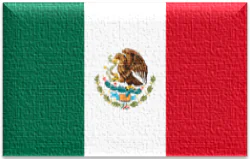
| 11 | Mexico | 66.27 | 662,656 |
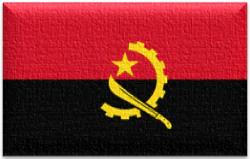
| 12 | Angola | 63.26 | 632,623 |
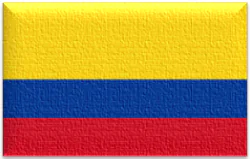
| 13 | Colombia | 59.46 | 594,569 |
| 14 | Bolivia | 54.37 | 543,703 |
| 15 | Venezuela | 47.09 | 470,882 |
| 16 | Argentina | 46.60 | 465,980 |
| 17 | Central African Republic | 45.09 | 450,949 |
| 18 | Zambia | 44.87 | 448,743 |
| 19 | Tanzania | 43.40 | 434,000 |
| 20 | Papua New Guinea | 34.00 | 340,000 |
| 21 | Mozambique | 32.20 | 322,000 |
| 22 | Sweden | 27.90 | 279,000 |
| 23 | Myanmar | 27.10 | 271,000 |
| 24 | Ethiopia | 26.70 | 267,000 |
| 25 | Japan | 24.90 | 249,000 |
| 26 | Gabon | 23.60 | 236,000 |
| 27 | South Africa | 22.90 | 229,000 |
| 28 | Türkiye | 22.80 | 228,000 |
| 29 | Finland | 22.50 | 225,000 |
| 30 | Sudan | 22.00 | 220,000 |
| 31 | Republic of the Congo | 21.90 | 219,000 |
| 32 | Thailand | 19.60 | 196,000 |
| 33 | Cameroon | 19.10 | 191,000 |
| 34 | Spain | 19.10 | 191,000 |
| 35 | Malaysia | 18.90 | 189,000 |
| 36 | Guyana | 18.40 | 184,000 |
| 37 | Chile | 18.20 | 182,000 |
| 38 | France | 17.80 | 178,000 |
| 39 | Nigeria | 17.10 | 171,000 |
| 40 | Botswana | 15.70 | 157,000 |
| 41 | Vietnam | 14.80 | 148,000 |
| 42 | Suriname | 14.70 | 147,000 |
| 43 | Paraguay | 14.30 | 143,000 |
| 44 | Mongolia | 14.20 | 142,000 |
| 45 | Zimbabwe | 13.80 | 138,000 |
| 46 | Laos | 13.00 | 130,000 |
| 47 | Ecuador | 12.30 | 123,000 |
| 48 | Norway | 12.10 | 121,000 |
| 49 | Germany | 11.50 | 115,000 |
| 50 | Iran | 10.80 | 108,000 |
Data note: The table combines the published 2025 FAO-based country figures with rounded values from the Our World in Data forest-area dataset. Values displayed to two decimal places are rounded, and the corresponding square-kilometre figures are approximate. Small differences may occur between data platforms and revisions of the underlying FAO database.
Countries with the Largest Forest Areas: Detailed Overview
1. Russia
Russia has the largest forest area of any country, with approximately 832.63 million hectares of forest in 2025. Its forests cover an enormous part of northern Eurasia and form the world’s most extensive continuous boreal forest region.
Much of Russia’s forest area consists of taiga, a vast ecosystem dominated by coniferous trees such as pine, spruce, and larch. These forests extend across Siberia and the Russian Far East, providing habitat for bears, wolves, lynx, elk, and numerous bird species.
Russian forests are also important for global carbon storage. Their soils, peatlands, and vegetation hold substantial quantities of carbon, making their conservation important for climate regulation.
2. Brazil
Brazil ranks second globally, with approximately 486.09 million hectares of forest. Its forests include the Amazon rainforest, Atlantic Forest, Cerrado woodland formations, and other tropical and subtropical ecosystems.
The Amazon is the largest tropical rainforest region in the world and contains exceptional biodiversity. It plays an important role in regional rainfall patterns, carbon storage, and the global water cycle.
Brazil’s forest resources face pressures from agricultural expansion, cattle ranching, infrastructure development, logging, mining, and fires. Forest conservation policies and the protection of Indigenous territories are important parts of the country’s environmental management.
3. Canada
Canada has approximately 368.82 million hectares of forest, making it the third-largest country by total forest area.
Its forests extend across a large part of the country, particularly in the boreal region. Canada’s forest ecosystems include coniferous forests, mixed forests, temperate rainforests, and deciduous woodlands.
These forests provide habitats for moose, caribou, black bears, grizzly bears, wolves, and many other species. They are also important for the country’s timber industry, recreation, freshwater systems, and carbon storage.
4. United States
The United States contains approximately 308.90 million hectares of forest. Its forest ecosystems vary considerably because of the country’s large geographical size and diverse climate zones.
Major forest regions include the eastern deciduous forests, Appalachian forests, Pacific Northwest temperate rainforests, Rocky Mountain coniferous forests, and southeastern pine forests.
The United States also has extensive national forests, national parks, and other protected natural areas. Forest management involves timber production, wildlife conservation, recreation, fire prevention, and restoration.
5. China
China ranks fifth, with approximately 227.15 million hectares of forest. Its forest area has increased substantially over recent decades, supported by large-scale afforestation, reforestation, and ecological restoration programmes.
China contains several forest types, including temperate forests in the northeast, subtropical forests in the south, mountain forests in the west, and plantation forests across various regions.
The country’s major restoration initiatives include programmes designed to reduce soil erosion, restore degraded landscapes, and expand tree cover. However, forest quality, biodiversity, and the ecological suitability of plantations remain important considerations.
6. Democratic Republic of the Congo
The Democratic Republic of the Congo has approximately 139.19 million hectares of forest. It contains a major portion of the Congo Basin rainforest, the second-largest tropical rainforest region after the Amazon.
Its forests support extraordinary biodiversity, including forest elephants, bonobos, chimpanzees, gorillas, and numerous endemic plant species.
The Congo Basin is also important for rainfall regulation and carbon storage. Agricultural expansion, fuelwood collection, logging, mining, and infrastructure development create significant conservation challenges.
7. Australia
Australia has approximately 133.56 million hectares of forest. Its forests include eucalyptus woodlands, tropical rainforests, temperate forests, acacia-dominated formations, and other native forest ecosystems.
The country’s forests support distinctive wildlife, including koalas, possums, kangaroos, and numerous native bird species. Forest fires, land clearing, drought, and changing climate conditions affect forest health in different parts of Australia.
8. Indonesia
Indonesia contains approximately 95.97 million hectares of forest. Its tropical forests are distributed across major islands, including Sumatra, Borneo, Sulawesi, and New Guinea.
Indonesian forests are known for their exceptional biodiversity, including orangutans, Sumatran tigers, elephants, and many rare plant species.
Peatland forests and mangrove ecosystems are particularly important for carbon storage. Deforestation, plantation expansion, illegal logging, and forest fires have historically placed considerable pressure on these ecosystems.
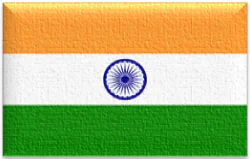
9. India
India has approximately 72.74 million hectares of forest. Its forests range from Himalayan coniferous woodlands and temperate forests to tropical rainforests, dry deciduous forests, mangroves, and thorn forests.
Important forest regions include the Western Ghats, northeastern India, the Himalayan foothills, and central Indian forest landscapes.
Indian forests support tigers, elephants, leopards, rhinoceroses, deer, and many other species. They also provide essential resources and livelihoods for rural and Indigenous communities.
10. Peru
Peru has approximately 67.16 million hectares of forest, most of which is associated with the Amazon Basin.
The country’s Amazonian forests contain an enormous range of plants, mammals, reptiles, amphibians, and bird species. They also contribute to carbon storage and regional water circulation.
Forest degradation and loss are associated with agricultural expansion, illegal mining, logging, road development, and other land-use changes.
Countries with the Largest Forest Areas by Continent
Forest resources are distributed unevenly among the continents. Some regions are dominated by extensive boreal forests, while others contain large tropical rainforests or temperate woodlands.
Asia
Asia contains several of the world’s largest forest countries. Russia, China, Indonesia, India, and Japan are among its major forest holders.
The continent’s forest ecosystems include Siberian taiga, tropical rainforests in Southeast Asia, Himalayan forests, and temperate woodlands in East Asia.
Russia has the largest forest area in Asia and the world. China has also expanded its forest area through extensive planting and restoration programmes.
Africa
Africa contains some of the world’s most important tropical forest ecosystems, particularly in the Congo Basin.
The Democratic Republic of the Congo has the continent’s largest forest area, followed by Angola, Zambia, the Central African Republic, and Tanzania among the countries in the upper part of the global ranking.
African forests include tropical rainforests, dry woodlands, miombo forests, montane forests, and mangrove ecosystems. They are essential for biodiversity, local livelihoods, water regulation, and climate stability.
North America
North America has extensive forest resources, particularly in Canada and the United States.
Canada’s boreal forest forms one of the world’s largest continuous forest ecosystems. The United States contains a broad range of forest types, from temperate rainforests to subtropical woodlands.
Mexico also has a substantial forest area, including tropical forests, mountain forests, and dry woodland ecosystems.
South America
South America is one of the world’s most forest-rich regions, largely because of the Amazon rainforest.
Brazil has the largest forest area in the continent, followed by Peru, Colombia, Bolivia, Venezuela, and Argentina.
The Amazon Basin is shared by several countries and supports exceptional biodiversity. Other important ecosystems include the Atlantic Forest, Andean forests, and temperate forests of southern Chile and Argentina.
Europe
Europe contains extensive boreal and temperate forests. Russia accounts for the largest forest area on the continent, while Sweden, Finland, and other northern European countries also have substantial forest resources.
European forests include coniferous forests, mixed woodlands, deciduous forests, and mountain ecosystems. Forest management, sustainable timber production, biodiversity protection, and restoration are important environmental priorities across the region.
Oceania
Australia and Papua New Guinea are the major forest countries in Oceania. Their ecosystems include eucalyptus forests, tropical rainforests, subtropical woodlands, and island forests.
Papua New Guinea is especially important for tropical biodiversity, while Australia’s forests contain distinctive native vegetation and wildlife.
Total Forest Area vs. Percentage of Land Covered by Forest
Total forest area and forest coverage percentage are two different measurements. Understanding this distinction is essential when comparing countries.
Total forest area measures the actual amount of land classified as forest. It is commonly reported in hectares or square kilometres.
Forest coverage percentage measures how much of a country’s total land area is occupied by forests.
For example, Russia ranks first by total forest area because of its enormous territory and extensive boreal forests. However, smaller countries such as Suriname, Gabon, and Micronesia can have a much higher percentage of their national land covered by forests.
A country can therefore rank highly in forest coverage but relatively low in total forest area.
Countries with the Highest Percentage of Forest Cover
The following countries and territories illustrate how forest coverage percentage differs from total forest area. Figures are rounded 2025 estimates.
| Country or territory | Forest cover (% of land area) |
|---|
| French Guiana | 96% |
| Micronesia | 92% |
| Suriname | 91% |
| Gabon | 91% |
| Palau | 91% |
| Solomon Islands | 90% |
| Guyana | 87% |
| Equatorial Guinea | 86% |
| Dominica | 76% |
| Papua New Guinea | 75% |
| Guinea-Bissau | 75% |
| Vanuatu | 74% |
| Finland | 74% |
| Saint Vincent and the Grenadines | 73% |
| Central African Republic | 72% |
| Brunei | 72% |
| Timor-Leste | 71% |
| Bhutan | 70% |
| Sweden | 69% |
| Japan | 68% |
These figures are percentages, not forest-area measurements. They should not be used as a substitute for the total-area ranking above.
How Is Forest Area Measured?
The FAO uses an internationally established definition of forest to make country comparisons more consistent.
In general, forest land is defined as land covering more than 0.5 hectares with trees higher than five metres and a canopy cover greater than 10%, or trees capable of reaching these thresholds in their natural growing conditions. The land must not be predominantly used for agriculture or urban purposes.
This definition includes both naturally regenerated forests and planted forests. It does not automatically include every location where trees are visible.
For example, trees in agricultural production systems, fruit plantations, and urban parks and gardens are generally excluded from the forest-area indicator.
Forest Area and Tree Cover Are Not the Same
Satellite imagery can identify areas containing tree cover, but tree cover is not always equivalent to forest area.
A plantation, an orchard, an urban park, or a group of trees within agricultural land may appear as tree cover without qualifying as forest under the FAO definition.
Similarly, forest-area statistics are based on land use and internationally agreed classification rules. They are not simply measurements of every visible tree from satellite images.
Why Do Some Countries Have More Forest Area?
Several geographical, climatic, historical, and economic factors influence the distribution of forests.
1. Country Size and Geography
Large countries have more potential land available for forests. Russia, Canada, Brazil, the United States, and China possess enormous territories containing extensive forest ecosystems.
However, large land area does not automatically mean a country has a large forest area. Climate, soils, terrain, agriculture, and settlement patterns also influence forest distribution.
2. Climate and Rainfall
Forests require suitable environmental conditions for tree growth. Tropical regions with high rainfall often support dense rainforests, while colder northern regions contain extensive boreal forests.
Temperate climates support mixed and deciduous forests, while dry regions generally have more open woodland and shrubland ecosystems.
3. Population and Land Use
Population growth, agricultural expansion, urbanisation, and infrastructure development can change the amount of land available for forests.
In some countries, forests are converted into farmland, settlements, roads, or industrial areas. In others, restoration programmes and changing land-use practices have helped increase forest area.
4. Forest Conservation Policies
Government policies can influence whether forests are protected, restored, sustainably managed, or cleared.
Protected areas, national parks, sustainable forestry programmes, and restoration initiatives can contribute to long-term forest conservation.
Global Forest Area Trends: 1990–2025
Global forest area has declined over the long term, although the rate of loss has changed between reporting periods.
The FAO’s 2025 assessment provides a historical comparison of global forest area.
| Year | Global forest area (million hectares) |
|---|
| 1990 | 4,343.5 |
| 2000 | 4,236.6 |
| 2010 | 4,201.0 |
| 2015 | 4,181.4 |
| 2020 | 4,165.3 |
| 2025 | 4,140.4 |
The figures show a long-term decline in global forest area between 1990 and 2025. The world lost approximately 203 million hectares of forest area over this period, based on the assessment’s reporting series.
However, forest-area change is not identical to deforestation alone. Changes can also reflect afforestation, reforestation, natural forest expansion, plantation development, and revisions to national reporting.
Why Are Forests Important to the World?
Forests perform essential environmental, economic, and social functions. Their importance extends beyond the countries in which they are located.
Climate Regulation and Carbon Storage
Trees absorb carbon dioxide during photosynthesis and store carbon in their trunks, branches, roots, and surrounding soils. Forest conservation therefore contributes to climate-change mitigation.
Biodiversity Protection
Forests provide habitats for a significant proportion of the world’s terrestrial biodiversity. Tropical rainforests, in particular, contain exceptionally high concentrations of plant and animal species.
Water Cycle and Rainfall
Forests influence evaporation, transpiration, soil moisture, and regional rainfall patterns. They also help protect watersheds and maintain water quality.
Soil Protection
Tree roots stabilise soil and reduce erosion. Forest vegetation can also help limit the impact of heavy rainfall, landslides, and land degradation.
Economic and Social Benefits
Forests provide timber, paper products, fuelwood, food, medicines, and other resources. They also support tourism, recreation, traditional livelihoods, and the cultural practices of Indigenous communities.
Major Threats to Global Forests
Despite their importance, forests face several environmental and human pressures.
Agricultural expansion: Forests are frequently cleared to create land for cattle ranching, crops, and commercial plantations.
Logging: Unsustainable and illegal logging can damage forest ecosystems, reduce biodiversity, and degrade natural habitats.
Forest fires: Wildfires can destroy large areas of vegetation, damage wildlife habitats, and release stored carbon into the atmosphere.
Mining and infrastructure: Roads, dams, mining operations, and urban development can fragment forests and increase pressure on previously remote ecosystems.
Climate change: Rising temperatures, drought, changing rainfall patterns, and more severe fire conditions can weaken forest ecosystems and affect their ability to regenerate.
Difference Between Primary, Naturally Regenerated, and Planted Forests
Not all forests have the same ecological characteristics. The FAO distinguishes between several forest categories.
Primary Forests
Primary forests are naturally regenerated forests of native species where there are no clearly visible indications of human activities and ecological processes are not significantly disturbed.
They are especially important for biodiversity, ecosystem stability, and carbon storage.
Naturally Regenerated Forests
These forests develop primarily through natural regeneration. They may show evidence of human activities, such as selective logging, previous agricultural use, or recovery following fires.
Planted Forests
Planted forests are predominantly composed of trees established through planting or deliberate seeding. They may be developed for timber, paper production, restoration, or other purposes.
A country can have a large total forest area without all of its forests being primary or undisturbed natural forests. For this reason, total forest area should not be interpreted as a direct measure of forest quality.
Frequently Asked Questions
1. Which country has the largest forest area in the world?
Russia has the largest forest area in the world, with approximately 832.63 million hectares, equivalent to 8.33 million square kilometres in 2025.
2. Which country has the second-largest forest area?
Brazil ranks second, with approximately 486.09 million hectares of forest. Most of its forest resources are associated with the Amazon Basin and other tropical and subtropical ecosystems.
3. Which country has the third-largest forest area?
Canada ranks third globally, with approximately 368.82 million hectares of forest.
4. Which five countries have the largest forest areas?
The five largest forest-area countries are Russia, Brazil, Canada, the United States, and China.
5. Which continent has the largest forest area?
Europe has the largest continental forest area when Russia is included in the European total. South America also holds a major share of global forests, largely because of the Amazon rainforest.
6. Which country has the largest tropical rainforest?
Brazil contains the largest share of the Amazon rainforest, which is the world’s largest tropical rainforest region.
7. Which African country has the largest forest area?
The Democratic Republic of the Congo has the largest forest area in Africa, with approximately 139.19 million hectares in 2025.
8. Which Asian country has the largest forest area?
Russia has the largest forest area in Asia. China, Indonesia, and India are also among the continent’s major forest countries.
9. Which country has the largest forest area in North America?
Canada has the largest forest area in North America, followed by the United States and Mexico.
10. Which country has the largest forest area in South America?
Brazil has the largest forest area in South America, followed by Peru and Colombia.
11. Is Russia’s forest area larger than Brazil’s?
Yes. Russia has approximately 832.63 million hectares of forest, compared with Brazil’s 486.09 million hectares.
12. Which country has the highest percentage of forest cover?
Among the countries and territories in the 2025 comparison, French Guiana has approximately 96% forest cover. Suriname and Gabon are also among the most heavily forested countries.
13. Does a large forest area mean that a country has a high percentage of forest cover?
No. Total forest area measures the actual size of forest land, while forest coverage measures the proportion of a country’s land area covered by forests. Large countries can rank highly in total forest area without having the highest forest coverage percentage.
14. How many hectares of forest are there in the world?
The FAO-based 2025 assessment estimates global forest area at approximately 4.14 billion hectares.
15. What is the difference between forest area and tree cover?
Forest area follows a land-use definition based on factors such as tree height, canopy cover, and land use. Tree cover is a broader measurement of land containing visible trees and may include orchards, plantations, and urban trees that do not qualify as forests.
16. Which country has the largest boreal forest?
Russia contains the world’s largest share of boreal forest, followed by Canada. Boreal forests are characterised by cold climates and predominantly coniferous vegetation.
17. Is global forest area increasing or decreasing?
Global forest area has declined overall since 1990. However, the rate of loss has varied over time, and some countries have expanded their forest areas through natural regeneration and planting programmes.
18. What is the main source of global forest-area statistics?
The Food and Agriculture Organization of the United Nations is the principal international source. Its Global Forest Resources Assessment collects and publishes forest statistics for countries and territories around the world.
Conclusion:
- The global distribution of forests is dominated by a relatively small group of countries. Russia has the largest forest area, followed by Brazil, Canada, the United States, and China. Together, these countries represent a substantial part of the world’s forest resources.
- However, forest size alone does not determine environmental importance. Smaller countries with high forest coverage can also play essential roles in biodiversity conservation, carbon storage, and regional climate regulation.
- Understanding both total forest area and the percentage of land covered by forests provides a more complete picture of global forest resources. Reliable international statistics, particularly those published by the FAO, help researchers, policymakers, and readers compare countries and understand long-term changes in the world’s forests.