
south america continent
South America Countries Regions & Area Explained
Countries & Regions: South America consists of 12 sovereign countries, while regional classifications may also include territories such as French Guiana. The continent is commonly divided into 4 major geographic regions based on geography and location.
Population: South America population is roughly 435 million people, making it the fifth most populated continent in the world. Source: UNdata Portal.
Area: South America covers approximately 17.84 million km², making it the 4th largest continent in the world, after Asia, Africa, and North America. Source: United Nations Statistics Division.
south american countries by population
| Rank | country | population |
|---|---|---|
| 1 | Brazil | 213,562,666 |
| 2 | Colombia | 53,936,226 |
| 3 | Argentina | 46,003,734 |
| 4 | Peru | 34,922,148 |
| 5 | Venezuela | 28,633,711 |
| 6 | Chile | 19,945,850 |
| 7 | Ecuador | 18,444,506 |
| 8 | Bolivia | 12,749,291 |
| 9 | Paraguay | 7,095,279 |
| 10 | Uruguay | 3,382,537 |
| 11 | Guyana | 840,890 |
| 12 | Suriname | 645,256 |
| 13 | French Guiana | 318,872 |
| 14 | Falkland Islands | 3,465 |
| Source : Worldpopulationreview - South America Countries | ||
how many regions Of Continent South America
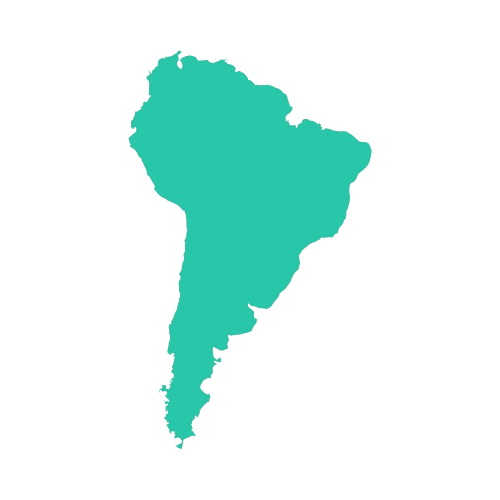
South America Continent Overview
Introduction to South America
South America is the world’s fourth-largest continent, covering approximately 17.84 million km² — about 12% of Earth’s land area. It comprises 12 sovereign countries across 4 major regions and is home to roughly 435 million people, about 5.3% of the global population. Average population density is around 24 people per km², with population growth varying considerably among countries, according to the UN World Population Prospects.
Capital Cities of South America With Population
| S no. | country | city | population |
|---|---|---|---|
| 1 | Peru | Lima | 12,003,443 |
| 2 | Colombia | Bogota | 7,945,996 |
| 3 | Argentina | Buenos Aires | 3,167,079 |
| 4 | Brazil | Brasilia | 3,043,900 |
| 5 | Venezuela | Caracas | 2,223,474 |
| 6 | Ecuador | Quito | 1,865,632 |
| 7 | Uruguay | Montevideo | 1,285,414 |
| 8 | Chile | Santiago | 559,385 |
| 9 | Paraguay | Asuncion | 452,865 |
| 10 | Bolivia | Sucre | 305,012 |
| 11 | Suriname | Paramaribo | 237,426 |
| 12 | Guyana | Georgetown | 127,970 |
| 13 | French Guiana | Cayenne | 61,678 |
| 14 | Falkland Islands | Stanley | 2,618 |
What percentage of the population lives in South America- South America Population History
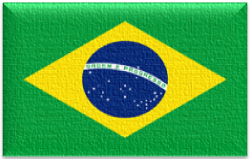
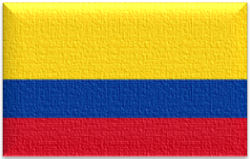
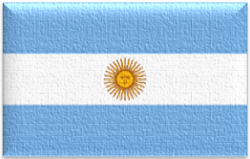
Distribution Of Religion By Population In Africa

Christianity in South America
Christianity 83% Christianity Symbol Christianity in South America Christianity is South America’s largest religion, representing about 83% of the continent’s population, with major communities across Brazil, Colombia, Argentina, Peru, Venezuela, and Chile.

Religiously Unaffiliated in South America
Unaffiliated 13% Unaffiliated Symbol Religiously Unaffiliated in South America Religiously unaffiliated people account for about 13% of South America’s population, with significant communities across Uruguay, Chile, Argentina, Brazil, and Colombia.

Islam in South America
Islam 1% Islam Symbol Islam in South America Islam is practiced by about 1% of South America’s population, with Muslim communities particularly present in Argentina, Brazil, Venezuela, and other countries.

Hinduism in South America
Hinduism 1% Hinduism Symbol Hinduism in South America Hinduism is practiced by a small share of South America’s population, with communities particularly associated with Guyana, Suriname, and other parts of the continent.
Most Spoken Native Languages in South America
Native Spoken Languages Across Continent South America
Native Spoken Languages Across Continent South America: South America is home to more than 400 Indigenous languages, alongside widely spoken European languages introduced during colonization. The most widely spoken languages by native speakers include:
Spanish — more than 200 million native speakers
Portuguese — more than 200 million native speakers
Quechua — around 8–10 million speakers
Guaraní — around 5–7 million speakers
South America Regions Population And Geography Explained With Religion
South America is a continent of striking geographic contrasts, stretching from tropical Caribbean-facing landscapes in the north to the cold subantarctic regions of the far south. The continent contains the Amazon Basin, the Andes Mountains, vast grasslands, high-altitude plateaus, deserts, glaciers, and one of the world’s richest concentrations of biodiversity. It is also home to 12 sovereign countries, several overseas territories, hundreds of Indigenous peoples, and a multilingual population shaped by Indigenous, European, African, and Asian heritage.
This guide explains South America’s population, countries, regions, geography, religions, languages, economy, cities, history, biodiversity, and demographic trends using data from the United Nations, Pew Research Center, Encyclopaedia Britannica, UNDP, World Bank, IMF, and other established sources.
South America Continent Statistics
South America by the Numbers: Countries, Regions & Area Explained
| Metric | Figure |
|---|---|
| Major geographic regions | 3 |
| Sovereign countries | 12 |
| Population | ~440.5 million |
| Area | ~17.84 million km² |
| Average population density | ~25 people/km² |
| Continent rank by area | 4th |
| Continent rank by population | 5th |
| Largest country | Brazil |
| Most populous country | Brazil |
| Main languages | Spanish and Portuguese |
| Highest point | Aconcagua, Argentina |
| Longest major river system | Amazon |
| Largest rainforest | Amazon Rainforest |
Population figures are based on UN World Population Prospects data; the 2026 South America estimate is approximately 440.5 million people. Source: UN World Population Prospects 2024, processed by demographic data providers.
How Many Countries Are There in South America?
South America has 12 sovereign countries: Argentina, Bolivia, Brazil, Chile, Colombia, Ecuador, Guyana, Paraguay, Peru, Suriname, Uruguay, and Venezuela.
Several territories are geographically associated with the continent but are not independent sovereign states. These include French Guiana, an overseas department and region of France, and the Falkland Islands, a British overseas territory. South Georgia and the South Sandwich Islands are also associated geographically with the South Atlantic region.
The distinction between countries and territories is important when compiling a South America country list because different databases may include dependent territories alongside the 12 independent states.
Regions of South America
South America can be divided geographically into three broad regions:
- Northern South America
- Western South America
- Eastern and Southern South America
These broad geographic divisions are useful for describing the continent’s physical environment, although individual atlases and institutions may use different regional classifications.
1. Northern South America
Northern South America includes Colombia, Venezuela, Guyana, Suriname, French Guiana, and parts of northern Brazil. The region combines Caribbean and Atlantic coastlines with tropical forests, river systems, savannas, and the northern Andes.
The Guiana Shield is one of the continent’s oldest geological formations, while the Orinoco Basin contains extensive tropical grasslands known as the Llanos. Northern South America also contains important Indigenous cultural regions and major petroleum resources, particularly in Venezuela and Colombia.
2. Western South America
Western South America is dominated by the Andes Mountains, which extend along the continent’s western edge from Venezuela and Colombia through Ecuador, Peru, Bolivia, Chile, and Argentina.
The region includes some of the continent’s highest mountains, volcanic landscapes, high-altitude plateaus, deep valleys, and extremely dry environments. The Andes also influence rainfall, river systems, agriculture, settlement, and climate across much of western South America.
3. Eastern and Southern South America
Eastern and southern South America contain the enormous Brazilian Highlands, Amazon Basin, Pampas, Gran Chaco, Patagonia, and the southern Andes.
Brazil dominates the eastern portion of the continent geographically, while Argentina, Uruguay, Paraguay, and southern Brazil form an important agricultural and economic zone. Farther south, Patagonia extends across Argentina and Chile and contains mountains, steppe, glaciers, lakes, and windswept plains.
Geographic Regions and Countries
Northern South America: Colombia, Venezuela, Guyana, Suriname, French Guiana, and northern Brazil.
Western South America: Colombia, Ecuador, Peru, Bolivia, Chile, and western Argentina, dominated by the Andes.
Eastern South America: Brazil and the Amazon Basin, Brazilian Highlands, and Atlantic coastal regions.
Southern South America: Argentina, Chile, Uruguay, Paraguay, and southern Brazil, including the Pampas and Patagonia.
Source: regional geographic classifications from Encyclopaedia Britannica and standard geographic references.
South America Continent Overview
Introduction to South America
South America covers approximately 17.84 million km², making it the world’s fourth-largest continent by area. It contains 12 sovereign countries and a population of roughly 440 million people in 2026. The continent represents around 5% of the world’s population and has an average population density of approximately 25 people per km².
Its geography is dominated by three enormous systems: the Andes Mountains along the west, the Amazon Basin across much of the north and center, and the broad lowlands and grasslands of the east and south. Source: UN World Population Prospects and Encyclopaedia Britannica.
Physical Geography and Landforms of South America
South America’s physical geography is exceptionally varied. The Andes form the continent’s principal mountain system and extend for thousands of kilometers along the Pacific side. The range contains numerous volcanic peaks, high plateaus, glaciers, valleys, and some of the world’s highest mountains outside Asia.
The continent’s interior is dominated by enormous drainage basins. The Amazon Basin is the largest drainage basin on Earth, covering a vast portion of northern South America. The Amazon River and its tributaries transport immense volumes of freshwater toward the Atlantic Ocean.
The Brazilian Highlands occupy much of eastern Brazil, while the Guiana Highlands rise in the north. The Pampas provide some of the continent’s most productive agricultural land across Argentina and Uruguay. In the south, Patagonia combines dry steppe, mountain landscapes, glaciers, lakes, and extensive coastal environments.
South America also contains the Atacama Desert in northern Chile, one of the driest non-polar environments on Earth.
Major Mountains of South America
South America’s mountains are strongly concentrated along the Andes.
Aconcagua
Aconcagua, located in Argentina near the Chilean border, rises to approximately 6,961 meters and is the highest mountain in both the Americas and the Southern and Western Hemispheres.
Ojos del Salado
Ojos del Salado, located on the Argentina-Chile border, is the world’s highest active volcano, rising to approximately 6,893 meters.
Chimborazo
Ecuador’s Chimborazo reaches about 6,263 meters above sea level. Because Earth bulges around the equator, its summit is among the points on Earth’s surface farthest from the planet’s center.
Major Rivers of South America
South America’s river systems support agriculture, transportation, ecosystems, hydropower, and human settlement.
Amazon River
The Amazon is the continent’s dominant river system and carries more water than any other river on Earth. Its enormous drainage basin covers several countries and supports one of the planet’s most important freshwater and forest ecosystems.
Paraná River
The Paraná River forms part of a major drainage system in southern South America and supports agriculture, transportation, and hydroelectric generation.
Orinoco River
The Orinoco drains much of Venezuela and parts of Colombia before reaching the Atlantic Ocean. Its basin includes extensive tropical forests and savannas.
São Francisco River
The São Francisco is one of Brazil’s most important rivers, supporting agriculture, communities, transport, and hydropower across northeastern and central Brazil.
Climate Zones of South America
South America contains an unusually wide range of climatic conditions because of its enormous north-south extent, elevation differences, ocean currents, and mountain barriers.
- Equatorial rainforest climate across much of the Amazon Basin, characterized by high temperatures and abundant rainfall.
- Tropical savanna climate across areas of Brazil, Venezuela, Colombia, Bolivia, and Paraguay, with pronounced wet and dry seasons.
- Desert climate in the Atacama and other arid parts of western South America.
- Mediterranean climate across central Chile, with dry summers and wetter winters.
- Temperate climates across portions of Argentina, Uruguay, Chile, and southern Brazil.
- Highland and alpine climates throughout the Andes, where temperature decreases sharply with elevation.
- Cold subpolar environments across the far south, particularly Patagonia and Tierra del Fuego.
Capital Cities of South America by Population
Population estimates for capital cities vary depending on whether a source measures municipal boundaries, urban areas, or metropolitan populations. Major South American capitals include:
| Country | Capital |
|---|---|
| Argentina | Buenos Aires |
| Bolivia | Sucre |
| Brazil | Brasília |
| Chile | Santiago |
| Colombia | Bogotá |
| Ecuador | Quito |
| Guyana | Georgetown |
| Paraguay | Asunción |
| Peru | Lima |
| Suriname | Paramaribo |
| Uruguay | Montevideo |
| Venezuela | Caracas |
Note: Bolivia has Sucre as its constitutional capital, while La Paz serves as the seat of government.
Source: national statistical agencies and UN urbanization datasets.
Major Cities of South America Beyond the Capitals
Some of South America’s most important cities are not national capitals. São Paulo is Brazil’s largest metropolitan center and one of the largest urban economies in the Southern Hemisphere. Rio de Janeiro is a major international tourism, cultural, and business center.
Medellín is an important Colombian urban and technology center, while Guayaquil is Ecuador’s major commercial port city. Córdoba is one of Argentina’s largest urban centers and an important industrial and educational hub.
Other significant cities include Rosario, Belo Horizonte, Salvador, Fortaleza, Recife, Cali, Barranquilla, Arequipa, and Valparaíso.
South America Countries by Population
Brazil has by far the largest population in South America. Colombia, Argentina, Peru, and Venezuela follow as the continent’s next-largest population centers.
| Rank | Country | Approx. 2026 Population |
|---|---|---|
| 1 | Brazil | ~212.8 million |
| 2 | Colombia | ~53.4 million |
| 3 | Argentina | ~45.9 million |
| 4 | Peru | ~34.6 million |
| 5 | Venezuela | ~28.5 million |
| 6 | Chile | ~19.9 million |
| 7 | Ecuador | ~18.3 million |
| 8 | Bolivia | ~12.6 million |
| 9 | Paraguay | ~7.0 million |
| 10 | Uruguay | ~3.4 million |
| 11 | Guyana | ~0.84 million |
| 12 | Suriname | ~0.64 million |
Figures are rounded estimates based on 2026 demographic datasets derived from UN World Population Prospects. Exact totals can vary slightly according to revision and geographic definitions.
Population History of South America
| Year | Approx. Population |
|---|---|
| 2026 | ~440.5 million |
| 2020 | ~431 million |
| 2010 | ~393 million |
| 2000 | ~348 million |
| 1990 | ~297 million |
| 1980 | ~241 million |
| 1970 | ~191 million |
| 1960 | ~141 million |
| 1950 | ~113 million |
Source: UN World Population Prospects 2024.
South America’s population increased rapidly during the second half of the twentieth century. Growth has slowed considerably in recent decades as fertility rates have fallen across much of the continent. Several countries now have fertility levels below the replacement threshold, creating a long-term shift toward slower population growth and population aging.
UN-based projections indicate that South America’s population is expected to reach a higher level during the coming decades before eventually entering a period of decline.
Economy of South America
South America has a diverse economic base built around agriculture, mining, energy, manufacturing, services, finance, and international trade. Brazil represents the continent’s largest economy and has a highly diversified industrial and service sector.
Key economic characteristics include:
- Agriculture: Brazil, Argentina, Paraguay, Uruguay, Colombia, Peru, and Chile are important producers of crops, livestock, coffee, soybeans, fruits, and other agricultural commodities.
- Mining: Chile and Peru are major copper producers, while Brazil is a leading producer of iron ore and other minerals.
- Energy: Venezuela possesses enormous petroleum reserves, while Brazil, Argentina, Colombia, Bolivia, Ecuador, and Guyana also have important energy industries.
- Hydropower: Brazil, Paraguay, Colombia, and several Andean countries rely heavily on hydroelectric generation.
- Technology and services: São Paulo, Buenos Aires, Bogotá, Santiago, Lima, and other metropolitan areas host growing technology, financial, and professional-service industries.
- Tourism: Peru’s archaeological heritage, Brazil’s coastline and Amazon, Argentina’s landscapes, Chile’s deserts and mountains, and Colombia’s cultural and natural attractions support major tourism industries.
- Trade integration: MERCOSUR and the Pacific Alliance have contributed to regional economic integration and trade relationships.
Source: World Bank, International Monetary Fund, and national economic statistics.
South America’s Major Economies
Brazil
Brazil is South America’s largest country by population, area, and overall economic output. Its economy combines agriculture, manufacturing, mining, energy, financial services, technology, and a large domestic consumer market.
Argentina
Argentina has a diversified economy with major agricultural, energy, industrial, and service sectors. Its Pampas are among the continent’s most productive agricultural regions.
Colombia
Colombia has a large service economy alongside energy, agriculture, manufacturing, mining, and rapidly developing technology industries.
Chile
Chile has a highly open economy and is particularly important in global copper production. Agriculture, mining, services, fisheries, and renewable energy are also significant.
Peru
Peru’s economy combines mining, agriculture, manufacturing, fishing, tourism, and services. Copper, gold, silver, and other minerals are important exports.
Nation-by-Nation Comparison: South America Countries by HDI
The Human Development Index measures three broad dimensions: health, education, and income.
South American countries vary considerably in human development. Chile, Argentina, and Uruguay have historically occupied the upper end of the regional HDI table, while countries facing greater economic and social constraints generally record lower scores.
Because UNDP updates HDI rankings and values through successive Human Development Reports, the latest published dataset should be used when creating a numerical ranking table.
Source: UNDP Human Development Reports.
Which Country in South America Has the Highest HDI?
In recent UNDP Human Development Report datasets, Chile has ranked among the highest-developed countries in South America, alongside Argentina and Uruguay. HDI values should be cited using the relevant UNDP reporting year because the index is revised and published periodically.
Source: UNDP Human Development Reports.
Population in South America by Religion
South America is overwhelmingly Christian, although religious affiliation has changed significantly in recent decades. Catholicism remains historically dominant across much of the continent, while Protestant and evangelical communities have expanded in several countries.
Christianity in South America
Christianity is the continent’s dominant religious tradition, with Catholicism historically accounting for the largest share. Protestant and evangelical movements have also grown across several South American countries. Source: Pew Research Center.
Religiously Unaffiliated Population in South America
Religiously unaffiliated people form South America’s second-largest broad religious category in many demographic datasets. The share is particularly notable in countries such as Uruguay, Chile, and Argentina, where religious disaffiliation has increased over time. Source: Pew Research Center.
Islam in South America
Islam represents a small minority of South America’s population. Muslim communities are concentrated especially in large metropolitan areas and include descendants of immigrants from the Middle East, as well as more recent converts and immigrant communities. Source: Pew Research Center.
Judaism in South America
Judaism represents a small proportion of South America’s population. The continent has historically important Jewish communities, particularly in Argentina and Brazil, with smaller communities elsewhere. Source: Pew Research Center.
Pew’s broader Latin America-Caribbean analysis estimated that Christians represented about 85% of the region’s population in 2020, while the religiously unaffiliated accounted for about 12%. Muslims, Jews, Hindus, Buddhists, and other groups each represented comparatively small shares. South America is included within the broader Latin America-Caribbean regional framework used in this dataset. Source: Pew Research Center.
Most Spoken Languages in South America
Languages Spoken Across the Continent
South America has a multilingual linguistic landscape shaped by Indigenous languages, European colonial languages, African heritage, and later immigration. Spanish and Portuguese dominate numerically, with Portuguese concentrated overwhelmingly in Brazil and Spanish used across most of the remaining sovereign countries.
Major languages include:
- Spanish — the principal language across most South American countries.
- Portuguese — the dominant language of Brazil, the continent’s most populous country.
- Quechua — an important Indigenous language family concentrated particularly in Peru, Bolivia, and Ecuador.
- Guarani — one of the most important Indigenous languages, particularly in Paraguay.
- Aymara — spoken mainly in Bolivia and Peru, with communities in Chile.
- Mapudungun — associated primarily with the Mapuche people of Chile and Argentina.
- Dutch — the official language of Suriname.
- English — the official language of Guyana.
- French — the official language of French Guiana.
- Indigenous languages of Amazonia — hundreds of smaller languages remain spoken across Brazil, Peru, Colombia, Venezuela, Bolivia, and neighboring areas.
South America’s linguistic diversity is therefore much broader than its two dominant colonial languages suggest. Indigenous languages remain an important part of the continent’s cultural identity and national heritage.
Source: Ethnologue and national language authorities.
Indigenous Peoples and Cultures of South America
South America contains hundreds of Indigenous peoples with distinct languages, traditions, territories, and social systems.
Major Indigenous cultural and linguistic populations include the Quechua, Aymara, Guarani, Mapuche, Yanomami, Tikuna, Wayuu, Shipibo-Conibo, Asháninka, and many other peoples.
The Andes contain some of the continent’s largest Indigenous populations, while the Amazon Basin contains numerous communities with languages and cultural traditions that developed over thousands of years.
Indigenous heritage remains particularly visible in Bolivia, Peru, Ecuador, Paraguay, Colombia, Brazil, Chile, Venezuela, Guyana, and Suriname.
South America’s Oldest Historical Civilizations
South America has a long archaeological history extending thousands of years before European colonization.
Norte Chico Civilization
The Norte Chico civilization, also called the Caral-Supe civilization, developed along the central coast of present-day Peru more than 4,000 years ago. It is recognized as one of the earliest known complex civilizations in the Americas.
Chavín Civilization
The Chavín civilization developed in the Peruvian Andes and influenced religious and artistic traditions across a wide area of ancient South America.
Nazca Civilization
The Nazca civilization flourished along Peru’s southern coast and is famous for the enormous Nazca Lines, geoglyphs created in the desert landscape.
Moche Civilization
The Moche civilization developed along Peru’s northern coast and is known for sophisticated ceramics, metallurgy, irrigation systems, architecture, and monumental sites.
Inca Empire
The Inca Empire became the largest political state in pre-Columbian South America. Centered in the Andes, it controlled a vast territory before the Spanish conquest in the sixteenth century. Cusco served as its political and cultural center.
European Colonization and South American Independence
European exploration began in the late fifteenth century following voyages across the Atlantic. Spain and Portugal subsequently established extensive colonial territories.
Portuguese rule became dominant in Brazil, while Spain controlled most of the rest of the continent. European colonization dramatically transformed political structures, population patterns, economies, languages, and religions.
During the late eighteenth and early nineteenth centuries, independence movements spread across the continent. Figures such as Simón Bolívar and José de San Martín played major roles in the independence struggles that created many modern South American states.
Brazil followed a different political path, declaring independence from Portugal in 1822.
Wildlife and Biodiversity of South America
South America is one of the world’s most biologically diverse continents.
The Amazon Rainforest contains an extraordinary range of plant and animal species, including jaguars, giant river otters, pink river dolphins, sloths, macaws, anacondas, monkeys, and thousands of plant species.
The Andes provide habitats for spectacled bears, vicuñas, llamas, alpacas, condors, pumas, and numerous high-altitude birds.
The Pantanal, especially in Brazil, Bolivia, and Paraguay, is one of the world’s largest tropical wetland systems and supports jaguars, caimans, giant otters, capybaras, and hundreds of bird species.
The Galápagos Islands, although politically part of Ecuador and geographically located in the Pacific Ocean, are famous for unique species and played an important role in the development of Charles Darwin’s ideas about natural selection.
Environmental Challenges in South America
South America’s natural systems face several major environmental pressures.
Amazon Deforestation
Deforestation, agricultural expansion, infrastructure development, mining, and fires have altered parts of the Amazon rainforest. The scale and pace vary considerably by country and year.
Glacier Retreat
Many Andean glaciers have experienced significant retreat, affecting water availability and ecosystems in high-altitude regions.
Biodiversity Loss
Habitat conversion, illegal wildlife trade, pollution, invasive species, and climate change create pressure on ecosystems across the continent.
Urban Expansion
Rapid metropolitan growth has increased demand for housing, transportation, water, energy, and public services in major cities.
Quick Facts Summary
| Category | Details |
|---|---|
| Continent rank by size | 4th largest |
| Continent rank by population | 5th most populous |
| Approximate area | ~17.84 million km² |
| Approximate population | ~440.5 million |
| Sovereign countries | 12 |
| Major geographic regions | Northern, Western, Eastern & Southern |
| Largest country by area | Brazil |
| Most populous country | Brazil |
| Dominant religion | Christianity |
| Major languages | Spanish and Portuguese |
| Highest point | Aconcagua, Argentina |
| Major river system | Amazon |
| Largest rainforest | Amazon Rainforest |
| Largest wetland | Pantanal |
| Highest active volcano | Ojos del Salado |
| Major mountain system | Andes |
| Largest economy | Brazil |
| Important Indigenous languages | Quechua, Guarani, Aymara and others |
| Oldest complex civilization | Norte Chico / Caral-Supe |
| Major pre-Columbian empire | Inca Empire |
Conclusion
South America combines enormous geographic scale with remarkable cultural and ecological diversity. The Andes, Amazon Basin, Pampas, Atacama Desert, Brazilian Highlands, and Patagonia create a continent of sharply contrasting landscapes.
Its population of roughly 440 million people is concentrated heavily in Brazil, the Atlantic coastal belt, the Andes, and major metropolitan areas. Spanish and Portuguese dominate modern communication, but hundreds of Indigenous languages and cultural traditions remain an important part of South America’s identity.
The continent’s future will be shaped by several interconnected trends: slower population growth, urbanization, economic diversification, mineral and energy development, agricultural production, biodiversity conservation, climate change, and the protection of Indigenous communities and ecosystems.
From the ancient civilizations of Peru to the modern megacities of Brazil, Colombia, and Argentina, South America combines deep historical continuity with rapid social, economic, and environmental change.
Frequently Asked Questions
1. How many countries are in South America?
South America has 12 sovereign countries: Argentina, Bolivia, Brazil, Chile, Colombia, Ecuador, Guyana, Paraguay, Peru, Suriname, Uruguay, and Venezuela.
2. What is the population of South America?
South America has approximately 440 million people in 2026, based on UN World Population Prospects estimates.
3. What is the largest country in South America?
Brazil is the largest country in South America by both area and population.
4. What is the largest city in South America?
São Paulo, Brazil, is generally regarded as South America’s largest metropolitan area by population.
5. What is the largest religion in South America?
Christianity is the dominant religious tradition across South America, with Catholicism historically representing the largest Christian tradition.
6. What are the main languages of South America?
Spanish and Portuguese are the two dominant languages. Important Indigenous languages include Quechua, Guarani, and Aymara.
7. What is the largest river in South America?
The Amazon River system is the continent’s largest river system and has the greatest water discharge of any river system in the world.
8. What is the highest mountain in South America?
Aconcagua in Argentina is the highest mountain in South America, reaching approximately 6,961 meters.
9. What is the largest rainforest in South America?
The Amazon Rainforest is the continent’s largest rainforest and the world’s largest tropical rainforest.
10. What is the driest place in South America?
The Atacama Desert in northern Chile is among the driest non-polar environments on Earth.
11. How many regions are there in South America?
There is no single universally accepted regional division. For broad geographic purposes, South America can be discussed through Northern, Western, and Eastern/Southern regions, while other classifications use different subregions.
12. What was the largest empire in pre-Columbian South America?
The Inca Empire was the largest political empire in pre-Columbian South America, controlling a vast area of the Andes before Spanish conquest.
13. Which South American country has the highest HDI?
Chile, Argentina, and Uruguay are among the continent’s highest-ranking countries in recent UNDP Human Development Index datasets. Exact rankings vary by Human Development Report edition.
14. Why is Brazil so important to South America?
Brazil is the continent’s largest country by area and population and has South America’s largest economy. Its territory includes much of the Amazon Basin and a major share of the continent’s agricultural, industrial, mineral, and energy resources.
15. Is French Guiana a country?
No. French Guiana is an overseas department and region of France, although it is geographically located in South America.
Sources
- United Nations, World Population Prospects population estimates and projections.
- Our World in Data — UN World Population Prospects population dataset.
- Encyclopaedia Britannica — South America geography, area, landforms, and regional information.
- Pew Research Center — religious composition and demographic change in Latin America and the Caribbean.
- UNDP Human Development Reports — Human Development Index.
- World Bank — economic and development indicators.
- International Monetary Fund — national and regional economic data.
- Ethnologue — language and linguistic diversity data.
- UN Statistics Division — geographic and demographic classifications.
- UN World Urbanization Prospects — urban and city population data.