
Almoravid dynasty originated and was founded in Mauritania
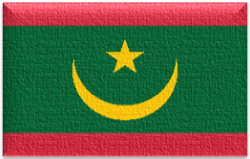
modern day and historical flags almoravid dynasty

Top 5 almoravid dynasty rulers
01
Abdallah ibn Yasin
Died 1059
02
Abu Bakr ibn Umar
Died 1087
03
Yusuf ibn Tashfin
Died In 1106
04
Ali ibn Yusuf
Died In 1143
05
Tashfin ibn Ali
Died In 1145
Modern Nations Overlapping with the Peak Territory of the almoravid dynasty
Almoravid Empire History
Introduction
The Almoravid Empire was a major medieval Islamic empire founded by the Sanhaja Amazigh (Berber) peoples of the western Sahara. Emerging during the 11th century, the Almoravids established a powerful state that united much of present-day Morocco, extended across parts of North Africa, and incorporated large territories of Muslim-ruled Iberia, known as al-Andalus.
The empire rose through a combination of religious reform, tribal alliances, military expansion, and control of important trans-Saharan trade routes. Its rulers promoted the Maliki school of Sunni Islamic law and established Marrakesh as their principal political center. Under Yusuf ibn Tashfin, the Almoravids became one of the most influential powers in the western Islamic world.
The Almoravids also played a significant role in the history of medieval Spain. After Muslim rulers in al-Andalus requested military assistance against expanding Christian kingdoms, Yusuf ibn Tashfin crossed the Strait of Gibraltar and defeated the forces of Alfonso VI of León and Castile at the Battle of Sagrajas in 1086. The Almoravids subsequently brought most of the remaining Taifa kingdoms under their authority.
The empire reached its greatest influence during the late 11th and early 12th centuries. However, internal difficulties, military setbacks, and the rise of the rival Almohad movement gradually weakened Almoravid authority. In 1147, the Almohads captured Marrakesh, bringing the Almoravid dynasty’s imperial rule to an end.
Almoravid Empire at a Glance
| Feature | Details |
|---|---|
| Empire | Almoravid Empire |
| Dynasty | Almoravid dynasty |
| Period | 11th–12th centuries |
| Approximate imperial era | c. 1040–1147 CE |
| Founding movement | Almoravid religious and political movement |
| Founding leader | Abdallah ibn Yasin |
| Major political founder | Abu Bakr ibn Umar |
| Most famous ruler | Yusuf ibn Tashfin |
| Last ruler | Ishaq ibn Ali |
| Capital | Marrakesh |
| Main ethnic groups | Sanhaja Amazigh and other North African populations |
| Religion | Islam |
| Main Islamic legal school | Maliki Sunni Islam |
| Major territories | Morocco, parts of Algeria, the western Sahara, and al-Andalus |
| Important language | Arabic, alongside Amazigh languages |
| Major rival dynasty | Almohad dynasty |
| Major military victory | Battle of Sagrajas, 1086 |
| Fall of the capital | 1147 CE |
Origin of the Almoravid Empire
The origins of the Almoravid Empire lie among the Sanhaja, a confederation of Amazigh groups inhabiting parts of the western Sahara and regions south of the Atlas Mountains. These communities participated in pastoralism, caravan commerce, and the movement of goods between North Africa and the western Sahel.
During the 11th century, the western Maghreb was politically fragmented. Various regional dynasties and local rulers controlled important towns, agricultural districts, and commercial routes. Meanwhile, Muslim-ruled Iberia had divided into numerous independent Taifa kingdoms following the collapse of the Umayyad Caliphate of Córdoba in 1031.
The Almoravid movement emerged within this setting of political division and religious reform. It developed a reputation for disciplined military organization and adherence to Maliki Islamic jurisprudence.
The name Almoravid derives from the Arabic term al-Murābiṭūn, commonly associated with those who devoted themselves to religious service and frontier or communal military activity at a ribāṭ. The precise historical development of the movement’s name and early organization remains a subject of scholarly discussion.
The Almoravids initially concentrated on consolidating authority among Saharan communities before expanding northward into the Maghreb.
Abdallah ibn Yasin and the Religious Movement
Abdallah ibn Yasin was a religious scholar traditionally identified as the principal spiritual founder of the Almoravid movement. He helped establish a disciplined religious community among Sanhaja groups and encouraged adherence to Islamic teachings and Maliki jurisprudence.
The movement’s early development is associated with Yahya ibn Ibrahim, a leader connected with the Gudala Sanhaja. According to traditional accounts, Yahya sought religious instruction for his people after encountering Abdallah ibn Yasin.
Ibn Yasin’s teachings helped create a shared ideological framework among communities that had previously maintained separate political and tribal identities. The movement developed a strong emphasis on religious discipline, collective allegiance, and organized military action.
Its expansion was not solely a religious undertaking. Tribal politics, competition for trade routes, regional rivalries, and the ambitions of military leaders also influenced its development.
Abdallah ibn Yasin died during the expansion of the movement, traditionally dated to approximately 1059. By then, the Almoravids had established the foundations of a growing political and military power.
Abu Bakr ibn Umar and Early Expansion
Abu Bakr ibn Umar was one of the leading military commanders responsible for the early territorial expansion of the Almoravids. Following the death of Yahya ibn Umar, another early leader, Abu Bakr assumed an important role in directing the movement’s campaigns.
The Almoravids advanced northward into the western Maghreb, where political fragmentation created opportunities for expansion. They confronted local rulers, strengthened alliances, and established authority over strategically important settlements.
The conquest of Sijilmasa, an important commercial center associated with trans-Saharan trade, was significant to their rise. Control of the town strengthened the movement’s position within networks connecting the Maghreb with the western Sahel.
Abu Bakr later returned toward the Sahara to address political and military affairs there. Before departing, he entrusted much of the northern campaign and the developing state to his relative Yusuf ibn Tashfin.
This transfer of authority proved decisive. Yusuf would transform the Almoravid movement from a regional power into an empire that dominated much of the western Mediterranean’s Islamic world.
Rise of Yusuf ibn Tashfin
Yusuf ibn Tashfin was the most influential ruler in Almoravid history. During his reign, the movement consolidated its authority over Morocco and expanded into al-Andalus.
Yusuf strengthened the administration, organized military forces, and developed Marrakesh into the empire’s principal capital. His leadership helped connect territories in the Maghreb with Muslim-ruled regions across the Strait of Gibraltar.
Rather than immediately claiming the universal title of caliph, the Almoravid rulers used the title Amir al-Muslimin, meaning Commander or Prince of the Muslims. They maintained formal recognition of the Abbasid caliphate, reflecting the political and religious relationships that shaped the medieval Islamic world.
Yusuf’s rule combined military expansion with the consolidation of existing institutions. His campaigns against regional rivals brought extensive territory under a more centralized government, although local conditions and levels of direct control varied from region to region.
His intervention in Iberia in 1086 was particularly important because it helped establish Almoravid authority beyond North Africa.
Founding of Marrakesh
Marrakesh became the political center of the Almoravid state during the second half of the 11th century. Its foundation is traditionally dated to around 1070–1071, although historical accounts differ on the precise chronology and the roles of early Almoravid leaders.
The city’s location provided access to agricultural lands, routes toward the Atlas Mountains, and commercial connections extending into the Sahara. It also offered a strategic base for campaigns in northern Morocco and across the Strait of Gibraltar.
Under Yusuf ibn Tashfin and his successors, Marrakesh developed into an important center of government, religious scholarship, commerce, and architecture.
The city’s rise reflected a broader political transformation. The Almoravids were no longer simply a Saharan religious movement; they had become rulers of a large territorial state requiring administrative institutions, fortified settlements, and urban centers.
Marrakesh remained an important political capital after the Almoravids were replaced by the Almohads.
Expansion Across North Africa
The Almoravids extended their authority across much of the western Maghreb, including Morocco and parts of what is now Algeria. Their expansion involved military campaigns, alliances with local elites, and the incorporation of regional commercial centers.
They confronted competing Amazigh groups and established control over territories that had previously been divided among local dynasties and principalities.
Their authority was particularly significant in western North Africa, where they connected Saharan routes with Mediterranean ports and inland urban centers.
The empire’s geographical reach should not be understood as a uniform modern-style territorial administration. Some regions were governed directly, while others depended on local authorities, military garrisons, negotiated allegiance, or changing political relationships.
Nevertheless, the Almoravids established one of the most influential political systems in the medieval Maghreb and created a framework that later North African dynasties would adapt.
The Almoravid Conquest of al-Andalus
Al-Andalus was the name used for Muslim-ruled parts of the Iberian Peninsula. Following the collapse of the Umayyad Caliphate of Córdoba in 1031, numerous independent Taifa kingdoms emerged.
These states included Seville, Granada, Badajoz, Zaragoza, Toledo, and other regional centers. Although several enjoyed considerable prosperity and cultural achievement, political rivalry often prevented them from presenting a united military front against their Christian neighbors.
The expansion of Christian kingdoms, particularly under Alfonso VI, placed increasing pressure on Muslim rulers. The conquest of Toledo by Alfonso VI in 1085 intensified these concerns.
Several Taifa rulers sought assistance from Yusuf ibn Tashfin, who had already consolidated Almoravid power in North Africa.
The resulting intervention changed the balance of power in Iberia. The Almoravids initially arrived as military allies, but they eventually removed many of the Taifa rulers and incorporated their territories into the empire.
This process reunited much of Muslim Iberia under a North African dynasty and connected the political histories of Morocco and al-Andalus more closely than before.
Battle of Sagrajas (1086)
The Battle of Sagrajas, also known as the Battle of Zallaqa, was one of the most important military engagements in Almoravid history.
It took place in 1086 near Badajoz in present-day Spain. Yusuf ibn Tashfin led Almoravid forces into Iberia to assist Muslim rulers confronting Alfonso VI of León and Castile.
The Almoravid army joined forces with contingents from several Taifa kingdoms. The resulting battle ended in a major defeat for Alfonso VI’s army.
The victory demonstrated the military strength of the Almoravids and checked the immediate Christian advance in the region. It also enhanced Yusuf’s standing among Muslim rulers and strengthened the position of his movement in al-Andalus.
Sagrajas did not permanently end conflict between Christian and Muslim states in Iberia. Instead, it initiated a new phase in which the Almoravids became directly involved in the peninsula’s political affairs.
The battle remains one of the defining events associated with Yusuf ibn Tashfin and the rise of the Almoravid Empire.
Annexation of the Taifa Kingdoms
After the victory at Sagrajas, Yusuf ibn Tashfin returned to Iberia as Almoravid involvement deepened. The political divisions among the Taifa rulers, along with continuing military pressure, contributed to the decision to remove several local dynasties.
From approximately 1090 onward, the Almoravids incorporated many of the major Taifa territories into their state. Seville, Granada, Córdoba, and other important cities came under Almoravid rule. Zaragoza, in the northeast, was also eventually ruled by the dynasty, though its political and military situation differed from that of the southern territories.
The annexation of the Taifa kingdoms was justified by Almoravid leaders partly through religious and political arguments concerning the security and unity of Muslim Iberia. It also served the dynasty’s strategic interests by bringing major cities, agricultural districts, and revenue sources under its control.
The result was the creation of a transcontinental empire extending across the western Maghreb and significant parts of Iberia.
However, direct imperial rule also brought new responsibilities. The Almoravids had to defend distant frontiers, manage urban populations, maintain military forces, and respond to local opposition.
Major Rulers of the Almoravid Empire
Abu Bakr ibn Umar (early leadership, mid-11th century)
Abu Bakr ibn Umar was a central figure in the early military development of the Almoravid movement. He helped consolidate the movement’s authority in the western Sahara and directed campaigns into the Maghreb.
His decision to entrust northern territories to Yusuf ibn Tashfin enabled the latter to establish a stronger political center and expand the state.
Abu Bakr remained associated with the southern regions of the movement’s sphere of influence. His career illustrates the importance of Saharan networks and tribal alliances in the empire’s formation.
Yusuf ibn Tashfin (c. 1061–1106)
Yusuf ibn Tashfin was the dynasty’s most famous ruler and the principal architect of its imperial expansion.
His major achievements included the consolidation of Morocco, the development of Marrakesh as the capital, the victory at Sagrajas, and the incorporation of much of al-Andalus.
He strengthened military organization and brought major commercial and urban centers under Almoravid control. His reign marked the high point of the dynasty’s political influence.
Yusuf died in approximately 1106 and was succeeded by his son Ali ibn Yusuf.
Ali ibn Yusuf (1106–1143)
Ali ibn Yusuf inherited a vast empire spanning territories in North Africa and Iberia. His reign was marked by continued administration of the state, military campaigns in al-Andalus, and the growing challenge of the Almohad movement.
The empire continued to possess considerable resources, but its geographical scale made governance and defense increasingly difficult. Military pressure in Iberia and political unrest in the Maghreb placed growing demands on the dynasty.
Ali’s reign also coincided with the development of a sophisticated urban and architectural culture, particularly in Marrakesh and other major cities.
He died in 1143, leaving the dynasty facing mounting challenges.
Tashfin ibn Ali (1143–1145)
Tashfin ibn Ali ruled during a period of accelerating Almoravid decline. He inherited a state already facing a powerful Almohad challenge in North Africa and continuing military pressure in Iberia.
The Almohads gained ground in the Maghreb, undermining the authority of the Almoravid government and threatening its principal centers.
Tashfin was killed in 1145 while attempting to escape during military operations against the Almohads. His death further weakened the dynasty’s ability to organize an effective response.
Ibrahim ibn Tashfin (1145)
Ibrahim ibn Tashfin held power briefly during the succession crisis that followed his father’s death. His short reign reflected the severe instability affecting the dynasty.
The Almohad advance continued, and the Almoravids struggled to maintain control over their remaining territories.
Ishaq ibn Ali (1145–1147)
Ishaq ibn Ali was the last Almoravid ruler. His reign coincided with the final phase of the struggle against the Almohads.
The Almohad movement, which had emerged in the Atlas Mountains under the religious leadership of Ibn Tumart and the political leadership of Abd al-Mu’min, steadily expanded its power.
In 1147, the Almohads captured Marrakesh. Ishaq was killed during the conquest, marking the end of the Almoravid dynasty’s imperial rule.
Government and Administration
The Almoravid Empire governed a large and diverse territory that included Saharan communities, North African cities, agricultural regions, and Iberian urban centers.
The ruler stood at the head of the political and military system. Provincial governors, military commanders, judges, and local officials helped administer territories and maintain the authority of the dynasty.
The government relied on established urban institutions as well as military networks and alliances with regional leaders. In al-Andalus, the Almoravids inherited administrative traditions developed under earlier Muslim dynasties.
Religious scholars and judges played an important role in legal and social life. The dynasty’s association with Maliki jurisprudence helped establish a shared legal framework across much of its territory.
Despite efforts to centralize authority, administration varied across the empire. Distance, local political conditions, and military pressures limited the degree to which the central government could exercise uniform control.
Religion and Maliki Islamic Law
The Almoravids were Sunni Muslims closely associated with the Maliki school of Islamic jurisprudence. This legal tradition had a long history in North Africa and al-Andalus before the dynasty emerged.
The movement’s religious identity helped legitimize its authority and provided a framework for law, judicial appointments, and public religious institutions.
Maliki scholars and judges were influential in the administration of justice. Religious learning also supported the dynasty’s relationship with local communities and established urban elites.
The Almoravids are often described as a reform-oriented movement, but their religious policies were shaped by both ideological commitments and the political circumstances of the empire.
Their relationship with scholars, local traditions, and intellectual communities was not always simple. As the dynasty developed, tensions emerged between political authority, religious scholars, and changing social conditions.
Economy and Trans-Saharan Trade
Trade was fundamental to the rise and development of the Almoravid Empire. Its territories connected Mediterranean markets with commercial networks extending across the Sahara into the western Sahel.
Caravans transported goods such as gold, salt, textiles, and other commodities between North African cities and trading centers farther south.
Sijilmasa was particularly important as a northern gateway for trans-Saharan commerce. Other cities and ports connected inland routes with Mediterranean and Atlantic-facing trade networks.
The empire also benefited from agricultural production, livestock, taxation, urban markets, and commercial exchange across the Strait of Gibraltar.
The incorporation of parts of al-Andalus added important agricultural regions, manufacturing centers, and urban markets to the dynasty’s economic base.
Control of trade routes helped finance military campaigns and support the development of Marrakesh and other cities. However, the empire’s reliance on long-distance commerce and extensive territorial networks also made it vulnerable to political disruption and the loss of key centers.
Military Organization and Warfare
The Almoravid military developed from the movement’s Sanhaja tribal foundations and expanded as the dynasty acquired additional territories.
Its forces included cavalry, infantry, and contingents drawn from different communities across the empire. Military organization evolved as the Almoravids moved from Saharan campaigns to large-scale operations in North Africa and Iberia.
Mobility was particularly important in the early expansion of the movement. Cavalry and knowledge of regional terrain supported campaigns across arid and semi-arid landscapes.
In Iberia, the Almoravids confronted armies with different military traditions and operated in a setting characterized by fortified towns, regional alliances, and contested frontiers.
The victory at Sagrajas demonstrated their ability to coordinate forces from North Africa with troops supplied by Muslim Iberian rulers.
Over time, however, maintaining military control across such a large area became increasingly difficult. The dynasty had to defend multiple fronts while responding to internal rebellions and the rise of the Almohads.
Major Battles and Military Campaigns
Conquest of Sijilmasa
The Almoravid capture of Sijilmasa strengthened their control over an important commercial center linking the Maghreb with Saharan trade routes. The conquest helped provide the movement with a stronger economic and strategic base.
Expansion into Morocco
The Almoravids consolidated their authority across much of Morocco by confronting rival political groups and incorporating important settlements. Their expansion laid the foundations for the centralized state that developed under Yusuf ibn Tashfin.
Battle of Sagrajas (1086)
The victory over Alfonso VI’s forces was a major turning point. It checked the immediate Christian advance and strengthened Almoravid influence in al-Andalus.
Campaigns against the Taifa Kingdoms
The incorporation of the Taifa kingdoms from approximately 1090 onward expanded Almoravid control over major Iberian cities and agricultural territories. These campaigns transformed the dynasty from an external military ally into the principal ruling power across much of Muslim Iberia.
Conflict with the Almohads
The Almohad movement became the most serious threat to Almoravid authority. Its forces captured important towns and territories in North Africa, eventually advancing on Marrakesh in 1147.
Culture, Architecture, and Urban Development
The Almoravid period contributed to the development of urban institutions, architecture, and artistic exchange across North Africa and al-Andalus.
Marrakesh became a major center of government and religious life. Mosques, public buildings, commercial spaces, and other urban structures reflected the dynasty’s growing resources and political ambitions.
Almoravid architecture combined regional North African traditions with influences from al-Andalus. Decorative techniques, carved wood, stucco work, and geometric ornament became part of the broader artistic environment of the western Islamic world.
One notable surviving object associated with the period is the elaborate minbar commissioned for the Kutubiyya Mosque in Marrakesh by Ali ibn Yusuf in the 12th century. Although the present Kutubiyya Mosque is principally associated with the later Almohad period, its historic minbar preserves evidence of Almoravid craftsmanship and artistic connections with al-Andalus.
The dynasty’s cultural history also challenges the assumption that its religious conservatism prevented artistic development. Almoravid patronage helped sustain artistic production and exchange between North Africa and Iberia.
Education, Scholarship, and Intellectual Life
Religious scholarship was central to Almoravid political culture. Maliki jurists, judges, teachers, and other scholars contributed to legal administration and the transmission of Islamic learning.
The dynasty governed cities that already possessed important scholarly traditions. Córdoba, Seville, Fez, and other centers had developed intellectual networks under earlier rulers, and these traditions continued under Almoravid authority.
Arabic remained an important language of administration, scholarship, literature, and religious learning. Amazigh languages also remained central to the lives of many communities throughout the empire.
The movement’s religious identity influenced educational and legal institutions, although intellectual life across the empire remained diverse and was shaped by local traditions as well as imperial policy.
Relations with Christian Kingdoms
The Almoravid Empire played a central role in the military and political relationships between Muslim-ruled Iberia and the Christian kingdoms of the peninsula.
Its intervention followed the expansion of Christian powers and the weakening of the Taifa states. The victory at Sagrajas strengthened the position of Muslim rulers, but the subsequent annexation of the Taifa kingdoms created a new political order.
The Almoravids continued to fight against Christian forces and defend major cities and frontier regions. Their armies achieved successes as well as setbacks, and the balance of power varied over time.
The dynasty could not permanently halt the expansion of Christian kingdoms. Political divisions, military pressures, and the increasing challenge of the Almohads weakened its position during the 12th century.
The Almoravid period nevertheless remains an important chapter in the history of medieval Iberia because it connected the political development of the Maghreb and al-Andalus within a single imperial framework.
Reasons for the Decline of the Almoravid Empire
The Almoravid Empire did not collapse because of one event alone. Several connected developments weakened the dynasty during the first half of the 12th century.
Rise of the Almohad Movement
The Almohads emerged in the Atlas Mountains under Ibn Tumart, whose religious teachings challenged the legitimacy and authority of the Almoravids.
After Ibn Tumart’s death, Abd al-Mu’min became the principal political and military leader of the movement. The Almohads developed a powerful alternative to Almoravid rule and gradually expanded across the Maghreb.
Military Pressure on Multiple Fronts
The empire had to defend territories in North Africa and Iberia simultaneously. Maintaining armies and communications across the Strait of Gibraltar and extensive inland regions placed heavy demands on the government.
As the Almohads advanced, the Almoravids found it increasingly difficult to preserve their territorial integrity.
Political and Succession Difficulties
The later reigns were marked by growing instability and a weakening ability to coordinate resistance. The deaths of important rulers during the conflict with the Almohads further undermined the dynasty.
Challenges in al-Andalus
The Almoravids faced continuing conflict with Christian kingdoms and local opposition. The loss of important strongholds and the difficulty of defending distant territories weakened their position in Iberia.
Loss of Key Cities
The Almohad capture of major North African centers gradually reduced Almoravid authority. The fall of Marrakesh in 1147 was the decisive event that ended the dynasty’s imperial rule.
Fall of the Almoravid Empire (1147)
The final collapse of the Almoravid Empire came with the Almohad conquest of Marrakesh in 1147.
The Almohads had spent years building their political and military strength in opposition to the Almoravids. Under Abd al-Mu’min, they transformed the movement into a major imperial power.
As Almoravid authority weakened, the Almohads captured increasingly important territories and advanced toward the capital. The fall of Marrakesh ended the dynasty’s control of its principal political center.
Ishaq ibn Ali, the last Almoravid ruler, was killed during the conquest. The Almohads then established their own government in Marrakesh and continued expanding their authority across North Africa and al-Andalus.
The transition marked the replacement of one major Amazigh-led Islamic dynasty by another. Although Almoravid imperial rule ended, its administrative, urban, and cultural legacies continued to influence the region.
Almoravid Empire vs. Almohad Empire
| Feature | Almoravid Empire | Almohad Empire |
|---|---|---|
| Period | c. 1040–1147 | c. 1120–1269 |
| Origins | Sanhaja Amazigh groups of the western Sahara | Masmuda Amazigh groups of the High Atlas |
| Religious founder or principal early leader | Abdallah ibn Yasin | Ibn Tumart |
| Major political ruler | Yusuf ibn Tashfin | Abd al-Mu’min |
| Capital | Marrakesh | Marrakesh |
| Main legal and religious identity | Sunni Islam, associated with Maliki jurisprudence | A reform movement emphasizing Ibn Tumart’s teachings |
| Major territories | Morocco, parts of Algeria, and much of al-Andalus | Much of the Maghreb and al-Andalus at its height |
| Important legacy | Integration of the western Maghreb and Muslim Iberia | A larger North African and Iberian empire with major architectural and intellectual achievements |
| End of imperial rule | 1147 | 1269 |
Historical Legacy of the Almoravid Empire
The Almoravid Empire was one of the most important political formations in the medieval western Islamic world. Its rise helped unite large portions of the western Maghreb and connect them politically with Muslim-ruled Iberia.
The dynasty contributed to the development of Marrakesh as a major capital and strengthened commercial relationships between Saharan networks, North African cities, and Iberian markets.
Its intervention in al-Andalus altered the balance of power between Muslim and Christian states. The victory at Sagrajas demonstrated the importance of North African military support, while the annexation of the Taifa kingdoms temporarily reunited much of Muslim Iberia under a single ruling dynasty.
The Almoravids also left an architectural and artistic legacy visible in surviving monuments and objects associated with the period. Their history illustrates the interaction of religious reform, tribal organization, commerce, and imperial state-building.
Although the Almohads eventually replaced them, the Almoravids helped shape the political and cultural environment inherited by later dynasties in Morocco and the wider western Mediterranean.
Frequently Asked Questions
What was the Almoravid Empire?
The Almoravid Empire was a medieval Islamic empire founded by Sanhaja Amazigh groups in the western Sahara. It expanded across Morocco, parts of North Africa, and large areas of Muslim-ruled Iberia during the 11th and 12th centuries.
When was the Almoravid Empire founded?
The Almoravid movement emerged during the 11th century, conventionally around the 1040s. Its development into a territorial empire took place over several decades.
Who founded the Almoravid Empire?
Abdallah ibn Yasin is traditionally regarded as the movement’s principal religious founder. Abu Bakr ibn Umar and Yusuf ibn Tashfin were crucial in its military and political expansion.
Who was the most famous Almoravid ruler?
Yusuf ibn Tashfin was the most famous Almoravid ruler. He consolidated the state, developed Marrakesh as its capital, defeated Alfonso VI’s forces at Sagrajas in 1086, and brought much of al-Andalus under Almoravid authority.
What was the capital of the Almoravid Empire?
Marrakesh, in present-day Morocco, served as the principal capital of the Almoravid Empire.
Which territories did the Almoravids control?
At their height, the Almoravids ruled Morocco, parts of present-day Algeria, areas connected with the western Sahara, and significant territories in al-Andalus, the medieval Muslim-ruled parts of Iberia.
What religion did the Almoravids follow?
The Almoravids followed Sunni Islam and were closely associated with the Maliki school of Islamic jurisprudence.
What was the Battle of Sagrajas?
The Battle of Sagrajas, fought in 1086, was a major Almoravid victory against the forces of Alfonso VI of León and Castile. It strengthened Almoravid influence in Iberia and helped shape the dynasty’s subsequent intervention in the Taifa kingdoms.
Why did the Almoravids enter al-Andalus?
Muslim Taifa rulers sought assistance against the expansion of Christian kingdoms. Yusuf ibn Tashfin intervened militarily, and the Almoravids later incorporated many of the Taifa territories into their empire.
Who defeated the Almoravid Empire?
The Almohad movement, led politically by Abd al-Mu’min after the death of Ibn Tumart, defeated the Almoravids and captured Marrakesh in 1147.
Who was the last Almoravid ruler?
Ishaq ibn Ali is generally identified as the last Almoravid ruler. He was killed when the Almohads captured Marrakesh in 1147.
What caused the fall of the Almoravid Empire?
The dynasty declined because of the rise of the Almohads, military pressure in North Africa and Iberia, succession difficulties, and the challenge of governing extensive territories.
What was the difference between the Almoravids and the Almohads?
The Almoravids originated among Sanhaja groups of the western Sahara and emphasized Maliki jurisprudence. The Almohads emerged among Masmuda groups of the High Atlas and developed a distinct religious reform movement. The Almohads ultimately replaced the Almoravids as the dominant power in the western Maghreb.
Did the Almoravids influence Moroccan history?
Yes. The dynasty helped consolidate political authority in Morocco, established Marrakesh as a major capital, supported commercial networks, and contributed to the region’s architectural and institutional development.
What is the historical importance of the Almoravid Empire?
The Almoravids connected North Africa and Muslim Iberia under one political authority, strengthened trans-Saharan and Mediterranean commercial networks, and played a major role in the military and cultural history of the medieval western Islamic world.
Conclusion
The Almoravid Empire emerged from a religious and political movement among the Sanhaja Amazigh communities of the western Sahara and developed into a major medieval Islamic power. Under Yusuf ibn Tashfin, it unified much of Morocco, expanded across North Africa, and intervened decisively in al-Andalus.
Its victory at Sagrajas, incorporation of the Taifa kingdoms, and development of Marrakesh as a capital made the dynasty a central force in western Mediterranean history. The empire eventually weakened under military pressure and the rise of the Almohads, who captured Marrakesh in 1147.
Despite its relatively short period of imperial dominance, the Almoravid dynasty left a lasting legacy in the history of Morocco, the Sahara, and medieval Iberia.
Sources:
- Encyclopaedia Britannica – General historical reference
- The Metropolitan Museum of Art – The Art of the Almoravid and Almohad Periods
- Amira K. Bennison, The Almoravid and Almohad Empires – Edinburgh University Press
- The New Cambridge History of Islam – Al-Andalus and the Maghrib to the Fall of the Almoravids
- Pascal Buresi – Preparing the Almohad Caliphate: The Almoravids
- Portland State University – The Almohad: The Rise and Fall of the Strangers
Source
- history.co.uk | five fantastic sultans of ottoman empire