
Dynasty Origin: Which Sovereign Region And Territory It Emerged From
The kingdom was founded in 1399 by the Wadiyar dynasty (beginning with traditional founder Yaduraya) in the vicinity of the modern city of Mysore in the southern Karnataka plateau. For its first century and a half, the dynasty served as a loyal vassal state under the imperial Vijayanagara Empire, capitalizing on the empire's collapse following the Battle of Talikota in 1565 to declare complete independence under Raja Wodeyar I.
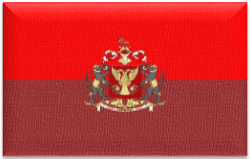
Kingdom of Mysore Standard: Historical Insignia And Modern National Flags

The Top Modern Regions and Territories Part of the Kingdom of Mysore
01
The political heartland, capital cities of Mysore and Srirangapatna, and cultural center.
Mysore & Southern Karnataka
02
Annexed hill territory securing western mountain passes and spice routes.
Coorg (Kodagu)
03
Secured maritime access to the Arabian Sea and lucrative international spice trade.
Malabar & Coastal Districts
04
Strategic southern interior corridors connecting the Deccan to Tamil plains.
Coimbatore & Salem
05
Wealthy northern mercantile and forest tracts annexed during early expansion phases.
Bednore & Coastal Karnataka
The Territorial Reach Of The Kingdom Of Mysore In Modern Terms
At its peak expanse, the kingdom's direct control or tributary reach spanned across modern southern Karnataka, large parts of Kerala (Malabar), significant sections of western and northwestern Tamil Nadu, and parts of the Rayalaseema region in Andhra Pradesh, stretching from the interior Deccan plateau down to the western Arabian Sea coastline.
From Wodeyars To Sultans: Tracking Mysore's Golden Age And Conflicts
At its greatest historical territorial zenith in the late 18th century under Hyder Ali and Tipu Sultan, the kingdom expanded across the southern Deccan plateau, encompassing major agricultural zones, coastal ports, and trade hubs.
From Wodeyars To Sultans: Tracking Mysore's Golden Age And Conflicts
Kingdom of Mysore South Indian kingdom
The Kingdom of Mysore was a major South Indian kingdom that played an important role in the political and military history of the Indian subcontinent. Centered in the region of present-day Karnataka, India, Mysore developed from a regional kingdom into a powerful state during the 18th century.
The kingdom is particularly associated with Haider Ali and his son Tipu Sultan, who transformed Mysore into a strong military power and fought several major wars against the British East India Company and its allies.
Mysore’s history, however, began centuries before Tipu Sultan. The Wadiyar dynasty established itself at Mysore in the early 17th century, and the kingdom gradually expanded its influence across southern India. During the reigns of Haider Ali and Tipu Sultan, Mysore reached its greatest military and territorial power.
The kingdom was eventually defeated by the British-led forces in the Fourth Anglo-Mysore War in 1799. Tipu Sultan was killed during the fall of Seringapatam, and much of his territory was divided among the British and their allies. The Wadiyar dynasty was restored to the Mysore throne as a princely state under British paramountcy.
Kingdom of Mysore at a Glance
| Feature | Details |
|---|---|
| Kingdom | Kingdom of Mysore |
| Region | South India |
| Modern country | India |
| Historical core | Mysore region, Karnataka |
| Early Wadiyar rule | 1399 onward |
| Major ruling dynasty | Wadiyar dynasty |
| Founder traditionally associated with Wadiyars | Yaduraya Wadiyar |
| Famous rulers | Krishnaraja Wadiyar III, Haider Ali, Tipu Sultan |
| Major capital | Mysore |
| Important military capital | Seringapatam |
| Major rival | British East India Company |
| Other rivals | Marathas, Nizam of Hyderabad, Travancore |
| Major wars | Anglo-Mysore Wars |
| Golden military period | Haider Ali and Tipu Sultan |
| Famous battle | Battle of Pollilur |
| Final major defeat | Fourth Anglo-Mysore War |
| Fall of Tipu Sultan | 1799 |
| Later status | Princely state under British rule |
| Present region | Karnataka, India |
Where Did the Kingdom of Mysore Originate?
The Kingdom of Mysore originated in southern India, in the region surrounding the city of Mysore in present-day Karnataka.
The kingdom’s traditional history connects its foundation with Yaduraya Wadiyar, who is traditionally dated to the late 14th century.
Mysore initially controlled a relatively small territory but gradually expanded through warfare, diplomacy and political alliances.
Early History of Mysore
Before Mysore became a major kingdom, southern India was dominated by several powerful states and political centers.
Important regional powers included:
- Vijayanagara Empire
- Bahmani Sultanate
- Deccan Sultanates
- Nayaka kingdoms
- Maratha Confederacy
- Hyderabad State
Mysore developed within this changing political environment.
Wadiyar Dynasty
The Wadiyar dynasty became the principal ruling family of Mysore.
The Wadiyars initially ruled as regional chiefs within the broader political sphere of the Vijayanagara Empire.
After the decline of Vijayanagara power, Mysore gained greater independence.
Mysore and the Vijayanagara Empire
For much of its early history, Mysore existed within the political environment created by the Vijayanagara Empire.
The weakening of Vijayanagara after the Battle of Talikota in 1565 created opportunities for regional powers.
Mysore gradually expanded its autonomy.
Raja Wadiyar I
Raja Wadiyar I ruled from 1578 to 1617 and is traditionally credited with greatly increasing Mysore’s power.
In 1610, he captured Srirangapatna, also known as Seringapatam.
Srirangapatna subsequently became one of the most important political and military centers of Mysore.
Seringapatam
Seringapatam, located on an island in the Kaveri River, became the principal stronghold and capital of Mysore.
Its strategic position made it an ideal defensive center.
The city later became famous because of the Anglo-Mysore Wars and the final battle of 1799.
Expansion of Mysore
During the 17th and 18th centuries, Mysore expanded across parts of southern India.
The kingdom competed with neighboring powers for control of:
- Karnataka
- Tamil Nadu
- Kerala
- Malabar
- Coorg
- Southern Deccan territories
Chikka Devaraja Wadiyar
Chikka Devaraja Wadiyar, who ruled from 1673 to 1704, was one of the most important early Mysore rulers.
During his reign, Mysore expanded considerably.
He strengthened the administration and finances of the kingdom.
Mysore Administration Before Haider Ali
The Wadiyar rulers developed an increasingly organized state.
Mysore relied on:
- Agriculture
- Land revenue
- Trade
- Fortifications
- Regional military forces
The kingdom’s resources later enabled Haider Ali to build a much stronger military state.
Rise of Haider Ali
The transformation of Mysore into a major military power began under Haider Ali.
Haider Ali was born around 1720.
He was not a member of the Wadiyar royal family.
Instead, he rose through the Mysore military.
How Did Haider Ali Rise to Power?
Haider Ali demonstrated considerable military and political ability.
He gradually gained influence within the Mysore army.
Through military success and political maneuvering, he became the effective ruler of Mysore.
Although the Wadiyar monarch remained formally on the throne, real political authority increasingly rested with Haider Ali.
Haider Ali’s Military Reforms
Haider Ali reorganized Mysore’s military.
He expanded:
- Infantry
- Cavalry
- Artillery
- Fortifications
- Firearms units
He also employed foreign military specialists and adopted techniques associated with European warfare.
Mysorean Rockets
Mysore became particularly famous for its use of iron-cased rockets.
These weapons were more advanced than many earlier military rockets because their iron casing allowed greater pressure and range.
Mysorean rocket units were used extensively against British forces.
The technology later influenced British military rocket development.
First Anglo-Mysore War
The First Anglo-Mysore War lasted from 1767 to 1769.
The major participants included:
- Mysore
- British East India Company
- Maratha forces
- Nizam of Hyderabad
Alliances shifted during the conflict.
Haider Ali eventually demonstrated that Mysore could challenge British power militarily.
Treaty of Madras
The First Anglo-Mysore War ended with the Treaty of Madras in 1769.
The agreement restored territories and established commitments between the parties.
The war demonstrated Mysore’s growing importance in South Indian politics.
Second Anglo-Mysore War
The Second Anglo-Mysore War began in 1780.
Haider Ali formed alliances against the British and launched a major invasion of the Carnatic.
Mysore initially achieved significant military successes.
Battle of Pollilur
The Battle of Pollilur in 1780 was one of Mysore’s most famous victories.
Mysorean forces defeated a British East India Company army commanded by Colonel William Baillie.
Mysorean rockets played an important role in the fighting.
The defeat became one of the most serious British military setbacks in India during the period.
Haider Ali’s Death
Haider Ali died in 1782 during the Second Anglo-Mysore War.
His son, Tipu Sultan, succeeded him as the effective ruler of Mysore.
Tipu Sultan
Tipu Sultan, also known as Sultan Fateh Ali Tipu, was born in 1750.
He became one of the most prominent rulers in South Asian history.
His reign lasted from 1782 to 1799.
Tipu inherited a powerful state but faced increasingly strong opposition from the British and their allies.
Tipu Sultan’s Titles
Tipu Sultan was known by several titles and names.
These included:
- Sultan Fateh Ali Khan Tipu
- Tipu Sultan
- Tiger of Mysore
The “Tiger of Mysore” association became particularly prominent in later historical representations.
Tipu Sultan’s Military Reforms
Tipu continued his father’s military modernization.
He expanded:
- Rocket units
- Infantry
- Artillery
- Cavalry
- Fortifications
- Military manufacturing
He also developed military links with France and sought technological and diplomatic assistance from European powers.
Second Anglo-Mysore War
Tipu continued fighting the British after Haider Ali’s death.
The war ended in 1784 with the Treaty of Mangalore.
This treaty restored territories and represented an important diplomatic achievement for Mysore.
Treaty of Mangalore
The Treaty of Mangalore was signed in 1784.
It brought the Second Anglo-Mysore War to an end.
The agreement was notable because Mysore negotiated with the British from a position in which neither side had achieved decisive permanent dominance.
Tipu Sultan’s Foreign Policy
Tipu Sultan understood that Mysore’s survival depended partly on international alliances.
He sought relationships with:
- France
- Ottoman Empire
- Afghanistan
- Arab and Persian Gulf powers
His diplomatic correspondence sought assistance against British expansion.
Mysore and France
Tipu Sultan maintained close relations with revolutionary and later Napoleonic France.
French military specialists served in Mysore.
Tipu hoped French assistance could strengthen Mysore against the British.
Mysore and the Ottoman Empire
Tipu Sultan also sought diplomatic support from the Ottoman Empire.
He sent diplomatic missions seeking assistance against the British.
The Ottoman government was itself dealing with major geopolitical challenges, limiting the practical military support it could provide.
Third Anglo-Mysore War
The Third Anglo-Mysore War lasted from 1790 to 1792.
The conflict began after Mysore’s invasion of Travancore.
The British formed a powerful coalition with:
- Maratha forces
- Nizam of Hyderabad
This alliance placed Mysore under substantial military pressure.
Travancore and Mysore
Travancore was a powerful kingdom in southwestern India.
In 1789, Tipu Sultan attacked the Travancore defensive lines.
The conflict eventually triggered a wider war involving the British and their allies.
Siege of Seringapatam, 1792
The British-led coalition invaded Mysore.
Lord Cornwallis led the campaign against Tipu Sultan.
The war ended with the Treaty of Seringapatam in 1792.
Treaty of Seringapatam
The treaty imposed severe territorial and financial losses on Tipu Sultan.
Mysore surrendered approximately half of its territory to the victorious coalition.
Tipu also had to provide a large financial indemnity.
His two sons were temporarily handed over as hostages until the terms were fulfilled.
Mysore Territory After 1792
After the Third Anglo-Mysore War, Mysore’s territory was significantly reduced.
The British and their allies gained important territories.
Tipu Sultan remained ruler of a smaller but still powerful state.
Tipu Sultan’s Economic Policies
Tipu Sultan attempted to strengthen Mysore’s economy.
His government promoted:
- State-controlled trade
- Silk production
- Agriculture
- Irrigation
- Manufacturing
- International commerce
He sought to reduce dependence on European trading companies.
Mysore Silk
Mysore developed a significant silk industry.
Tipu Sultan promoted sericulture and attempted to improve silk production through the introduction of silk-related knowledge and resources.
The silk industry later became an important part of Karnataka’s economic heritage.
Tipu Sultan and Agriculture
Agriculture remained the foundation of Mysore’s economy.
The government invested in irrigation and sought to increase agricultural production.
Revenue collection was important for financing Tipu’s army.
Tipu Sultan’s Administration
Tipu Sultan strengthened central authority.
His government relied on:
- Provincial officials
- Revenue administrators
- Military governors
- Fort commanders
- State-controlled commercial institutions
He also introduced administrative and calendar reforms.
Tipu Sultan’s Coinage
Tipu Sultan issued his own coins.
He changed coin designs and inscriptions during his reign and used coinage as part of his assertion of sovereignty.
Mysore Calendar and State Reforms
Tipu Sultan introduced administrative changes intended to distinguish his government from earlier arrangements.
These included changes to:
- Calendar systems
- Weights and measures
- Coinage
- Administrative terminology
Tipu Sultan and Technology
Tipu Sultan encouraged the acquisition and development of military technology.
Mysore became one of the most technologically advanced military states in South Asia during the late 18th century.
Its iron-cased rockets were particularly notable.
Mysorean Rockets and British Development
British forces encountered Mysorean rockets during the Anglo-Mysore Wars.
After the British acquired examples of the technology, William Congreve developed improved military rockets in Britain.
These became known as Congreve rockets.
Fourth Anglo-Mysore War
The Fourth Anglo-Mysore War began in 1799.
The British considered Tipu Sultan’s relations with France a serious strategic concern.
Governor-General Richard Wellesley sought to eliminate Mysore as a major military threat.
British Coalition Against Mysore
The British East India Company assembled a large coalition.
It included forces associated with:
- British India
- Nizam of Hyderabad
- Maratha interests
The British army advanced toward Seringapatam.
Siege of Seringapatam
The British-led army besieged Seringapatam in 1799.
The fortress was heavily defended.
However, Mysore faced overwhelming military pressure.
Battle of Seringapatam
The decisive assault took place on 4 May 1799.
British-led forces breached the defenses and entered Seringapatam.
Tipu Sultan fought during the defense of the city and was killed.
Death of Tipu Sultan
Tipu Sultan died on 4 May 1799 while defending Seringapatam.
His death marked the end of Mysore as an independent major military power.
Fall of the Kingdom of Mysore
After Tipu Sultan’s death, Mysore was reorganized by the victorious powers.
The British took important territories.
Other territories were distributed among allies.
The Wadiyar dynasty was restored to the Mysore throne.
Restoration of the Wadiyar Dynasty
The British placed a member of the Wadiyar family on the throne.
The new ruler was Krishnaraja Wadiyar III.
Mysore became a princely state under British paramountcy rather than an independent kingdom.
Mysore Under British Rule
The restored Mysore state retained internal authority in many areas but operated under British political supremacy.
British officials increasingly influenced:
- Foreign relations
- Defense
- Administration
- Finances
Mysore nevertheless remained one of the most important princely states in British India.
Krishnaraja Wadiyar III
Krishnaraja Wadiyar III ruled from 1799 to 1868.
His long reign marked the continuation of the Wadiyar dynasty after the fall of Tipu Sultan.
Mysore underwent significant administrative and cultural developments during this period.
Commissioner’s Rule
From 1831 to 1881, Mysore was administered directly by British-appointed commissioners.
The British cited administrative and financial concerns as reasons for assuming direct control.
The Wadiyar dynasty was restored to direct rule in 1881.
Representative Government in Mysore
Mysore later became known for administrative and educational reforms.
The state developed institutions in:
- Education
- Public works
- Irrigation
- Industry
- Electricity
- Healthcare
This contributed to Mysore’s reputation as one of the more administratively developed princely states in British India.
Krishnaraja Wadiyar IV
Krishnaraja Wadiyar IV, who ruled from 1894 to 1940, became associated with modernization.
During his reign, Mysore developed major infrastructure and public institutions.
These included:
- Hydroelectric projects
- Industries
- Educational institutions
- Public administration
- Irrigation systems
Mysore and Hydroelectric Power
Mysore played an important role in India’s early hydroelectric development.
The Shivanasamudra hydroelectric project, established in the early 20th century, became an important milestone in regional electrification.
Mysore Industries
The princely state supported industrial development.
Important sectors included:
- Silk
- Sugar
- Sandalwood
- Mining
- Manufacturing
- Engineering
The state-sponsored industrialization contributed to the economic development of the region.
Mysore After Indian Independence
When British rule ended in 1947, Mysore joined the newly independent Union of India.
The princely state’s political status subsequently changed as India reorganized its states.
In 1956, the reorganization of Indian states brought the Kannada-speaking areas together into the enlarged Mysore State.
Formation of Karnataka
In 1973, Mysore State was renamed Karnataka.
The historical Kingdom of Mysore therefore forms an important part of the history of modern Karnataka.
Major Rulers of Mysore
| Ruler | Period | Major Significance |
|---|---|---|
| Yaduraya Wadiyar | Traditional founder, c. 1399 | Established Wadiyar rule |
| Raja Wadiyar I | 1578–1617 | Captured Seringapatam |
| Chikka Devaraja Wadiyar | 1673–1704 | Expanded and strengthened Mysore |
| Krishnaraja Wadiyar II | 1734–1766 | Reign during Haider Ali’s rise |
| Haider Ali | Effective ruler, c. 1761–1782 | Built Mysore into a major military power |
| Tipu Sultan | 1782–1799 | Modernized army and resisted British expansion |
| Krishnaraja Wadiyar III | 1799–1868 | Restored Wadiyar rule |
| Chamarajendra Wadiyar X | 1868–1894 | Continued modernization |
| Krishnaraja Wadiyar IV | 1894–1940 | Major period of modernization |
| Jayachamarajendra Wadiyar | 1940–1950 | Last ruling Maharaja before integration |
Major Battles of the Kingdom of Mysore
| Battle/Conflict | Year | Main Opponents | Significance |
|---|---|---|---|
| Anglo-Mysore War I | 1767–1769 | Mysore and allies vs British and allies | Mysore challenged British expansion |
| Battle of Pollilur | 1780 | Mysore vs British East India Company | Major Mysorean victory |
| Anglo-Mysore War II | 1780–1784 | Mysore vs British and allies | Ended with Treaty of Mangalore |
| Anglo-Mysore War III | 1790–1792 | Mysore vs British, Marathas and Hyderabad | Mysore lost substantial territory |
| Siege of Seringapatam | 1792 | Mysore vs British-led coalition | Treaty forced major territorial concessions |
| Anglo-Mysore War IV | 1799 | Mysore vs British-led coalition | Ended independent Mysorean power |
| Battle of Seringapatam | 1799 | Mysore vs British-led forces | Tipu Sultan killed |
Kingdom of Mysore at Its Peak
Mysore reached its greatest military power during the period of Haider Ali and Tipu Sultan.
At its height, Mysorean influence extended across large parts of southern India.
The kingdom controlled or contested territories corresponding to parts of modern:
- Karnataka
- Kerala
- Tamil Nadu
- Andhra Pradesh
- Telangana
The exact borders changed repeatedly during the Anglo-Mysore Wars.
Why Did Mysore Become Powerful?
Several factors contributed to Mysore’s rise.
Strong Military Leadership
Haider Ali and Tipu Sultan developed a disciplined and increasingly modern army.
Strategic Geography
Mysore’s position in southern India allowed it to influence routes between the Deccan, the western coast and the Carnatic.
Economic Resources
Agriculture, trade, taxation and manufacturing provided resources for military expansion.
Fortifications
Strong forts such as Seringapatam provided defensive advantages.
Military Technology
Mysore’s use of iron-cased rockets gave its forces an unusual technological capability.
Why Did Mysore Decline?
The decline of independent Mysore resulted from several factors.
Powerful British Expansion
The British East India Company had access to growing military and financial resources.
Coalition Warfare
Mysore increasingly faced coalitions involving the British, Marathas and Nizam of Hyderabad.
Diplomatic Isolation
Tipu Sultan struggled to secure reliable long-term military assistance from France and other foreign powers.
Territorial Losses
The Third Anglo-Mysore War significantly reduced Mysore’s territory.
Fourth Anglo-Mysore War
The final British campaign overwhelmed Mysore’s remaining military resistance.
Legacy of the Kingdom of Mysore
The legacy of Mysore extends beyond the 1799 defeat.
The kingdom contributed to the history of:
- South Indian state formation
- Military technology
- Indian resistance to British expansion
- Agriculture
- Silk production
- Industrial development
- Public administration
- Education
- Architecture
The Wadiyar dynasty also remained associated with Mysore’s cultural and economic development into the modern period.
Tipu Sultan’s Historical Legacy
Tipu Sultan remains one of the most extensively discussed figures in Indian history.
Historical interpretations differ regarding his military policies, administration, religious policies and treatment of communities in territories he conquered.
His documented correspondence, administrative records and contemporary accounts provide evidence for different aspects of his reign, while later colonial and nationalist histories have sometimes portrayed him differently.
For an evergreen historical article, it is useful to distinguish documented events from later interpretations rather than presenting contested characterizations as undisputed facts.
Mysore Palace
The Mysore Palace became one of the best-known symbols of the Wadiyar dynasty.
The present palace largely dates from the period after the original palace was destroyed by fire in 1897.
It represents the continuing cultural legacy of the Mysore royal family.
Seringapatam Today
Seringapatam, now generally called Srirangapatna, remains an important historical site in Karnataka.
Important surviving landmarks include:
- Tipu Sultan’s summer palace
- Gumbaz
- Sri Ranganathaswamy Temple
- Fortifications
- Historic battlefield sites
Kingdom of Mysore Timeline
| Year | Event |
|---|---|
| c. 1399 | Traditional beginning of Wadiyar rule |
| 1578 | Raja Wadiyar I begins reign |
| 1610 | Srirangapatna captured by Mysore |
| 1673 | Chikka Devaraja Wadiyar becomes ruler |
| 1704 | Chikka Devaraja Wadiyar dies |
| c. 1720 | Birth of Haider Ali |
| 1761 | Haider Ali becomes effective ruler |
| 1767–1769 | First Anglo-Mysore War |
| 1780 | Battle of Pollilur |
| 1782 | Haider Ali dies; Tipu Sultan succeeds |
| 1784 | Treaty of Mangalore |
| 1789 | Tipu Sultan attacks Travancore |
| 1790–1792 | Third Anglo-Mysore War |
| 1792 | Treaty of Seringapatam |
| 1799 | Fourth Anglo-Mysore War |
| 1799 | Tipu Sultan dies at Seringapatam |
| 1799 | Wadiyar dynasty restored |
| 1831 | British take direct administration |
| 1881 | Mysore returned to Wadiyar rule |
| 1947 | Mysore joins independent India |
| 1956 | Mysore State reorganized |
| 1973 | Mysore State renamed Karnataka |
Frequently Asked Questions
What was the Kingdom of Mysore?
The Kingdom of Mysore was a major South Indian kingdom centered in present-day Karnataka. It was ruled primarily by the Wadiyar dynasty and later became a powerful military state under Haider Ali and Tipu Sultan.
Where was the Kingdom of Mysore located?
The kingdom was located in southern India, primarily in present-day Karnataka, although its territory expanded into parts of neighboring states during periods of military expansion.
Who founded the Kingdom of Mysore?
The traditional history of Mysore attributes the establishment of Wadiyar rule to Yaduraya Wadiyar around 1399.
Who was the most famous ruler of Mysore?
Tipu Sultan is the most internationally famous ruler associated with Mysore’s resistance to British expansion. His father, Haider Ali, was also a major military ruler.
Was Tipu Sultan a Wadiyar?
No. Tipu Sultan belonged to the family of Haider Ali, not the Wadiyar royal dynasty. The Wadiyar monarch remained nominally associated with the Mysore state during Haider Ali’s and Tipu Sultan’s effective rule.
Who was Haider Ali?
Haider Ali was a military commander who rose through the Mysore army and became the effective ruler of Mysore during the 18th century.
When did Tipu Sultan rule Mysore?
Tipu Sultan ruled Mysore from 1782 until his death in 1799.
What was Tipu Sultan famous for?
Tipu Sultan is particularly associated with military resistance against British expansion, administrative reforms, international diplomacy, military rockets and economic policies.
What were the Anglo-Mysore Wars?
The Anglo-Mysore Wars were four major conflicts fought between Mysore and the British East India Company and their allies between 1767 and 1799.
Who won the Anglo-Mysore Wars?
The conflicts ended with the defeat of independent Mysorean power in 1799. The British East India Company and its allies defeated Tipu Sultan’s forces during the Fourth Anglo-Mysore War.
What happened at the Battle of Pollilur?
In 1780, Mysorean forces defeated a British East India Company army at Pollilur. It became one of the most significant Mysorean victories of the Anglo-Mysore conflicts.
What happened in the Fourth Anglo-Mysore War?
British-led forces invaded Mysore in 1799 and captured Seringapatam. Tipu Sultan was killed during the final fighting, ending Mysore’s status as a major independent military power.
When did Tipu Sultan die?
Tipu Sultan died on 4 May 1799 during the British-led assault on Seringapatam.
What happened to Mysore after Tipu Sultan died?
The British and their allies divided much of Tipu Sultan’s territory, while the Wadiyar dynasty was restored to the Mysore throne. Mysore became a princely state under British paramountcy.
Did Mysore become part of British India?
After Tipu Sultan’s defeat, Mysore became a princely state under British paramountcy rather than being directly annexed in its entirety.
What happened to Mysore after Indian independence?
Mysore joined the Union of India in 1947. Its territory was later reorganized, and in 1973 Mysore State was renamed Karnataka.
What was Seringapatam?
Seringapatam, now known as Srirangapatna, was a major capital and fortified center of Mysore. It was the site of Tipu Sultan’s final battle in 1799.
What were Mysorean rockets?
Mysorean rockets were iron-cased military rockets used by Mysorean forces. Their use against British armies influenced later British rocket development.
Did Tipu Sultan have relations with France?
Yes. Tipu Sultan maintained diplomatic and military connections with France and sought French assistance as part of his strategy against British expansion.
Did Tipu Sultan seek help from the Ottoman Empire?
Yes. Tipu Sultan sent diplomatic missions seeking support from the Ottoman government, although the Ottomans did not provide the large-scale military intervention he hoped for.
What was the Treaty of Seringapatam?
The Treaty of Seringapatam ended the Third Anglo-Mysore War in 1792. Tipu Sultan surrendered substantial territory and agreed to a major financial indemnity.
What was the Treaty of Mangalore?
The Treaty of Mangalore, signed in 1784, ended the Second Anglo-Mysore War.
What was the capital of Mysore?
Mysore city was the dynastic center, while Srirangapatna (Seringapatam) became the principal political and military capital during important periods, particularly under Haider Ali and Tipu Sultan.
Is Mysore the same as Karnataka?
No. Mysore was a historical kingdom and later a princely state. The modern Indian state of Karnataka includes the historical Mysore region along with many other territories.
Key Takeaways
- The Kingdom of Mysore developed in southern India.
- The Wadiyar dynasty traditionally traces its rule to approximately 1399.
- Mysore became increasingly independent after the decline of Vijayanagara power.
- Raja Wadiyar I captured Seringapatam in 1610.
- Chikka Devaraja Wadiyar significantly expanded Mysore.
- Haider Ali transformed Mysore into a major military power.
- Tipu Sultan continued his father’s military and administrative reforms.
- Mysore developed sophisticated iron-cased rockets.
- The kingdom fought four Anglo-Mysore Wars.
- The Battle of Pollilur in 1780 was a major Mysorean victory.
- The Treaty of Mangalore in 1784 ended the Second Anglo-Mysore War.
- The Third Anglo-Mysore War ended with major territorial losses for Tipu Sultan.
- The Fourth Anglo-Mysore War ended in 1799.
- Tipu Sultan died during the fall of Seringapatam on 4 May 1799.
- The Wadiyar dynasty was restored after Tipu’s defeat.
- Mysore later became an important princely state under British paramountcy.
- Mysore joined independent India in 1947.
- Mysore State was renamed Karnataka in 1973.
- The history of Mysore remains important to the political, military, economic and cultural history of South India.
Sources:
- Encyclopaedia Britannica — Mysore
Britannica — Mysore - Encyclopaedia Britannica — Tipu Sultan
Britannica — Tipu Sultan - Encyclopaedia Britannica — Haider Ali
Britannica — Haider Ali - Encyclopaedia Britannica — Anglo-Mysore Wars
Britannica — Anglo-Mysore Wars - Encyclopaedia Britannica — Wadiyar Dynasty
Britannica - British Library — Asian and African Studies
British Library - Victoria Memorial Hall — Tipu Sultan and Mysore historical collections
Victoria Memorial Hall - Government of Karnataka — Official Portal
Government of Karnataka