
Chartered Empires: The Rise of British Maritime Power in the North Atlantic
The imperial enterprise originated from England (and after the 1707 Acts of Union, the Kingdom of Great Britain) in the North Atlantic archipelago. Early overseas ventures began with Sir Humphrey Gilbert’s claim over Newfoundland in 1583 and the establishment of Jamestown, Virginia, in 1607. Driven by joint-stock monopolies—most notably the East India Company (chartered in 1600) and the Hudson's Bay Company (1670)—British naval and commercial networks expanded across North America, the Caribbean, West African trading forts, and coastal Indian factories, laying the structural foundation for global hegemony after the Seven Years' War (1763) and the defeat of Napoleonic France (1815).
The Union Flag, Imperial Crowns, and the Symbolism of British Sovereignty
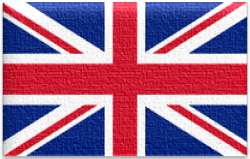
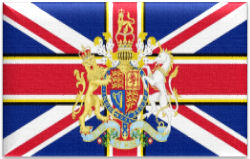
Top Modern Geographic Zones Governed By The Realm British Empire
01
Canada comprised 9,984,670 \text{km}^2 under 100% imperial sovereignty, serving as the empire's largest territorial dominion and a major supplier of timber, wheat, minerals, and expeditionary troops.
Canada
02
Australia contained 7,692,024 \text{km}^2 under complete British administration, evolving from penal settlements in New South Wales into a federated self-governing dominion in 1901.
Australia
03
India encompassed 3,280,000 \text{km}^2 as the demographic and economic centerpiece of the empire (the Jewel in the Crown), ruled directly by the British Raj alongside over 560 subordinate Princely States.
India
04
Sudan and South Sudan together spanned 2,505,813 \text{km}^2 under the Anglo-Egyptian Condominium, securing British strategic control over the entire Nile River basin.
Sudan And South Sudan
04
South Africa covered 1,221,037 \text{km}^2 under Dominion status following the Anglo-Boer Wars, dominating global gold and diamond production alongside the vital Cape sea route.
South Sudan
Primary Modern Jurisdictions Governed By British Authorities
Historical Arc: Epochs Of British Power, Global Hegemony, And Decolonization
Post-WWI Zenith & Interwar Peak (1914–1939): ~35,500,000 Km2 reached in 1920 following the acquisition of former German colonies (Tanganyika, South West Africa, New Guinea) and Ottoman territories (Iraq, Palestine, Transjordan) as League of Nations mandates, while the 1931 Statute of Westminster granted legislative independence to the Dominions.
Spatial Extent In Contemporary Geopolitical Terms
British Empire History And Greatest Extent
Introduction
The British Empire was one of the largest and most influential empires in world history. At its height in the early 20th century, it controlled territories across every inhabited continent, including large parts of Africa, Asia, the Americas, Oceania, and the Caribbean. Its political, economic, military, and cultural influence helped shape the modern world, leaving a legacy that remains visible in international institutions, languages, legal systems, borders, trade networks, and political traditions.
The empire developed gradually over several centuries. It began with English overseas settlements and trading ventures, expanded through colonization, conquest, commercial influence, and territorial agreements, and eventually became a global imperial system. Its expansion was driven by maritime trade, naval power, industrialization, competition with European rivals, and the pursuit of strategic territories and resources.
The British Empire reached its greatest territorial extent after the First World War, particularly in the 1920s, when it governed approximately one-quarter of the world’s land area and population. However, the empire’s power weakened during the 20th century. Nationalist movements, the economic consequences of two world wars, changing international attitudes toward colonialism, and growing demands for self-government contributed to its gradual dissolution.
British Empire at a Glance
| Category | Details |
|---|---|
| Empire | British Empire |
| Origins | English overseas expansion during the late 15th and 16th centuries |
| Major expansion | 17th–20th centuries |
| Greatest extent | Approximately 1920–1922 |
| Maximum area | About 35.5 million km² |
| Share of world land area | Approximately 26–27% |
| Population at greatest extent | Roughly 450–500 million people |
| Main imperial power | Great Britain and the United Kingdom |
| Major imperial centers | London, England |
| Major territories | India, Canada, Australia, New Zealand, parts of Africa, the Caribbean, and numerous Asian territories |
| Political system | Monarchy, parliament, colonial administrations, dominions, protectorates, and other imperial arrangements |
| Major economic activities | Trade, shipping, agriculture, mining, manufacturing, and finance |
| Decline | Accelerated after the Second World War |
| Major turning point | Indian independence in 1947 |
| End of empire | Gradual decolonization throughout the 20th century |
The figures for the empire’s maximum area and population are estimates because imperial boundaries and administrative arrangements changed over time. The empire included colonies, dominions, protectorates, mandates, and territories with different degrees of political control.
Origins of the British Empire
The origins of the British Empire can be traced to the overseas expansion of England during the late medieval and early modern periods. Before Britain became a global imperial power, England had already established a presence in Ireland and had developed maritime interests in the Atlantic.
During the late 15th century, European states increasingly explored overseas territories in search of trade routes, valuable commodities, and strategic advantages. England gradually joined this competition, although its early overseas ventures were smaller than those of Portugal and Spain.
Early English Overseas Expansion
English overseas expansion gathered momentum during the reign of Henry VII and continued under Henry VIII and Elizabeth I. English merchants and explorers sought access to Asian markets, Atlantic fishing grounds, and territories in North America.
In 1497, the Italian explorer John Cabot, sailing under an English commission, reached parts of the North American coastline. His voyage helped establish English claims and encouraged further exploration.
During the 16th century, English maritime activity expanded through privateering, commercial voyages, and attempts to establish overseas settlements. The defeat of the Spanish Armada in 1588 strengthened England’s naval confidence, although Spain remained a major imperial competitor.
The Elizabethan Era and Early Colonization
The reign of Elizabeth I (1558–1603) was an important period in the development of English overseas ambitions. English merchants established new trading connections, while explorers and private investors attempted to create settlements across the Atlantic.
The first English attempts to establish permanent settlements in North America included the Roanoke colony in the 1580s. Although the settlement failed, English interest in overseas colonization continued.
The establishment of the East India Company in 1600 marked another important development. The company received a royal charter granting it trading privileges in the East Indies and later became a major instrument of British expansion in South Asia.
Development of the British Empire
The British Empire did not emerge as a single state through one conquest or political event. It developed over centuries through a combination of settlement, trade, military campaigns, treaties, private companies, and colonial administration.
The First British Empire
Historians commonly use the term First British Empire to describe the earlier phase of British overseas expansion, particularly its Atlantic and North American possessions.
During the 17th and 18th centuries, England established colonies in North America and the Caribbean. These territories became important sources of agricultural commodities, raw materials, and commercial revenue.
The Caribbean colonies produced sugar, tobacco, and other plantation crops. Their economies relied heavily on enslaved African labor, creating immense wealth for some British merchants and investors while subjecting enslaved people to brutal exploitation.
In North America, English settlements expanded along the Atlantic coast. The colonies developed their own political institutions and economic networks, although they remained under British sovereignty.
The Seven Years’ War and Imperial Expansion
The Seven Years’ War (1756–1763) was a major turning point in the growth of British global power. Britain fought France and its allies in Europe, North America, the Caribbean, West Africa, and India.
The conflict ended with the Treaty of Paris in 1763. Britain gained significant territories and strengthened its position in North America and India. France lost much of its former influence in Canada and several other overseas possessions.
The victory established Britain as a leading global maritime and colonial power. However, the cost of maintaining the empire and financing the war contributed to tensions with Britain’s North American colonies.
The American War of Independence
The American colonies increasingly opposed British taxation and political control during the 1760s and 1770s. Disputes over representation, trade regulations, and imperial authority eventually developed into the American War of Independence (1775–1783).
The conflict ended with the Treaty of Paris in 1783, through which Britain recognized the independence of the United States.
The loss of the thirteen American colonies was a major setback, but it did not end British imperial expansion. Instead, Britain increasingly focused on South Asia, Africa, the Pacific, and other parts of the world.
The East India Company and British Rule in India
India became the most important territory in the British Empire. Its large population, agricultural production, textile industries, commercial networks, and strategic location made it central to Britain’s imperial economy.
Establishment of Company Rule
The English East India Company was established in 1600. Initially, it operated primarily as a commercial organization, establishing trading posts and negotiating privileges with regional authorities.
The company gradually became involved in Indian politics and military conflicts. Its influence expanded as Mughal imperial authority weakened and regional powers competed for control.
The Battle of Plassey in 1757 was a major turning point. Company forces under Robert Clive defeated the forces of Siraj ud-Daulah, the Nawab of Bengal, with assistance from political defections within the Nawab’s camp.
In 1764, the company defeated the combined forces of the Mughal emperor Shah Alam II, the Nawab of Awadh, and the Nawab of Bengal at the Battle of Buxar. The Treaty of Allahabad in 1765 granted the company the right to collect revenue in Bengal, Bihar, and Orissa.
These developments transformed the East India Company from a trading organization into a major territorial and political power.
Expansion Across the Indian Subcontinent
During the late 18th and 19th centuries, the company expanded through wars, alliances, annexations, and political agreements.
Major conflicts included:
Anglo-Mysore Wars against the Kingdom of Mysore.
Anglo-Maratha Wars against the Maratha Confederacy.
Anglo-Sikh Wars against the Sikh Empire.
Anglo-Nepalese War against the Kingdom of Nepal.
Conflicts with regional rulers and princely states.
The company established control over large parts of the Indian subcontinent, while numerous princely states remained under local rulers subject to varying degrees of British influence.
The Indian Rebellion of 1857
The Indian Rebellion of 1857 was one of the most significant uprisings against British rule. It began among Indian soldiers serving in the East India Company’s army and spread to several regions of northern and central India.
The rebellion involved soldiers, former rulers, landholders, peasants, and other groups with different political and social objectives. Major centers of resistance included Delhi, Kanpur, Lucknow, Jhansi, and parts of central India.
British forces eventually suppressed the rebellion. Its consequences were profound: the British government ended the East India Company’s political authority and transferred direct control of India to the Crown through the Government of India Act 1858.
The British Raj
The period of direct British Crown rule in India, from 1858 to 1947, is commonly known as the British Raj.
The British administration reorganized the military, expanded railways and telegraph networks, developed ports, and established new administrative and legal institutions. These changes connected distant regions and supported commercial activity, but they also strengthened colonial control and facilitated the extraction of resources.
The Raj included British-administered provinces and hundreds of princely states. The latter retained local rulers but operated under British paramountcy.
India became the central pillar of the British imperial system, contributing soldiers, agricultural products, raw materials, tax revenues, and strategic military resources.
The British Empire in Africa
Africa became a major focus of British imperial expansion during the 19th century. British influence initially developed around coastal trading posts, strategic ports, and commercial settlements. It later expanded into large inland territories.
Early British Presence in Africa
British involvement in Africa included trading settlements, naval bases, and colonies along the western and southern coasts.
Sierra Leone became an important British settlement in the late 18th century. It was initially associated with the resettlement of formerly enslaved people and later developed into a Crown Colony.
The British also expanded their influence in the Gold Coast, present-day Ghana, where commercial interests and conflicts with the Asante Empire shaped colonial expansion.
Southern Africa
The Cape Colony became British-controlled during the Napoleonic Wars. Its strategic position near the maritime route to Asia made it valuable to British imperial interests.
British expansion in southern Africa brought the empire into conflict with African kingdoms and Boer settlers. Major conflicts included the Xhosa Wars, the Anglo-Zulu War of 1879, and the South African War of 1899–1902.
The Anglo-Zulu War ended with the defeat of the Zulu Kingdom, although Zulu resistance had demonstrated the military capabilities of African forces.
The South African War, also known as the Second Boer War, was fought between Britain and the Boer republics of the Transvaal and Orange Free State. Britain eventually defeated the republics and established a more unified imperial administration in the region.
The Scramble for Africa
During the late 19th century, European powers competed to occupy African territories. This period is commonly known as the Scramble for Africa.
Britain acquired or consolidated control over territories including Egypt, Sudan, Kenya, Uganda, Nigeria, Northern and Southern Rhodesia, Bechuanaland, and other regions.
The occupation of Egypt in 1882 was particularly important because of the Suez Canal, which provided a shorter maritime route between Europe and Asia.
British colonial expansion in Africa was driven by strategic interests, commercial opportunities, mineral resources, agricultural production, and competition with other European empires.
The British Empire in Asia
Beyond India, Britain established influence across several Asian regions. Its presence included commercial ports, strategic territories, protectorates, and colonies.
Ceylon and the Indian Ocean
Ceylon, now Sri Lanka, came under British control in stages. The British took control of coastal territories from the Dutch in the late 18th century and annexed the Kandyan Kingdom in 1815.
The island became important for plantation agriculture, particularly tea, rubber, and coffee. British administration also developed ports, railways, and export infrastructure.
Burma
British expansion into Burma took place through three Anglo-Burmese Wars between 1824 and 1885.
The final war resulted in the annexation of the Burmese kingdom in 1885. Burma was incorporated into British India and later became a separate colony in 1937.
Malaya and Singapore
British influence in the Malay Peninsula developed through commercial agreements, strategic settlements, and political intervention.
Singapore became a major British trading port after its establishment as a British settlement in 1819 by Stamford Raffles. Together with Penang and Malacca, it formed part of the Straits Settlements.
British influence later expanded across the Malay states, particularly because of the region’s tin resources and strategic maritime location.
Hong Kong
Britain acquired Hong Kong Island following the First Opium War through the Treaty of Nanking in 1842. Further territorial expansion followed through the acquisition of Kowloon and the 99-year lease of the New Territories in 1898.
Hong Kong developed into a major international port and commercial center. British administration continued until the territory was handed over to China on 1 July 1997.
The Middle East
British influence in the Middle East expanded significantly during the 19th and early 20th centuries.
The Suez Canal, opened in 1869, became one of the most important strategic waterways in the world. Britain occupied Egypt in 1882 and maintained a major military and political presence there.
During and after the First World War, Britain acquired mandates and influence over territories including Iraq, Palestine, and Transjordan under the postwar settlement.
British influence also extended through treaties and protectorate arrangements in parts of the Persian Gulf, including Bahrain, Kuwait, Qatar, and the Trucial States, which later formed the United Arab Emirates.
The British Empire in the Americas and the Caribbean
The Americas were central to the early development of the British Empire. British colonies in North America and the Caribbean contributed agricultural products, trade, shipping, and settlement.
Canada
British control over much of Canada expanded after the defeat of France in the Seven Years’ War. The Treaty of Paris in 1763 transferred New France to Britain, although French-speaking communities retained important cultural and legal traditions.
The British North America Act of 1867 established the Dominion of Canada, bringing together several provinces under a federal system. Canada gradually gained greater control over its domestic and foreign affairs.
The Caribbean
British Caribbean colonies included Jamaica, Barbados, Trinidad, the Bahamas, and several smaller islands.
Their economies were heavily connected to sugar production and plantation agriculture. For much of the colonial period, these industries depended on the forced labor of enslaved Africans.
The British Parliament abolished the slave trade in 1807 and slavery throughout most of the British Empire through the Slavery Abolition Act 1833, with emancipation taking effect from 1834. The transition included an apprenticeship system that continued coercive labor practices for several years.
Other American Territories
British influence also extended to territories in Central America and the South Atlantic. British Honduras, now Belize, became a Crown Colony in 1862. The Falkland Islands remained under British administration after the 19th-century establishment of British control.
The British Empire in Oceania
British expansion into the Pacific and Australia became increasingly important from the late 18th century.
Australia
The British established their first permanent settlement in Australia at Sydney Cove in 1788. The colony initially served as a penal settlement, but free migration and economic development expanded during the 19th century.
British colonization profoundly affected Aboriginal and Torres Strait Islander peoples. Indigenous communities experienced dispossession, violence, disease, restrictions on movement, and the loss of traditional lands.
The Australian colonies gradually developed representative institutions and became self-governing. In 1901, they federated to form the Commonwealth of Australia.
New Zealand
British involvement in New Zealand increased during the early 19th century. The Treaty of Waitangi was signed in 1840 between representatives of the British Crown and many Māori chiefs.
The treaty became the foundation of British sovereignty claims, but differences between its English and Māori texts contributed to enduring disputes over authority, land, and rights.
New Zealand developed into a self-governing colony and later a dominion, becoming an important part of the British imperial network in the Pacific.
The Greatest Extent of the British Empire
<PRIVATE_DATE> is often associated with the British Empire’s maximum territorial extent, particularly after the First World War, when the League of Nations assigned Britain several former German and Ottoman territories as mandates.
At its greatest extent, the empire covered approximately 35.5 million square kilometres, representing around one-quarter of the world’s land surface. Its population is commonly estimated at roughly 450–500 million people, although estimates vary according to the year and the territories included.
The empire stretched across the Atlantic, Indian, and Pacific oceans and controlled strategically important maritime routes.
Major Territories at Its Height
| Region | Major territories and possessions |
|---|---|
| North America | Canada, Newfoundland, and British Caribbean territories |
| South America and Atlantic | British Guiana, Falkland Islands |
| Africa | Egypt, Sudan, Nigeria, Gold Coast, Kenya, Uganda, South Africa, Rhodesia, and others |
| South Asia | British India, including present-day India, Pakistan, and Bangladesh |
| East and Southeast Asia | Burma, Malaya, Singapore, Hong Kong, and other territories |
| Middle East | Iraq, Palestine, Transjordan, and Persian Gulf protectorates |
| Oceania | Australia, New Zealand, Fiji, and numerous Pacific islands |
| Europe and Mediterranean | Gibraltar, Malta, Cyprus, and other strategic possessions |
These territories did not all have the same constitutional status. Some were Crown Colonies, others were dominions, protectorates, mandates, or territories governed through local rulers.
Powerful British Monarchs and Imperial Leaders
The expansion and administration of the British Empire took place under many monarchs, politicians, military commanders, explorers, merchants, and colonial administrators.
Henry VII (1485–1509)
Henry VII ruled during the early development of English overseas exploration. His reign helped establish the political and commercial foundations for later English maritime expansion.
The voyage of John Cabot in 1497 was undertaken under his authority and contributed to England’s early claims in North America.
Elizabeth I (1558–1603)
Elizabeth I presided over a period of growing maritime ambition. English explorers and merchants expanded overseas activity, while the defeat of the Spanish Armada in 1588 strengthened England’s naval position.
The foundations of later colonial ventures were established during her reign, although the empire remained limited compared with its later global reach.
James I (1603–1625)
James I ruled when the first permanent English settlements in North America were established.
The founding of Jamestown in 1607 marked the beginning of a lasting English colonial presence in what later became the United States. The Ulster Plantation also expanded English and Scottish settlement in Ireland.
Charles II (1660–1685)
Charles II’s reign witnessed further expansion of English colonial activity. The English acquired new territories in the Caribbean and North America, while commercial and naval interests grew.
The Royal African Company, established in 1672, became deeply involved in the transatlantic slave trade.
George III (1760–1820)
George III’s reign included major imperial victories and setbacks. Britain gained substantial territories after the Seven Years’ War but lost the thirteen American colonies following the American War of Independence.
The empire subsequently expanded in other regions, particularly in India and the Pacific.
Queen Victoria (1837–1901)
Queen Victoria’s reign was one of the most important periods of British imperial expansion. The empire expanded across Africa, Asia, and the Pacific, while industrialization strengthened Britain’s global economic position.
In 1876, Victoria was given the title Empress of India. The Victorian era became closely associated with the expansion of British imperial power, although it also witnessed major colonial conflicts and resistance movements.
George V (1910–1936)
George V reigned during the First World War and the period when the British Empire reached its greatest territorial extent.
After the war, Britain received several former German and Ottoman territories as League of Nations mandates. At the same time, nationalist movements and demands for self-government became increasingly influential.
George VI (1936–1952)
George VI reigned during the Second World War and the beginning of rapid decolonization.
India and Pakistan became independent in 1947, marking a major turning point in the decline of the empire. During his reign, several other territories also moved toward independence.
Important British Prime Ministers and Imperial Administrators
Robert Walpole
Robert Walpole, generally regarded as Britain’s first prime minister, served from 1721 to 1742. His period in office coincided with the expansion of British commercial interests and the development of imperial administration.
William Pitt the Elder
William Pitt the Elder was a major political figure during the Seven Years’ War. His leadership helped Britain secure victories against France and expand its overseas possessions.
William Pitt the Younger
William Pitt the Younger served as prime minister during the French Revolutionary and Napoleonic Wars. His government helped maintain Britain’s position against France and supported the expansion of British power in several regions.
William Gladstone
William Gladstone served four terms as prime minister. His governments were involved in major debates about imperial policy, Ireland, colonial administration, and Britain’s role in Africa and the Mediterranean.
Benjamin Disraeli
Benjamin Disraeli was a leading advocate of imperial prestige. His government played a significant role in strengthening the symbolic connection between the monarchy and the empire, particularly through the title Empress of India for Queen Victoria.
Winston Churchill
Winston Churchill was Britain’s prime minister during most of the Second World War. He became a central figure in the Allied struggle against Nazi Germany, although his views on the empire and colonial self-government remained strongly imperial in character.
Economy and Trade of the British Empire
The British Empire was built around a vast network of trade routes, ports, plantations, mines, agricultural regions, financial institutions, and industrial centers.
Britain’s economic strength was supported by its naval power, commercial companies, manufacturing industries, and access to overseas resources.
Industrial Revolution
The Industrial Revolution began in Britain during the 18th century and transformed the country’s economy. Mechanized textile production, coal mining, iron manufacturing, steam power, and railway construction increased industrial output.
Colonial markets supplied raw materials and provided destinations for British manufactured goods. Cotton from overseas territories and the Atlantic world became particularly important to Britain’s textile industry.
Global Trade Networks
British merchants and shipping companies connected Europe with Asia, Africa, the Americas, and Oceania.
Major commodities included:
Cotton and textiles.
Tea, coffee, and sugar.
Tobacco and spices.
Coal, iron, and other minerals.
Rubber and palm oil.
Jute, indigo, and other agricultural products.
Gold, diamonds, and other precious resources.
The empire’s trade system was not simply a mutually beneficial commercial network. Colonial policies often prioritized British strategic and economic interests, sometimes damaging local industries and shaping production around imperial demand.
The Role of the East India Company
The East India Company became one of the most powerful commercial and political organizations in history. It collected revenue, maintained armies, negotiated treaties, and administered large territories.
Its rule in India generated enormous wealth for some company shareholders and British commercial interests. At the same time, company policies and revenue systems contributed to economic pressures and political instability in parts of the subcontinent.
Slavery and Forced Labor
Slavery was central to the development of several British Atlantic colonies, especially those in the Caribbean. Enslaved Africans were forced to work on plantations producing sugar, tobacco, and other commodities.
Britain abolished its participation in the transatlantic slave trade in 1807 and passed the Slavery Abolition Act in 1833, which ended slavery in most British colonies from 1834, subject to transitional arrangements.
However, other forms of coercive labor, land dispossession, unequal taxation, and exploitative employment continued in different parts of the empire.
Military Power and the Royal Navy
The Royal Navy was one of the principal foundations of British imperial expansion. Its ability to protect shipping routes, transport troops, blockade rival states, and control strategic waterways helped Britain maintain a global presence.
Naval Dominance
Britain developed a powerful fleet through centuries of maritime competition with Spain, the Netherlands, and France.
The Battle of Trafalgar in 1805 was a decisive British naval victory over the combined French and Spanish fleets. Under Admiral Horatio Nelson, the Royal Navy secured a major strategic advantage during the Napoleonic Wars.
Colonial Armies
British imperial forces included British regular soldiers, locally recruited troops, colonial militias, and military forces supplied by allied rulers.
In India, the East India Company and later the British Crown relied heavily on Indian soldiers, commonly known as sepoys. Indian troops also served in imperial campaigns beyond the subcontinent.
During the First and Second World Wars, millions of people from across the empire and Commonwealth served in military forces or supported the war effort.
Major Wars and Conflicts of the British Empire
The British Empire expanded and defended its territories through numerous wars. Some conflicts strengthened imperial control, while others exposed the limits of British power.
| Conflict | Period | Outcome or significance |
|---|---|---|
| Anglo-Spanish War | 1585–1604 | Intensified English-Spanish imperial rivalry |
| Anglo-Dutch Wars | 1652–1674 | Maritime and commercial competition |
| Seven Years’ War | 1756–1763 | Britain gained major overseas territories |
| American War of Independence | 1775–1783 | Britain recognized US independence |
| Napoleonic Wars | 1803–1815 | Britain emerged as a leading maritime power |
| Anglo-Mysore Wars | 1767–1799 | British influence expanded in southern India |
| Anglo-Maratha Wars | 1775–1818 | Maratha political power was defeated |
| Indian Rebellion | 1857–1858 | Company rule ended; Crown rule began |
| Anglo-Zulu War | 1879 | Zulu Kingdom defeated, though resistance was significant |
| South African War | 1899–1902 | Boer republics defeated and incorporated into the British imperial system |
| First World War | 1914–1918 | Empire expanded through mandates but suffered heavy costs |
| Second World War | 1939–1945 | Britain’s global position weakened and decolonization accelerated |
Achievements and Contributions of the British Empire
The British Empire left a complicated legacy. Its influence contributed to the spread of certain institutions, technologies, infrastructure, and languages, but these developments were frequently designed to serve imperial priorities.
English Language
English spread across many parts of the world through settlement, colonial administration, education, commerce, and migration.
Today, it is widely used as an international language in diplomacy, science, aviation, education, and business. Its global position is one of the most visible legacies of British imperial expansion.
Railways and Transportation
Railways, ports, roads, and telegraph networks were developed in many colonial territories.
In India, railway construction began in the 1850s and eventually connected major cities, agricultural regions, ports, and industrial centers. These networks supported trade and administration, while also helping the colonial government move troops and resources.
Legal and Administrative Institutions
British rule influenced legal and political institutions in numerous former colonies. Common-law traditions, parliamentary systems, civil services, and certain judicial practices became part of the institutional frameworks of many independent states.
However, colonial legal systems were often unequal and did not provide the same political rights to all inhabitants.
Education and Universities
British colonial administrations and missionary organizations established schools, colleges, and universities in several territories.
Institutions founded during the colonial period contributed to the development of modern professional education and political leadership. At the same time, access to education was often unequal, and colonial curricula frequently reflected imperial priorities.
Parliamentary and Constitutional Traditions
The British parliamentary system influenced constitutional development in several former colonies and dominions.
Countries such as Canada, Australia, New Zealand, and India adopted political institutions influenced by British constitutional traditions, although each developed its own political system.
Maritime and Commercial Networks
British shipping, ports, insurance, banking, and commercial institutions contributed to the development of international trade networks.
London became one of the world’s leading financial centers, and British commercial influence helped shape modern global economic connections.
Negative Consequences and Controversies of the British Empire
The British Empire’s history also includes conquest, racial discrimination, political repression, economic exploitation, forced displacement, and severe humanitarian crises.
A balanced account of the empire must examine these consequences alongside its institutional and technological legacy.
Colonial Exploitation
Colonial economies were often organized to supply raw materials and generate revenue for imperial markets. In many territories, land, labor, and resources were controlled in ways that benefited British commercial and political interests.
The impact varied between regions, but colonial rule frequently restricted local economic decision-making and reinforced unequal power structures.
The Transatlantic Slave Trade
British merchants and companies played a major role in the transatlantic slave trade. Millions of Africans were forcibly transported across the Atlantic by European slave traders, including British operators.
The wealth generated through plantation slavery contributed to the development of British ports, financial institutions, and commercial fortunes. The abolition of the slave trade and slavery came only after prolonged resistance by enslaved people, abolitionist campaigning, and political struggle.
Famines in Colonial India
Several devastating famines occurred during the period of British rule in India. The causes differed, involving drought, crop failures, poverty, market conditions, administrative decisions, and colonial economic structures.
The Great Famine of 1876–1878 and the Bengal Famine of 1943 are among the most widely studied examples. Historians continue to debate the relative importance of environmental, economic, and political factors, including the role of colonial policies and wartime decisions.
Racial Discrimination
British colonial systems frequently established racial hierarchies that privileged Europeans in administration, employment, settlement, and political authority.
Although policies differed across territories and periods, racial inequality was a defining feature of many imperial institutions.
Colonial Wars and Repression
Imperial expansion frequently involved military campaigns against local rulers and communities. Resistance movements were sometimes met with collective punishment, imprisonment, executions, forced relocation, and restrictions on political activity.
The suppression of uprisings and independence movements contributed to lasting political and social tensions.
Partition of India
The end of British rule in South Asia in 1947 was accompanied by the partition of British India into the independent states of India and Pakistan.
Partition triggered one of the largest mass migrations in modern history and widespread communal violence. Millions of people crossed the new borders, and hundreds of thousands or more were killed, although estimates vary considerably.
The hurried transfer of power, competing political demands, communal tensions, and the decisions of British and South Asian leaders all shaped the crisis.
Decline of the British Empire
The decline of the British Empire was a gradual process that accelerated during the 20th century. Although Britain remained an important global power after the Second World War, it no longer possessed the economic and military resources required to maintain its earlier imperial system.
First World War
The First World War placed enormous financial and human demands on Britain and its empire.
Colonial troops and resources contributed to the Allied war effort, but the conflict weakened Britain’s economy and increased political pressure for reform and self-government in several territories.
The postwar acquisition of mandates temporarily expanded British territorial responsibilities, even as the empire faced growing nationalist opposition.
Rise of Nationalist Movements
Nationalist movements developed across Asia, Africa, the Middle East, and the Caribbean.
In India, the Indian National Congress and the All-India Muslim League became major political organizations. In Africa and Southeast Asia, political parties, labor movements, religious organizations, and independence groups increasingly challenged colonial rule.
The demand for independence became stronger after the Second World War.
Second World War
The Second World War was a decisive turning point. Britain depended heavily on support from the wider empire and Commonwealth, but the war left the country deeply indebted and economically weakened.
Japanese victories in Southeast Asia, including the fall of Singapore in 1942, undermined the image of European imperial invincibility.
The war also strengthened anti-colonial movements and changed international attitudes toward self-determination.
Indian Independence in 1947
India and Pakistan became independent in August 1947. The end of British rule in India was a major blow to the imperial system because the subcontinent had been its most important possession.
The partition of British India created two independent states and resulted in widespread displacement and violence.
Decolonization in Africa and Asia
During the 1950s and 1960s, many British colonies became independent.
Ghana became independent in 1957, followed by Nigeria in 1960, Sierra Leone in 1961, Uganda in 1962, Kenya in 1963, and several other African territories.
In Asia, Burma became independent in 1948, while Malaya gained independence in 1957 and later became part of Malaysia in 1963.
The process continued across the Caribbean and Pacific during the following decades.
Hong Kong and the Final Major Imperial Transition
Hong Kong was transferred from British to Chinese sovereignty on 1 July 1997 under the Sino-British Joint Declaration.
The handover is often treated as a symbolic milestone in the end of Britain’s major territorial empire. However, several territories remain under British sovereignty, and the process of decolonization has not been identical in every case.
Timeline of the British Empire
| Year | Major event |
|---|---|
| 1497 | John Cabot explored parts of North America’s coastline under an English commission |
| 1600 | English East India Company established |
| 1607 | Jamestown founded in North America |
| 1620 | Plymouth settlement established |
| 1756–1763 | Seven Years’ War |
| 1757 | Battle of Plassey |
| 1763 | Treaty of Paris expanded British territorial power |
| 1775–1783 | American War of Independence |
| 1788 | First permanent British settlement established in Australia |
| 1807 | Britain abolished its participation in the slave trade |
| 1815 | British victory at Waterloo |
| 1833 | Slavery Abolition Act passed |
| 1842 | Hong Kong Island ceded to Britain |
| 1857–1858 | Indian Rebellion and transfer of Indian administration to the Crown |
| 1867 | Canadian Confederation |
| 1876 | Queen Victoria proclaimed Empress of India |
| 1882 | British occupation of Egypt |
| 1885 | Annexation of Upper Burma |
| 1899–1902 | South African War |
| 1901 | Commonwealth of Australia established |
| 1914–1918 | First World War |
| 1920s | British Empire reached its greatest territorial extent |
| 1939–1945 | Second World War |
| 1947 | India and Pakistan became independent |
| 1948 | Burma and Ceylon became independent |
| 1957 | Ghana and Malaya gained independence |
| 1960 | Nigeria became independent |
| 1960s | Major wave of African decolonization |
| 1984 | Sino-British Joint Declaration signed |
| 1997 | Hong Kong transferred to China |
Legacy of the British Empire
The British Empire shaped the political, economic, cultural, and linguistic development of many modern countries. Its legacy is complex and remains the subject of historical debate.
The spread of English, parliamentary institutions, common-law traditions, railways, universities, and international commercial networks are among its lasting influences. At the same time, colonial exploitation, slavery, racial discrimination, land dispossession, political repression, and the disruption of local economies left deep consequences.
Many modern borders and political disputes in South Asia, Africa, and the Middle East were influenced by decisions made during the colonial period. The effects of imperial rule therefore remain important to understanding contemporary international relations and national histories.
The Commonwealth of Nations, established in its modern form through the 20th century, connects many countries that were formerly part of the British Empire. Its members are independent states, and membership does not mean that they remain under British political control.
Frequently Asked Questions About the British Empire
What was the British Empire?
The British Empire was a global imperial system consisting of colonies, dominions, protectorates, mandates, and other territories controlled or influenced by Britain over several centuries.
When did the British Empire begin?
There is no single universally accepted starting date. Its origins are generally associated with English overseas exploration and colonization during the late 15th and 16th centuries, followed by the establishment of permanent colonies and trading companies in the 17th century.
When was the British Empire at its greatest extent?
The empire reached its greatest territorial extent in the early 1920s, following the First World War and the allocation of former German and Ottoman territories as mandates.
How large was the British Empire at its peak?
It covered approximately 35.5 million square kilometres, or around 26–27% of the world’s land area. Exact estimates vary according to the territories and year included.
How many people lived in the British Empire at its peak?
Its population is commonly estimated at roughly 450–500 million people in the early 20th century, representing a substantial share of the world’s population at the time.
Which was the most important colony of the British Empire?
India was generally considered the most important British imperial possession because of its population, economic resources, strategic position, and contribution to imperial military and administrative power.
Why was India called the jewel in the crown of the British Empire?
India was described as the jewel in the crown because it was central to Britain’s imperial economy and global strategy. It supplied agricultural products, raw materials, revenue, soldiers, and access to important Asian trade routes.
Who was the most powerful British monarch during the empire’s expansion?
Queen Victoria is closely associated with the empire’s major 19th-century expansion. However, imperial growth occurred under many monarchs and governments over several centuries.
Did the British Empire control the entire world?
No. Although it controlled territories on every inhabited continent and became the largest empire in history by total land area, many countries and regions remained independent or were controlled by other powers.
Why did the British Empire decline?
Its decline resulted from several factors, including the economic costs of the two world wars, the growth of nationalist movements, anti-colonial resistance, changing international attitudes, and Britain’s reduced ability to maintain its overseas territories.
When did the British Empire end?
There is no single date marking the end of the entire empire. Decolonization took place gradually throughout the 20th century. Indian independence in 1947 was a major turning point, while Hong Kong’s transfer to China in 1997 became a symbolic milestone.
Is the United Kingdom still an empire?
The United Kingdom no longer controls a global empire comparable to the British Empire at its height. However, it retains sovereignty over several overseas territories, which have different constitutional arrangements.
What is the difference between the British Empire and the Commonwealth?
The British Empire was an imperial system of colonial and other territorial control. The modern Commonwealth is a voluntary association of independent and equal sovereign states, most of which have historical connections to Britain.
Conclusion
- The British Empire was a defining force in world history, developing from England’s early overseas ventures into a global system that reached its greatest extent in the early 20th century. Its expansion was supported by maritime power, trade, industrialization, military campaigns, and colonial administration.
- The empire helped spread English, established lasting commercial and political connections, and influenced the institutions of many modern countries. Yet its history also involved slavery, conquest, economic exploitation, racial inequality, and the suppression of local resistance.
- Its decline after the two world wars transformed international politics and accelerated the emergence of independent states across Asia, Africa, and the Caribbean. Understanding the British Empire therefore requires examining both its global influence and the profound human, political, and economic consequences of colonial rule.
British Empire – Sources
- Encyclopaedia Britannica – British Empire
- T. O. Lloyd – The British Empire 1558–1995, Oxford University Press
- Jane Samson (Editor) – The British Empire, Oxford University Press
- Wm. Roger Louis and Robin Winks (Editors) – The Oxford History of the British Empire: Volume V – Historiography
- Andrew Porter (Editor) – The Oxford History of the British Empire: Volume III – The Nineteenth Century
- David Armitage – The Ideological Origins of the British Empire, Cambridge University Press
- John Darwin – Decolonization and the End of Empire, Oxford University Press
- The National Archives (UK) – Empire and Commonwealth Records Held by Other Archives
- Yale University Library – British Empire: Research Guide
- University of California, Berkeley – British Empire: Historical Primary Sources
- University of London Press – Administering the Empire, 1801–1968
- University of Cambridge – The Ideological Origins of the British Empire: Book Excerpt