
Chagatai Dynasty Origin: Which Sovereign Region And Territory It Emerged From
The dynasty originated as the Central Asian appanage granted to Chagatai Khan following the division of the Mongol Empire. Its political core developed across the fertile oases of Transoxiana and Semirechye, with key urban centers such as Almaliq (near modern Yining/Gulja) and later Samarkand and Qarshi serving as administrative and royal seats.
Chagatai Khanate Standard: Historical Insignia And Modern National Flags
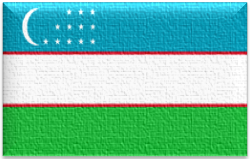

The Top Modern Countries That Were Part Of The Chagatai Khanate
01
China included 1,200,000 km² under Chagatai control, encompassing the eastern oasis trade centers of the Tarim Basin in Xinjiang.
China
02
Kazakhstan contained 850,000 km² under control, forming the crucial Zhetysu pasturelands and Syr Darya frontier.
Kazakhstan
03
Uzbekistan comprised 448,978 km² under 100% full control, functioning as the urban, economic, and cultural heartland.
Uzbekistan
04
Turkmenistan covered 250,000 km² under control, securing the eastern trade routes and historical oasis cities.
Turkmenistan
05
Kyrgyzstan spanned 199,951 km² under 100% full control, providing strategic high-altitude pastures and trade passes.
Kyrgyzstan
The Territorial Reach Of The Chagatai Khanate In Modern Terms
At its peak, the khanate extended from the Aral Sea and Oxus River in the west to the Gobi Desert and Tarim Basin in the east, and from the Kazakh steppes in the north down to the Hindu Kush and Afghan borderlands.
The Current Sovereign Nations Whose Areas Were Significantly Or Fully Under The Control Of The Chagatai Khanate
Direct sovereign control was established across Transoxiana (Uzbekistan, Tajikistan, Kyrgyzstan) and Xinjiang, while peripheral steppe zones in Kazakhstan, Turkmenistan, and northern Afghanistan were managed through tribal confederations, provincial governors, or tributary ties.
From Khans To Sovereignty: Tracking The Chagatai Khanate Peak And Last Century
Chagatai Khanate Islamic Phase Greatest Extent And Powerful Rulers
Chagatai Khanate Islamic Phase and Notable Battles
Introduction
The Chagatai Khanate was one of the four major political divisions that emerged from the Mongol Empire. Founded by Chagatai, the second son of Genghis Khan, it controlled important parts of Central Asia, including Transoxiana, the region around Samarkand and Bukhara, the Ili Valley, Semirechye, and parts of the Tarim Basin at different times.
Unlike some Mongol successor states, the Chagatai Khanate did not become Muslim under one ruler in a single, decisive moment. Its religious transformation occurred gradually. Some Chagatai princes accepted Islam before the 14th century, but Tarmashirin Khan (c. 1326–1334) was especially important in establishing Islam among the ruling elite of the western khanate. After the state divided, Tughlugh Timur (c. 1347–1363) became a major figure in the Islamization of the eastern Chagatai territories, known as Moghulistan.
The khanate was also a major military power. Its rulers fought the Yuan dynasty, the Ilkhanate, the Golden Horde, the Delhi Sultanate, and rival Central Asian princes. Its greatest territorial reach depended on the period being considered: at some points, Chagatai authority extended across a vast belt of Central Asia, but the level of direct control varied considerably.
This article examines the khanate’s origins, conversion to Islam, territorial extent, strongest rulers, major battles, achievements, decline, and historical legacy.
1. At a Glance: The Chagatai Khanate
| Detail | Information |
|---|---|
| Name | Chagatai Khanate, also called the Chaghadaid Khanate |
| Founder | Chagatai Khan, son of Genghis Khan |
| Origins | Early 13th century; developed as a distinct Mongol ulus after Genghis Khan’s death in 1227 |
| Dynasty | Chagataid dynasty |
| Main regions | Transoxiana, Semirechye, the Ili Valley, and parts of the Tarim Basin and surrounding regions |
| Important cities | Samarkand, Bukhara, Almaliq, Kashgar, and other regional centers at different times |
| Early Muslim rulers | A number of princes converted before Tarmashirin, but his reign marked a major turning point |
| Major western Islamization ruler | Tarmashirin Khan, c. 1326–1334 |
| Major eastern Islamization ruler | Tughlugh Timur, c. 1347–1363 |
| Important military rulers | Duwa, Baraq, Qaidu as a powerful rival, and Tughlugh Timur |
| Major rivalries | Yuan dynasty, Ilkhanate, Golden Horde, Delhi Sultanate, and regional Central Asian powers |
| Political division | The khanate fragmented into western Transoxiana and eastern Moghulistan during the 14th century |
| Legacy | Islamization of much of Central Asia, Mongol-Turkic political traditions, and the emergence of later Central Asian states |
2. Origins of the Chagatai Khanate
2.1 Chagatai, the son of Genghis Khan
Chagatai was one of Genghis Khan’s principal sons and received an extensive inheritance in Central Asia. His territories formed part of the Mongol Empire’s western and central domains, linking the steppe regions with settled agricultural centers along the Silk Roads.
The Chagatai ulus was not immediately an entirely independent state. Its rulers remained connected to the broader Mongol imperial order, and succession disputes often involved the Great Khans and other branches of the dynasty.
After Chagatai’s death in 1242, his descendants competed for authority. Some rulers favored the nomadic traditions of the Mongol elite, while others increasingly relied on settled populations, Muslim administrators, and the wealth of Transoxiana.
2.2 A state between the steppe and the cities
The khanate’s geography shaped its history. Its eastern and northern regions included steppe and mountain territories where nomadic traditions remained influential. Its western territories included major agricultural and urban centers such as Samarkand and Bukhara, where Islam had been established long before the Mongol conquests.
This created a recurring political tension. Some Mongol nobles wished to preserve nomadic customs and the authority of traditional Mongol law, while other rulers became more closely integrated with Muslim urban society.
The contrast between these political and social interests would become particularly important during Tarmashirin’s reign and the later division of the khanate.
3. The Greatest Territorial Extent of the Chagatai Khanate
3.1 How large was the khanate?
The Chagatai Khanate at its broadest included extensive parts of Central Asia. Its territories and spheres of influence could stretch from the Ili Valley and Semirechye in the east and northeast to Transoxiana in the west, with influence extending toward the Tarim Basin and, at certain periods, territories south of the Oxus.
Its historical geography included parts of modern:
- Uzbekistan
- Southern Kazakhstan
- Kyrgyzstan
- Tajikistan
- Xinjiang in western China
- Parts of Afghanistan and neighboring regions during particular periods of expansion or political influence
These are modern geographical comparisons, not fixed national borders of the medieval khanate.
3.2 When was it most powerful?
The khanate’s power was particularly significant under rulers such as Baraq Khan (1266–1271) and Duwa Khan (c. 1282–1307), although their authority operated in very different political circumstances.
Baraq challenged the Yuan dynasty’s influence in the Tarim Basin and became involved in warfare with other Mongol powers. Duwa, by contrast, helped strengthen the khanate’s position after years of conflict involving Qaidu and the Yuan court. Following Qaidu’s death in 1301, Duwa played a major role in negotiating a settlement with the Yuan dynasty and bringing parts of the wider Mongol conflict to an end.
The khanate’s reach was not equally secure everywhere. Some territories were directly administered, others were controlled by allied or subordinate rulers, and still others changed hands during wars. Therefore, claims about a single exact maximum area should be treated cautiously.
3.3 Why was its territory difficult to control?
The Chagatai Khanate had to govern both mobile pastoral communities and wealthy settled regions. These societies had different economic needs and political traditions.
Nomadic military elites depended on herds, pasturelands, and the distribution of booty. Agricultural regions depended on irrigation, secure trade routes, stable taxation, and the protection of towns. When rulers favored one interest too strongly, they risked rebellion from other groups.
The distance between eastern centers such as Almaliq and the western cities of Transoxiana also made political unity difficult. These tensions eventually contributed to the division between western Transoxiana and eastern Moghulistan.
4. How Did the Chagatai Khanate Convert to Islam?
The Islamization of the Chagatai Khanate was gradual and did not happen through one mass conversion at the beginning of the state’s history.
4.1 Before Tarmashirin: Early Muslim princes and a diverse court
Some Chagatai princes accepted Islam before the 14th century, and Muslim communities were influential in Transoxiana. Nevertheless, the ruling dynasty retained strong connections to Mongol customary law and older religious traditions.
Muslim urban communities, merchants, scholars, and religious institutions helped make Islam increasingly important in the western territories. The pace of conversion differed between regions, and the eastern steppe communities did not necessarily follow the same path as the settled population of Transoxiana.
4.2 Tarmashirin Khan: The major turning point in the west
Tarmashirin ruled approximately from 1326 to 1334 and is one of the most important rulers in the khanate’s Islamic history. After accepting Islam, he became known by the Muslim title Ala al-Din.
His conversion strengthened the position of Muslim officials and Islamic institutions in the western khanate. Tarmashirin favored the settled regions of Transoxiana and became more closely associated with Muslim political culture than some of his predecessors.
The importance of his reign is recognized by modern scholarship, although the precise chronology and extent of his authority remain subjects of historical discussion. Tarmashirin’s conversion helped advance the Islamization of the khanate, but it did not instantly make every Chagatai territory Muslim.
4.3 Why did Tarmashirin lose power?
Tarmashirin’s policies created tension with Mongol nobles who wanted to preserve traditional political customs. His preference for the western territories, his association with Islam, and his failure to maintain some expected Mongol political practices contributed to opposition.
His deposition around 1334 illustrates that religious conversion could become part of a broader struggle over political authority. His opponents were not necessarily all motivated by religious hostility alone; regional interests, dynastic rivalry, and disputes about customary law also mattered.
4.4 Tughlugh Timur and the Islamization of Moghulistan
After the khanate divided, Tughlugh Timur became a major ruler of the eastern Chagatai territories, known as Moghulistan. He converted to Islam in the mid-14th century and is remembered as an important figure in the spread of Islam among eastern Mongol communities.
Later historical accounts describe a large number of people converting during his reign. The exact numbers in these traditions should not be accepted as precise demographic statistics, but they reflect the remembered importance of his religious transformation.
The Islamization of Moghulistan was not identical to that of Transoxiana. It developed through different political networks and local conditions. Tughlugh Timur’s conversion helped strengthen Islam in the east, while Muslim traditions had already become deeply rooted in many western cities.
5. The Most Powerful Rulers of the Chagatai Khanate
The following rulers were especially important because of their military achievements, territorial influence, administrative reforms, or role in Islamization. Dates for some early and later rulers differ among historical sources.
5.1 Chagatai Khan (c. 1227–1242)
Chagatai was the founder of the dynasty’s political inheritance. He helped establish the ruling framework for a large Central Asian ulus within the Mongol Empire.
He is remembered for maintaining the authority of Genghis Khan’s political and legal traditions. His descendants ruled a strategically important region connecting eastern Asia, the steppe, and the Islamic cities of Transoxiana.
5.2 Qara Hülegü (intermittently in the mid-13th century)
Qara Hülegü, a grandson of Chagatai, was an important early ruler during a period of succession disputes. His reign and restoration reflected the influence that the wider Mongol imperial court could exert over the Chagatai dynasty.
His significance lies less in territorial conquest than in the continuing struggle to establish stable succession within the ruling family.
5.3 Alugh Khan (c. 1260–1266)
Alugh became ruler during a period of conflict involving other Mongol branches. His reign was connected with shifting alliances and struggles over the authority of the Chagatai ulus.
The political instability of this era made it difficult for any ruler to maintain uncontested control over all the khanate’s territories.
5.4 Baraq Khan (1266–1271)
Baraq was one of the more assertive rulers of the 13th-century khanate. He challenged Yuan influence in eastern territories and sought to strengthen his position in Central Asia.
His campaigns brought him into conflict with Qaidu, a powerful Ögedeid prince who became a major rival of the Yuan dynasty and a decisive figure in Central Asian politics. Baraq’s eventual accommodation with Qaidu and involvement in campaigns against the Ilkhanate show the extent to which Chagatai politics were intertwined with wider Mongol rivalries.
5.5 Duwa Khan (c. 1282–1307)
Duwa was one of the most influential Chagatai rulers. His long reign helped strengthen the khanate after years of conflict involving Qaidu and the Yuan dynasty.
Following Qaidu’s death in 1301, Duwa worked toward a settlement with the Yuan court. By the end of his reign, the Chagatai Khanate had gained a greater degree of practical independence and a more stable political position.
Duwa’s importance rests on his combination of military participation, diplomacy, and dynastic consolidation. His descendants continued to dominate Chagatai politics for decades, although succession conflicts persisted.
5.6 Kebek Khan (1318–1326)
Kebek was a significant ruler because of his efforts to strengthen administration and encourage a more settled political center in the western territories.
He is associated with the standardization of coinage and the use of Qarshi as a major administrative center. These developments reflected the growing importance of settled government and commerce within the khanate.
Kebek’s reign helped prepare the ground for the closer integration of the ruling elite with the urban societies of Transoxiana, although the khanate remained divided in its political and cultural outlook.
5.7 Tarmashirin Khan (c. 1326–1334)
Tarmashirin was among the most important Muslim rulers of the western Chagatai realm. His conversion strengthened the role of Islam in government and helped accelerate the Islamization of the settled western territories.
He also pursued military campaigns, including an invasion toward the Delhi Sultanate. Yet his policies created opposition among eastern Mongol nobles, and he was deposed around 1334.
His reign demonstrates both the influence and the limits of a Muslim ruler within a dynasty that still contained competing regional and political traditions.
5.8 Tughlugh Timur (c. 1347–1363)
Tughlugh Timur was a powerful ruler of eastern Moghulistan after the khanate’s division. His conversion to Islam made him a major figure in the Islamization of eastern Chagatai communities.
He also attempted to reassert authority over Transoxiana through campaigns in 1360 and 1361. These expeditions brought him into the political world from which Timur, later known as Tamerlane, would emerge as a dominant military leader.
Tughlugh Timur’s campaigns demonstrated that Chagatai khans could still exert major influence beyond the eastern territories, but they did not restore lasting unity to the former khanate.
5.9 Timur: A powerful successor, but not a Chagatai khan
Timur, often called Tamerlane, was one of the most powerful rulers to emerge from the political world of the later Chagatai Khanate. He was a Muslim military leader who rose to power in Transoxiana during the 14th century.
However, Timur was not himself a Chagatai khan. He relied on Chinggisid figurehead khans to strengthen his legitimacy while exercising real power through his own military and political authority.
Timur eventually built a vast empire extending across Central Asia, Persia, and other regions. His rise should be understood as part of the Chagatai Khanate’s fragmentation and aftermath, rather than as the reign of a unified Chagatai state.
6. Notable Battles and Military Campaigns
The Chagatai Khanate’s military history included wars against other Mongol powers, campaigns against the Delhi Sultanate, and struggles among Central Asian rulers. Not every campaign resulted in a lasting territorial gain, but several were important in shaping the region.
6.1 Baraq’s conflict with Qaidu and the Yuan dynasty (1260s–1270s)
Baraq challenged Yuan influence in the eastern territories and became involved in a wider conflict among Mongol dynasties. Qaidu, an Ögedeid prince, emerged as one of his principal rivals.
The conflict reflected the breakdown of unified Mongol authority. Although all the main rulers belonged to the wider Mongol imperial family, they competed over territory, succession, and control of trade routes.
Result: Baraq was unable to secure uncontested control of the eastern territories. His eventual accommodation with Qaidu helped shift the balance of power in Central Asia and drew the Chagatai realm into broader Mongol rivalries.
6.2 Duwa and the settlement with the Yuan dynasty (early 14th century)
Following Qaidu’s death in 1301, Duwa and the Yuan dynasty pressured Qaidu’s successor, Chapar, to surrender his claims. These events helped end one phase of the long Mongol civil conflict.
Result: Duwa strengthened the Chagatai Khanate’s practical independence and improved its position relative to the Yuan court. The settlement did not eliminate all later disputes, but it marked an important change in the balance of power among the Mongol successor states.
6.3 The Battle of Kili (1299): Chagatai forces against the Delhi Sultanate
A major Mongol invasion of northern India occurred in 1299, during the reign of Delhi Sultan Alauddin Khalji. The invading force was led by Qutlugh Khwaja, a Mongol prince associated with the Chagatai ruling family.
The invaders advanced into the Delhi region and fought the army of the Delhi Sultanate at Kili, near Delhi. The battle was fierce, and the Mongol forces eventually withdrew without capturing the capital.
Result: Delhi remained under Khalji control, and the invasion demonstrated the ability of the Delhi Sultanate to resist a major Mongol incursion. It also showed that Chagatai military pressure could reach far beyond Central Asia, even when it failed to establish lasting territorial control.
6.4 The Mongol raid and siege of Delhi (1303)
In 1303, a Mongol force led by Taraghai advanced into the Delhi region while Alauddin Khalji was consolidating his power. The Mongols threatened the capital, and the Delhi Sultanate took defensive measures.
The Mongol army did not capture Delhi and eventually withdrew. The campaign highlighted the vulnerability of northern India to fast-moving steppe armies but also the limits of Mongol operations far from their Central Asian bases.
Result: Delhi survived the invasion, and the Sultanate continued to strengthen its defenses. The campaign contributed to the strategic importance of frontier fortifications and military preparedness under Alauddin Khalji.
6.5 The Battle of Amroha (1305)
In 1305, another Mongol force invaded northern India and was defeated by the army of the Delhi Sultanate near Amroha. The campaign was part of a wider pattern of incursions from Mongol-controlled Central Asia during the late 13th and early 14th centuries.
Result: The Delhi Sultanate won an important defensive victory, captured or killed many members of the invading force, and reduced the immediate threat from this particular expedition. The outcome strengthened Alauddin Khalji’s reputation as a ruler capable of defending his state against Mongol attacks.
6.6 The Mongol campaign near the Ravi River (1306)
A further Mongol invasion in 1306 was defeated by Delhi Sultanate forces in the northwestern frontier region near the Ravi River. This campaign is often included among the major defeats suffered by Mongol forces invading India during Alauddin Khalji’s reign.
Result: The Delhi Sultanate preserved its territorial integrity and reinforced its position against repeated incursions. These campaigns did not destroy the Chagatai Khanate, but they demonstrated the difficulty of translating raids into sustained conquest of northern India.
Historical note: The Mongol armies that invaded India came from the wider Mongol political world, including forces associated with the Chagatai realm. Their campaigns should not be treated as evidence that every Chagatai ruler personally directed each invasion.
6.7 Tughlugh Timur’s campaigns in Transoxiana (1360–1361)
After the Chagatai realm had fragmented, Tughlugh Timur invaded Transoxiana in an attempt to reassert authority over the western territories. Local leaders, including Timur and Amir Husayn, became central to the struggle for regional power.
Tughlugh Timur’s campaigns demonstrated that the eastern khanate retained the ability to intervene in Transoxiana. However, his control proved temporary, and local power struggles continued after his death.
Result: The campaigns did not restore a unified Chagatai Khanate. Instead, the political conditions allowed Timur to consolidate his position and eventually create a new empire of his own.
6.8 The Battle of the Mire (1365): Timur and Amir Husayn against Ilyas Khoja
The Battle of the Mire, fought in 1365, took place during the struggle over Transoxiana after the khanate’s fragmentation. Timur and Amir Husayn fought the army of Ilyas Khoja, a ruler associated with Moghulistan and the Chagatai dynasty.
The battle ended in defeat for Timur and Amir Husayn. However, Ilyas Khoja was unable to establish lasting control over Samarkand, where local resistance complicated his campaign.
Result: The battle did not restore the old khanate. Instead, it exposed the weakness of competing Central Asian powers and helped shape the conditions under which Timur later became dominant. This battle belongs to the history of the Chagatai successor states rather than to the period of a unified khanate.
7. Relations With Neighboring Empires and States
7.1 Yuan dynasty
The Yuan dynasty in China was one of the Chagatai Khanate’s most important rivals. The two powers were branches of the wider Mongol imperial family, but their rulers competed for influence in eastern Central Asia.
Under Baraq, conflict with Yuan influence intensified. Later, Duwa’s settlement with the Yuan court helped reduce the immediate pressure and strengthened the Chagatai realm’s practical independence.
7.2 Ilkhanate
The Ilkhanate ruled much of Persia and neighboring western Asian territories. The Chagatai rulers and the Ilkhans repeatedly competed over regions connecting Central Asia with Iran and Afghanistan.
Their rivalry reflected the broader fragmentation of the Mongol Empire. Although both states descended from Genghis Khan, their rulers pursued independent political and military interests.
7.3 Golden Horde
The Golden Horde controlled much of the western Eurasian steppe. It was involved in the wider struggle among Mongol successor states and sometimes cooperated with rulers opposing the Yuan dynasty.
The Chagatai Khanate’s relations with the Golden Horde were shaped by shifting alliances and the balance of power across Central Asia. Both states eventually developed strong Islamic traditions, but shared religion did not automatically produce political unity.
7.4 Delhi Sultanate
The Delhi Sultanate was the principal southern target of the Chagatai-associated invasions of northern India. Mongol armies repeatedly raided the northwestern frontier and advanced toward Delhi during the late 13th and early 14th centuries.
Alauddin Khalji’s forces defeated several of these invasions, helping preserve the independence of the Delhi Sultanate. The conflicts are among the best-known examples of the military reach of Mongol powers in Central Asia and their limits in the Indian subcontinent.
7.5 Regional Central Asian rulers
The khanate also faced competition from local commanders, tribal leaders, and regional dynasties. These rivalries became particularly important after the 1340s, when the old political structure weakened.
The rise of Timur reflected this environment. Although he claimed legitimacy through the Chagatai political tradition, his empire was a new political formation rather than a straightforward continuation of the unified khanate.
8. Achievements of the Chagatai Khanate
8.1 Strengthening the Silk Road connections
The khanate occupied important routes linking China, Central Asia, Persia, and the wider Islamic world. When political conditions were stable, these routes facilitated trade, movement of scholars, and the exchange of goods and ideas.
Warfare and political fragmentation periodically disrupted this commerce, but the region remained strategically important because of its position between eastern and western Eurasia.
8.2 Administrative and monetary reforms
Kebek Khan is associated with reforms to coinage and with strengthening the role of settled administrative centers. These changes reflected an effort to govern the western territories more effectively and to connect the ruling elite with the urban economy.
The reforms did not eliminate instability, but they helped shape the political and economic traditions of later Central Asian states.
8.3 Islamization of Central Asian societies
The Islamization of the western khanate under Tarmashirin and the eastern territories under Tughlugh Timur helped strengthen Islam among Mongol and Turkic communities. Muslim scholars, institutions, and urban traditions became increasingly important in the political life of the region.
The process was gradual and uneven, but it contributed to the development of the Islamic cultural landscape of Central Asia.
8.4 Cultural interaction
The Chagatai realm brought Mongol political traditions into contact with Persian, Turkic, and Islamic cultures. Over time, these interactions influenced regional political practices and the development of later Central Asian societies.
8.5 A legacy in later states
The Chagatai dynasty’s political legacy continued in Moghulistan and later Central Asian khanates. Timur’s rise also took place within the political world shaped by the Chagatai ulus, even though he was not himself a Chagatai khan.
9. Weaknesses and Reasons for Decline
The Chagatai Khanate’s decline resulted from several interconnected problems.
Dynastic succession disputes: Rival branches of the ruling family repeatedly competed for the throne, making long-term stability difficult.
Conflict between nomadic and settled interests: Some nobles prioritized steppe traditions, while others relied on the agricultural wealth and administrative institutions of Transoxiana.
Regional separation: The distance between the eastern territories and western cities made unified government difficult.
External warfare: Conflict with the Yuan dynasty, Ilkhanate, Delhi Sultanate, and other regional powers drained resources and encouraged military competition.
Tarmashirin’s deposition: His overthrow in the 1330s exposed divisions between the western Muslim-oriented court and eastern Mongol elites.
Fragmentation after the 1340s: The emergence of Moghulistan in the east and competing political powers in Transoxiana ended the effective unity of the khanate.
The dynasty did not disappear everywhere at once. Chagatai descendants continued to rule in eastern Central Asia, while western Transoxiana came under powerful military leaders, including Timur.
10. Timeline of the Chagatai Khanate
| Date or period | Event |
|---|---|
| 1227 | Genghis Khan died, and his son Chagatai inherited a major Central Asian ulus. |
| 1242 | Chagatai died, beginning a succession period among his descendants. |
| 1260s | Baraq challenged Yuan influence and became involved in wider Mongol rivalries. |
| 1266–1271 | Baraq ruled and sought to strengthen the khanate’s position. |
| c. 1282–1307 | Duwa’s reign strengthened the khanate and helped establish a settlement with the Yuan dynasty. |
| 1299 | Chagatai-associated Mongol forces fought the Delhi Sultanate at Kili. |
| 1303 | A Mongol invasion threatened Delhi but failed to capture the city. |
| 1305 | Delhi Sultanate forces defeated a Mongol invasion near Amroha. |
| 1306 | Another Mongol campaign was defeated near the Ravi River. |
| 1318–1326 | Kebek promoted administrative and monetary reforms. |
| c. 1326–1334 | Tarmashirin’s reign marked a major stage in the Islamization of the western khanate. |
| c. 1334 onward | Dynastic conflict and regional division weakened the unified khanate. |
| c. 1347–1363 | Tughlugh Timur ruled Moghulistan and became a key figure in eastern Islamization. |
| 1360–1361 | Tughlugh Timur campaigned in Transoxiana. |
| 1365 | The Battle of the Mire took place amid the struggles among Central Asian successor powers. |
| Late 14th century | Timur established a new empire in much of Central Asia and beyond. |
11. Frequently Asked Questions
1. Who founded the Chagatai Khanate?
Chagatai, the second son of Genghis Khan, founded the dynasty’s political inheritance in Central Asia. The khanate developed as a distinct political entity after the fragmentation of the Mongol Empire.
2. When did the Chagatai Khanate become Muslim?
The conversion was gradual. Tarmashirin Khan’s reign around 1326–1334 was a major turning point in the western khanate, while Tughlugh Timur helped advance Islamization in the eastern territories during the mid-14th century.
3. Who was the most important Muslim ruler of the Chagatai Khanate?
Tarmashirin is one of the most important figures in the Islamization of the western khanate. Tughlugh Timur was similarly significant for the eastern territories of Moghulistan.
4. What was the greatest extent of the Chagatai Khanate?
At its broadest, the khanate encompassed major parts of Central Asia, including Transoxiana, Semirechye, the Ili Valley, and parts of the Tarim Basin. Its exact reach varied, and some regions were under indirect or contested control.
5. Which ruler made the Chagatai Khanate most powerful?
There is no single universally accepted answer. Duwa strengthened the khanate through warfare and diplomacy, while Baraq was an assertive ruler during an earlier period of Mongol rivalry. Their achievements differed according to their political circumstances.
6. What were the most notable battles involving Chagatai forces?
Important campaigns include the conflict with Qaidu and the Yuan dynasty, the Battle of Kili in 1299, the Mongol campaigns against the Delhi Sultanate in 1303–1306, and the struggles in Transoxiana after the khanate’s fragmentation.
7. Did the Chagatai Khanate conquer Delhi?
No. Mongol forces associated with the Chagatai political world repeatedly invaded northern India, but the Delhi Sultanate repelled major campaigns and retained its capital.
8. Was Timur a Chagatai khan?
No. Timur emerged from the political world of the Chagatai Khanate and used Chinggisid figurehead rulers to support his legitimacy, but he was not himself a Chagatai khan.
9. Why was Tarmashirin overthrown?
His association with Islam, his focus on the western territories, and tensions with nobles who favored traditional Mongol customs contributed to his downfall. Political and regional rivalries also played important roles.
10. What happened to the Chagatai Khanate?
The unified khanate fragmented during the 14th century into western Transoxiana and eastern Moghulistan. Chagatai descendants continued to rule in successor states, while Timur established a separate empire in much of Central Asia.
Conclusion
- The Chagatai Khanate was a major Mongol successor state whose history combined extensive territorial influence, military campaigns, political rivalries, and gradual Islamization. Its rulers controlled important parts of Central Asia and fought powerful neighbors, including the Yuan dynasty, Ilkhanate, and Delhi Sultanate.
- Duwa and Baraq were among its influential military rulers, Kebek promoted administrative reforms, Tarmashirin advanced Islam in the west, and Tughlugh Timur became a key figure in the Islamization of Moghulistan. The invasions of northern India showed the khanate’s military reach, while repeated defeats and the failure to establish lasting control exposed its limitations.
- The state’s eventual division resulted from dynastic conflict, regional differences, and the competing interests of nomadic and settled elites. Its legacy continued in later Central Asian states and in the political world from which Timur emerged.
Sources
- 1. Cambridge University Press — The Cambridge History of the Mongol Empire: Mongol Central Asia, by Michal Biran
Mongol Central Asia: The Chaghadaids and the Ögödeids, 1260–1370 — History, political divisions, culture, and Islamization of the Chagatai Khanate. - Cambridge University Press
- 2. Encyclopaedia Iranica — Central Asia: In the Mongol and Timurid Periods
Central Asia in the Mongol and Timurid Periods — The spread of Sunni Islam among the Chagatai Mongols and the conversion of Tarmashirin Khan.
Encyclopaedia Iranica - 3. Michal Biran — The Chaghadaids and Islam: The Conversion of Tarmashirin Khan (1331–34)
The Chaghadaids and Islam — Peer-reviewed study of Tarmashirin Khan’s conversion, reign, and religious and political policies.
The Hebrew University of Jerusalem - 4. Cambridge University Press — A History of Inner Asia, by Svat Soucek
The Chaghatayids — Background on the Chagatai rulers, the spread of Islam, and the role of Sufi traditions in Mongol Central Asia. - A History of Inner Asia
- 5. Yale University Press / Oxford Academic — The Mongols and the Islamic World: From Conquest to Conversion, by Peter Jackson
The Mongols and the Islamic World — Scholarly overview of Mongol rule, conversion to Islam, and the relationship between Mongol traditions and Islamic societies. - Oxford Academic
- 6. Peter Jackson — The Onset of Islamization: Royal Converts and Muslim Resurgence
Royal Converts and Muslim Resurgence — Examines the conversion of Chagatai and other Mongol rulers to Islam.
Oxford Academic - 7. Cambridge University Press — Islam across the Oxus (Seventh to Seventeenth Centuries)
Islam across the Oxus — Discusses Islamization in Central Asia, including the conversion of Tughluq Timur and the influence of Sufi networks. - Islam and Asia
- 8. Journal of History, Al-Farabi Kazakh National University — The Religious Atmosphere of the Uluses of Chagatai and Jochi
The Religious Atmosphere of the Uluses of Chagatai and Jochi — Research on religious change and the role of rulers in supporting Islam in the Mongol successor states