
saudi arabia administrative divisions
top 10 largest provinces of saudi arabia by Population : A Complete Administrative Breakdown
01
Riyadh
8.59 Million
02
Makkah, Mecca
7.76 Million
03
Eastern Region
5.12 Million
04
Madinah, Medina
2.38 Million
05
Aseer
2.02 Million
06
Jazan
1.40 Million
07
Al-Qaseem
1.33 Million
08
Tabouk
886 K
09
Ḥā'il
746 K
10
Al-Jawf
595 K
Saudi Arabia population by region
| S no. | Name | Status | Population 2022 |
|---|---|---|---|
| 1 | Riyadh | Region | 8,591,748 |
| 2 | Makkah, Mecca | Region | 7,769,994 |
| 3 | Eastern Region | Region | 5,125,254 |
| 4 | Madinah, Medina | Region | 2,389,452 |
| 5 | Aseer | Region | 2,024,285 |
| 6 | Jazan | Region | 1,404,997 |
| 7 | Al-Qaseem | Region | 1,336,179 |
| 8 | Tabouk | Region | 886,036 |
| 9 | Ḥā'il | Region | 746,406 |
| 10 | Al-Jawf | Region | 595,822 |
| 11 | Najrān | Region | 592,300 |
| 12 | Northern Borders | Region | 373,577 |
| 13 | Al-Bahah | Region | 339,174 |
| Total | Saudi Arabia | Kingdom | 32,175,224 |
| Source : Saudi Arabia Region | citypopulation.de | |||
which is the most populous province in Saudi Arabia
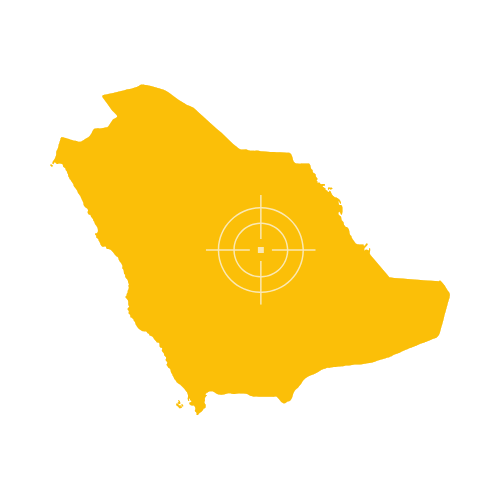
Riyadh Region Is The Most Populous Saudi Region
Saudi Arabia Population by Region 2022: A Complete Administrative Breakdown
Saudi Arabia is divided into 13 administrative regions (also called provinces), each governed by a royally-appointed emir. As of the 2022 census, the Kingdom’s total population stood at 32,175,224, spread unevenly across a landmass of over 2.1 million km² — from the dense urban core of Riyadh to the vast, sparsely populated deserts of the Northern Borders. This guide breaks down every region by population, land area, and density, and explains the patterns behind Saudi Arabia’s demographic map.
Saudi Arabia’s Total Population in 2022
Saudi Arabia’s population reached 32,175,224 as of the 2022 census, spread across 13 regions covering approximately 2,149,690 km² — giving the Kingdom an average national density of just under 15 people per km², among the lower figures for a country of its population size. That national average, however, masks enormous variation: some regions are packed with millions of residents in a fraction of the country’s land area, while others remain vast, thinly populated frontier territories.
Riyadh: The Capital Region’s Demographic Dominance
Riyadh region is Saudi Arabia’s most populous administrative division, home to 8,591,748 people — nearly 27% of the entire Kingdom’s population — concentrated substantially around Riyadh City, the national capital. Covering 404,240 km², Riyadh is also the second-largest region by land area, meaning its overall density of 21.25 people per km² is deceptively low; in reality, the vast majority of the region’s population is clustered tightly within Riyadh City itself, while the surrounding desert governorates remain sparsely inhabited. Riyadh’s population has grown dramatically over the past three decades, more than doubling since 1992, driven by its role as the political, financial, and administrative heart of the country.
Makkah: The Religious and Economic Second Pillar
The Makkah (Mecca) region ranks second with 7,769,994 residents, representing just over 24% of the national population. Home to both Mecca — Islam’s holiest city — and Jeddah, Saudi Arabia’s key Red Sea port and commercial hub, Makkah region combines religious significance with major economic weight. Its density of 50.76 people per km² is the second-highest of any region, reflecting the concentration of population in and around its two major cities, further amplified by the millions of pilgrims who pass through the region annually for Hajj and Umrah.
Riyadh and Makkah Together: Two-Thirds of the Country in Two Regions
Combined, Riyadh and Makkah alone account for 16,361,742 people — over 50% of Saudi Arabia’s total population — despite covering only about 26% of the Kingdom’s land area. Add the Eastern Region’s 5,125,254 residents, and the top three regions together hold roughly 66.8% of the entire national population, underscoring just how concentrated Saudi Arabia’s demography is around a handful of major urban and economic centers.
Eastern Region: Largest by Area, Modest by Density
The Eastern Region is Saudi Arabia’s largest administrative division by far, spanning 672,522 km² — nearly a third of the country’s total land area — yet home to just 5,125,254 people, giving it one of the lowest densities in the Kingdom at 7.62 people per km². This region houses the country’s oil industry infrastructure, including Dammam and the Aramco headquarters in Dhahran, but much of its territory consists of the Rub’ al Khali (Empty Quarter) and other largely uninhabited desert expanses, explaining the gap between its enormous size and comparatively modest population.
Jazan: Saudi Arabia’s Most Densely Populated Region
While Riyadh and Makkah dominate in raw population, the real density story belongs to Jazan, a small coastal region near the Yemeni border. With 1,404,997 residents packed into just 11,671 km², Jazan posts a density of 120.43 people per km² — the highest of any region in Saudi Arabia, more than double that of Makkah and nearly six times the national average. This reflects Jazan’s fertile agricultural land, coastal fishing communities, and historically dense settlement patterns along the Red Sea, in sharp contrast to the vast desert interior that characterizes much of the rest of the country.
Al-Bahah and Aseer: Smaller Regions with Strong Densities
Two of Saudi Arabia’s smaller southwestern regions also stand out for density rather than raw population size. Al-Bahah, the smallest region by population at 339,174, packs its residents into just 9,921 km² for a density of 34.20 per km². Aseer, home to the cooler highland city of Abha, holds 2,024,285 residents across 76,693 km² for a density of 26.40 per km² — both considerably above the national average, reflecting the more habitable mountainous terrain of Saudi Arabia’s southwest compared to the desert plains further north and east.
The Sparsest Frontiers: Najran and Northern Borders
At the opposite extreme, Najran (592,300 people across 149,511 km², density 3.96) and the Northern Borders region (373,577 people across 111,797 km², density 3.34) are Saudi Arabia’s most sparsely populated administrative divisions. Both sit along the Kingdom’s frontiers — Najran near Yemen, Northern Borders near Iraq — and are characterized by vast desert terrain, small population centers, and low overall settlement density, typical of border regions that serve strategic and logistical roles more than dense urban or agricultural development.
Key Takeaways
- Riyadh region is the undisputed population center, home to nearly 27% of Saudi Arabia’s population and continuing to grow rapidly as the national capital.
- The top three regions (Riyadh, Makkah, Eastern) hold two-thirds of the national population, despite covering only a portion of the country’s total land area.
- Jazan, not Riyadh or Makkah, is the most densely populated region, at over 120 people per km² — driven by its small size and fertile coastal geography.
- The Eastern Region is Saudi Arabia’s largest by area but ranks only third in population, reflecting its vast, largely uninhabited desert expanse.
- Najran and the Northern Borders are the Kingdom’s least densely populated regions, consistent with their remote, frontier geography.
Frequently Asked Questions
What is the most populous region in Saudi Arabia? Riyadh is the most populous region, with 8,591,748 residents in 2022 — nearly 27% of the national population.
Which Saudi Arabian region has the highest population density? Jazan has the highest density of any region, at approximately 120.43 people per km², despite ranking only sixth in total population.
Which is the largest region in Saudi Arabia by area? The Eastern Region is the largest by area, covering 672,522 km² — nearly a third of the entire country.
What is Saudi Arabia’s total population in 2022? Saudi Arabia’s total population according to the 2022 census is 32,175,224.
Which region in Saudi Arabia has the smallest population? Al-Bahah has the smallest population of any region, at 339,174 residents in 2022.
Source:
Population data compiled from City Population. Area and density figures cross-referenced from official Saudi regional statistics.