
Pakistan Cities and Population ranking
pakistan biggest city by population
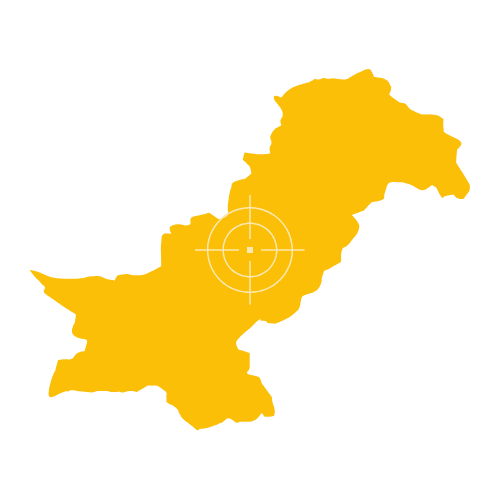
Karachi is the biggest city in Pakistan by population

top 10 most populated cities of pakistan
pakistan cities by population
| Rank | City | Province / Territory | Population 2023 |
|---|---|---|---|
| 1 | Karachi | Sindh | 18,868,021 |
| 2 | Lahore | Punjab | 13,004,135 |
| 3 | Faisalabad | Punjab | 3,691,999 |
| 4 | Rawalpindi | Punjab | 3,357,612 |
| 5 | Gujranwala | Punjab | 2,511,118 |
| 6 | Multan | Punjab | 2,215,381 |
| 7 | Hyderabad | Sindh | 1,921,275 |
| 8 | Peshawar | Khyber Pakhtunkhwa | 1,905,975 |
| 9 | Quetta | Balochistan | 1,565,546 |
| 10 | Islamabad | Islamabad Capital Territory | 1,108,872 |
| 11 | Sargodha | Punjab | 975,886 |
| 12 | Sialkot | Punjab | 911,817 |
| 13 | Bahawalpur | Punjab | 903,795 |
| 14 | Jhang | Punjab | 606,533 |
| 15 | Sheikhupura | Punjab | 591,424 |
| 16 | Gujrat | Punjab | 574,240 |
| 17 | Sukkur | Sindh | 563,851 |
| 18 | Larkana | Sindh | 551,716 |
| 19 | Sahiwal | Punjab | 538,344 |
| 20 | Okara | Punjab | 533,693 |
| 21 | Rahim Yar Khan | Punjab | 519,261 |
| 22 | Kasur | Punjab | 510,875 |
| 23 | Dera Ghazi Khan | Punjab | 494,464 |
| 24 | Wah Cantonment | Punjab | 400,733 |
| 25 | Mardan | Khyber Pakhtunkhwa | 368,302 |
| 26 | Nawabshah | Sindh | 363,138 |
| 27 | Burewala | Punjab | 361,664 |
| 28 | Mingora | Khyber Pakhtunkhwa | 361,112 |
| 29 | Hafizabad | Punjab | 318,621 |
| 30 | Chiniot | Punjab | 318,165 |
| 31 | Jhelum | Punjab | 312,426 |
| 32 | Kamoke | Punjab | 292,023 |
| 33 | Khanewal | Punjab | 281,890 |
| 34 | Sadiqabad | Punjab | 274,210 |
| 35 | Turbat | Balochistan | 268,625 |
| 36 | Mirpur Khas | Sindh | 267,833 |
| 37 | Muridke | Punjab | 254,291 |
| 38 | Khanpur | Punjab | 247,170 |
| 39 | Bahawalnagar | Punjab | 241,873 |
| 40 | Kohat | Khyber Pakhtunkhwa | 235,880 |
| 41 | Muzaffargarh | Punjab | 235,541 |
| 42 | Abbottabad | Khyber Pakhtunkhwa | 234,395 |
| 43 | Mandi Bahauddin | Punjab | 232,361 |
| 44 | Daska | Punjab | 228,626 |
| 45 | Pakpattan | Punjab | 221,280 |
| 46 | Dera Ismail Khan | Khyber Pakhtunkhwa | 220,575 |
| 47 | Jacobabad | Sindh | 219,315 |
| 48 | Chakwal | Punjab | 218,356 |
| 49 | Khuzdar | Balochistan | 218,112 |
| 50 | Gojra | Punjab | 214,349 |
| 51 | Vehari | Punjab | 210,288 |
| 52 | Shikarpur | Sindh | 204,938 |
| 53 | Ahmedpur East | Punjab | 196,618 |
| 54 | Hub | Balochistan | 195,661 |
| 55 | Chishtian | Punjab | 192,403 |
| 56 | Khairpur | Sindh | 191,044 |
| 57 | Dadu | Sindh | 188,317 |
| 58 | Samundri | Punjab | 186,371 |
| 59 | Ferozwala | Punjab | 177,238 |
| 60 | Attock | Punjab | 176,544 |
| 61 | Tando Adam | Sindh | 174,291 |
| 62 | Tando Allahyar | Sindh | 171,185 |
| 63 | Jaranwala | Punjab | 170,872 |
| 64 | Bholari | Sindh | 169,613 |
| 65 | Hasilpur | Punjab | 168,146 |
| 66 | Kamalia | Punjab | 166,617 |
| 67 | Kot Abdul Malik | Punjab | 162,030 |
| 68 | Panjgur | Balochistan | 157,693 |
| 69 | Arif Wala | Punjab | 157,063 |
| 70 | Gujranwala Cantonment | Punjab | 156,929 |
| 71 | Swabi | Khyber Pakhtunkhwa | 156,496 |
| 72 | Jampur | Punjab | 155,243 |
| 73 | Jatoi | Punjab | 155,196 |
| 74 | Wazirabad | Punjab | 152,624 |
| 75 | Layyah | Punjab | 151,274 |
| 76 | Shujabad | Punjab | 151,115 |
| 77 | Haroonabad | Punjab | 149,679 |
| 78 | Jalalpur Jattan | Punjab | 146,743 |
| 79 | Umerkot | Sindh | 144,558 |
| 80 | Lodhran | Punjab | 144,512 |
| 81 | Moro | Sindh | 142,685 |
| 82 | Kot Addu | Punjab | 142,161 |
| 83 | Mian Channu | Punjab | 140,112 |
| 84 | Khushab | Punjab | 139,905 |
| 85 | Rajanpur | Punjab | 137,553 |
| 86 | Mansehra | Khyber Pakhtunkhwa | 137,278 |
| 87 | Taxila | Punjab | 136,900 |
| 88 | Kabal | Khyber Pakhtunkhwa | 132,549 |
| 89 | Bhakkar | Punjab | 131,658 |
| 90 | Narowal | Punjab | 130,692 |
| 91 | Chaman | Balochistan | 130,139 |
| 92 | Mianwali | Punjab | 129,500 |
| 93 | Shakargarh | Punjab | 126,742 |
| 94 | Mailsi | Punjab | 125,431 |
| 95 | Nowshera | Khyber Pakhtunkhwa | 122,953 |
| 96 | Dipalpur | Punjab | 122,759 |
| 97 | Haveli Lakha | Punjab | 122,389 |
| 98 | Lala Musa | Punjab | 121,036 |
| 99 | Shahdadkot | Sindh | 120,687 |
| 100 | Charsadda | Khyber Pakhtunkhwa | 120,170 |
| 101 | Ghotki | Sindh | 119,879 |
| 102 | Sambrial | Punjab | 119,571 |
| 103 | Bhalwal | Punjab | 117,982 |
| 104 | Badin | Sindh | 117,455 |
| 105 | Taunsa | Punjab | 115,704 |
| 106 | Barikot | Khyber Pakhtunkhwa | 115,045 |
| 107 | Phool Nagar | Punjab | 114,530 |
| 108 | Tando Muhammad Khan | Sindh | 114,406 |
| 109 | Pattoki | Punjab | 113,735 |
| 110 | Shahdadpur | Sindh | 113,342 |
| 111 | Jauharabad | Punjab | 113,188 |
| 112 | Kamber Ali Khan | Sindh | 112,313 |
| 113 | Chichawatni | Punjab | 112,191 |
| 114 | Farooqabad | Punjab | 109,717 |
| 115 | Pishin | Balochistan | 107,646 |
| 116 | Dera Murad Jamali | Balochistan | 106,952 |
| 117 | Kotri | Sindh | 106,615 |
| 118 | Sangla Hill | Punjab | 103,709 |
| 119 | Gujar Khan | Punjab | 103,284 |
| 120 | Kharian | Punjab | 103,036 |
| 121 | Pasrur | Punjab | 102,717 |
| 122 | Shabqadar | Khyber Pakhtunkhwa | 102,340 |
| 123 | Kot Radha Kishan | Punjab | 102,057 |
| 124 | Ludhewala Waraich | Punjab | 100,331 |
| 125 | Renala Khurd | Punjab | 100,054 |
| Source : citypopulation | Cities Of Pakistan | |||
cities of pakistan ranked by population
Pakistan is one of South Asia’s most urbanizing countries, with a large and diverse network of cities ranging from the megacity of Karachi to rapidly growing regional centers such as Lahore, Faisalabad, Rawalpindi, Gujranwala, Multan, Peshawar and Quetta. The country’s urban population has expanded considerably over the past several decades as cities have grown through natural population increase, migration, economic development and the expansion of built-up areas.
According to the 7th Population and Housing Census of Pakistan, conducted in 2023, Pakistan had a total population of 241,499,431, including 93,884,702 people living in urban areas. The 2023 Census counted 657 urban localities nationwide.
For city-level comparisons, population figures need to be interpreted carefully because a “city” can mean a municipal boundary, an urban locality, a metropolitan area, a district or a wider built-up agglomeration. The figures in this article refer primarily to populations reported for individual cities or urban localities rather than metropolitan regions.
Pakistan Cities Population Overview
Pakistan’s urban population is concentrated in a relatively small number of very large cities. Census 2023 recorded 46 urban localities with populations of 500,000 or more, accounting for more than half of the country’s urban population. The same census recorded 43 localities in the 200,000–499,999 range and 76 in the 100,000–199,999 range.
The largest population centers are concentrated particularly in Punjab and Sindh, although Khyber Pakhtunkhwa, Balochistan and Islamabad also contain major urban centers.
Two Pakistani cities had populations above 10 million in the 2023 census:
- Karachi — 18,868,021
- Lahore — 13,004,135
Together, these two cities form Pakistan’s principal megacity population centers. PBS’s National Census Report states that Karachi alone accounted for about 7.8% of Pakistan’s total population and approximately one-fifth of the country’s urban population.
Pakistan Population and Urbanization
Pakistan’s 2023 census recorded a total population of 241,499,431. Of this population, 93,884,702 lived in urban areas, while 147,614,729 lived in rural areas. Urban residents therefore represented approximately 38.9% of the country’s population according to the census classification.
The number of urban localities increased from 586 in the 2017 Census to 657 in the 2023 Census. This reflects the continuing expansion and reclassification of Pakistan’s urban settlements.
Urban growth is especially visible around the country’s largest economic and administrative centers. Karachi and Lahore have developed into major metropolitan economies, while cities such as Faisalabad, Rawalpindi, Gujranwala, Multan, Hyderabad, Peshawar and Quetta serve as important regional centers.
Largest Cities in Pakistan by Population
The following table lists Pakistani cities with populations of 100,000 or more, using the 2023 census figures available through official census-based compilations.
| Rank | City | Province / Territory | Population 2023 | |
|---|---|---|---|---|
| 1 | Karachi | Sindh | 18,868,021 | |
| 2 | Lahore | Punjab | 13,004,135 | |
| 3 | Faisalabad | Punjab | 3,691,999 | |
| 4 | Rawalpindi | Punjab | 3,357,612 | |
| 5 | Gujranwala | Punjab | 2,511,118 | |
| 6 | Multan | Punjab | 2,215,381 | |
| 7 | Hyderabad | Sindh | 1,921,275 | |
| 8 | Peshawar | Khyber Pakhtunkhwa | 1,905,975 | |
| 9 | Quetta | Balochistan | 1,565,546 | |
| 10 | Islamabad | Islamabad Capital Territory | 1,108,872 |
Note: City listings and census classifications can differ depending on whether a source treats a municipality, urban locality, cantonment or wider urban agglomeration as the city. For this reason, city-population tables should not be confused with metropolitan-area populations. The PBS urban-locality tables provide the underlying census framework.
Karachi Population
Karachi is Pakistan’s largest city and the country’s principal commercial and financial center. The 2023 Census recorded a population of 18,868,021 for Karachi under the relevant city definition.
Karachi’s population increased substantially from previous census levels. The city has expanded through natural population growth, migration and the continued development of its metropolitan area.
Karachi is also divided administratively into several districts, and its urban population statistics can therefore appear different when comparing city, district and metropolitan definitions.
City Population’s Pakistan data and the PBS census tables provide separate figures for Karachi’s districts and urban localities. For example, the 2023 population of Karachi South district was reported as 2,329,764, illustrating why district totals should not be substituted for the population of Karachi as a whole.
Lahore Population
Lahore is Pakistan’s second-largest city and the capital of Punjab. Its 2023 population was 13,004,135.
Lahore is an important center for government, education, culture, commerce, manufacturing and services. The city has experienced significant population growth over several decades.
The 2023 census data also show that Lahore’s urban area contains several administrative components. PBS’s urban-locality table records separate portions of Lahore Metropolitan Corporation within different tehsils, so the total city figure should be distinguished from individual administrative subdivisions.
Faisalabad Population
Faisalabad had a population of 3,691,999 in the 2023 Census.
The city is one of Punjab’s most important industrial centers and is particularly associated with textile manufacturing, agriculture-related industries and trade. Its large population reflects its role as a major industrial and commercial center in central Punjab.
Rawalpindi Population
Rawalpindi recorded 3,357,612 people in 2023.
Rawalpindi is closely connected economically and geographically with Islamabad. Together, the two cities form one of Pakistan’s most important urban regions.
The Rawalpindi population has grown rapidly in recent decades, supported by its strategic location, transportation connections, residential development and proximity to the federal capital.
Gujranwala Population
Gujranwala had a 2023 population of 2,511,118.
The city is one of Punjab’s major industrial and commercial centers. Its surrounding urban corridor contains numerous towns and industrial settlements, making the wider Gujranwala region one of the most densely populated parts of Punjab.
Multan Population
Multan recorded 2,215,381 inhabitants in the 2023 Census.
Located in southern Punjab, Multan is a major regional center for agriculture, commerce, education, transportation and services. It is also one of the historic urban centers of the Indus region.
Hyderabad Population
Hyderabad, Sindh, had a population of 1,921,275 in 2023.
It is one of Sindh’s major urban and commercial centers after Karachi. Hyderabad serves as an important regional center for education, manufacturing, trade and administration.
Peshawar Population
Peshawar recorded 1,905,975 inhabitants in 2023.
The city is the capital of Khyber Pakhtunkhwa and has historically served as an important commercial and transportation center between South Asia and the regions to the west.
The 2023 city figure is notable because the reported population was slightly lower than the 2017 census figure under the relevant city boundaries.
Quetta Population
Quetta had a population of 1,565,546 in the 2023 Census.
As the capital of Balochistan, Quetta is the province’s principal administrative, commercial and educational center. Its location in a valley surrounded by mountains gives the city a distinctive geographical setting.
Islamabad Population
Islamabad, Pakistan’s federal capital, recorded 1,108,872 inhabitants in the 2023 Census.
Islamabad is located in the Islamabad Capital Territory and differs administratively from cities belonging to Pakistan’s provinces. The city is the country’s principal federal administrative center and is closely connected to neighboring Rawalpindi.
Sargodha Population
Sargodha had 975,886 inhabitants in 2023.
The city is a major agricultural and commercial center in central Punjab and is particularly associated with citrus production in the surrounding region.
Sialkot Population
Sialkot recorded 911,817 inhabitants.
The city is internationally recognized for manufacturing and exporting sports goods, surgical instruments, leather products and other industrial goods.
Bahawalpur Population
Bahawalpur had a population of 903,795 in 2023.
Located in southern Punjab, it serves as a major regional center and has a strong historical connection with the former princely state of Bahawalpur.
Major Cities by Province
Punjab Cities by Population
Punjab contains the largest concentration of major cities in Pakistan. The province includes Lahore, Faisalabad, Rawalpindi, Gujranwala, Multan, Sargodha, Sialkot, Bahawalpur, Jhang, Sheikhupura, Gujrat and many other large urban centers.
According to the commonly used 2023 city compilation, 81 of Pakistan’s 127 cities with more than 100,000 inhabitants are located in Punjab.
This concentration reflects Punjab’s high population density, extensive agricultural economy, industrial development and interconnected network of towns and cities.
Sindh Cities by Population
Sindh contains some of Pakistan’s largest urban centers, led by Karachi and Hyderabad.
Other major Sindh cities include:
- Karachi
- Hyderabad
- Sukkur
- Larkana
- Nawabshah
- Mirpur Khas
- Jacobabad
- Shikarpur
- Khairpur
- Dadu
- Tando Adam
- Tando Allahyar
- Umerkot
- Moro
- Ghotki
- Badin
- Shahdadpur
- Tando Muhammad Khan
- Kotri
Sindh had 22 cities with populations above 100,000 in the cited 2023 city compilation.
Khyber Pakhtunkhwa Cities by Population
Khyber Pakhtunkhwa’s principal urban centers include:
- Peshawar
- Mardan
- Mingora
- Kohat
- Abbottabad
- Dera Ismail Khan
- Mansehra
- Swabi
- Kabal
- Charsadda
- Nowshera
- Barikot
- Dera Ismail Khan
- Shabqadar
The province had 13 cities above 100,000 inhabitants in the referenced 2023 city compilation.
Balochistan Cities by Population
Balochistan is Pakistan’s largest province by area but has a comparatively dispersed population.
Its principal urban centers include:
- Quetta
- Turbat
- Khuzdar
- Hub
- Chaman
- Panjgur
- Pishin
- Dera Murad Jamali
Eight cities in Balochistan were listed above the 100,000 population threshold in the 2023 compilation.
Islamabad Capital Territory
Islamabad is Pakistan’s federal capital and is administered separately from the four provinces.
The 2023 census recorded 1,108,872 people for Islamabad city under the cited city definition.
Pakistan Cities With 50,000 to 100,000 Population
Pakistan also has a large number of medium-sized urban centers below the 100,000 threshold. Examples from the 2023 census-based city list include:
| City | Population 2023 | Province |
|---|---|---|
| Kandhkot | 99,155 | Sindh |
| Uch Sharif | 98,852 | Punjab |
| Dera Allah Yar | 98,761 | Balochistan |
| Fazalpur | 98,627 | Punjab |
| Kahror Pacca | 98,325 | Punjab |
| Dijkot | 96,934 | Punjab |
| Khurrianwala | 96,743 | Punjab |
| Hujra Shah Muqeem | 95,921 | Punjab |
| Nankana Sahib | 94,988 | Punjab |
| Dinga | 94,252 | Punjab |
| Rohri | 92,135 | Sindh |
| Kabirwala | 91,932 | Punjab |
| Haripur | 91,915 | Khyber Pakhtunkhwa |
| Kunjah | 90,905 | Punjab |
| Daharki | 90,177 | Sindh |
| Jalalpur Pirwala | 89,679 | Punjab |
| Shahkot | 89,638 | Punjab |
| Thul | 88,554 | Sindh |
| Jamshoro | 88,190 | Sindh |
| Chunian | 87,547 | Punjab |
| Naushahro Feroze | 87,416 | Sindh |
| Chowk Azam | 87,376 | Punjab |
| Takht-i-Bahi | 85,040 | Khyber Pakhtunkhwa |
| Dina | 84,629 | Punjab |
| Fort Abbas | 83,192 | Punjab |
| Ratodero | 81,935 | Sindh |
| Chenab Nagar | 81,695 | Punjab |
| Mustafabad | 81,550 | Punjab |
| Fateh Jang | 81,321 | Punjab |
| Kharan | 80,806 | Balochistan |
| Ghakhar | 80,320 | Punjab |
| Alahabad | 80,097 | Punjab |
| Sui | 79,567 | Balochistan |
| Talagang | 79,431 | Punjab |
| Zahirpir | 76,979 | Punjab |
| Ali Pur Chatta | 76,964 | Punjab |
| Pano Akil | 76,942 | Sindh |
| Bahrain | 76,728 | Khyber Pakhtunkhwa |
| Paharpur | 76,027 | Khyber Pakhtunkhwa |
| Taxila | 75,444 | Punjab |
| Kahuta | 75,349 | Punjab |
| Sehwan Sharif | 75,167 | Sindh |
| Topi | 74,867 | Khyber Pakhtunkhwa |
| Mirpur Mathelo | 74,651 | Sindh |
| Qila Didar Singh | 74,523 | Punjab |
| Kot Mithan | 74,479 | Punjab |
| Matli | 74,402 | Sindh |
| Tando Jam | 74,303 | Sindh |
| Sanghar | 74,112 | Sindh |
| Alipur | 74,095 | Punjab |
| Sarai Alamgir | 73,967 | Punjab |
| Batkhela | 73,525 | Khyber Pakhtunkhwa |
| Sakrand | 72,040 | Sindh |
| Hala | 71,094 | Sindh |
| Bhera | 70,921 | Punjab |
| Zehri | 70,910 | Balochistan |
| Gwadar | 70,852 | Balochistan |
| Lakki Marwat | 70,759 | Khyber Pakhtunkhwa |
| Hasan Abdal | 69,529 | Punjab |
| Sibi | 69,300 | Balochistan |
| Buleda | 68,752 | Balochistan |
| Darya Khan | 68,622 | Punjab |
| Minchinabad | 67,164 | Punjab |
| Narang Mandi | 67,137 | Punjab |
| Mehar | 67,082 | Sindh |
| Liaqatpur | 66,933 | Punjab |
| Pindi Bhattian | 66,511 | Punjab |
| Raja Jang | 66,404 | Punjab |
| Tasp | 66,030 | Balochistan |
| Usta Muhammad | 64,632 | Balochistan |
| Pindi Gheb | 63,810 | Punjab |
| Chowk Sarwar Shaheed | 63,421 | Punjab |
| Kot Momin | 63,411 | Punjab |
| Phalia | 62,453 | Punjab |
| Shehr Sultan | 62,184 | Punjab |
| Kallar Syedan | 60,941 | Punjab |
| Yazman | 60,738 | Punjab |
| Chak Jhumra | 60,131 | Punjab |
| Kot Chutta | 59,870 | Punjab |
| Gambat | 59,790 | Sindh |
| Nowshera Virkan | 59,639 | Punjab |
| Khipro | 58,307 | Sindh |
| Karak | 58,065 | Khyber Pakhtunkhwa |
| Mehrabpur | 57,978 | Sindh |
| Chitral | 57,157 | Khyber Pakhtunkhwa |
| Khwazakhela | 57,113 | Khyber Pakhtunkhwa |
| Jehangira | 57,011 | Khyber Pakhtunkhwa |
| Chaubara | 57,002 | Punjab |
| Jamrud | 56,642 | Khyber Pakhtunkhwa |
| Jand | 56,254 | Punjab |
| Khalabat | 55,850 | Khyber Pakhtunkhwa |
| Pir Jo Goth | 54,266 | Sindh |
| Safdarabad | 54,242 | Punjab |
| Makli | 54,137 | Sindh |
| Naudero | 52,846 | Sindh |
| Zafarwal | 52,639 | Punjab |
| Lalian | 52,542 | Punjab |
| Fateh Pur | 52,255 | Punjab |
| Dunyapur | 51,888 | Punjab |
| Matta | 51,821 | Khyber Pakhtunkhwa |
| Mananwala | 51,746 | Punjab |
| Thatta | 51,723 | Sindh |
| Malakwal | 51,327 | Punjab |
| Khairpur Nathan Shah | 50,786 | Sindh |
| Ubauro | 50,981 | Sindh |
| Sukheke | 50,458 | Punjab |
| Jahanian | 50,318 | Punjab |
The 50,000–100,000 category demonstrates the depth of Pakistan’s urban network beyond the country’s largest metropolitan centers.
Karachi and Lahore Compared With Other Pakistani Cities
Karachi and Lahore are substantially larger than the next tier of Pakistani cities.
In 2023:
- Karachi had 18.87 million people.
- Lahore had 13.00 million.
- Faisalabad had 3.69 million.
- Rawalpindi had 3.36 million.
- Gujranwala had 2.51 million.
- Multan had 2.22 million.
- Hyderabad had 1.92 million.
- Peshawar had 1.91 million.
- Quetta had 1.57 million.
- Islamabad had 1.11 million.
This shows a pronounced population gap between Pakistan’s two megacities and its next group of major cities.
Population Growth of Pakistani Cities
Population growth has not been uniform across Pakistan. Some cities have expanded rapidly, while others have recorded slower growth or changes associated with administrative boundaries and census definitions.
For example, the 2017–2023 census comparison shows substantial growth in cities including Rawalpindi, Quetta, Sargodha, Sialkot, Jhang, Okara and several medium-sized urban centers. The PBS urban-locality tables provide annual average growth rates for individual localities.
Population changes should therefore be examined together with boundary definitions. A change in a city’s reported population can reflect both genuine demographic growth and changes in the urban locality or administrative area included in the count.
Why Pakistan’s Cities Are Growing
Several factors contribute to the expansion of Pakistani cities.
Natural Population Growth
Pakistan has historically had relatively high population growth. Natural increase remains an important component of urban population expansion.
Rural-to-Urban Migration
People frequently move toward urban centers for employment, education, healthcare, transportation and other services. Larger cities generally provide a wider range of economic opportunities than small rural settlements.
Industrial Development
Industrial centers such as Faisalabad, Sialkot, Gujranwala and Karachi attract workers and businesses because of their manufacturing and commercial economies.
Administrative Expansion
Urban boundaries and local-government classifications can change over time. When settlements are incorporated into urban jurisdictions, their populations may become part of a city’s official census count.
Transportation Networks
Roads, railways, ports and airports contribute to the growth of cities by improving access to markets and employment.
Pakistan’s Most Populous Urban Centers
The country’s largest urban centers can broadly be grouped into several tiers.
Megacities
- Karachi
- Lahore
Major Metropolitan and Regional Cities
- Faisalabad
- Rawalpindi
- Gujranwala
- Multan
- Hyderabad
- Peshawar
- Quetta
- Islamabad
Large Regional Cities
- Sargodha
- Sialkot
- Bahawalpur
- Jhang
- Sheikhupura
- Gujrat
- Sukkur
- Larkana
- Sahiwal
- Okara
- Rahim Yar Khan
- Kasur
- Dera Ghazi Khan
Medium-Sized Cities
Pakistan has dozens of additional cities with populations between approximately 100,000 and 500,000, including Mardan, Nawabshah, Burewala, Mingora, Hafizabad, Chiniot, Jhelum, Kamoke, Khanewal, Sadiqabad, Turbat, Mirpur Khas, Muridke and many others.
Pakistan Urban Population by Population Size
The 2023 Census provides a useful picture of how Pakistan’s urban population is distributed.
| Urban locality population | Number of localities | Population | Share of urban population |
|---|---|---|---|
| 500,000 and above | 46 | 51,781,590 | 55.15% |
| 200,000–499,999 | 43 | 12,474,448 | 13.29% |
| 100,000–199,999 | 76 | 10,530,232 | 11.22% |
| 50,000–99,999 | 134 | 9,461,324 | 10.08% |
| 25,000–49,999 | 200 | 7,144,107 | 7.61% |
| 10,000–24,999 | 128 | 2,321,212 | 2.47% |
| 5,000–9,999 | 18 | 134,826 | 0.14% |
| Below 5,000 | 12 | 36,963 | 0.04% |
| Total | 657 | 93,884,702 | 100% |
These figures come directly from the national 2023 census classification of urban localities.
The table shows that large urban centers account for a disproportionate share of Pakistan’s urban population. The 46 urban localities with at least 500,000 residents alone accounted for more than 55% of the country’s urban population.
City Population vs Metropolitan Population
One of the most important points when comparing Pakistan’s cities is the difference between a city population and a metropolitan population.
A city population generally refers to people living inside a defined municipal or urban locality boundary. A metropolitan population may include several municipalities, towns, suburbs, cantonments and surrounding settlements that form a connected economic or built-up area.
For example, the wider urban region around Rawalpindi and Islamabad contains more people than either individual city alone. Similarly, the greater Karachi metropolitan region extends beyond the simple population of an individual administrative locality.
Therefore, two websites may show different population numbers for the same city without either figure necessarily being incorrect. The difference may come from the geographic definition being used.
Why Census Year Matters
The latest nationwide population benchmark is the 2023 Census of Pakistan. Population figures described as “current population” should not automatically be interpreted as a 2026 or 2027 estimate.
A census is an enumeration conducted at a specific point in time. Between census years, population estimates may be produced using demographic models or annual growth assumptions.
For a historical comparison, it is therefore better to label figures clearly as:
- 2023 Census
- 2017 Census
- 1998 Census
- Estimated population
- Metropolitan population
This avoids mixing official census counts with projections.
Historical Growth of Pakistan’s Major Cities
Pakistan’s major cities have experienced dramatic long-term population growth.
Karachi grew from approximately 1.07 million in 1951 to more than 18.8 million in 2023 under the census-based city definition used in the cited historical table. Lahore increased from about 849,000 in 1951 to more than 13 million in 2023. Faisalabad also expanded from fewer than 200,000 residents in 1951 to more than 3.6 million in 2023.
This long-term growth reflects Pakistan’s broader demographic transformation from a predominantly rural country toward a much larger urban population.
Pakistan Cities and the Economy
Cities play a central role in Pakistan’s economy.
Karachi is the country’s major port, financial and commercial center. Lahore has a large service, manufacturing, education and cultural economy. Faisalabad is strongly associated with textiles and manufacturing. Sialkot has a globally connected export industry, while Rawalpindi and Islamabad form an important administrative, services and technology corridor.
Other cities perform specialized regional roles. Multan is an important agricultural and commercial center in southern Punjab, Peshawar serves as a major gateway and regional market in Khyber Pakhtunkhwa, Quetta is Balochistan’s principal administrative center, and Sukkur and Hyderabad are important nodes in Sindh’s urban network.
Largest Cities in Pakistan: Key Facts
| City | Population 2023 | Province / Territory | Major role |
|---|---|---|---|
| Karachi | 18,868,021 | Sindh | Finance, port, commerce, industry |
| Lahore | 13,004,135 | Punjab | Government, services, culture, industry |
| Faisalabad | 3,691,999 | Punjab | Textiles, manufacturing, commerce |
| Rawalpindi | 3,357,612 | Punjab | Services, administration, commerce |
| Gujranwala | 2,511,118 | Punjab | Manufacturing, commerce |
| Multan | 2,215,381 | Punjab | Agriculture, trade, services |
| Hyderabad | 1,921,275 | Sindh | Commerce, industry, services |
| Peshawar | 1,905,975 | Khyber Pakhtunkhwa | Administration, trade, transport |
| Quetta | 1,565,546 | Balochistan | Administration, trade, services |
| Islamabad | 1,108,872 | Islamabad Capital Territory | Federal administration, services |
Frequently Asked Questions About Pakistan Cities and Population
What is the largest city in Pakistan?
Karachi is the largest city in Pakistan by the 2023 Census population, with 18,868,021 inhabitants under the cited city definition.
What is the second-largest city in Pakistan?
Lahore is the second-largest city, with a 2023 population of 13,004,135.
How many cities in Pakistan have more than 100,000 people?
The referenced 2023 city compilation identifies 127 cities with populations above 100,000. The distribution includes 81 in Punjab, 22 in Sindh, 13 in Khyber Pakhtunkhwa, eight in Balochistan, two in Azad Jammu and Kashmir and one in Islamabad Capital Territory.
What is the population of Pakistan’s largest city?
Karachi had a population of 18,868,021 in the 2023 Census.
What is the population of Lahore?
Lahore had 13,004,135 inhabitants in the 2023 Census.
What are the 10 largest cities in Pakistan?
The 10 largest cities by the cited 2023 census-based city figures are Karachi, Lahore, Faisalabad, Rawalpindi, Gujranwala, Multan, Hyderabad, Peshawar, Quetta and Islamabad.
Which Pakistani province has the most large cities?
Punjab has the largest concentration of cities with populations above 100,000. The cited 2023 compilation lists 81 such cities in Punjab.
How many urban localities are there in Pakistan?
The 2023 Census counted 657 urban localities in Pakistan.
What percentage of Pakistan’s population is urban?
The 2023 Census recorded 93,884,702 urban residents out of a national population of 241,499,431. This equals approximately 38.9% of the population under the census’s urban classification.
Is Islamabad a province?
No. Islamabad is located in the Islamabad Capital Territory, which is administered separately from Pakistan’s four provinces.
Is Karachi a province?
No. Karachi is a city in Sindh Province. It is divided into several administrative districts.
Is Lahore bigger than Karachi?
By the 2023 Census city population figures used here, Karachi has a larger population than Lahore. Karachi had 18,868,021 residents compared with Lahore’s 13,004,135.
Why do different websites give different city population figures?
Different sources may use different geographical definitions. One source may count a municipality, another an urban locality, and another a metropolitan area. Cantonments and adjacent settlements can also affect totals.
What is the latest official population census of Pakistan?
The latest nationwide census is the 7th Population and Housing Census, conducted in 2023. Pakistan Bureau of Statistics publishes the national and provincial census results.
What is the difference between a city and an urban locality?
An urban locality is a statistical classification used by the census. A city can be discussed using a broader administrative or metropolitan definition. Consequently, the two terms are not always interchangeable.
Are these 2023 figures estimates?
The figures identified as 2023 Census are census counts rather than population projections. Future-year estimates should be labeled separately.
Key Takeaways
Pakistan’s urban population is concentrated in a relatively small number of major cities, but the country also has hundreds of smaller urban localities.
The most important population facts are:
- Pakistan’s total population was 241,499,431 in the 2023 Census.
- Urban population reached 93,884,702.
- Pakistan had 657 urban localities according to the 2023 Census.
- Karachi was the largest city with 18,868,021 residents.
- Lahore was second with 13,004,135.
- Faisalabad and Rawalpindi each had more than 3 million residents.
- Gujranwala and Multan each had more than 2 million.
- Hyderabad and Peshawar each had roughly 1.9 million.
- Quetta exceeded 1.5 million.
- Islamabad exceeded 1.1 million.
- The 2023 city compilation identifies 127 cities above 100,000 population.
- Punjab contains the largest number of major cities.
- Large cities account for a substantial share of Pakistan’s total urban population.
Population comparisons should always specify the census year and geographic definition because city, urban-locality, district and metropolitan populations are not necessarily the same.
Sources
The primary statistical source for this article is the Pakistan Bureau of Statistics (PBS), 7th Population and Housing Census 2023. City Population provides a useful city-by-city presentation of Pakistan’s historical census data and urban localities.
- Primary source: Pakistan Bureau of Statistics — 2023 Census, national statistical tables and census reports.
- City data source: City Population — Pakistan: Provinces, Districts, Subdistricts, Cities and Towns, based on Pakistan Bureau of Statistics census data.
- Additional reference: Pakistan Bureau of Statistics — Census 2023 detailed statistical tables for urban localities.