
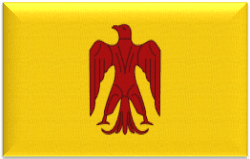
Ayyubid Sultanate
Capital : Cairo , Damascus & Aleppo
Ayyubid Sultanate And saladin ayyubi History

Damascus & Aleppo In present Day
syria & Cairo In Egypt
Ayyubid Sultanate History And Rulers
The Ayyubid Sultanate was a major Sunni Muslim dynasty that ruled large parts of Egypt, Syria, Palestine, Yemen and the Jazira during the late 12th and 13th centuries. Founded by Salah al-Din Yusuf ibn Ayyub, better known in the West as Saladin, the Ayyubids emerged from the political world of the Zangids and became one of the most important powers of the medieval Middle East.
The Ayyubid period is especially remembered for Saladin’s defeat of the Crusaders at the Battle of Hattin in 1187 and his subsequent recovery of Jerusalem. The dynasty also played a major role in strengthening Sunni institutions, developing fortified cities, supporting madrasas and encouraging architecture, arts and scholarship.
The Ayyubid state was not a centralized empire in the same way as the Ottoman or Abbasid states. Instead, it was largely a family-based sultanate, in which members of the Ayyubid ruling family governed different territories. This political structure helped the dynasty expand rapidly but also contributed to rivalry and fragmentation after Saladin’s death. (The Metropolitan Museum of Art)
The dynasty ruled in Egypt until 1250, while Ayyubid branches survived in parts of Syria until 1260. The rise of the Mamluk Sultanate brought the main Ayyubid political era to an end. (The Metropolitan Museum of Art)
Ayyubid Sultanate at a Glance
| Feature | Details |
|---|---|
| Name | Ayyubid Sultanate |
| Dynasty | Ayyubid Dynasty |
| Founded by | Salah al-Din Yusuf ibn Ayyub |
| Common European name | Saladin |
| Dynasty origin | Kurdish family |
| Political origins | Zangid military and political establishment |
| Foundation | 1171 |
| Main period | c. 1171–1250 in Egypt; Ayyubid branches survived longer in Syria |
| Main capitals | Cairo and Damascus |
| Major regions | Egypt, Syria, Palestine, Yemen, Jazira |
| Religion | Sunni Islam |
| Famous ruler | Saladin |
| Famous battle | Battle of Hattin |
| Jerusalem recovered | 1187 |
| Major rival | Crusader states |
| Major later threat | Mongols |
| Final Ayyubid ruler in Egypt | Turan Shah |
| End of Ayyubid rule in Egypt | 1250 |
| Successor in Egypt | Mamluk Sultanate |
Who Were the Ayyubids?
The Ayyubids were a Kurdish Muslim ruling dynasty whose political rise was closely connected with the Zangid state of Syria and northern Iraq.
The dynasty took its name from Ayyub ibn Shadi, the father of Saladin.
Ayyub and his family served important rulers in the Middle East, and members of the family rose through military and administrative positions.
The most famous member of the family, Saladin, transformed this regional military family into the ruling house of a powerful sultanate.
Origin of the Ayyubid Dynasty
The Ayyubids originated from a Kurdish family that entered the military and political service of rulers in the Middle East.
Saladin’s father, Najm al-Din Ayyub, and his uncle Shirkuh became important military figures under the Zangids.
This background was crucial because the Ayyubid state did not emerge suddenly from an established independent kingdom.
Instead, it developed from the military and political networks of Zangid Syria and northern Iraq.
Saladin Before Becoming Sultan
Saladin was born in Tikrit in 1137 or 1138.
His family later moved into the political environment of Syria.
As a young man, Saladin served alongside his uncle Shirkuh, a leading Zangid commander.
Shirkuh’s military campaigns in Egypt eventually brought Saladin into direct contact with the declining Fatimid Caliphate and the competing interests of the Zangids and Crusader states.
This Egyptian campaign became the foundation of Saladin’s future power.
The Zangids and the Rise of Saladin
The Zangid ruler Nur al-Din Zangi controlled much of Syria and sought to strengthen Muslim resistance against the Crusader states.
Saladin initially served Nur al-Din.
The relationship was complicated because Saladin eventually became powerful enough to establish his own political authority.
The Ayyubid rise therefore cannot be separated from the earlier Zangid effort to unite Muslim territories against the Crusaders.
Saladin’s Campaign in Egypt
In 1169, Saladin’s uncle Shirkuh became vizier of Egypt after a series of political and military struggles.
Shirkuh died shortly afterward.
Saladin succeeded him as vizier.
At this point, Saladin was officially operating within the Fatimid political system while maintaining his connection with Nur al-Din.
The situation soon changed dramatically.
End of the Fatimid Caliphate
In 1171, Saladin ended the Fatimid Caliphate in Egypt.
The Fatimids had followed an Isma’ili Shi’i tradition, while Saladin restored recognition of the Sunni Abbasid caliphate in Baghdad.
This was one of the most important political and religious transformations in medieval Egypt.
The Metropolitan Museum identifies 1171 as the year in which Saladin ended the Fatimid caliphate and established Ayyubid rule. (The Metropolitan Museum of Art)
Foundation of the Ayyubid Sultanate
The Ayyubid Sultanate emerged from Saladin’s consolidation of power in Egypt.
Although 1171 is commonly used as the beginning of Ayyubid rule, the political formation of the dynasty developed over several years as Saladin expanded his authority in Egypt, Syria and surrounding territories.
Saladin’s objective was not simply to rule Egypt.
He sought to create a political bloc capable of resisting the Crusader states and restoring Muslim control over important territories.
Unification of Egypt and Syria
After the death of Nur al-Din in 1174, Saladin moved to establish control over Syria.
He captured or secured authority over important cities including:
- Damascus
- Aleppo
- Hama
- Homs
This process was not entirely peaceful.
Saladin faced opposition from Zangid rulers and other Muslim political leaders.
Nevertheless, he gradually created a powerful state stretching across Egypt and much of Syria.
Expansion of the Ayyubid Sultanate
At its greatest extent, Ayyubid political authority included substantial portions of:
- Egypt
- Syria
- Palestine
- Transjordan
- Yemen
- Northern Iraq
- The Jazira
- Parts of the Hijaz
The exact boundaries changed frequently because the Ayyubid state was divided among members of the ruling family.
The Metropolitan Museum notes that Ayyubid territories eventually extended from Tunisia toward northern Iraq and Yemen in the broader period of their expansion, although actual direct control varied considerably by region and time. (Metropolitan Museum of Art Resources)
Ayyubid Control of Yemen
Saladin expanded Ayyubid influence into Yemen in 1174.
The region was strategically important because of its location near Red Sea and Indian Ocean trade routes.
Ayyubid authority in Yemen was largely exercised through members and representatives of the ruling family rather than through a uniformly centralized administration.
Ayyubid Control of the Hijaz
The Ayyubids also exercised influence over the Hijaz, including the holy cities of Mecca and Medina.
Control or recognition in the Hijaz was important because of the religious prestige associated with the holy cities.
The Crusader States
The Ayyubids emerged during a period when Crusader states controlled important territories in the eastern Mediterranean.
These included:
- Kingdom of Jerusalem
- Principality of Antioch
- County of Tripoli
- County of Edessa, before its destruction
The Kingdom of Jerusalem was the most important Crusader state in Saladin’s struggle.
Ayyubid–Crusader Conflict
The struggle between Saladin and the Crusaders lasted for decades.
It included:
- Raids
- Sieges
- Major field battles
- Diplomatic negotiations
- Temporary truces
- Territorial exchanges
The conflict was not a single continuous war.
Instead, it consisted of several campaigns separated by periods of diplomacy.
Battle of Hattin
The Battle of Hattin, fought on 4 July 1187, was the decisive military victory of Saladin over the Kingdom of Jerusalem.
The Crusader army was severely weakened by heat, thirst and its difficult march toward the Sea of Galilee.
Saladin’s forces surrounded and defeated the Crusader army.
The victory opened the way for Saladin to recover much of the Kingdom of Jerusalem’s territory.
The Metropolitan Museum identifies Hattin as the celebrated 1187 battle in which Saladin defeated the Crusaders. (Metropolitan Museum of Art Resources)
Why Was Hattin So Important?
Hattin changed the balance of power in the eastern Mediterranean.
After the battle, Saladin captured a series of important Crusader positions.
Among the territories recovered were:
- Acre
- Tiberias
- Nazareth
- Jaffa
- Ascalon
- Jerusalem
The victory dramatically weakened the Kingdom of Jerusalem.
Recovery of Jerusalem
Saladin captured Jerusalem in October 1187.
The city had been under Crusader rule since its capture in 1099.
Its recovery was one of the greatest achievements of Saladin’s career.
The Metropolitan Museum records that Jerusalem was taken by Saladin in October 1187 after almost nine decades of Crusader control. (Metropolitan Museum of Art Resources)
Saladin and Jerusalem
Saladin’s capture of Jerusalem became one of the defining moments of medieval Islamic history.
The city was enormously important to Muslims, Christians and Jews.
Under Saladin, the city was restored to Muslim rule, while arrangements were made for Christian inhabitants and pilgrims.
His approach to Jerusalem became an important part of his later historical reputation.
Third Crusade
The fall of Jerusalem shocked western Europe and contributed directly to the Third Crusade.
Major European rulers who participated included:
- Richard I of England
- Philip II of France
- Frederick I Barbarossa of the Holy Roman Empire
Richard I, known as Richard the Lionheart, became Saladin’s most famous opponent.
Saladin vs Richard the Lionheart
The conflict between Saladin and Richard I produced several major battles and diplomatic negotiations.
One of the most important engagements was the Battle of Arsuf in 1191.
Richard won a significant tactical victory, but he did not permanently recover Jerusalem.
The conflict eventually ended through negotiation.
Treaty of Jaffa
In 1192, Saladin and Richard agreed to a settlement commonly associated with the Treaty of Jaffa.
Jerusalem remained under Muslim control.
Christian pilgrims were permitted access to the city and other sacred places under agreed arrangements.
The Crusaders retained a coastal zone.
The agreement ended the main phase of the Third Crusade.
Death of Saladin
Saladin died in Damascus in 1193.
He left behind a powerful but politically fragmented family empire.
His death exposed one of the major weaknesses of the Ayyubid system: succession and family rivalry.
Saladin’s Successors
Saladin’s empire was divided among members of his family.
His brother al-Adil eventually became the dominant Ayyubid ruler.
Other members of the family ruled territories including:
- Damascus
- Aleppo
- Egypt
- Hama
- Homs
- Yemen
- Jazira
This arrangement provided flexibility but also encouraged rivalry.
Al-Afdal
Saladin’s son al-Afdal initially inherited Damascus.
However, he struggled to maintain the political dominance of his father.
His uncle al-Adil eventually became the most powerful member of the family.
Al-Adil I
Al-Adil I, Saladin’s brother, became the leading Ayyubid ruler.
He is often considered one of the most capable administrators among Saladin’s successors.
He worked to stabilize the territories inherited from Saladin.
His reign was also characterized by diplomacy with the Crusader states.
Al-Kamil
Al-Kamil, son of al-Adil, became one of the most important later Ayyubid rulers.
He ruled Egypt and later became the dominant Ayyubid ruler.
His reign coincided with the Fifth Crusade.
Fifth Crusade
The Fifth Crusade targeted Egypt because European leaders believed that control of Egypt could force the Muslims to surrender Jerusalem.
The Crusaders captured Damietta in 1219.
Al-Kamil eventually negotiated with the Crusaders.
In 1229, Jerusalem was temporarily transferred to the Crusaders through a diplomatic agreement rather than a major battlefield defeat.
This demonstrated the importance of diplomacy in Ayyubid foreign policy.
Ayyubid Jerusalem After 1187
Jerusalem changed hands again during the complex political struggles of the 13th century.
Under al-Kamil’s agreement with Frederick II, the city was ceded to the Crusaders in 1229.
However, this arrangement did not last permanently.
In 1244, Muslim forces retook Jerusalem.
The city remained under Muslim control afterward.
The Metropolitan Museum records that Jerusalem was recovered by Muslims in 1187, temporarily ceded following a later treaty, and definitively retaken in 1244. (The Metropolitan Museum of Art)
Ayyubid Rulers
| Ruler | Reign / Period | Importance |
|---|---|---|
| Saladin | 1171–1193 | Founder and greatest conqueror |
| Al-Afdal | 1193–1196 in Damascus | Saladin’s son |
| Al-Aziz Uthman | 1193–1198 in Egypt | Controlled Egypt |
| Al-Mansur Muhammad | 1198–1199 in Egypt | Brief reign |
| Al-Adil I | 1200–1218 | Reunified much of the Ayyubid realm |
| Al-Kamil | 1218–1238 | Major ruler; negotiated with Crusaders |
| Al-Adil II | 1238–1240 | Period of instability |
| As-Salih Ayyub | 1240–1249 | Strengthened military power |
| Turan Shah | 1249–1250 | Last independent Ayyubid sultan of Egypt |
Because the Ayyubid state was a family-based political system, different members of the dynasty ruled different territories simultaneously. Therefore, a simple single succession list can be misleading. (Metropolitan Museum of Art Resources)
Ayyubid Government
The Ayyubid political system differed from later centralized sultanates.
Saladin divided territories among family members.
This created a network of related rulers rather than a single tightly centralized administration.
The arrangement had advantages:
- Rapid administration of conquered territories
- Family loyalty
- Distribution of military responsibilities
- Local governance
But it also created serious disadvantages:
- Succession disputes
- Family rivalries
- Civil wars
- Territorial fragmentation
- Weak central authority
The Metropolitan Museum describes the Ayyubid government as a collective system of family-ruled principalities, with Saladin as the dominant sultan and other relatives ruling semi-independently. (Metropolitan Museum of Art Resources)
Ayyubid Military
The Ayyubid military was built around a combination of:
- Kurdish soldiers
- Turkic cavalry
- Mamluk troops
- Arab forces
- Local levies
- Professional military commanders
The mamluks became increasingly important.
These military slaves were trained for warfare and could rise to positions of enormous political power.
Ironically, the military system that helped protect the Ayyubids eventually contributed to their overthrow in Egypt.
Mamluks Under the Ayyubids
Mamluks were not simply ordinary enslaved people.
Many were military recruits brought from outside the Islamic heartlands, trained as soldiers and incorporated into elite military institutions.
Turkic mamluks became particularly important in Egypt.
Their growing political power eventually allowed them to take control of the Egyptian state.
Ayyubid Economy
The Ayyubid economy was based on several major sectors.
Agriculture
Egypt’s Nile-based agriculture provided the economic foundation of the sultanate.
Trade
Egypt and Syria were connected to Mediterranean, Red Sea and overland trade routes.
Ports
Cities such as Alexandria, Damietta and Acre were strategically important for commerce.
Manufacturing
Textiles, metalwork, ceramics and glassware were major industries.
Taxation
The government depended heavily on agricultural and commercial taxation.
Ayyubid Trade
The Ayyubids controlled important commercial routes connecting:
- Mediterranean ports
- Egypt
- Syria
- Arabia
- Red Sea
- Iraq
- Anatolia
Their territories therefore occupied a strategic position between the Mediterranean and Indian Ocean commercial systems.
Ayyubid Society
Ayyubid society was highly diverse.
It included:
- Arabs
- Kurds
- Turks
- Armenians
- Christians
- Jews
- Muslims of different traditions
- Merchants
- Scholars
- Military elites
- Farmers
- Artisans
Cairo and Damascus were particularly cosmopolitan cities.
Sunni Religious Revival
One important feature of Ayyubid rule was the strengthening of Sunni institutions after the end of Fatimid rule in Egypt.
Saladin and his successors supported:
- Sunni madrasas
- Mosques
- Religious scholars
- Islamic courts
- Educational institutions
The Metropolitan Museum specifically highlights the Ayyubid patronage of Sunni educational institutions. (The Metropolitan Museum of Art)
Ayyubid Madrasas
Ayyubid rulers established numerous educational institutions.
Important examples include madrasas in:
- Cairo
- Damascus
- Aleppo
- Jerusalem
These institutions supported the study of:
- Islamic law
- Hadith
- Quran
- Theology
- Arabic language
Ayyubid Architecture
The Ayyubids were major builders.
Their architecture reflected the military challenges of the period as well as their religious and political ambitions.
Important architectural developments included:
- Citadels
- City walls
- Mosques
- Madrasas
- Mausoleums
- Palaces
- Fortifications
The Metropolitan Museum identifies the Citadel of Cairo and Citadel of Aleppo among the outstanding examples of Ayyubid military architecture. (The Metropolitan Museum of Art)
Citadel of Cairo
Saladin began strengthening Cairo’s defenses in the late 12th century.
The Citadel of Cairo became one of the most important fortified complexes in Egypt.
It later became a major political center under the Ayyubids and subsequent dynasties.
Citadel of Aleppo
The Citadel of Aleppo was another major fortress associated with the Ayyubid period.
Its strategic location made it extremely important for the defense of northern Syria.
Ayyubid Art
Ayyubid art is particularly known for:
- Inlaid metalwork
- Ceramics
- Glass
- Wood carving
- Textiles
- Calligraphy
The Metropolitan Museum identifies refined brass objects inlaid with silver, ceramics and enameled glass as important artistic achievements of the period. (The Metropolitan Museum of Art)
Ayyubid Metalwork
Ayyubid metalwork was among the finest artistic production of the medieval Islamic world.
Brass vessels decorated with silver and other materials were highly prized.
Craftsmen in Mosul became particularly famous for this type of work.
The disruptions caused by Mongol expansion also encouraged skilled craftsmen to move toward safer regions, helping spread artistic techniques. (The Metropolitan Museum of Art)
Ayyubid Ceramics
Ceramic production flourished in Syria and Egypt.
Ayyubid ceramics incorporated influences from:
- Seljuq Iran
- Byzantine artistic traditions
- Local Syrian techniques
- Earlier Islamic art
Luster-painted and underglaze-painted ceramics were particularly important. (The Metropolitan Museum of Art)
Ayyubid Glass
Glass production became another important artistic industry.
Enameled and gilded glass developed strongly in Syria during the 12th century and flourished during the final decades of Ayyubid power and the early Mamluk period. (The Metropolitan Museum of Art)
Ayyubid Golden Age
The Ayyubid period does not have a “Golden Age” in exactly the same sense as the Abbasid Golden Age.
Instead, its peak can be described as a period of:
- Political expansion
- Military success
- Urban development
- Architectural construction
- Religious education
- Artistic excellence
- Commercial activity
The high point of Ayyubid political power occurred under Saladin and al-Adil, while cultural and architectural achievements continued under later rulers.
Why Was the Ayyubid Period Important?
The Ayyubids played a major role in reshaping the political map of the Middle East.
They:
- Ended Fatimid rule in Egypt
- Restored Sunni political authority there
- United Egypt and Syria under a powerful dynasty
- Defeated the Crusaders at Hattin
- Recovered Jerusalem
- Expanded into Yemen
- Strengthened Islamic military architecture
- Established Sunni educational institutions
- Created important artistic traditions
- Developed the political system that preceded the Mamluk Sultanate
Ayyubid Relations With the Crusaders
The Ayyubids did not rely exclusively on warfare.
Their rulers frequently used diplomacy.
They negotiated:
- Truces
- Territorial exchanges
- Prisoner releases
- Commercial arrangements
- Pilgrimage access
Al-Kamil’s negotiations with Frederick II demonstrate how diplomacy could achieve objectives that military campaigns could not.
Ayyubids and the Mongols
The Ayyubids faced a new threat during the 13th century as Mongol armies expanded westward.
The Mongol advance destabilized Syria and northern Iraq.
By this stage, Ayyubid political unity was already weak.
Mongol campaigns contributed to the final destruction of some Ayyubid branches in Syria.
Fall of the Ayyubid Sultanate
The Ayyubid state did not fall in one single battle.
Its decline resulted from:
- Dynastic rivalries
- Political fragmentation
- Dependence on military slaves
- Crusader pressure
- Mongol expansion
- Weak succession arrangements
- Mamluk military power
The decisive transformation occurred in Egypt in 1250.
Turan Shah and the End of Ayyubid Egypt
Turan Shah, son of as-Salih Ayyub, became ruler after his father’s death.
He attempted to assert control over the powerful Mamluk military establishment.
The Mamluks rebelled.
Turan Shah was killed in 1250.
The Mamluks then established their own sultanate in Egypt.
The Metropolitan Museum identifies the overthrow of Turan Shah by Turkic mamluks as the event that led to the establishment of the Mamluk Sultanate. (The Metropolitan Museum of Art)
Establishment of the Mamluk Sultanate
The Mamluk Sultanate emerged from the weakening Ayyubid state in Egypt and Syria.
The Mamluks inherited:
- Cairo
- Egyptian administrative institutions
- A powerful army
- A major commercial economy
- A strategic position
- Many former Ayyubid territories
The new Mamluk state soon became one of the most powerful Muslim states of the later Middle Ages. (The Metropolitan Museum of Art)
Battle of Ain Jalut
Only a decade after the fall of Ayyubid Egypt, the Mamluks confronted the Mongols.
At the Battle of Ain Jalut in 1260, the Mamluks defeated a Mongol army.
This victory helped establish the Mamluks as the dominant power in Egypt and Syria.
It also allowed them to absorb many of the territories formerly associated with the Ayyubid political world. (The Metropolitan Museum of Art)
Ayyubid Rule in Syria After 1250
The end of Ayyubid rule in Egypt did not immediately eliminate every Ayyubid ruler.
Ayyubid branches continued to control cities in Syria.
However, their political independence was increasingly threatened by both the Mamluks and Mongols.
By around 1260, the remaining major Ayyubid political centers in Syria had been absorbed or defeated.
The Ayyubid political era was therefore effectively over by the middle of the 13th century.
Ayyubid Sultanate Timeline
| Year | Event |
|---|---|
| 1137/38 | Saladin born in Tikrit |
| 1169 | Saladin becomes vizier of Egypt |
| 1171 | Fatimid Caliphate abolished |
| 1174 | Saladin begins major expansion into Syria |
| 1180s | Ayyubid control expands across Syria |
| 1187 | Battle of Hattin |
| 1187 | Jerusalem recovered by Saladin |
| 1191 | Battle of Arsuf during Third Crusade |
| 1192 | Treaty of Jaffa |
| 1193 | Death of Saladin |
| 1200 | Al-Adil becomes dominant Ayyubid ruler |
| 1218–1221 | Fifth Crusade |
| 1219 | Crusaders capture Damietta |
| 1229 | Jerusalem temporarily ceded to Crusaders |
| 1238 | Death of al-Kamil |
| 1244 | Jerusalem permanently recovered by Muslim forces |
| 1249 | Turan Shah succeeds as-Salih Ayyub in Egypt |
| 1250 | Mamluks overthrow Turan Shah |
| 1250 | Ayyubid rule ends in Egypt |
| 1260 | Remaining Ayyubid power in Syria collapses amid Mongol and Mamluk expansion |
Ayyubid Sultanate vs Fatimid Caliphate
| Feature | Fatimid Caliphate | Ayyubid Sultanate |
|---|---|---|
| Major center | Cairo | Cairo and Damascus |
| Religious tradition | Isma’ili Shi’i | Sunni |
| Period in Egypt | 969–1171 | 1171–1250 |
| Founder of dynasty | Ubayd Allah al-Mahdi | Saladin |
| Major political opponent | Abbasids and Crusaders | Crusader states |
| Famous achievement | Founded Cairo and al-Azhar | Defeated Crusaders and recovered Jerusalem |
| Final ruler in Egypt | Al-Adid | Turan Shah |
Ayyubid Sultanate vs Mamluk Sultanate
| Feature | Ayyubids | Mamluks |
|---|---|---|
| Main period | 1171–1250 in Egypt | 1250–1517 |
| Origin | Kurdish ruling family | Military slave elite |
| Capital | Cairo/Damascus | Cairo |
| Famous ruler | Saladin | Baybars |
| Major military system | Kurdish, Turkic and mamluk forces | Mamluk military elite |
| Jerusalem | Recovered in 1187 | Maintained Muslim control |
| Major threat | Crusaders | Mongols and Crusaders |
| End | Mamluk takeover | Ottoman conquest |
Legacy of the Ayyubid Sultanate
The Ayyubid legacy remained important long after the dynasty disappeared.
Its most significant contributions include:
- The political reunification of Egypt and Syria
- The recovery of Jerusalem
- The strengthening of Sunni institutions
- The development of Cairo’s fortifications
- The expansion of madrasas
- Military architecture in Syria
- Development of luxury metalwork and ceramics
- The military system that eventually produced the Mamluk state
The Mamluks inherited much of the political and military infrastructure created during the Ayyubid period. (The Metropolitan Museum of Art)
Saladin’s Historical Legacy
Saladin became one of the best-known Muslim rulers in medieval history.
His reputation was shaped by:
- His victory at Hattin
- Recovery of Jerusalem
- Conflict with Richard the Lionheart
- Diplomacy
- Political unification of Egypt and Syria
- His patronage of Sunni institutions
Over the centuries, both Muslim and European writers developed different images of Saladin.
His historical reputation therefore extends beyond his actual military achievements into literature, politics and cultural memory.
Key Takeaways
- The Ayyubid Sultanate was a major medieval Muslim dynasty centered on Egypt and Syria.
- The dynasty was founded by Salah al-Din Yusuf ibn Ayyub, better known as Saladin.
- The Ayyubids were of Kurdish origin.
- The dynasty emerged from the political and military world of the Zangids.
- Saladin became vizier of Egypt in 1169.
- He ended the Fatimid Caliphate in 1171.
- The Ayyubids restored Sunni political authority in Egypt.
- Saladin expanded into Syria after the death of Nur al-Din.
- The Battle of Hattin in 1187 was the Ayyubids’ most famous military victory.
- Saladin recovered Jerusalem in 1187.
- The recovery of Jerusalem triggered the Third Crusade.
- Saladin fought Richard the Lionheart during the Third Crusade.
- The Ayyubid state expanded into Yemen and parts of northern Iraq and the Jazira.
- Ayyubid rule was based heavily on a family network of semi-independent principalities.
- This system created both strength and political instability.
- Al-Adil I reunited much of the Ayyubid realm after Saladin’s death.
- Al-Kamil was an important later ruler who used diplomacy as well as warfare.
- Jerusalem was temporarily returned to Crusader control in 1229 and recovered by Muslims again in 1244.
- The Ayyubids were major patrons of madrasas, mosques, citadels and fortifications.
- Ayyubid art is particularly known for metalwork, ceramics, glass and wood carving.
- Ayyubid military power depended increasingly on mamluk soldiers.
- Mamluk commanders eventually overthrew the last independent Ayyubid ruler in Egypt, Turan Shah, in 1250.
- The Mamluk Sultanate succeeded the Ayyubids in Egypt.
- Remaining Ayyubid branches survived in Syria until about 1260.
- The Ayyubid legacy strongly influenced the political, military and cultural development of the medieval Middle East.
Frequently Asked Questions
When did the Ayyubid Sultanate begin?
The Ayyubid Sultanate emerged in 1171, when Saladin ended the Fatimid Caliphate in Egypt and established his own ruling authority.
Who founded the Ayyubid Sultanate?
The dynasty was founded by Salah al-Din Yusuf ibn Ayyub, widely known as Saladin.
Where did the Ayyubids originate?
The Ayyubids came from a Kurdish family that rose through military service under the Zangid rulers of Syria and northern Iraq.
Who was the most famous Ayyubid ruler?
Saladin was the most famous Ayyubid ruler because of his military victories against the Crusaders and his recovery of Jerusalem.
What was Saladin’s real name?
His full name was Salah al-Din Yusuf ibn Ayyub. European sources commonly called him Saladin.
When did Saladin capture Jerusalem?
Saladin captured Jerusalem in October 1187, following his decisive victory over the Crusaders at Hattin.
What was the Battle of Hattin?
The Battle of Hattin, fought on 4 July 1187, was Saladin’s decisive victory over the army of the Kingdom of Jerusalem.
Why was the Battle of Hattin important?
Hattin destroyed much of the main Crusader field army and opened the way for Saladin to capture major Crusader cities, including Jerusalem.
Did Saladin defeat the Crusaders completely?
No. Saladin severely weakened the Crusader states but did not eliminate them. The Crusaders retained important coastal territories, and the Third Crusade later recovered some positions.
Who was Saladin’s most famous European opponent?
His most famous opponent was Richard I of England, known as Richard the Lionheart.
Did Richard the Lionheart defeat Saladin?
Richard won important engagements, including the Battle of Arsuf, but he did not recover Jerusalem.
Did Saladin and Richard ever meet?
Medieval sources describe extensive negotiations between the two sides, but popular stories about personal meetings should be treated carefully because later literature embellished their relationship.
What happened to Jerusalem after Saladin captured it?
Jerusalem remained under Muslim control after 1187, although it was temporarily transferred to the Crusaders through a treaty in 1229 before being recovered by Muslim forces in 1244.
What religion were the Ayyubids?
The Ayyubids were Sunni Muslims and actively supported Sunni religious institutions.
Why did Saladin abolish the Fatimid Caliphate?
Saladin ended the Fatimid Caliphate in Egypt in 1171, bringing Egypt into the Sunni political order associated with the Abbasid caliphate.
What was the capital of the Ayyubid Sultanate?
Cairo was the main economic and political center in Egypt, while Damascus became a crucial strategic and political center in Syria.
Did the Ayyubids rule Yemen?
Yes. Saladin’s forces established Ayyubid control in Yemen in 1174.
How large was the Ayyubid Sultanate?
At different times, Ayyubid authority covered much of Egypt, Syria, Palestine, Yemen and parts of northern Iraq and the Jazira, although the territory was divided among different members of the ruling family.
Why did the Ayyubid Sultanate decline?
The main causes were dynastic rivalries, political fragmentation, succession disputes, dependence on powerful military elites, Crusader pressure and the growing power of the Mamluks.
Who ended the Ayyubid Sultanate?
The Mamluks ended Ayyubid rule in Egypt in 1250 by overthrowing and killing Sultan Turan Shah.
Who was the last Ayyubid ruler of Egypt?
Turan Shah was the last independent Ayyubid sultan of Egypt.
Did the Ayyubids completely disappear in 1250?
No. Ayyubid branches continued to rule parts of Syria after the Mamluk takeover of Egypt, but their remaining political power largely disappeared by around 1260.
What dynasty replaced the Ayyubids?
The Mamluk Sultanate replaced the Ayyubids as the dominant power in Egypt and later much of Syria.
What was the Ayyubid Golden Age?
The Ayyubid peak was primarily a period of political expansion, military success, architectural development, Sunni education and artistic production, rather than a scientific Golden Age comparable to the Abbasid period.
What were the Ayyubids famous for?
They are best known for Saladin, the Battle of Hattin, the recovery of Jerusalem, the struggle against the Crusaders, Sunni institutions and their architectural and artistic legacy.
What did the Ayyubids build?
They constructed and strengthened citadels, city walls, mosques, madrasas and mausoleums, particularly in Cairo, Damascus and Aleppo.
What is the Ayyubid legacy?
The Ayyubids left a major legacy in medieval Islamic politics, military architecture, Sunni education, art and the political development of Egypt and Syria. Their military system also helped create the conditions for the rise of the Mamluk Sultanate.
Sources:
The Metropolitan Museum of Art — The Art of the Ayyubid Period
Metropolitan Museum of Art — Ayyubid Period
The Metropolitan Museum of Art — Islamic Art: Historical Context
Metropolitan Museum of Art — Islamic Art Historical Context
The Metropolitan Museum of Art — Jerusalem, 1000–1400
Metropolitan Museum of Art — Jerusalem 1000–1400
The Metropolitan Museum of Art — The Art of the Mamluk Period
Metropolitan Museum of Art — Mamluk Period