
Countries With The Most Islands In The World
top 10 countries with most number of islands
01
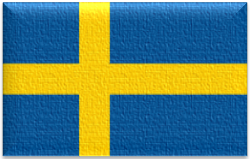
Sweden
Islands : 267,570
02
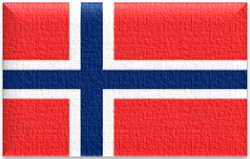
Norway
Islands : 239,057
03
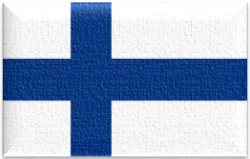
Finland
Islands : 178,947
04
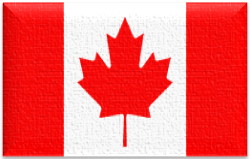
Canada
Islands : 52,455
05
United States
Islands : 18,617
06
Indonesia
Islands : 17,508
07
Australia
Islands : 8,222
08
Philippines
Islands : 7,641
09
China
Islands : 6,961
10
Japan
Islands : 6,852
Countries With the Most Islands: Ranking
| Ranks | Country | Total Islands |
|---|---|---|
| 1 | Sweden | 267,570 |
| 2 | Norway | 239,057 |
| 3 | Finland | 178,947 |
| 4 | Canada | 52,455 |
| 5 | United States | 18,617 |
| 6 | Indonesia | 17,508 |
| 7 | Australia | 8,222 |
| 8 | Philippines | 7,641 |
| 9 | China | 6,961 |
| 10 | Japan | 6,852 |
| 11 | United Kingdom | 6,346 |
| 12 | Greece | 6,000 |
| 13 | Chile | 5,919 |
| 14 | Cuba | 4,000 |
| 15 | Laos | 4,000 |
| 16 | North Korea | 3,579 |
| 17 | South Korea | 3,358 |
| 18 | kenya | 3,000 |
| 19 | Vietnam | 3,000 |
| 20 | Estonia | 2,222 |
| 21 | France | 1,900 |
| 22 | Thailand | 1,430 |
| 23 | Panama | 1,400 |
| 24 | India | 1,382 |
| 25 | Russia | 1,338 |
| 26 | Saudi Arabia | 1,300 |
| 27 | Croatia | 1,246 |
| 28 | Maldives | 1,192 |
| 29 | Solomon Islands | 992 |
| 30 | Scotland | 900 |
| 31 | Malaysia | 878 |
| 32 | Italy | 808 |
| 33 | Myanmar | 800 |
| 34 | Venezuela | 650 |
| 35 | Micronesia | 607 |
| 36 | New Zealand | 600 |
| 37 | Turkey | 500 |
| 38 | Denmark | 406 |
| 39 | Fiji | 300 |
| 40 | Switzerland | 300 |
| 41 | Hong Kong SAR | 263 |
| 42 | Algeria | 240 |
| 43 | Peru | 233 |
| 44 | Palau | 200 |
| 45 | UAE | 200 |
| 46 | Tonga | 169 |
| 47 | Yemen | 112 |
| 48 | Dominican Republic | 100 |
| 49 | Germany | 100 |
| 50 | Mexico | 100 |
| 51 | Ireland | 80 |
| 52 | Costa Rica | 79 |
| 53 | Colombia | 74 |
| 54 | Singapore | 64 |
| 55 | Cambodia | 60 |
| 56 | Spain | 60 |
| 57 | Romania | 50 |
| 58 | Antigua and Barbuda | 54 |
| 59 | Hungary | 44 |
| 60 | Poland | 44 |
| 61 | Senegal | 35 |
| 62 | Iran | 34 |
| 63 | Marshall Islands | 34 |
| 64 | Bahrain | 33 |
| 65 | Brunei | 33 |
| 66 | Kiribati | 33 |
| 67 | Brazil | 32 |
| 68 | Iceland | 31 |
| 69 | North Macedonia | 30 |
| 70 | South Africa | 28 |
| 71 | Bangladesh | 23 |
| 72 | Malta | 21 |
| 73 | Ecuador | 21 |
| 74 | Latvia | 20 |
| 75 | Ukraine | 21 |
| 76 | Serbia | 19 |
| 77 | Austria | 14 |
| 78 | Egypt | 14 |
| 79 | Georgia | 14 |
| 80 | Azerbaijan | 16 |
| 81 | Cape Verde | 15 |
| 82 | Nigeria | 17 |
| 83 | Albania | 12 |
| 84 | Pakistan | 12 |
| 85 | Samoa | 12 |
| 86 | Netherlands | 11 |
| 87 | Qatar | 10 |
| 88 | Kuwait | 9 |
| 89 | Portugal | 9 |
| 90 | Tuvalu | 9 |
| 91 | Belgium | 7 |
| 92 | Israel | 6 |
| 93 | Syria | 6 |
| 94 | Oman | 5 |
| 95 | Lebanon | 5 |
| 96 | Barbados | 4 |
| 97 | Bosnia and Herzegovina | 3 |
| 98 | Dominica | 3 |
| 99 | Monaco | 2 |
| 100 | Belarus | 1 |
| 101 | DR Congo | 1 |
| 102 | Nauru | 1 |
| 103 | Slovenia | 1 |
| Source : Rankingroyals | Most Islands By Country | ||
which country has the most islands
Sweden With 267,570 Islands holds the world record for the most islands of any nation
Countries With the Most Islands in the World
The world is home to thousands of islands, from tiny rocky outcrops in northern Europe to large tropical islands in Southeast Asia and the Pacific. Some countries contain only a handful of islands, while others have hundreds of thousands of islands, islets, and small landmasses.
According to the 2023 ranking published by RankingRoyals, Sweden has the largest number of islands in the world, with 267,570 islands. Norway follows with 239,057, while Finland ranks third with 178,947. Canada and the United States complete the top five.
The ranking also demonstrates an important geographical point: the countries most famous for being island nations are not necessarily the countries with the highest number of islands. Indonesia and the Philippines are well-known archipelagic countries, but Sweden, Norway, and Finland have substantially larger island counts under the counting methods used for this ranking.
Top 10 Countries With the Most Islands
The first ten countries in the RankingRoyals dataset account for an exceptionally large number of the world’s recorded islands. The Nordic countries dominate the top of the ranking, followed by countries with extensive Arctic, Pacific, Asian, and Australian coastlines.
1. Sweden — 267,570 Islands
Sweden ranks first with 267,570 islands, according to the RankingRoyals 2023 dataset. The country’s enormous island count is closely associated with its highly fragmented coastline and extensive archipelagos.
The Stockholm archipelago is particularly famous. RankingRoyals describes it as containing around 30,000 islands, islets, and rocks. The Bohuslän archipelago on Sweden’s western coast also contains thousands of islands and islets.
Many Swedish islands are extremely small and uninhabited. Consequently, the number of islands is much greater than the number of islands supporting permanent communities.
2. Norway — 239,057 Islands
Norway ranks second with 239,057 islands.
The country’s rugged coastline contains countless islands and skerries. The famous Lofoten Islands are among Norway’s best-known island groups, while numerous islands are also scattered around the country’s fjords and southern coast.
Norway’s landscape was heavily shaped by glacial activity. Deep fjords, rugged coastlines, and fragmented coastal terrain have produced an environment containing an enormous number of small landmasses.
3. Finland — 178,947 Islands
Finland ranks third with 178,947 islands in the RankingRoyals dataset.
Much of Finland’s island landscape is concentrated around the Baltic Sea, particularly in the southwestern part of the country. The Finnish archipelago contains thousands of islands, islets, and rocky formations.
Finland is also famous for its enormous number of lakes, meaning that the broader question of what qualifies as an island can become important when comparing national statistics.
4. Canada — 52,455 Islands
Canada ranks fourth with 52,455 islands.
Its enormous geographical area and extensive Arctic and Atlantic-Pacific coastlines provide ideal conditions for a very large island population. Canada’s northern territories contain numerous islands, including major Arctic islands.
Canada’s island geography is particularly significant in the Arctic, where large islands form the Canadian Arctic Archipelago.
5. United States — 18,617 Islands
The United States ranks fifth with 18,617 islands in the RankingRoyals dataset.
The country’s island geography extends far beyond the well-known Hawaiian Islands. Alaska contains a particularly large number of islands because of its extensive and highly fragmented coastline.
The United States therefore combines island environments from the Arctic and North Pacific to the Atlantic, Caribbean, and Pacific regions.
6. Indonesia — 17,508 Islands
Indonesia has 17,508 islands in the RankingRoyals ranking and is one of the world’s best-known archipelagic countries.
The country stretches across a vast area between mainland Southeast Asia and Australia. Its major islands include Java, Sumatra, Kalimantan, Sulawesi, and parts of New Guinea.
Indonesia is particularly notable because islands are fundamental to the country’s geography, transportation, economy, culture, and settlement patterns.
7. Australia — 8,222 Islands
Australia ranks seventh with 8,222 islands.
Although Australia is itself a continental landmass rather than an island nation in the conventional geographic classification, its surrounding territory includes thousands of smaller islands.
These range from tropical islands near Queensland to remote islands in the Southern Ocean and coastal waters around the mainland.
8. Philippines — 7,641 Islands
The Philippines ranks eighth with 7,641 islands.
It is one of the world’s most recognizable archipelagic countries. The country is commonly divided geographically into three major island groups:
- Luzon
- Visayas
- Mindanao
The islands support diverse coastal ecosystems, communities, cultures, and tourism destinations.
9. China — 6,961 Islands
China is listed with 6,961 islands in the RankingRoyals dataset.
China’s island geography extends along its long eastern and southern coastline and includes islands of different sizes and physical characteristics.
Its coastal islands have geographical, economic, ecological, and strategic importance.
10. Japan — 6,852 Islands
Japan is listed with 6,852 islands in the RankingRoyals 2023 table.
Japan’s island geography is particularly notable because the country is itself an archipelago. Its principal islands are Honshu, Hokkaido, Kyushu, and Shikoku, surrounded by numerous smaller islands.
It is worth noting that Japan’s island count has changed substantially in more recent official mapping. A 2023 Japanese survey identified 14,125 islands, more than double the older figure of 6,852, largely because of advances in surveying and mapping technology.
For this article, however, the main ranking remains the 2023 RankingRoyals dataset, as requested.
Why Do Sweden, Norway and Finland Have So Many Islands?
The dominance of Sweden, Norway, and Finland may seem surprising because countries such as Indonesia and the Philippines are much more commonly associated with island geography.
One important explanation is glacial geography.
During the last Ice Age, enormous glaciers covered large areas of northern Europe. Moving ice eroded bedrock and reshaped coastal and inland landscapes. After the glaciers retreated, rising water flooded low-lying areas and left countless rocky elevations surrounded by water.
The result is a landscape containing vast numbers of small islands, islets, skerries, and rocky outcrops.
Another factor is the definition of an island. Different countries and mapping organizations do not necessarily use the same minimum size or classification criteria. Consequently, two countries can have dramatically different island counts even when their physical landscapes are broadly comparable. Modern mapping technology can also identify small landforms that earlier surveys missed.
What Counts as an Island?
There is no single universally applied global method for counting islands.
In general geographic usage, an island is a landmass surrounded by water and smaller than a continent. However, national surveys may use different thresholds for minimum size, elevation, permanence, or classification.
Some datasets include:
- Large inhabited islands
- Small uninhabited islands
- Islets
- Skerries
- Rocky outcrops
- Islands in lakes or inland waters
- Islands that are difficult to distinguish from neighboring landforms
Other datasets may exclude some of these features.
This difference is extremely important when interpreting rankings. A country that counts thousands of tiny rocks may appear to have far more islands than a country that counts only larger named islands.
Island Count Does Not Mean Island Country
Having many islands does not necessarily mean that a country is an island nation.
For example, Canada and the United States have thousands of islands, but their mainland territories are enormous.
Likewise, Australia is a continent-sized country with thousands of surrounding islands.
By contrast, countries such as Indonesia and the Philippines are commonly described as archipelagic states because their territory and national geography are fundamentally organized around groups of islands.
Therefore, “country with the most islands” and “largest island country” are two different geographical concepts.
Sweden and the Stockholm Archipelago
Sweden’s position at the top of the ranking is strongly connected with its archipelagos.
The Stockholm archipelago extends eastward from the Swedish capital into the Baltic Sea. RankingRoyals reports around 30,000 islands, islets, and rocks within this archipelago.
Some islands are permanently inhabited, while others are used seasonally for recreation, tourism, or holiday homes.
This creates an unusual relationship between mainland Sweden and its islands. Bridges, ferries, and boats connect many communities, while other islands remain almost completely undeveloped.
Norway’s Island Landscape
Norway’s coastline is among the world’s most fragmented.
Its fjords cut deeply into the mainland, while thousands of islands and skerries lie along the coast. The Lofoten Islands are particularly well known for dramatic mountains, fishing communities, and Arctic scenery.
Norway’s island geography also contributes to its distinctive coastal economy. Fishing, aquaculture, tourism, maritime transportation, and offshore activities all interact with the country’s extensive coastal environment.
Finland’s Archipelago
Finland’s southwestern coastline contains one of Europe’s most extensive archipelago environments.
The Finnish archipelago is made up of islands and rocky islets scattered across the Baltic Sea. Some are inhabited, while many remain sparsely populated.
The landscape combines forests, rocky shorelines, shallow coastal waters, and small settlements. It is also an important recreational region for boating and summer tourism.
Indonesia: The World’s Famous Tropical Archipelago
Indonesia occupies a special place in discussions about islands.
Although its reported total of 17,508 islands places it sixth in the RankingRoyals ranking, Indonesia is one of the world’s most important archipelagic countries.
Its islands span a huge area between the Indian and Pacific oceans.
Major islands and island groups include:
- Sumatra
- Java
- Kalimantan
- Sulawesi
- Bali
- Lesser Sunda Islands
- Maluku Islands
- Western New Guinea
Indonesia’s island geography has influenced its languages, cultures, trade routes, biodiversity, settlement patterns, and political history.
The Philippines and Its 7,641 Islands
The Philippines has 7,641 islands according to the RankingRoyals data.
Its three principal geographic divisions—Luzon, the Visayas, and Mindanao—contain numerous smaller islands.
The country’s geography has produced a strong maritime culture. Fishing, shipping, tourism, coastal agriculture, and inter-island transportation are important parts of life in many communities.
The large number of islands also contributes to considerable cultural and linguistic diversity.
Countries With More Than 1,000 Islands
According to the 2023 RankingRoyals dataset, more than two dozen entries have at least 1,000 islands.
The most prominent are:
| Country | Islands |
|---|---|
| Sweden | 267,570 |
| Norway | 239,057 |
| Finland | 178,947 |
| Canada | 52,455 |
| United States | 18,617 |
| Indonesia | 17,508 |
| Australia | 8,222 |
| Philippines | 7,641 |
| China | 6,961 |
| Japan | 6,852 |
| United Kingdom | 6,346 |
| Greece | 6,000 |
| Chile | 5,919 |
| Cuba | 4,000 |
| Laos | 4,000 |
| North Korea | 3,579 |
| South Korea | 3,358 |
| Kenya | 3,000 |
| Vietnam | 3,000 |
| Estonia | 2,222 |
| France | 1,900 |
| Thailand | 1,430 |
| Panama | 1,400 |
| India | 1,382 |
| Russia | 1,338 |
| Saudi Arabia | 1,300 |
| Croatia | 1,246 |
| Maldives | 1,192 |
Countries With Around 100 to 1,000 Islands
The middle portion of the ranking includes a mixture of European, Asian, African, Caribbean, Pacific, and American countries.
Examples include:
- Solomon Islands — 992
- Scotland — 900
- Malaysia — 878
- Italy — 808
- Myanmar — 800
- Venezuela — 650
- Micronesia — 607
- New Zealand — 600
- Turkey — 500
- Denmark — 406
- Fiji — 300
- Switzerland — 300
- Hong Kong SAR — 263
- Algeria — 240
- Peru — 233
- Palau — 200
- UAE — 200
- Tonga — 169
- Yemen — 112
- Dominican Republic — 100
- Germany — 100
- Mexico — 100
These figures show that island geography occurs across almost every major region of the world.
Countries With Fewer Than 100 Islands
The lower portion of the RankingRoyals table contains countries with fewer than 100 reported islands.
Examples include Ireland, Costa Rica, Colombia, Singapore, Cambodia, Spain, Romania, Hungary, Poland, Senegal, Iran, Bahrain, Brunei, Kiribati, Brazil, Iceland, South Africa, Bangladesh, Malta, Ecuador, Latvia, Ukraine, Serbia, Austria, Egypt, Georgia, Azerbaijan, Cape Verde, Nigeria, Albania, Pakistan, Samoa, the Netherlands, Qatar, Kuwait, Portugal, Tuvalu, Belgium, Israel, Syria, Oman, Lebanon, Barbados, Bosnia and Herzegovina, Dominica, Monaco, Belarus, DR Congo, Nauru, and Slovenia.
A low position in this ranking does not mean that a country lacks important islands. Some countries have only a small number of islands but possess strategically or geographically significant ones.
Island Count and Geography
The number of islands a country has is influenced by several geographical factors.
Glacial History
Glaciers can break up coastlines and create thousands of small rocky islands. This is particularly important in northern Europe and parts of Canada.
Coastline Length
Countries with extremely long or irregular coastlines have more opportunities for islands and coastal fragmentation.
Tectonic Activity
Plate boundaries and volcanic activity can produce chains of islands, especially around the Pacific Ocean.
Coral Formation
Coral reefs and atolls create numerous low-lying islands across tropical oceans.
River and Lake Systems
Some island counts may include islands located in inland waters, depending on the methodology used.
Mapping Technology
Improved satellite imagery, aerial photography, and geographic information systems can identify small islands that were previously overlooked.
Japan provides a prominent recent example: its official 2023 recount increased the number of recognized islands from the older figure of 6,852 to 14,125.
Why Island Rankings Can Change
Island rankings should not be treated as permanently fixed numbers.
There are several reasons for changes:
- New surveys can discover previously uncounted islands.
- Mapping technology can distinguish separate landforms more accurately.
- Different organizations may apply different minimum-size thresholds.
- Some countries include inland islands while others focus primarily on marine islands.
- Small islands can be difficult to classify consistently.
- Administrative and geographic definitions can change.
For these reasons, the exact number of islands reported for a country can differ considerably between sources.
Most Islands vs Largest Islands
The number of islands should not be confused with the total area of islands.
A country can have hundreds of thousands of very small islands without having the largest total island landmass.
Similarly, a country may have only a few major islands that collectively cover an enormous area.
For example, Canada has some of the world’s largest islands, including Baffin Island, Ellesmere Island, and Victoria Island, while Sweden’s very high total is largely driven by its enormous number of small islands and islets.
This demonstrates why island rankings depend on the measurement being used.
Countries Famous for Their Island Geography
Several countries in the ranking are particularly associated with islands.
Indonesia
Indonesia is one of the world’s most important archipelagic states, with thousands of islands distributed across Southeast Asia.
Philippines
The Philippines consists of a vast collection of islands and is known internationally for its beaches, coral reefs, and maritime geography.
Japan
Japan is an island nation made up of four major islands and thousands of smaller islands.
Greece
Greece has thousands of islands and islets scattered across the Aegean and Ionian seas, although only a fraction are permanently inhabited.
Maldives
The Maldives is composed of numerous coral islands organized into atolls. Its total island count is much smaller than Sweden’s, but its entire national geography is fundamentally island-based.
New Zealand
New Zealand consists primarily of two large main islands along with numerous smaller islands.
Are All Islands Inhabited?
No. The overwhelming majority of islands in the highest-ranking countries are not permanently inhabited.
This is particularly important for Sweden, Norway, Finland, and Canada, where a very large number of counted islands are tiny landforms.
An island can be geographically classified as an island without having houses, roads, infrastructure, or a permanent population.
Therefore, the number of islands and the number of inhabited islands are completely different statistics.
Why the Number of Islands Matters
Island geography affects much more than tourism.
Countries with large numbers of islands may face special challenges involving:
- Transportation
- Infrastructure
- Coastal development
- Emergency services
- Telecommunications
- Environmental protection
- Fishing
- Tourism
- Maritime borders
- Climate change
- Population distribution
Small island communities can be particularly dependent on ferries, boats, aviation, and other forms of maritime transportation.
Islands and Biodiversity
Islands often develop distinctive ecosystems because geographic isolation limits interaction with mainland environments.
This can produce:
- Endemic plant species
- Endemic animals
- Unique marine ecosystems
- Specialized coastal habitats
- Important bird populations
- Coral reef ecosystems
- Breeding grounds for marine species
Island environments are therefore important to conservation efforts.
At the same time, small islands can be highly vulnerable to environmental changes, invasive species, coastal erosion, and rising sea levels.
Islands and Tourism
Many islands are major tourism destinations.
The Philippines, Indonesia, Greece, Japan, Norway, Finland, Australia, New Zealand, and numerous Caribbean and Pacific countries attract visitors because of their beaches, landscapes, wildlife, cultural heritage, and maritime environments.
However, having a large number of islands does not automatically make a country a major tourism destination. Accessibility, infrastructure, climate, natural attractions, and investment also influence tourism.
Frequently Asked Questions
Which country has the most islands in the world?
According to the 2023 RankingRoyals dataset, Sweden has the most islands, with 267,570. Norway ranks second with 239,057, followed by Finland with 178,947.
Which country has the second-most islands?
Norway ranks second in the RankingRoyals 2023 ranking, with 239,057 islands.
Which country has the third-most islands?
Finland ranks third, with 178,947 islands in the RankingRoyals dataset.
Does Indonesia have the most islands?
No. Indonesia is listed with 17,508 islands, placing it sixth in the RankingRoyals 2023 ranking. Sweden, Norway, Finland, Canada, and the United States are listed above it.
How many islands does the Philippines have?
The RankingRoyals dataset lists 7,641 islands for the Philippines.
How many islands does Canada have?
Canada is listed with 52,455 islands, making it fourth in the 2023 RankingRoyals ranking.
How many islands does the United States have?
The RankingRoyals dataset lists the United States with 18,617 islands.
Why does Sweden have so many islands?
Sweden’s extremely high number is related to its fragmented coastal landscape, glacial history, and the inclusion of many very small islands and rocky formations in island counts.
Why are island counts different between sources?
Different organizations can use different definitions and minimum-size thresholds. Some count very small islets and rocks, while others use narrower criteria. Improvements in mapping technology can also change national totals.
Did Japan’s island count change?
Yes. Japan’s 2023 official survey identified 14,125 islands, compared with the previously used figure of 6,852. The increase was largely associated with improved surveying and mapping technology.
Is an island country the same as a country with many islands?
No. “Island country” generally describes a country’s geographic character, while “number of islands” is a numerical measurement. A large mainland country can contain thousands of islands without being classified as an island nation.
Which European countries have the most islands?
In the RankingRoyals dataset, Sweden, Norway, Finland, the United Kingdom, Greece, Chile, France, Croatia, Scotland, Italy, Denmark, and several other European entries have large island totals.
Does a country with more islands necessarily have more island territory?
No. Island count measures the number of islands, not their combined area. A country can have thousands of tiny islands while another has fewer but much larger islands.
Are most of Sweden’s islands inhabited?
No. Sweden’s enormous island total includes many very small and uninhabited islands, islets, and rocks.
What is an archipelago?
An archipelago is a group or chain of islands. Indonesia, the Philippines, Japan, the Stockholm archipelago, and many other regions are associated with archipelagic geography.
Key Takeaways
- Sweden ranks first in the 2023 RankingRoyals dataset with 267,570 islands.
- Norway ranks second with 239,057 islands.
- Finland ranks third with 178,947 islands.
- Canada has 52,455 islands and ranks fourth.
- The United States ranks fifth with 18,617 islands.
- Indonesia has 17,508 islands and ranks sixth.
- Australia, the Philippines, China, and Japan complete the top 10 in the supplied 2023 ranking.
- The Nordic countries dominate the top of the list partly because of their highly fragmented, glacially shaped landscapes.
- Island counts vary between sources because countries and organizations may use different definitions and surveying methods.
- The number of islands should not be confused with the total area of islands or the number of inhabited islands.
- Japan’s official 2023 survey illustrates how improved mapping can significantly change an island count.