
Africa Continent
Africa Continent Population & Area
Countries & Regions: The African Union formally recognizes 55 members, including Western Sahara, while the UN counts 54. This distinction is documented by the UN Statistics Division’s M49 geoscheme
Population: Africa population is roughly 1.55 billion to 1.59 billion people, making it the second most populated continent in the world Source : UNdata Portal
Area: Africa covers 30.37 million km² , Global Rank: 2nd largest continent (after Asia) Source: United Nations Statistics Division
How Many Countries Are There in Africa
African Countries Ranking By Population
| Rank | Country | Population |
|---|---|---|
| 1 | Nigeria | 242,431,832 |
| 2 | Ethiopia | 138,902,185 |
| 3 | Egypt | 120,101,175 |
| 4 | DR Congo | 116,452,162 |
| 5 | Tanzania | 72,563,780 |
| 6 | South Africa | 65,453,084 |
| 7 | Kenya | 58,636,412 |
| 8 | Sudan | 53,282,719 |
| 9 | Uganda | 52,761,469 |
| 10 | Algeria | 48,028,334 |
| 11 | Angola | 40,215,179 |
| 12 | Morocco | 38,762,441 |
| 13 | Mozambique | 36,639,851 |
| 14 | Ghana | 35,697,557 |
| 15 | Madagascar | 33,522,052 |
| 16 | Ivory Coast | 33,494,346 |
| 17 | Cameroon | 30,640,817 |
| 18 | Niger | 28,814,878 |
| 19 | Mali | 25,932,275 |
| 20 | Burkina Faso | 24,601,700 |
| 21 | Malawi | 22,785,535 |
| 22 | Zambia | 22,521,915 |
| 23 | Chad | 21,560,380 |
| 24 | Somalia | 20,305,907 |
| 25 | Senegal | 19,366,548 |
| 26 | Zimbabwe | 17,273,580 |
| 27 | Guinea | 15,441,993 |
| 28 | Benin | 15,170,419 |
| 29 | Rwanda | 14,889,693 |
| 30 | Burundi | 14,729,157 |
| 31 | South Sudan | 12,436,037 |
| 32 | Tunisia | 12,415,138 |
| 33 | Togo | 9,930,918 |
| 34 | Sierra Leone | 8,996,745 |
| 35 | Libya | 7,539,851 |
| 36 | Republic of the Congo | 6,637,785 |
| 37 | Liberia | 5,853,949 |
| 38 | Central African Republic | 5,698,984 |
| 39 | Mauritania | 5,461,319 |
| 40 | Eritrea | 3,682,669 |
| 41 | Namibia | 3,153,246 |
| 42 | Gambia | 2,884,079 |
| 43 | Gabon | 2,647,399 |
| 44 | Botswana | 2,603,388 |
| 45 | Lesotho | 2,389,336 |
| 46 | Guinea-Bissau | 2,297,808 |
| 47 | Equatorial Guinea | 1,984,468 |
| 48 | Eswatini | 1,269,859 |
| 49 | Mauritius | 1,265,059 |
| 50 | Djibouti | 1,199,459 |
| 51 | Comoros | 899,010 |
| 52 | Reunion | 886,298 |
| 53 | Western Sahara | 610,813 |
| 54 | Cape Verde | 529,630 |
| 55 | Mayotte | 347,536 |
| 56 | Sao Tome and Principe | 244,994 |
| 57 | Seychelles | 134,959 |
| 58 | Saint Helena Ascension and Tristan da Cunha | 5,147 |
| Source: | worldpopulationreview | Africa Countries | |
how many regions Of Continent Africa
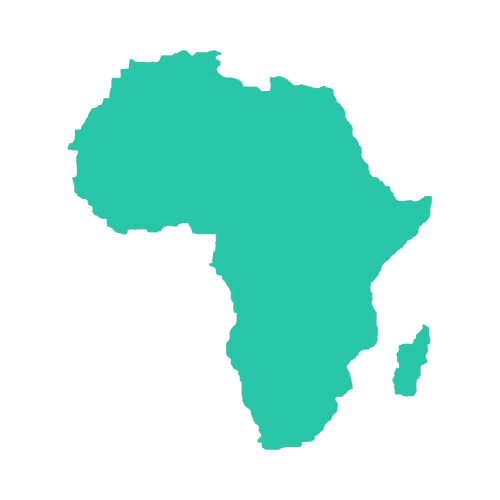
Africa Continent Overview
Introduction to Africa
Africa is the world’s second-largest continent, covering 30.37 million km² — about 20% of Earth’s land area. It comprises 54 countries across 5 regions and is home to 1.5 billion people, roughly 19% of the global population. Average density sits around 50 people per km², while population growth remains faster than in other continents, according to UN World Population Prospects.
Capital Cities of Africa And Population
| S no. | country | city | population |
|---|---|---|---|
| 1 | DR Congo | Kinshasa | 21,852,144 |
| 2 | Egypt | Cairo | 10,119,520 |
| 3 | Angola | Luanda | 8,473,127 |
| 4 | Kenya | Nairobi | 5,603,502 |
| 5 | Mali | Bamako | 5,163,564 |
| 6 | Ethiopia | Addis Ababa | 4,229,569 |
| 7 | Cameroon | Yaounde | 3,674,849 |
| 8 | Somalia | Mogadishu | 3,307,421 |
| 9 | South Africa | Pretoria | 3,296,921 |
| 10 | Burkina Faso | Ouagadougou | 3,149,586 |
| 11 | Algeria | Algiers | 2,961,324 |
| 12 | Ghana | Accra | 2,951,532 |
| 13 | Togo | Lome | 2,766,121 |
| 14 | Madagascar | Antananarivo | 2,567,094 |
| 15 | Liberia | Monrovia | 2,396,360 |
| 16 | Zambia | Lusaka | 2,393,400 |
| 17 | Republic of the Congo | Brazzaville | 2,323,299 |
| 18 | Sudan | Khartoum | 2,274,979 |
| 19 | Guinea | Conakry | 2,195,947 |
| 20 | Rwanda | Kigali | 2,075,215 |
| 21 | Nigeria | Abuja | 2,057,985 |
| 22 | Uganda | Kampala | 1,862,258 |
| 23 | Chad | N'Djamena | 1,697,201 |
| 24 | Mauritania | Nouakchott | 1,637,012 |
| 25 | Niger | Niamey | 1,523,856 |
| 26 | Libya | Tripoli | 1,506,832 |
| 27 | Zimbabwe | Harare | 1,494,371 |
| 28 | Malawi | Lilongwe | 1,344,144 |
| 29 | Mozambique | Maputo | 1,067,522 |
| 30 | Senegal | Dakar | 1,063,571 |
| 31 | Gabon | Libreville | 997,953 |
| 32 | Tanzania | Dodoma | 934,592 |
| 33 | Central African Republic | Bangui | 865,084 |
| 34 | Djibouti | Djibouti | 806,174 |
| 35 | Guinea-Bissau | Bissau | 795,519 |
| 36 | Eritrea | Asmara | 783,135 |
| 37 | Burundi | Bujumbura | 758,892 |
| 38 | Namibia | Windhoek | 537,336 |
| 39 | Lesotho | Maseru | 517,905 |
| 40 | Morocco | Rabat | 504,005 |
| 41 | Sierra Leone | Freetown | 474,425 |
| 42 | South Sudan | Juba | 474,156 |
| 43 | Tunisia | Tunis | 471,958 |
| 44 | Equatorial Guinea | Ciudad de la Paz | 332,814 |
| 45 | Benin | Porto-Novo | 314,100 |
| 46 | Western Sahara | Laayoune | 272,865 |
| 47 | Ivory Coast | Yamoussoukro | 268,568 |
| 48 | Botswana | Gaborone | 251,682 |
| 49 | Cape Verde | Praia | 189,897 |
| 50 | Reunion | Saint-Denis | 159,007 |
| 51 | Mauritius | Port Louis | 141,235 |
| 52 | Comoros | Moroni | 90,383 |
| 53 | Sao Tome and Principe | Sao Tome | 82,618 |
| 54 | Mayotte | Mamoudzou | 71,437 |
| 55 | Eswatini | Mbabane | 61,306 |
| 56 | Gambia | Banjul | 23,727 |
| 57 | Seychelles | Victoria | 4,739 |
| 58 | Saint Helena Ascension and Tristan da Cunha | Jamestown | 3,942 |
| Source : worldpopulationreview.com | Continent Africa Capital Cities | |||
what percentage of the world's population lives in Africa - Africa population History
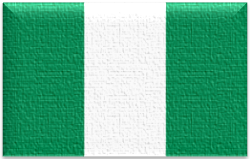
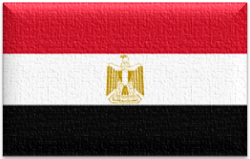
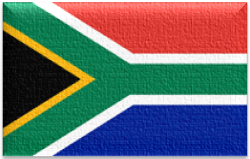
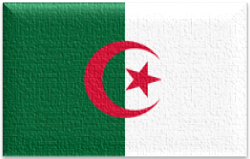
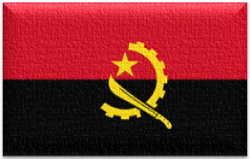
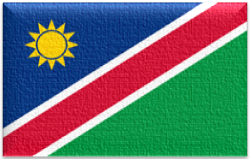
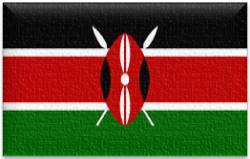
Distribution Of Religion By Population In Africa

Christianity in Africa
Christianity 49% Christianity Symbol Christianity in Africa Christianity is Africa’s largest religion, representing about 49% of the continent’s population, with major communities across Central, East, West, and Southern Africa.
Islam in Africa
Islam 42% Islam Symbol Islam in Africa Islam is Africa’s second-largest religion, representing about 42% of the continent’s population, with major communities across North, West, Central, and East Africa.

Atheist in Africa
Atheist & Unaffiliated 8% Atheist Symbol Atheist & Unaffiliated in Africa Atheist and religiously unaffiliated people account for about 8% of Africa’s population, with communities found across North, West, East, Central, and Southern Africa.

Hinduism Population
Hinduism 1% Hinduism Symbol Hinduism in Africa Hinduism is practiced by about 1% of Africa’s population, with the largest communities concentrated in East and Southern Africa, particularly in countries with established Indian diaspora populations.
Most Spoken native Languages in Africa
Native Spoken Languages Across Continent Africa
Africa is home to an estimated 1,250 to 3,000 native languages, more than any other continent. According to Ethnologue, the most widely spoken languages by combined native and second-language speakers include: Swahili 200,000,000 speakers (native + second language), Arabic (African speakers) , Hausa
Swahili 200,000,000 speakers (native + second language)
Arabic (African speakers) 150,000,000
Hausa 80,000,000 speakers
Yoruba 45,000,000 native speakers
Africa: Population, Regions, Religion & Geography Explained , Africa is the only continent that sits astride both hemispheres and both major climatic belts of the planet — deserts in the north, rainforest at the equator, and savanna, mountain, and coastline in between. It is the world’s second-largest continent by both area and population, home to the oldest human fossil record on Earth, and by most demographic projections, it will be the single biggest driver of global population growth for the rest of this century. Africa is also a continent of striking economic and geographic contrast — the world’s largest hot desert sits alongside the world’s second-largest rainforest, and some of the fastest-growing tech economies on Earth sit alongside some of its lowest-income nations. This guide breaks down Africa’s population, regions, religions, languages, economy, and geography, with every figure traced to its original source.
Africa Continent Statistics
Africa by the Numbers: Countries, Regions & Area Explained
| Metric | Figure |
|---|---|
| Regions | 5 |
| Sovereign Countries | 54 |
| Number of Countries (incl. disputed states) | 56 |
| Population | 1,552,847,691 |
| Area | ~30.37 million km² |
| Population Density (avg.) | ~51 people/km² |
| Median Age | ~19 years — the youngest of any continent |
How Many Countries Are There in Africa
Africa has 54 UN-recognized sovereign countries — more than any other continent. Two additional territories, Western Sahara and Somaliland, function as de facto independent states but lack full international recognition, which is why some sources cite the total as 55 or 56. The African Union formally recognizes 55 members, including Western Sahara, while the UN counts 54. This distinction is documented by the UN Statistics Division’s M49 geoscheme.
Regions of Africa
Western Africa — No. of Countries: 16 Eastern Africa — No. of Countries: 19 Northern Africa — No. of Countries: 6 Middle Africa — No. of Countries: 9 Southern Africa — No. of Countries: 5
1. Northern Africa
Egypt, Algeria, Libya, Morocco, Tunisia, and Sudan — bound together by the Sahara, the Mediterranean coastline, and a shared Arab-Berber cultural and linguistic heritage. The region is also home to the Suez Canal, one of the most strategically important shipping corridors on Earth, connecting the Mediterranean to the Red Sea and cutting thousands of kilometers off the sea route between Europe and Asia.
2. Western Africa
Sixteen countries including Nigeria, Ghana, and Senegal — the continent’s most populous subregion, home to over 500 spoken languages and some of Africa’s fastest-growing economies. Nigeria alone accounts for roughly a third of the subregion’s population and has become a major hub for technology startups, earning Lagos the nickname “Silicon Lagoon.”
3. Middle Africa
Nine countries centered on the Congo Basin, including the Democratic Republic of the Congo, Cameroon, and Chad — home to the world’s second-largest rainforest. The Congo Basin holds an estimated 60% of Africa’s remaining tropical rainforest and is a critical global carbon sink, though it faces mounting pressure from logging and agricultural expansion.
4. Eastern Africa
Nineteen countries and territories stretching from Ethiopia and Kenya to Madagascar and the Indian Ocean islands — geographically the most varied subregion, spanning highlands, rift valleys, and coastline. The East African Rift, a active tectonic boundary running through the region, is slowly splitting the continent apart and is expected to eventually form a new ocean basin over millions of years.
5. Southern Africa
South Africa, Botswana, Namibia, Zimbabwe, and Eswatini — the continent’s wealthiest subregion by average income, anchored by South Africa’s diversified economy, which remains the continent’s most industrialized and includes the world’s largest reserves of platinum and among the largest of gold.
Geographic Regions and Countries
Northern Africa — Egypt (~118 million), Algeria (~46 million), Morocco (~38 million), Sudan (~48 million), Tunisia (~12.5 million), Libya (~7.4 million)
Western Africa — Nigeria (~230 million), Ghana (~34 million), Côte d’Ivoire (~30 million), Niger (~27 million), Mali (~24 million), Senegal (~18.5 million)
Middle Africa — DR Congo (~110 million), Cameroon (~29 million), Angola (~37 million), Chad (~19 million), Congo-Brazzaville (~6.1 million)
Eastern Africa — Ethiopia (~130 million), Tanzania (~68 million), Kenya (~58 million), Uganda (~50 million), Madagascar (~31 million)
Southern Africa — South Africa (~61 million), Zimbabwe (~16.7 million), Zambia (~21 million), Namibia (~2.7 million), Botswana (~2.5 million)
Source: UN World Population Prospects.
Physical Geography and Landforms of Africa
Africa’s terrain is anchored by two of the planet’s most extreme landscapes at opposite ends of the continent. The Sahara Desert spans nearly 9.2 million km² across North Africa — roughly the size of the United States or China — making it the largest hot desert on Earth, while the Congo Basin rainforest in Central Africa covers an area exceeding 3.7 million km², second in size only to the Amazon. Between them lies the Sahel, a semi-arid transitional belt increasingly affected by desertification and shifting rainfall patterns.
To the east, the Great Rift Valley cuts a nearly 6,000-km scar from the Red Sea down through Ethiopia, Kenya, and Tanzania into Mozambique, producing dramatic highland terrain, deep freshwater lakes (Lake Victoria, Lake Tanganyika, and Lake Malawi among them), and Africa’s tallest peak, Mount Kilimanjaro (5,895 m), a dormant volcano in Tanzania. The Nile River, widely credited as the longest river in the world at roughly 6,650 km, flows north through eleven countries before reaching the Mediterranean at the Nile Delta in Egypt — the same river system that supported one of history’s earliest civilizations.
Climate Zones of Africa
Africa’s position straddling the equator gives it an unusually symmetrical range of climate bands moving outward from the center:
- Tropical rainforest climates across the Congo Basin, with consistently high rainfall and temperature year-round
- Tropical savanna climates across much of East and Southern Africa, marked by distinct wet and dry seasons and home to the continent’s largest wildlife populations
- Desert climates across the Sahara in the north and the Kalahari and Namib in the south
- Semi-arid (Sahel) climates forming a transitional band between the Sahara and the savanna belt
- Mediterranean climates along the northern coast and southwestern tip of South Africa, with mild, wet winters and hot, dry summers
Capital Cities of Africa by Population
| Country | Capital | Population |
|---|---|---|
| Nigeria | Abuja | ~3.6 million |
| Egypt | Cairo | ~10.1 million |
| DR Congo | Kinshasa | ~17 million |
| Ethiopia | Addis Ababa | ~5.2 million |
| Kenya | Nairobi | ~4.7 million |
| South Africa | Pretoria | ~2.9 million |
| Algeria | Algiers | ~2.7 million |
| Morocco | Rabat | ~1.9 million |
| Ghana | Accra | ~2.6 million |
| Senegal | Dakar | ~1.3 million |
| Tanzania | Dodoma | ~765,000 |
| Seychelles | Victoria | ~28,000 |
Source: UN World Urbanization Prospects.
Major Cities of Africa Beyond the Capitals
As in many parts of the world, Africa’s largest cities are often not its capitals. Lagos, Nigeria’s commercial hub, holds a metro population exceeding 16 million — more than four times Abuja’s — and is projected by the UN to become one of the world’s largest megacities within decades. Johannesburg, South Africa’s financial and mining capital, has no official capital status at all (the country splits capital functions across Pretoria, Cape Town, and Bloemfontein) yet remains its largest and most economically significant city. Casablanca, Morocco’s commercial center, dwarfs Rabat in both population and economic output, and Alexandria, Egypt’s historic Mediterranean port city, remains the country’s second-largest urban center after Cairo.
Population History of Africa
| Year | Population |
|---|---|
| 2026 | 1,552,847,691 |
| 2020 | 1,340,598,213 |
| 2010 | 1,050,388,742 |
| 2000 | 810,672,341 |
| 1990 | 630,264,978 |
| 1980 | 477,838,562 |
| 1970 | 365,987,241 |
| 1960 | 284,562,913 |
| 1950 | 228,832,406 |
Source: UN World Population Prospects, 2024 Revision. Africa’s population has grown nearly sevenfold since 1950 — the fastest sustained growth rate of any continent — and is projected to reach roughly 2.5 billion by 2050, at which point one in four people on Earth is expected to live in Africa.
Economy of Africa
Africa’s economy is defined by resource wealth, a young and rapidly growing workforce, and sharp disparities between its most and least developed economies. Nigeria and Egypt currently hold the continent’s largest economies by nominal GDP, with South Africa close behind as the most industrially diversified. Key economic patterns include:
- Resource exports — oil (Nigeria, Angola, Libya), natural gas (Algeria, Mozambique), and minerals including gold, platinum, and diamonds (South Africa), and cobalt, essential for batteries and electronics (DR Congo, which holds an estimated 70% of global cobalt reserves)
- Agriculture remains the largest employer across most of the continent, even where it contributes a smaller share of GDP than services or industry
- Rapidly growing technology hubs — Lagos (“Silicon Lagoon”) and Nairobi (“Silicon Savannah”) have become major centers for mobile banking, fintech, and startup investment, with mobile money adoption in East Africa among the highest in the world
- Tourism as a significant economic driver in Kenya, Tanzania, Morocco, and South Africa, built around wildlife safaris, coastal destinations, and historical sites
- The African Continental Free Trade Area (AfCFTA), launched to create the largest free trade area by number of participating countries in the world, aiming to boost intra-African trade, which has historically remained low relative to trade with other continents
- Remittances from the African diaspora represent a critical income source for many households, in several countries exceeding both foreign direct investment and foreign aid combined
Source: World Bank and International Monetary Fund country-level economic data.
Nation-by-Nation Comparison: Africa Countries Performance by Indicator
Africa’s HDI leader — Seychelles
- HDI Score: 0.848
- World Rank: ~73
- Continent Rank: 01
- Capital: Victoria
- Location: Africa (Eastern Africa / Indian Ocean)
- Abbreviation: SYC
Which country in Africa has the highest HDI?
Seychelles ranks first in Africa on the Human Development Index (HDI) with a score of 0.848, placing it in the “very high development” category — the only African country besides Mauritius to clear that threshold. Its capital is Victoria, and the score reflects strong outcomes in health, education, and income, supported by a small population and a tourism-driven economy, according to UNDP Human Development Reports. Mauritius follows closely in second place at 0.806.
Population in Africa by religion
Christianity 49% Christianity Symbol Christianity in Africa Christianity is Africa’s largest religion, dominant across Sub-Saharan Africa, particularly in Southern, Eastern, and much of Western Africa, and continuing to grow through some of the world’s fastest church expansion, especially Pentecostal and Evangelical movements.
Islam 42% Islam Symbol Islam in Africa Islam is the second-largest religion in Africa, dominant across North Africa and the Sahel, and a major presence in much of West and East Africa, including Nigeria and coastal Kenya and Tanzania. Nigeria alone has one of the largest Muslim populations of any country in the world.
Traditional and Indigenous Faiths 8% Traditional Faiths Symbol Traditional African Religions Indigenous belief systems remain practiced across the continent, often alongside Christianity or Islam rather than in isolation, and continue to shape cultural and spiritual life in many rural communities, including ancestor veneration and animist traditions.
Other Faiths 1% Other Faiths Symbol Minority Religions in Africa Hinduism, Judaism, Baháʼí, and other minority faiths make up a small share of Africa’s population, concentrated mainly in urban centers with historical immigrant communities such as South Africa and Kenya.
Source: Pew Research Center — Religion in Africa
Most Spoken Languages in Africa
Languages Spoken Across the Continent
Africa is home to an estimated 1,250 to 3,000 native languages, more than any other continent. According to Ethnologue, the most widely spoken languages by combined native and second-language speakers include:
Swahili 200,000,000 speakers (native + second language)
Arabic (African speakers) 150,000,000 speakers
Hausa 80,000,000 speakers
Yoruba 45,000,000 native speakers
Amharic 32,000,000 native speakers
Igbo 27,000,000 native speakers
Oromo 37,000,000 native speakers
Zulu 27,000,000 speakers (native + second language)
Shona 15,000,000 native speakers
Somali 21,000,000 native speakers
English and French also function as major administrative and lingua franca languages across former British and French colonial territories, used in government, education, and business even where they aren’t the majority first language. South Africa alone recognizes 12 official languages, one of the most linguistically formalized countries on the continent.
Africa’s Oldest Historical Civilizations
Africa holds two of the oldest continuous civilizations recorded anywhere on Earth, both built along the Nile River:
1. Ancient Egypt One of the world’s earliest and longest-lasting civilizations, Ancient Egypt formed around 3100 BCE with the unification of Upper and Lower Egypt, and continued as a distinct political and cultural entity for roughly 3,000 years. It produced monumental architecture including the Pyramids of Giza and the Sphinx, one of the earliest known writing systems (hieroglyphics), and administrative and engineering achievements that continue to be studied today.
2. The Kingdom of Kush (Nubia) Located in modern-day Sudan, immediately south of Egypt along the Nile, the Kingdom of Kush developed as one of Africa’s earliest urban civilizations, eventually conquering and ruling Egypt itself as the 25th Dynasty around 750 BCE. Kush built its own pyramids — more numerous, though smaller, than Egypt’s — and remained a major regional power for well over a thousand years.
Africa is also home to other significant ancient centers, including the Aksumite Empire in modern Ethiopia and Eritrea, one of the great trading powers of the ancient world, and Great Zimbabwe, whose stone ruins remain the largest ancient structure in Sub-Saharan Africa south of the Sahara.
Wildlife and Biodiversity
Africa is home to the largest remaining populations of large land mammals on Earth. The savannas of East and Southern Africa support the “Big Five” — lion, elephant, buffalo, leopard, and rhinoceros — alongside the annual Serengeti-Mara migration, in which over a million wildebeest and hundreds of thousands of zebra cross between Tanzania and Kenya in the largest overland animal migration on the planet. The Congo Basin rainforest shelters lowland and mountain gorillas, chimpanzees, and the okapi, a relative of the giraffe found nowhere else on Earth. Madagascar, isolated for roughly 88 million years, has developed one of the highest rates of species endemism anywhere in the world — over 90% of its wildlife, including all lemur species, exists nowhere else. Even the Sahara supports specialized desert wildlife, including the fennec fox and addax antelope, adapted to some of the harshest conditions on the planet.
Quick Facts Summary
| Category | Details |
|---|---|
| Continent Rank (by size) | 2nd largest |
| Continent Rank (by population) | 2nd most populous |
| Approximate Area | ~30.37 million km² |
| Approximate Population | 1,552,847,691 |
| Major Regions | Northern, Western, Middle, Eastern, Southern Africa |
| Sovereign Countries | 54 (55–56 including disputed states) |
| Dominant Religion | Christianity (~49%) and Islam (~42%) |
| Most Spoken Language | Swahili, followed by Arabic and Hausa |
| Highest HDI | Seychelles (0.848) |
| Bordering Oceans/Seas | Atlantic, Indian, Mediterranean, Red Sea |
| Highest Point | Mount Kilimanjaro, Tanzania (5,895 m / 19,341 ft) |
| Longest River | Nile River (~6,650 km) |
| Largest Country by Area | Algeria |
| Largest City | Lagos, Nigeria (~16 million metro) |
| Largest Economy | Nigeria / Egypt, followed by South Africa |
| Oldest Civilizations | Ancient Egypt and the Kingdom of Kush (Nubia) |
| Median Age | ~19 years — the youngest of any continent |
Conclusion
Africa’s blend of extreme geography, the youngest and fastest-growing population of any continent, deep religious and linguistic diversity, and rapidly emerging technology economies make it a continent whose global significance is set to grow substantially over the coming decades. From the Sahara’s endless dunes to the Congo Basin’s dense rainforest canopy, and from the ancient pyramids of Egypt and Sudan to the fintech hubs of Lagos and Nairobi, Africa’s story is one of both deep continuity and rapid change happening side by side.
Frequently Asked Questions
1. How many countries are in Africa? 54 UN-recognized sovereign countries; up to 55–56 when including Western Sahara and Somaliland, whose statehood is disputed.
2. What is the population of Africa? Approximately 1.55 billion people as of 2026, according to UN World Population Prospects — about 19% of the world’s population.
3. What is the main religion in Africa? Christianity (~49%) and Islam (~42%) together account for over 90% of the population, with traditional and indigenous faiths making up most of the remainder.
4. Which country in Africa has the highest HDI? Seychelles, with a score of 0.848 — the only African country besides Mauritius classified as “very high development” by the UNDP Human Development Index.
5. What languages are spoken in Africa? Swahili has the most combined speakers of any African language, followed by Arabic and Hausa, with English and French widely used as administrative languages.
6. What is the largest country in Africa by area? Algeria, followed by the Democratic Republic of the Congo.
7. What is the largest country in Africa by population? Nigeria, with over 230 million people — also on track to become one of the world’s most populous countries by mid-century.
8. What is Africa’s longest river? The Nile, widely regarded as the longest river in the world at approximately 6,650 km.
9. What are Africa’s oldest civilizations? Ancient Egypt and the Kingdom of Kush (Nubia), both built along the Nile River in what are now Egypt and Sudan.
10. What is Africa’s largest economy? Nigeria and Egypt currently lead by nominal GDP, with South Africa close behind as the continent’s most industrially diversified economy.
11. What is the largest rainforest in Africa? The Congo Basin rainforest, the second-largest tropical rainforest on Earth after the Amazon.
12. Why does Africa have the youngest population in the world? High fertility rates combined with declining child mortality mean roughly half of all Africans are under the age of 20, a demographic pattern known as a “youth bulge.”
Sources
- UN World Population Prospects — Africa Population
- UN Statistics Division, M49 Geoscheme — African Regions and Countries
- Pew Research Center — Religious Composition by Country
- Ethnologue — Most Spoken Languages in Africa
- UNDP Human Development Reports — HDI Rankings
- UN World Urbanization Prospects — Capital and City Population Data
- World Bank Open Data — Economic Indicators
- International Monetary Fund — GDP and Economic Data