
North America Continent: Countries, Capitals, Map, Religion , Geography, Climate, History, and Natural Features Explained
how many countries are in North America
north america countries by population
| Rank | Country | 2025 Population | Land Area (Km²) | Density (P/Km²) |
|---|---|---|---|---|
| 1 | United States | 347,275,807 | 9,147,420 | 38 |
| 2 | Mexico | 131,946,900 | 1,943,950 | 68 |
| 3 | Canada | 40,126,723 | 9,093,510 | 4 |
| 4 | Guatemala | 18,687,881 | 107,160 | 174 |
| 5 | Haiti | 11,906,095 | 27,560 | 432 |
| 6 | Dominican Republic | 11,520,487 | 48,320 | 238 |
| 7 | Honduras | 11,005,850 | 111,890 | 98 |
| 8 | Cuba | 10,937,203 | 106,440 | 103 |
| 9 | Nicaragua | 7,007,502 | 120,340 | 58 |
| 10 | El Salvador | 6,365,503 | 20,720 | 307 |
| 11 | Costa Rica | 5,152,950 | 51,060 | 101 |
| 12 | Panama | 4,571,189 | 74,340 | 61 |
| 13 | Puerto Rico | 3,235,289 | 8,870 | 365 |
| 14 | Jamaica | 2,837,077 | 10,830 | 262 |
| 15 | Trinidad and Tobago | 1,511,155 | 5,130 | 295 |
| 16 | Belize | 422,924 | 22,810 | 19 |
| 17 | Bahamas | 403,033 | 10,010 | 40 |
| 18 | Guadeloupe | 373,791 | 1,690 | 221 |
| 19 | Martinique | 340,439 | 1,060 | 321 |
| 20 | Barbados | 282,623 | 430 | 657 |
| 21 | Curaçao | 185,487 | 444 | 418 |
| 22 | Saint Lucia | 180,149 | 610 | 295 |
| 23 | Grenada | 117,303 | 340 | 345 |
| 24 | Aruba | 108,147 | 180 | 601 |
| 25 | St. Vincent & Grenadines | 99,924 | 390 | 256 |
| 26 | Antigua and Barbuda | 94,209 | 440 | 214 |
| 27 | U.S. Virgin Islands | 84,138 | 350 | 240 |
| 28 | Cayman Islands | 75,844 | 240 | 316 |
| 29 | Dominica | 65,871 | 750 | 88 |
| 30 | Bermuda | 64,555 | 50 | 1,291 |
| 31 | Greenland | 55,745 | 410,450 | 0 |
| 32 | Saint Kitts & Nevis | 46,922 | 260 | 180 |
| 33 | Turks and Caicos | 46,855 | 950 | 49 |
| 34 | St. Maarten | 43,923 | 34 | 1,292 |
| 35 | British Virgin Islands | 39,732 | 150 | 265 |
| 36 | Caribbean Netherlands | 31,338 | 328 | 96 |
| 37 | Anguilla | 14,728 | 90 | 164 |
| 38 | St. Barthelemy | 11,414 | 21 | 544 |
| 39 | St. Pierre & Miquelon | 5,574 | 230 | 24 |
| 40 | Montserrat | 4,359 | 100 | 44 |
| Source: | Geocountries | Population Statistics - North America Countries | |||
Regions of North America
Region Wise population distribution in North America
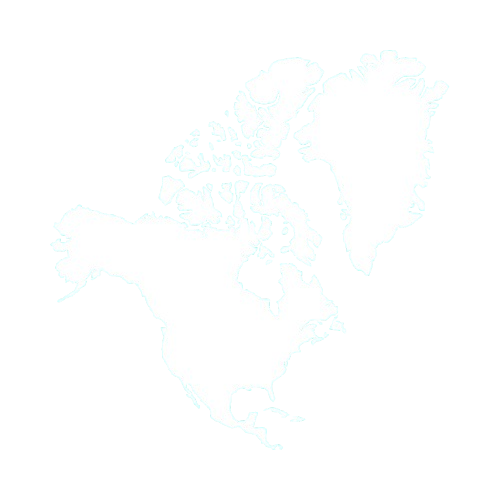
North America Continent Overview
Introduction to North America
North America is the world’s third-largest continent, covering 24.2 million km² (16.28%) of Earth’s land area. It comprises 41 countries and territories across 4 regions and is home to 621.2 million people, accounting for 7.49% of the global population. The continent has an average population density of 26 people per km² and grows by approximately 4 million people each year.
north america : continent
Largest Countries : Canada, United States
Number of Countries : 41
Land Area : 24.2M km² (16.28%)
Total Population : 621,248,040
Density : 26
World Population of : 7.49%
Annual Growth : 4,000,000 Million
Regions : 03+
Introduction
North America is a continent shaped as much by geological force as by human history. Stretching nearly 8,000 kilometers from the Arctic ice sheets of northern Canada to the tropical lowlands of Panama, it holds an unusual range of terrain, climate, and ecosystems packed into a single connected landmass. While population figures and country lists tell you the “what” of North America, this guide focuses on the “how” and “why” — how the continent’s landscape formed, how its climate varies so dramatically, and how thousands of years of human settlement shaped the cultures that exist there today.
Capital Cities of north America Continent With Population
| S no. | country | city | population |
|---|---|---|---|
| 1 | Mexico | Mexico City | 9,020,812 |
| 2 | Haiti | Port-au-Prince | 1,633,591 |
| 3 | Cuba | Havana | 1,583,433 |
| 4 | Canada | Ottawa | 1,218,903 |
| 5 | Honduras | Tegucigalpa | 1,176,079 |
| 6 | Panama | Panama City | 1,150,444 |
| 7 | Nicaragua | Managua | 1,064,326 |
| 8 | Dominican Republic | Santo Domingo | 1,001,525 |
| 9 | Guatemala | Guatemala City | 914,057 |
| 10 | United States | Washington | 698,733 |
| 11 | Costa Rica | San Jose | 364,062 |
| 12 | El Salvador | San Salvador | 333,295 |
| 13 | Bahamas | Nassau | 315,729 |
| 14 | Puerto Rico | San Juan | 291,890 |
| 15 | Martinique | Fort-de-France | 74,040 |
| 16 | Jamaica | Kingston | 73,019 |
| 17 | Barbados | Bridgetown | 72,807 |
| 18 | Antigua and Barbuda | St. John | 61,620 |
| 19 | Saint Lucia | Castries | 59,021 |
| 20 | Grenada | St. George's | 47,418 |
| 21 | Cayman Islands | George Town | 38,350 |
| 22 | British Virgin Islands | Road Town | 33,369 |
| 23 | Aruba | Oranjestad | 28,876 |
| 24 | Trinidad and Tobago | Port of Spain | 25,324 |
| 25 | Belize | Belmopan | 22,956 |
| 26 | Greenland | Nuuk | 20,298 |
| 27 | United States Virgin Islands | Charlotte Amalie | 17,809 |
| 28 | Dominica | Roseau | 14,987 |
| 29 | Saint Vincent and the Grenadines | Kingstown | 11,796 |
| 30 | Saint Kitts and Nevis | Basseterre | 11,764 |
| 31 | Guadeloupe | Basse-Terre | 9,043 |
| 32 | Turks and Caicos Islands | Cockburn Town | 6,190 |
| 33 | Saint Pierre and Miquelon | Saint-Pierre | 5,113 |
| 34 | Saint Martin | Marigot | 3,246 |
| 35 | Saint Barthelemy | Gustavia | 2,754 |
| 36 | Sint Maarten | Philipsburg | 2,417 |
| 37 | Montserrat | Plymouth | 1,478 |
| 38 | Curacao | Willemstad | 1,312 |
| 39 | Anguilla | The Valley | 1,174 |
| 40 | Bermuda | Hamilton | 779 |
Geographic Regions and Countries
Caribbean
01
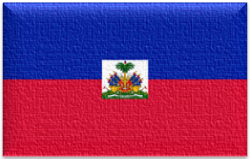
Haiti
population : 12,037,506
02
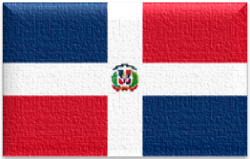
Dominican Republic
population : 11,609,500
03
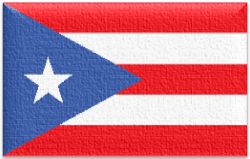
Puerto Rico
population : 3,222,688
04
Haiti
population : 2,833,403
05
Cuba
population : 10,892,659
Central America
01
Belize
population : 12,037,506
02
Guatemala
population : 11,609,500
03

Honduras
population : 3,222,688
04
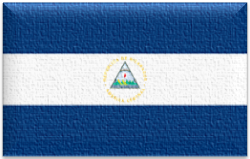
Nicaragua
population : 2,833,403
01
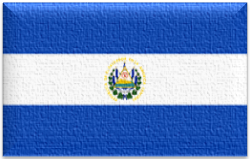
El Salvador
population : 12,037,506
02
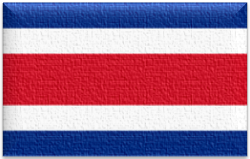
Costa Rica
population : 11,609,500
03
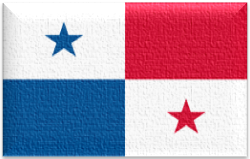
Panama
population : 3,222,688
Northern America
01

United States
Guatemala
01
Canada
Guatemala
01
Greenland
Guatemala
01
Mexico
Guatemala
North America Continent Population History
| S no. | Year | Population | Change |
|---|---|---|---|
| 1 | 2026 | 621,248,040 | 0.64% |
| 2 | 2025 | 617,280,241 | 0.63% |
| 3 | 2020 | 598,223,766 | 0.88% |
| 4 | 2015 | 572,612,251 | 1.05% |
| 5 | 2010 | 543,572,278 | 1.13% |
| 6 | 2005 | 513,781,515 | 1.13% |
| 7 | 2000 | 485,790,426 | 1.19% |
| 8 | 1995 | 457,844,575 | 1.38% |
| 9 | 1990 | 427,514,565 | 1.32% |
| 10 | 1985 | 400,458,672 | 1.36% |
| 11 | 1980 | 374,384,190 | 1.40% |
| 12 | 1975 | 349,213,207 | 1.56% |
| 13 | 1970 | 323,215,591 | 1.70% |
| 14 | 1965 | 297,047,232 | 2% |
| 15 | 1960 | 269,071,653 | 1.97% |
| 16 | 1955 | 244,048,382 | 1.84% |
| 17 | 1950 | 222,811,384 | 2.63% |
| 18 | 1945 | 195,674,642 | 1.65% |
| 19 | 1940 | 180,273,049 | 1.05% |
| 20 | 1935 | 171,071,933 | 1.02% |
| 21 | 1930 | 162,631,140 | 1.45% |
| 22 | 1925 | 151,328,781 | 1.50% |
| 23 | 1920 | 140,480,385 | 1.35% |
| 24 | 1915 | 131,357,719 | 1.36% |
| 25 | 1910 | 122,778,722 | 1.77% |
| 26 | 1905 | 112,446,137 | 1.81% |
comparison north america countries performance with different indicators
Canada North America’s HDI leader
- HDI Score : 0.939
- World Rank : 16
- Continent Rank : 01
- Capital: Ottawa
- Location : North America
- Abbreviation: CAN
which country in north america has the highest hdi
which highest hdi in north america
Canada ranks first in North America on the Human Development Index (HDI) with a score of 0.939, placing 16th globally. Its capital is Ottawa, reflecting strong performance in health, education, and quality of life.
Quebec Cit is Canada The Most Safest, Of North America
- Safety Score : 83.8
- World Rank : 06
- Continent Rank : 01
- Capital: Ottawa
- Location : North America
- Abbreviation: CAN
which city is the safest city in north america
safest city of north america
Quebec City ranks as the safest city in North America with a Safety Score of 83.8, placing 6th worldwide and 1st on the continent. The city is recognized for its low crime rate, high quality of life, and secure living environment.
Mexico City, Populous City
- Population: 22,752,400
- World Rank : 07
- Continent Rank : 01
- Capital: Mexico City
- Location : North America
- Abbreviation: MEX
most populated city of north america
populous city of north america
Mexico City is the most populous city in North America, with a population of 22,752,400. It ranks 1st in North America and 7th globally by population. As the capital of MEX (Mexico), it is the country’s largest economic, cultural, and political center.
Population in North America by religion




Most Spoken Languages North American
Most Spoken Languages in North America
Languages Spoken Across the Continent
North America is one of the world’s most linguistically diverse continents, with English being the most spoken language at approximately 334 million speakers, followed by Spanish with around 125 million, French with about 18 million, Chinese with approximately 4.6 million, Tagalog with 2 million, Vietnamese with 1.5 million, German and Arabic with roughly 1.3 million each, Korean with about 1.2 million, and Italian with approximately 1 million speakers.
English
334 Million
334 million speakers
Spanish
125 Million
Spanish speakers
French
18 Million
approximately
Tagalog
2 Million
million speakers
How North America’s Landscape Was Formed
North America’s geography owes its shape to millions of years of tectonic activity, glaciation, and erosion.
- The Rocky Mountains, running from British Columbia down through the western United States, were formed roughly 80 million years ago through a slow tectonic collision known as the Laramide Orogeny. Their jagged, relatively young peaks contrast sharply with the continent’s eastern mountains.
- The Appalachian Mountains, by comparison, are among the oldest mountain ranges on Earth — formed around 480 million years ago and worn down over hundreds of millions of years into the rounded, forested ridges seen today.
- The Sierra Madre ranges in Mexico split the country into distinct highland and coastal zones, shaped by ongoing volcanic and tectonic activity along the Pacific Ring of Fire.
- Glaciation during the last Ice Age carved out much of North America’s northern landscape, including the basins that would later fill to form the Great Lakes — the largest group of freshwater lakes on Earth by surface area.
This geological diversity means North America contains everything from 6,000-meter peaks to below-sea-level desert basins within relatively short distances of one another.
Climate Zones Across the Continent
Because North America spans such an extreme range of latitude — from near the North Pole to the tropics — it contains nearly every climate type found on Earth:
- Arctic and subarctic climates dominate northern Canada, Alaska, and Greenland, where winters are long, dark, and severe, and permafrost underlies much of the ground.
- Temperate climates cover most of the continental United States and southern Canada, bringing four distinct seasons and supporting the continent’s most productive farmland.
- Arid and semi-arid climates define much of the southwestern United States and northern Mexico, home to expansive desert systems.
- Tropical climates take over in southern Mexico, Central America, and the Caribbean, with warm year-round temperatures and pronounced wet and dry seasons driven by seasonal monsoon patterns.
This range of climates isn’t just a geographic curiosity — it directly shapes where people settled, what crops could be grown, and how economies developed differently across the continent’s regions.
Natural Resources and Biodiversity
North America’s natural wealth has shaped its economic development since long before European contact.
- Freshwater: The Great Lakes alone hold roughly 21% of the world’s surface fresh water, while river systems like the Mississippi and Mackenzie drain vast portions of the continent’s interior.
- Energy and minerals: Significant reserves of oil, natural gas, coal, copper, gold, and silver run through Canada, the United States, and Mexico, forming the backbone of several regional economies.
- Forests: The boreal forest stretching across Canada and Alaska is one of the largest intact forest ecosystems remaining on Earth, playing an outsized role in global carbon storage.
- Farmland: The Great Plains and California’s Central Valley are among the most agriculturally productive regions in the world, feeding not just North America but much of the globe.
Biodiversity follows the same north-to-south climate gradient — polar bears and Arctic foxes thrive in the far north, while jaguars, howler monkeys, and thousands of tropical bird species inhabit Central America’s rainforests. In between, temperate forests, grasslands, and deserts host distinct ecosystems all their own, from bison herds on the Great Plains to saguaro cacti in the Sonoran Desert.
A Brief History of North America
Before European Contact
Long before colonization, North America was home to sophisticated Indigenous civilizations. The Inuit adapted to life in the Arctic; the Haudenosaunee Confederacy developed complex political systems in the northeast; the Ancestral Puebloans built multi-story dwellings in the arid southwest; and the Maya and Aztec civilizations in Mesoamerica constructed advanced cities, calendars, and trade networks that rivaled contemporary societies elsewhere in the world.
Colonization and Its Aftermath
Beginning in the late 15th century, Spanish, French, and British powers established colonies across the continent, fundamentally reshaping its political, demographic, and cultural landscape. This era brought immense upheaval to Indigenous populations through displacement, disease, and conflict — effects still felt in many communities today.
The Path to Independence
Independence movements swept the continent from the late 18th through the 19th centuries. The United States broke from Britain in 1776. Haiti became the first Black-led republic in 1804, following a successful slave revolt. Mexico won independence from Spain in 1821, and most Central American nations followed shortly after. Canada’s independence came more gradually, culminating in full constitutional autonomy in 1982.
Modern Integration
The 20th and 21st centuries have brought deep economic integration across the continent, most visibly through trade frameworks like USMCA (formerly NAFTA), which tie the United States, Canada, and Mexico together through shared manufacturing and supply chains.
Culture and Identity
North America’s cultural fabric reflects the layering of Indigenous heritage with centuries of immigration from Europe, Africa, Asia, and Latin America. This blending shows up everywhere — in music (jazz and country in the U.S., mariachi in Mexico, reggae in Jamaica), in cuisine, in architecture, and in the continued practice of Indigenous languages and traditions across Native American, First Nations, Inuit, and Maya communities. Rather than a single unified culture, North America is better understood as a patchwork of distinct regional identities shaped by different colonial histories, migration patterns, and geography.
Frequently Asked Questions
What shaped North America’s mountain ranges?
The Rocky Mountains formed through tectonic collision roughly 80 million years ago, while the Appalachian Mountains are far older, dating back approximately 480 million years and worn smooth by erosion since.
Why does North America have so many different climates?
Its enormous north-south span — from the Arctic Circle to the tropics — means it passes through nearly every major climate zone on Earth, from polar to tropical.
What role did glaciation play in shaping the continent?
Ice Age glaciation carved out much of North America’s northern terrain, including the basins that became the Great Lakes.
Which Indigenous civilizations were most influential in North America?
The Maya and Aztec in Mesoamerica, the Haudenosaunee Confederacy in the northeast, the Ancestral Puebloans in the southwest, and the Inuit in the Arctic all developed distinct, sophisticated societies long before European contact.
How did North America’s colonial history differ by region?
Spanish colonization shaped Mexico, Central America, and much of the Caribbean, while British and French colonization shaped Canada and the United States — differences still visible today in language, religion, and legal systems across the continent.
Conclusion
North America’s identity is written into its landscape — ancient worn-down mountains beside young, jagged peaks; Arctic tundra a few thousand kilometers from tropical rainforest; Indigenous civilizations whose influence still shapes the continent today. Understanding these geological and historical forces offers a deeper picture of the continent than population figures alone can provide — one grounded in how the land itself, and the people who have lived on it, came to be what they are.