
Angola
Angola Country Profile Overview and Facts
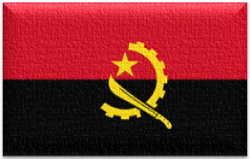
- Capital: Luanda
- Independence Day: November 11, 1975
- Provinces: 18
- Religion: Christianity
- Motto: “Unity, Discipline, Justice”
- Language: Portuguese
| 1 | Capital City | Luanda |
|---|---|---|
| 2 | Total Area | 1,246,700.00 (km²) |
| 3 | Land Area | 1,246,700.00 (km²) |
| 4 | Water Area | N/A |
| 5 | Population | 39,562,012 |
| 6 | Largest City | Luanda |
| 7 | Currency | Kwanza (AOA) |
| 8 | Density | 31.31 |
| 9 | Name | Republic of Angola |
| 10 | Location | Africa |
| 11 | Region | Middle Africa, Sub-Saharan Africa |
| 12 | Bordering Countries | Namibia, Zambia, The Congo, The Democratic Republic Of The Congo. |
| 13 | Phone Codes | 244 |
| 14 | Iso Code | AO / AGO |
| 15 | National Dishes | Moamba de Galinha |
| 16 | National Animals | Red-crested turaco |
| 17 | NO Of National Park | 8 |
| 18 | National Park Area |
Angola Profile Overview
Angola is a vast country located in Southern Africa, bordered by Namibia, the Democratic Republic of the Congo, Zambia, and the Atlantic Ocean. Its landscape features savannahs, tropical forests, highlands, and a long Atlantic coastline, making Angola ecologically diverse. With a population of over 36 million, Angola is one of Africa’s largest economies, driven by oil, diamonds, agriculture, and mining.
The nation has a rich history shaped by indigenous African kingdoms, Portuguese colonization, and a protracted struggle for independence. Angola achieved independence in 1975 after a 14-year liberation war, followed by a long civil conflict that ended in 2002. Today, Angola is focused on post-war reconstruction, economic diversification, and regional integration.
Importance of Angola
Angola holds strategic importance due to its abundant natural resources, extensive coastline, and position in Southern Africa. It is a key oil producer on the continent, contributing significantly to global energy markets. Angola’s economy and reconstruction efforts also influence regional trade, investment, and stability in the Southern African Development Community (SADC).
Alliances and International Relations
Angola is a member of the United Nations (UN), African Union (AU), Southern African Development Community (SADC), and Community of Portuguese Language Countries (CPLP). The country maintains diplomatic relations worldwide, focusing on trade, infrastructure development, peacekeeping, and regional cooperation.
Independence and Political History
Angola gained independence from Portugal on November 11, 1975. Its post-independence period was marked by civil war among liberation movements, which lasted until 2002. Since then, Angola has pursued political stability, democratic reforms, and economic reconstruction, aiming to strengthen governance and social development.
Global Contribution
Angola contributes globally through energy exports, diamond production, and peacekeeping initiatives. Its culture, music (notably Semba and Kuduro), and arts have gained international recognition. The Angolan diaspora also plays an important role in education, trade, and cultural exchange.
Region and Sub-Region
Region: Africa
Sub-Region: Southern Africa
This positioning allows Angola to play a significant role in regional trade, diplomacy, and development initiatives within Southern Africa.
Religion, Ethnicity, and Society
Religion: Predominantly Christianity (Roman Catholic and Protestant)
Ethnic Groups: Ovimbundu, Kimbundu, Bakongo, Chokwe, and others
Angola’s diverse society reflects a rich blend of tribal traditions, languages, and cultural practices, with community and family values deeply ingrained.
Languages and Culture
Official Language: Portuguese
Other Languages: Umbundu, Kimbundu, Kikongo, Chokwe
Angolan culture is characterized by music, dance, oral storytelling, traditional crafts, and cuisine. Celebrations and festivals reflect a mix of indigenous, Portuguese, and African influences.
Key Facts About Angola
Capital: Luanda
Currency: Angolan Kwanza (AOA)
Government: Presidential republic
Economy: Oil, diamonds, agriculture, services
Geography: Coastal plains, highlands, tropical forests
Conclusion
Angola is a country of vast natural wealth, cultural richness, and growing regional influence. Its strategic resources, demographic potential, and efforts in post-conflict reconstruction make it a key player in Southern Africa. Angola continues to focus on economic diversification, infrastructure development, and international cooperation.
Frequently Asked Questions (FAQs)
Q1: Where is Angola located?
Angola is in Southern Africa, bordered by Namibia, DRC, Zambia, and the Atlantic Ocean.
Q2: When did Angola gain independence?
Angola gained independence from Portugal on November 11, 1975.
Q3: What language is spoken in Angola?
Portuguese is the official language, alongside several indigenous languages.
Q4: What is Angola known for?
Angola is known for oil, diamonds, tropical landscapes, and vibrant culture.
Q5: What is the predominant religion in Angola?
Christianity is the dominant religion, mainly Roman Catholic and Protestant.
Sources :