
Japan
Japan Country Profile Overview and Facts
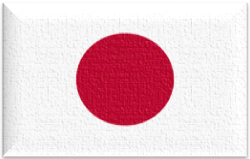
- Capital: Tokyo
- National Day: February 11 (National Foundation Day)
- Prefectures: 47 (organized into 8 regions: Hokkaido, Tohoku, Kanto, Chubu, Kansai, Chugoku, Shikoku, and Kyushu-Okinawa)
- Religion: Shintoism and Buddhism are the primary traditions (often practiced simultaneously)
- Motto: None official
- Language: Japanese
Japan Country Profile Overview
Japan is an island nation located in East Asia, situated in the northwestern Pacific Ocean. It lies east of the Korean Peninsula and China and consists of more than 6,800 islands, with Honshu, Hokkaido, Kyushu, and Shikoku being the four main islands. The capital city, Tokyo, is one of the world’s largest metropolitan and economic centers.
Japan is globally recognized for its advanced economy, technological innovation, deep-rooted traditions, and long, continuous history. It represents a unique balance between ancient culture and modern development, making it one of the most influential countries in the world.
Importance of Japan
Japan holds major global importance due to its role as the world’s third-largest economy, a leader in technology, manufacturing, and innovation, and a central power in Asia-Pacific geopolitics. The country is a global hub for automobiles, electronics, robotics, and precision engineering, while also influencing global culture through media, cuisine, and design.
Alliances and International Relations
Japan is a member of the United Nations (UN), G7, World Trade Organization (WTO), International Monetary Fund (IMF), and Asia-Pacific Economic Cooperation (APEC). It maintains a key strategic alliance with the United States, along with strong diplomatic and economic relations across Asia, Europe, and the Indo-Pacific region.
Independence and Historical Background
Japan has never been formally colonized in the modern era. Its current constitutional framework was established in 1947, following World War II. Japan operates as a constitutional monarchy, with the Emperor serving as a symbolic head of state and an elected parliament governing the country. Its history spans thousands of years, marked by imperial rule, feudal systems, modernization, and post-war economic transformation.
Global Contribution
Japan has made extensive global contributions in technology, science, education, culture, and humanitarian development. Japanese innovations in automotive engineering, consumer electronics, robotics, and environmental technology shape modern life worldwide. Culturally, Japan has influenced the world through anime, manga, cuisine, architecture, and philosophy.
Region and Sub-Region
Region: Asia
Sub-Region: East Asia
Japan’s geography includes mountains, volcanic landscapes, coastal plains, and frequent seismic activity due to its location along the Pacific Ring of Fire.
Religion, Ethnicity, and Society
Religion: Shintoism, Buddhism (often practiced together)
Ethnicity: Predominantly ethnic Japanese, with small minority communities
Japanese society emphasizes social harmony, discipline, respect for tradition, and technological efficiency.
Languages and Culture
Official Language: Japanese
Writing System: Kanji, Hiragana, Katakana
Japanese culture blends ancient customs such as tea ceremonies and festivals with modern lifestyles, creating a distinct national identity admired worldwide.
Key Facts About Japan
Capital: Tokyo
Currency: Japanese Yen (JPY)
Government: Constitutional monarchy with parliamentary democracy
Geography: Island nation, mountains, volcanoes, coastlines
Economy: Technology, manufacturing, finance, exports
Conclusion
Japan is a globally influential nation that combines historical continuity with modern innovation. Its leadership in technology, economic development, and cultural exchange makes it a cornerstone of global progress and stability.
Frequently Asked Questions (FAQs)
Q1: Where is Japan located?
Japan is located in East Asia, in the Pacific Ocean east of the Korean Peninsula.
Q2: What type of government does Japan have?
Japan is a constitutional monarchy with a parliamentary democracy.
Q3: Why is Japan important globally?
Japan is important for its economic strength, technology leadership, and cultural influence.
Q4: What language is spoken in Japan?
Japanese is the official and national language.
Q5: Is Japan prone to earthquakes?
Yes, Japan is located along the Pacific Ring of Fire and experiences frequent seismic activity
Sources :