Cuba
Cuba Country Profile Overview and Facts
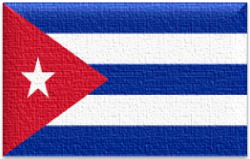
- Capital: Havana
- Independence Day: May 20, 1902 (from the United States); October 10, 1868 (Declaration of Independence from Spain)
- Provinces: 15 Provinces and 1 Special Municipality (Isla de la Juventud)
- Religion: Secular Christianity
- Motto: “Homeland or Death, We Shall Overcome!” (Patria o Muerte, Venceremos)
- Language: Spanish
Cuba Profile Overview
Cuba, officially the Republic of Cuba, is an island nation located in the Caribbean Sea, at the crossroads of North America, Central America, and the Caribbean. It is the largest island in the Caribbean, bordered by the United States to the north across the Florida Straits, Mexico to the west, the Bahamas to the northeast, Haiti to the east, and Jamaica to the south. The capital and largest city is Havana, which is also the country’s main political, economic, and cultural hub.
Cuba is known for its distinct political system, rich cultural heritage, historic cities, and strong social indicators in health and education. The country has a mixed economy with strong state involvement, supported by tourism, healthcare services, biotechnology, agriculture, and international medical cooperation.
Importance of Cuba
Cuba holds significant importance due to its strategic location in the Caribbean, influential political history, and global presence in healthcare and diplomacy. The country plays a notable role in regional politics, disaster response, and international medical assistance, particularly in developing nations.
Alliances and International Relations
Cuba is a member of the United Nations (UN), Non-Aligned Movement (NAM), Community of Latin American and Caribbean States (CELAC), Association of Caribbean States (ACS), and maintains strong diplomatic relations with countries in Latin America, Africa, Europe, and Asia. Cuba has historically pursued an independent foreign policy focused on sovereignty and South-South cooperation.
Independence and Political History
Cuba gained independence from Spain on May 20, 1902, following the Spanish-American War. The Cuban Revolution of 1959 reshaped the country’s political system, leading to the establishment of a socialist state. Cuba operates under a single-party socialist republic with a centralized governance structure.
Global Contribution
Cuba is globally recognized for its medical diplomacy, healthcare professionals, literacy programs, and biotechnology research. Cuban doctors and medical teams have provided humanitarian assistance in numerous countries during health crises and natural disasters.
Region and Sub-Region
Region: Americas
Sub-Region: Caribbean
Cuba’s geographic position gives it strategic maritime importance within the Caribbean basin.
Religion, Ethnicity, and Society
Religion: Christianity (mainly Roman Catholic), Afro-Cuban religions, and other beliefs
Ethnicity: Mixed European and African descent, European, African
Cuban society reflects a blend of cultural influences, with strong traditions in music, family life, and social solidarity.
Languages and Culture
Official Language: Spanish
Cuban culture is globally celebrated for its music, dance, literature, visual arts, and cuisine, with internationally recognized styles such as salsa, son, and rumba.
Key Facts About Cuba
Capital: Havana
Currency: Cuban Peso (CUP)
Government: Socialist republic
Geography: Islands, plains, mountains, coastlines
Economy: Tourism, healthcare services, agriculture, biotechnology
Conclusion
Cuba is a unique Caribbean nation with a strong global identity shaped by its history, culture, and political system. Its contributions to global healthcare, education, and cultural heritage continue to influence international cooperation and regional development.
Frequently Asked Questions (FAQs)
Q1: Where is Cuba located?
Cuba is located in the Caribbean Sea between North America and Central America.
Q2: When did Cuba gain independence?
Cuba gained independence from Spain on May 20, 1902.
Q3: What is Cuba known for globally?
Cuba is known for healthcare diplomacy, music, culture, and education.
Q4: What political system does Cuba have?
Cuba operates as a socialist republic.
Q5: What language is spoken in Cuba?
Spanish is the official language of Cuba.
Sources :