
Chile
Chile Country Profile Overview and Facts
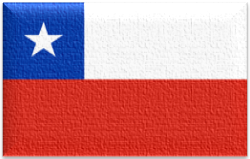
- Capital: Santiago
- Independence Day: September 18, 1810 (First Government Junta); February 12, 1818 (Official declaration)
- Regions: 16
- Religion: Secular (predominantly Christianity — Roman Catholic and Protestant)
- Motto: “By Reason or by Force” (Por la Razón o la Fuerza)
- Language: Spanish
| 1 | Capital City | Santiago |
|---|---|---|
| 2 | Total Area | 756,102.00 (km²) |
| 3 | Land Area | 743,812.00 (km²) |
| 4 | Water Area | 12,290.00 (km²) |
| 5 | Population | 19,901,795 |
| 6 | Largest City | Santiago |
| 7 | Currency | Chilean pesos (CLP) |
| 8 | Density | 26..71 (km²) |
| 9 | Name | Republic of Chile |
| 10 | Location | South America |
| 11 | Region | South America, Latin America |
| 12 | Bordering Countries | Argentina, Bolivia, Peru. |
| 13 | Phone Codes | 56 |
| 14 | Iso Code | CL / CHL |
| 15 | National Dishes | Empanadas |
| 16 | National Animals | Huemul |
| 17 | NO Of National Park | 41 |
| 18 | National Park Area | 146,046 (km²) |
Chile Profile Overview
Chile, officially the Republic of Chile, is a long and narrow country located along the western edge of South America, bordered by the Pacific Ocean to the west, Peru to the north, Bolivia to the northeast, and Argentina to the east. The capital and largest city is Santiago, which serves as the country’s political, economic, and cultural center.
Chile is globally recognized for its geographic diversity, extending from the Atacama Desert, one of the driest places on Earth, to fertile valleys, forests, fjords, glaciers, and Antarctica-linked territories. The country has a stable democratic system and one of Latin America’s most developed and open economies.
Importance of Chile
Chile is important due to its strong economy, political stability, and leadership in South America. It plays a major role in global mining, international trade, renewable energy, and environmental research. Chile’s Pacific coastline also makes it a key gateway between Latin America and Asia-Pacific markets.
Alliances and International Relations
Chile is a member of the United Nations (UN), Organization of American States (OAS), Pacific Alliance, World Trade Organization (WTO), Organisation for Economic Co-operation and Development (OECD), and Asia-Pacific Economic Cooperation (APEC). The country maintains extensive free trade agreements with nations across Asia, Europe, and the Americas.
Independence and Political History
Chile declared independence from Spain on September 18, 1810, with full independence consolidated in 1818. Chile operates as a presidential republic with a long tradition of constitutional governance, democratic institutions, and political reform.
Global Contribution
Chile contributes globally through copper production, agricultural exports, scientific research, and climate studies. It is the world’s largest producer of copper, a critical resource for global infrastructure and clean energy technologies. Chile also plays an active role in Antarctic research and environmental protection.
Region and Sub-Region
Region: Americas
Sub-Region: South America
Chile’s geography connects South America with the Pacific Ocean, strengthening its global trade and strategic position.
Religion, Ethnicity, and Society
Religion: Christianity (predominantly Roman Catholic), Protestantism, and other faiths
Ethnicity: Predominantly mestizo, with Indigenous groups such as Mapuche, Aymara, and Rapa Nui
Chilean society values education, social development, democratic participation, and cultural heritage.
Languages and Culture
Official Language: Spanish
Other Languages: Indigenous languages including Mapudungun, Aymara, and Rapa Nui
Chile’s culture is expressed through literature, music, cuisine, festivals, and arts, with internationally renowned poets, writers, and artists contributing to global culture.
Key Facts About Chile
Capital: Santiago
Currency: Chilean Peso (CLP)
Government: Presidential republic
Geography: Desert, valleys, mountains, coastline, glaciers
Economy: Mining, agriculture, services, renewable energy
Conclusion
Chile is a geographically unique and economically strong South American nation with global influence in mining, trade, science, and environmental policy. Its stable institutions, natural resources, and international partnerships position Chile as a leading country in Latin America.
Frequently Asked Questions (FAQs)
Q1: Where is Chile located?
Chile is located along the western coast of South America.
Q2: When did Chile gain independence?
Chile declared independence in 1810, with full independence achieved in 1818.
Q3: What is Chile known for?
Chile is known for copper production, wine exports, and diverse geography.
Q4: What language is spoken in Chile?
Spanish is the official language.
Q5: What is Chile’s political system?
Chile operates as a presidential republic.
Sources :