
Canada
Canada Country Profile Overview and Facts
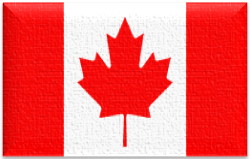
- Capital: Ottawa
- Independence Day: July 1, 1867 (Confederation)
- Provinces/Territories: 10 Provinces and 3 Territories
- Religion: Secular (predominantly Christianity)
- Motto: “From Sea to Sea” (A Mari Usque Ad Mare)
- Languages: English and French (Official)
| 1 | Capital City | Ottawa |
|---|---|---|
| 2 | Total Area | 9,984,670.00 (km²) |
| 3 | Land Area | 9,093,507.00 (km²) |
| 4 | Water Area | 891,163.00 (km²) |
| 5 | Population | 40,295,648 (km²) |
| 6 | Largest City | Toronto |
| 7 | Currency | Canadian dollars (CAD) |
| 8 | Density | 4.41 (km²) |
| 9 | Name | Canada |
| 10 | Location | North America |
| 11 | Region | Northern America |
| 12 | Bordering Countries | The United States Of America. |
| 13 | Phone Codes | 1 |
| 14 | Iso Code | CA / CAN |
| 15 | National Dishes | Poutine |
| 16 | National Animals | beaver Canadian horse |
| 17 | NO Of National Park | 47 |
| 18 | National Park Area | 377,000 |
Canada Profile Overview
Canada is the second-largest country in the world by total area, located in North America. It is bordered by the United States to the south, the Atlantic Ocean to the east, the Pacific Ocean to the west, and the Arctic Ocean to the north. The capital city is Ottawa, while major metropolitan centers include Toronto, Vancouver, Montreal, Calgary, and Edmonton.
Canada is known for its political stability, high quality of life, natural resources, and multicultural society. The country operates under a federal parliamentary democracy and constitutional monarchy, combining strong institutions with regional autonomy. Its economy is advanced and diversified, supported by natural resources, technology, manufacturing, and services.
Importance of Canada
Canada holds global importance due to its economic strength, diplomatic influence, natural resource reserves, and leadership in global governance. It plays a major role in international trade, climate policy, peacekeeping, education, and humanitarian efforts. Canada is also a preferred destination for immigration, higher education, and global investment.
Alliances and International Relations
Canada is an active member of major international organizations including the United Nations (UN), NATO, G7, G20, Commonwealth of Nations, Organisation for Economic Co-operation and Development (OECD), World Trade Organization (WTO), and North American trade frameworks. The country maintains strong diplomatic and economic ties with nations across Europe, Asia, Africa, and the Americas.
Independence and Political History
Canada gradually achieved sovereignty from British rule, beginning with Confederation in 1867, which united provinces under a federal system. Full legislative independence was established in 1931, with constitutional patriation completed in 1982. Canada remains a constitutional monarchy, with the monarch serving as ceremonial head of state.
Global Contribution
Canada contributes globally through peacekeeping missions, humanitarian aid, scientific research, climate initiatives, and economic partnerships. It is a leading exporter of energy, minerals, agricultural products, and advanced technologies, and plays a strong role in international education and global development programs.
Region and Sub-Region
Region: Americas
Sub-Region: North America
Canada’s geographic scale connects the Atlantic, Pacific, and Arctic regions, making it strategically significant in global trade and security.
Religion, Ethnicity, and Society
Religion: Christianity, Islam, Hinduism, Sikhism, Buddhism, Judaism, and non-religious communities
Ethnicity: Highly diverse, with European, Indigenous, Asian, African, and Middle Eastern heritage
Canadian society is defined by multiculturalism, inclusivity, democratic values, and respect for human rights. Indigenous peoples play a foundational role in the country’s history and identity.
Languages and Culture
Official Languages: English and French
Other Languages: Mandarin, Punjabi, Spanish, Arabic, and Indigenous languages
Canada’s culture reflects a blend of Indigenous traditions, European heritage, and modern multicultural influences, expressed through literature, music, film, arts, sports, and national festivals.
Key Facts About Canada
Capital: Ottawa
Largest City: Toronto
Currency: Canadian Dollar (CAD)
Government: Federal parliamentary democracy and constitutional monarchy
Geography: Mountains, forests, lakes, tundra, coastline
Economy: Natural resources, manufacturing, technology, finance, services
Conclusion
Canada is a globally respected nation known for stability, diversity, economic strength, and international cooperation. Its leadership in diplomacy, sustainable development, and innovation positions Canada as a key contributor to global progress and regional security.
Frequently Asked Questions (FAQs)
Q1: Where is Canada located?
Canada is located in North America, north of the United States.
Q2: When did Canada gain independence?
Canada’s independence developed gradually, starting in 1867, with full constitutional sovereignty achieved in 1982.
Q3: What is Canada known for globally?
Canada is known for peacekeeping, natural resources, high living standards, and multiculturalism.
Q4: What languages are spoken in Canada?
English and French are official languages, alongside many immigrant and Indigenous languages.
Q5: What is the political system of Canada?
Canada operates as a federal parliamentary democracy and constitutional monarchy.
Sources :