
Brazil
Brazil Country Profile Overview and Facts
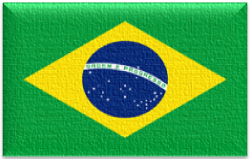
- Capital: Brasília
- Independence Day: September 7, 1822
- Provinces/States: 26 States and 1 Federal District
- Religion: Secular (predominantly Christianity — Roman Catholic and Protestant)
- Motto: “Order and Progress” (Ordem e Progresso)
- Language: Portuguese
| 1 | Capital City | Brasilia |
|---|---|---|
| 2 | Total Area | 8,515,770.00 (km²) |
| 3 | Land Area | 8,358,140.00 (km²) |
| 4 | Water Area | 157,630.00 (km²) |
| 5 | Population | 213,176,914 |
| 6 | Largest City | Sao Paulo |
| 7 | Currency | Reals (BRL) |
| 8 | Density | 25.46 (km²) |
| 9 | Name | Federative Republic of Brazil |
| 10 | Location | South America |
| 11 | Region | South America, Latin America |
| 12 | Bordering Countries | Guyana, Argentina, Bolivia, Paraguay, Peru, Uruguay, Colombia, Suriname, Venezuela. |
| 13 | Phone Codes | 55 |
| 14 | Iso Code | BR / BRA |
| 15 | National Dishes | Feijoada |
| 16 | National Animals | Rufous-bellied thrush |
| 17 | NO Of National Park | 75 |
| 18 | National Park Area | 250,000 (km²) |
Brazil Profile Overview
Brazil, officially known as the Federative Republic of Brazil, is the largest country in South America and the fifth-largest country in the world by area and population. It is bordered by every South American nation except Chile and Ecuador and has a long coastline along the Atlantic Ocean. The capital city is Brasília, while São Paulo and Rio de Janeiro are major economic and cultural centers.
Brazil is globally recognized for its Amazon Rainforest, vast biodiversity, natural resources, and cultural diversity. With a mixed economy, Brazil is a leading emerging market with strong sectors in agriculture, mining, manufacturing, energy, and services. The country plays a major role in regional and global affairs.
Importance of Brazil
Brazil is one of the world’s most important countries due to its economic scale, population size, natural resources, and environmental significance. It is a leading exporter of agricultural products and plays a critical role in global food security and climate balance, especially through stewardship of the Amazon Basin.
Alliances and International Relations
Brazil is a founding member of the United Nations (UN) and a key member of BRICS, G20, World Trade Organization (WTO), Organization of American States (OAS), Mercosur, and Community of Portuguese Language Countries (CPLP). It maintains strong diplomatic relations across the Americas, Europe, Africa, and Asia and is a major voice for developing nations.
Independence and Political History
Brazil declared independence from Portugal on September 7, 1822. The country transitioned from monarchy to republic in 1889 and currently operates as a federal presidential republic. Independence Day is a national holiday celebrated with patriotic events throughout the country.
Global Contribution
Brazil contributes globally through agricultural exports, renewable energy development, biodiversity conservation, peacekeeping missions, and international diplomacy. It is a global leader in biofuels, hydroelectric power, and tropical environmental research.
Region and Sub-Region
Region: Americas
Sub-Region: South America
Brazil’s geographic scale connects the Amazon, Atlantic coast, central plateaus, and southern plains.
Religion, Ethnicity, and Society
Religion: Christianity (predominantly Roman Catholic), Protestant denominations
Ethnicity: Mixed heritage including Indigenous, European, African, and Asian descent
Brazilian society is one of the most ethnically diverse in the world, shaped by centuries of migration and cultural blending.
Languages and Culture
Official Language: Portuguese
Brazilian culture is globally influential, expressed through music, dance, festivals, sports, cuisine, and arts. Traditions such as Carnival, samba, football culture, and regional folklore form a strong national identity.
Key Facts About Brazil
Capital: Brasília
Currency: Brazilian Real (BRL)
Government: Federal presidential republic
Geography: Rainforests, rivers, coastlines, plateaus
Economy: Agriculture, industry, energy, services
Conclusion
Brazil is a global powerhouse with immense natural wealth, cultural influence, and economic potential. Its leadership in agriculture, energy, environmental protection, and international cooperation makes Brazil a central player in shaping regional and global development.
Frequently Asked Questions (FAQs)
Q1: Where is Brazil located?
Brazil is located in South America and borders the Atlantic Ocean.
Q2: When did Brazil gain independence?
Brazil gained independence on September 7, 1822.
Q3: What language is spoken in Brazil?
Portuguese is the official language of Brazil.
Q4: Why is Brazil important globally?
Brazil is important for agriculture, biodiversity, energy production, and global diplomacy.
Q5: What is Brazil best known for?
Brazil is known for the Amazon Rainforest, football, Carnival, and cultural diversity.
Sources :