
Bosnia and Herzegovina
Bosnia and Herzegovina Country Profile Overview and Facts
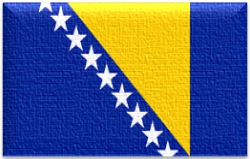
- Capital: Sarajevo
- Independence Day: March 1, 1992
- Entities: Federation of Bosnia and Herzegovina, Republika Srpska, and Brčko District
- Religion: Islam, Christianity (Orthodox and Roman Catholic)
- Motto: None
- Languages: Bosnian, Croatian, and Serbian
Bosnia and Herzegovina Profile Overview
Bosnia and Herzegovina is a country located in Southeastern Europe, within the Western Balkans region. It is bordered by Croatia to the north and west, Serbia to the east, and Montenegro to the southeast, with a small coastline along the Adriatic Sea. The capital city, Sarajevo, is the political, cultural, and economic center and is known for its rich multicultural heritage.
The country has a complex history shaped by Ottoman, Austro-Hungarian, and Yugoslav influences, which is reflected in its architecture, traditions, and social structure. Today, Bosnia and Herzegovina is a sovereign state with a decentralized political system and a developing economy focused on industry, services, tourism, and trade.
Importance of Bosnia and Herzegovina
Bosnia and Herzegovina holds regional importance due to its strategic location in the Balkans, cultural diversity, and role in European security and post-conflict stabilization. It serves as a cultural crossroads between Eastern and Western civilizations and plays a growing role in regional cooperation and European integration efforts.
Alliances and International Relations
Bosnia and Herzegovina is a member of the United Nations (UN), Council of Europe, Organization for Security and Co-operation in Europe (OSCE), Central European Free Trade Agreement (CEFTA), and International Monetary Fund (IMF). The country is a potential candidate for European Union membership and cooperates closely with NATO through partnership programs.
Independence and Political History
Bosnia and Herzegovina declared independence from Yugoslavia in 1992 following a national referendum. The country’s current political structure was established by the Dayton Peace Agreement in 1995, which ended the Bosnian War and created a complex system of governance designed to ensure power-sharing among its constituent peoples.
Global Contribution
Bosnia and Herzegovina contributes globally through peacekeeping participation, cultural heritage preservation, skilled labor exports, and regional trade. The country is also recognized for its historical sites, traditional craftsmanship, and growing tourism sector.
Region and Sub-Region
Region: Europe
Sub-Region: Southeastern Europe (Western Balkans)
This location places Bosnia and Herzegovina at the heart of Balkan cultural and geopolitical dynamics.
Religion, Ethnicity, and Society
Religion: Islam, Christianity (Orthodox and Catholic)
Ethnicity: Bosniaks, Serbs, Croats
Bosnia and Herzegovina is one of Europe’s most religiously and ethnically diverse countries, with centuries of coexistence shaping its social fabric.
Languages and Culture
Official Languages: Bosnian, Serbian, Croatian
The country’s culture blends Slavic traditions with Ottoman and Austro-Hungarian influences, expressed through cuisine, music, literature, architecture, and religious landmarks.
Key Facts About Bosnia and Herzegovina
Capital: Sarajevo
Currency: Bosnia and Herzegovina Convertible Mark (BAM)
Government: Federal parliamentary republic
Geography: Mountains, rivers, valleys
Economy: Industry, services, tourism
Conclusion
Bosnia and Herzegovina is a culturally rich and historically significant European nation with a unique governance system. Its strategic location, multicultural heritage, and ongoing integration efforts make it an important country in the Western Balkans and broader European region.
Frequently Asked Questions (FAQs)
Q1: Where is Bosnia and Herzegovina located?
Bosnia and Herzegovina is located in Southeastern Europe in the Western Balkans.
Q2: When did Bosnia and Herzegovina gain independence?
The country declared independence in 1992.
Q3: What languages are spoken in Bosnia and Herzegovina?
Bosnian, Serbian, and Croatian are the official languages.
Q4: What religions are practiced in Bosnia and Herzegovina?
Islam, Orthodox Christianity, and Catholic Christianity are the main religions.
Q5: Is Bosnia and Herzegovina part of the European Union?
No, but it is a potential candidate country for EU membership.
Sources :