
Austria
Austria Country Profile Overview and Facts
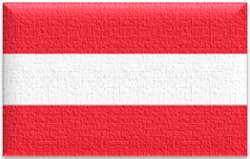
- Capital: Vienna
- Independence Day: October 26, 1955 (National Day)
- Provinces/States: 9 States (Bundesländer)
- Religion: Christianity (predominantly Roman Catholic)
- Motto: None (Historically: AEIOU)
- Language: German
Austria Profile Overview
Austria is a landlocked country in Central Europe, bordered by Germany, Czech Republic, Slovakia, Hungary, Slovenia, Italy, Switzerland, and Liechtenstein. Known for its alpine landscapes, historic cities, and cultural heritage, Austria combines natural beauty with political stability and economic strength. The country’s geography is dominated by the Eastern Alps, alongside fertile plains and river valleys, particularly along the Danube River.
Austria has a long and influential history, once serving as the core of the Habsburg Empire, which shaped European politics, culture, and art for centuries. Today, Austria is a highly developed nation with a strong economy based on industry, tourism, services, and innovation. Cities such as Vienna, Salzburg, Graz, and Innsbruck are globally recognized for their architecture, music, and quality of life.
Importance of Austria
Austria is important due to its central European location, political neutrality, and economic integration within the European Union. It acts as a bridge between Western and Eastern Europe, supporting trade, diplomacy, and cultural exchange. Austria is also a major tourism destination, contributing significantly to Europe’s travel and hospitality industry.
Alliances and International Relations
Austria is a member of the United Nations (UN), European Union (EU), Organization for Security and Co-operation in Europe (OSCE), Council of Europe, and World Trade Organization (WTO). Despite not being part of NATO, Austria maintains strong international cooperation through peacekeeping missions, diplomacy, and economic partnerships.
Independence and Political History
Austria emerged as a modern republic in 1918 following the dissolution of the Austro-Hungarian Empire. After World War II, Austria regained full sovereignty in 1955 with the Austrian State Treaty, declaring permanent neutrality. Today, Austria operates as a federal parliamentary republic with a strong democratic tradition.
Global Contribution
Austria contributes globally through diplomacy, music, science, environmental policy, and international mediation. Vienna hosts numerous international organizations, including UN offices, making Austria a center for global dialogue. Austrian classical music, philosophy, and architecture have had a lasting impact on world culture.
Region and Sub-Region
Region: Europe
Sub-Region: Central Europe
This location places Austria at the crossroads of major European trade routes and cultural regions.
Religion, Ethnicity, and Society
Religion: Predominantly Christianity, mainly Roman Catholic, with Protestant and Muslim minorities
Ethnicity: Primarily German-speaking Austrians, with recognized minority communities
Austrian society emphasizes social welfare, education, cultural preservation, and political stability, contributing to a high standard of living.
Languages and Culture
Official Language: German
Recognized Minority Languages: Croatian, Hungarian, Slovene
Austria is world-renowned for its classical music, opera, literature, architecture, and alpine traditions. Cultural festivals, historic landmarks, and artistic institutions are central to national identity.
Key Facts About Austria
Capital: Vienna
Currency: Euro (EUR)
Government: Federal parliamentary republic
Geography: Alps, plains, rivers
Economy: Industry, tourism, services, technology
Conclusion
Austria is a stable, prosperous, and culturally rich country with significant influence in Europe and beyond. Its commitment to neutrality, diplomacy, cultural heritage, and economic development makes Austria a key contributor to regional and global cooperation.
Frequently Asked Questions (FAQs)
Q1: Where is Austria located?
Austria is located in Central Europe and is landlocked by eight countries.
Q2: When did Austria become independent?
Austria became a republic in 1918 and regained full sovereignty in 1955.
Q3: What language is spoken in Austria?
German is the official language of Austria.
Q4: What is Austria known for globally?
Austria is known for classical music, alpine tourism, diplomacy, and high living standards.
Q5: What is the main religion in Austria?
Christianity, primarily Roman Catholicism, is the main religion.
Sources :