
Armenia
Armenia Country Profile Overview and Facts
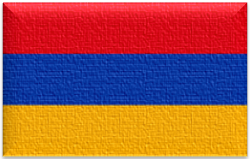
- Capital: Yerevan
- Independence Day: September 21, 1991
- Provinces: 10 (plus 1 city with special status)
- Religion: Christianity (Armenian Apostolic Church)
- Motto: “One Nation, One Culture” (Mek Azg, Mek Mshakuyt)
- Language: Armenian
| 1 | Capital City | Yerevan |
|---|---|---|
| 2 | Total Area | 29,743.00 (km²) |
| 3 | Land Area | 28,203.00 (km²) |
| 4 | Water Area | 1,540.00 km2 |
| 5 | Population | 2,942,684 |
| 6 | Largest City | Yerevan |
| 7 | Currency | Drams (AMD) |
| 8 | Density | 103.7 |
| 9 | Name | Republic of Armenia |
| 10 | Location | Asia |
| 11 | Region | Western Asia |
| 12 | Bordering Countries | Georgia, Turkey, Iran, Azerbaijan. |
| 13 | Phone Codes | 374 |
| 14 | Iso Code | AM / ARM |
| 15 | National Dishes | Harissa |
| 16 | National Animals | Eagle |
| 17 | NO Of National Park | 4 |
| 18 | National Park Area | 1176 (km²) |
Armenia Profile Overview
Armenia is a landlocked country located in the South Caucasus region of Eurasia, bordered by Turkey, Georgia, Azerbaijan, and Iran. It is known for its mountainous terrain, rich history, and unique cultural heritage. Armenia is one of the oldest nations in the world, with a civilization dating back over 3,000 years. It is famously recognized as the first country to adopt Christianity as a state religion in 301 AD, which has profoundly shaped its culture, architecture, and identity.
The country’s economy is developing, with key sectors including services, agriculture, IT, and mining. Yerevan, the capital, is the cultural, political, and economic hub, showcasing a blend of modern infrastructure and historic architecture. Armenia’s historical sites, monasteries, and natural landscapes make it a significant destination for tourism and cultural preservation.
Importance of Armenia
Armenia holds strategic importance due to its geographic position in the South Caucasus, acting as a bridge between Europe and Asia. It has a rich cultural and religious heritage that contributes to global history and Christian civilization. The country is also important for regional security, trade routes, and fostering diplomatic relations in the Caucasus region.
Alliances and International Relations
Armenia is a member of international organizations such as the United Nations (UN), Commonwealth of Independent States (CIS), Eurasian Economic Union (EAEU), and Council of Europe. Armenia maintains strong ties with neighboring countries, the Armenian diaspora worldwide, and strategic partners in Europe, Russia, and the Middle East. It also participates in international cultural and economic forums.
Independence and Political History
Armenia declared independence from the Soviet Union on September 21, 1991. Independence Day is celebrated nationally with patriotic events and cultural celebrations. Armenia has experienced periods of ancient kingdoms, foreign domination, and Soviet governance. Today, it functions as a unitary multiparty republic, emphasizing democratic governance and civil liberties.
Global Contribution
Armenia contributes globally through culture, education, IT, and scientific research. It is renowned for its ancient churches, manuscripts, and arts, as well as contributions to literature, music, and cuisine. The Armenian diaspora plays a vital role in business, academia, and cultural preservation worldwide.
Region and Sub-Region
Region: Asia / Eurasia
Sub-Region: South Caucasus
This strategic location connects Armenia to both European and Asian economic and cultural networks.
Religion, Ethnicity, and Society
Religion: Predominantly Christianity (Armenian Apostolic Church)
Ethnic Groups: Majority Armenian, with small Yazidi and Russian minorities
Religion and ethnicity strongly influence Armenian traditions, festivals, and social values, emphasizing community and national identity.
Languages and Culture
Official Language: Armenian
Other Languages: Russian and English are widely used in business and education
Armenian culture is rich in music, dance, art, literature, and cuisine. Traditional celebrations, religious festivals, and folklore are central to national life. Armenia is also famous for its architectural landmarks, including monasteries, churches, and the ancient city of Etchmiadzin.
Key Facts About Armenia
Capital: Yerevan
Currency: Armenian Dram (AMD)
Government: Unitary multiparty republic
Geography: Mountainous terrain, rivers, and plateaus
Economy: Services, IT, agriculture, mining
Conclusion
Armenia is a country with a rich historical and cultural legacy, a strong national identity, and strategic importance in the South Caucasus. Its contributions to religion, arts, and science, coupled with natural beauty and ancient heritage, make Armenia a unique nation bridging Europe and Asia.
Frequently Asked Questions (FAQs)
Q1: Where is Armenia located?
Armenia is in the South Caucasus region of Eurasia, bordered by Turkey, Georgia, Azerbaijan, and Iran.
Q2: When did Armenia gain independence?
Armenia gained independence from the Soviet Union on September 21, 1991.
Q3: What is the official language of Armenia?
Armenian is the official language.
Q4: What is Armenia known for globally?
Armenia is known for being the first Christian nation, its ancient monasteries, culture, and Armenian diaspora.
Q5: What is the main religion in Armenia?
Christianity, mainly through the Armenian Apostolic Church.
Sources :