India
India Country Profile Overview and Facts
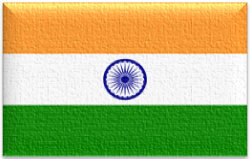
- Capital: New Delhi
- Independence Day: August 15, 1947
- Provinces/States: 28 States and 8 Union Territories
- Religion: Secular (predominantly Hinduism, Islam, Christianity, and Sikhism)
- Motto: “Truth Alone Triumphs” (Satyameva Jayate)
- Languages: Hindi and English (Official)
| 1 | Capital City | New Delhi |
|---|---|---|
| 2 | Total Area | 3,287,263.00 (km²) |
| 3 | Land Area | 2,973,193.00 (km²) |
| 4 | Water Area | 314,070.00 (km²) |
| 5 | Population | 1,469,644,440 |
| 6 | Largest City | Delhi |
| 7 | Currency | Indian rupees (INR) |
| 8 | Density | 492.36 |
| 9 | Name | Republic of India |
| 10 | Location | Asia |
| 11 | Region | Southern Asia, South Central Asia |
| 12 | Bordering Countries | China, Nepal, Bangladesh, Bhutan, Myanmar, Pakistan. |
| 13 | Phone Codes | 91 |
| 14 | Iso Code | IN / IND |
| 15 | National Dishes | Khichdi |
| 16 | National Animals | Tiger |
| 17 | NO Of National Park | 116 |
| 18 | National Park Area | 38136 (km²) |
India Profile Overview
India is a vast country located in South Asia, bordered by Pakistan, China, Nepal, Bhutan, Bangladesh, and Myanmar, with coastlines along the Arabian Sea and Bay of Bengal. It is the world’s second-most populous country and the seventh-largest by area, featuring diverse geography, including the Himalayas, Indo-Gangetic plains, deserts, plateaus, and tropical forests. India has a rich history shaped by ancient civilizations, empires, and colonial rule, influencing its culture, religion, and governance.
India’s economy is one of the fastest-growing globally, with key sectors including agriculture, manufacturing, IT, services, and energy. Major cities like New Delhi, Mumbai, Bangalore, and Kolkata serve as political, economic, and cultural hubs. India is also renowned for its diverse culture, cuisine, arts, festivals, and historical landmarks.
Importance of India
India holds strategic importance due to its geopolitical location, population, and economic potential. It is a major player in South Asian politics, trade, and regional security. India’s influence extends globally through its technology, culture, military, and diplomatic engagement. The country also contributes significantly to global education, science, and innovation.
Alliances and International Relations
India is a member of United Nations (UN), G20, World Trade Organization (WTO), South Asian Association for Regional Cooperation (SAARC), BRICS, and Commonwealth of Nations. India maintains strategic partnerships with countries worldwide, focusing on trade, security, climate action, and regional cooperation.
Independence and Political History
India gained independence from British colonial rule on August 15, 1947. Independence Day is celebrated nationally to honor the country’s freedom and leaders like Mahatma Gandhi and Jawaharlal Nehru. India adopted a federal parliamentary democratic republic system, with a President as the head of state and a Prime Minister as the head of government.
Global Contribution
India contributes globally through technology, space research, culture, arts, literature, and sports. It is known for its Bollywood film industry, yoga, cuisine, music, and festivals. Indian professionals and diaspora communities play a vital role in global education, business, and innovation. India also contributes to international peacekeeping, humanitarian aid, and scientific research.
Region and Sub-Region
Region: Asia
Sub-Region: South Asia
India’s strategic location and size make it central to South Asian politics, trade, and culture.
Religion, Ethnicity, and Society
Religion: Hinduism (majority), Islam, Christianity, Sikhism, Buddhism, Jainism, and others
Ethnic Groups: Diverse, including Indo-Aryan, Dravidian, Mongoloid, and others
India’s society emphasizes family, community, cultural traditions, and religious diversity, with festivals, rituals, and arts forming an integral part of national identity.
Languages and Culture
Official Languages: Hindi (official), English (associate official)
Other Languages: Over 21 officially recognized languages and 1,600+ regional dialects
Indian culture is rich in music, dance, literature, theater, festivals, and cuisine. Traditional and modern influences coexist, making India a global hub for arts, spirituality, and cultural tourism.
Key Facts About India
Capital: New Delhi
Currency: Indian Rupee (INR)
Government: Federal parliamentary republic
Geography: Mountains, plains, deserts, plateaus, coastal regions
Economy: Agriculture, IT, manufacturing, services, energy
Conclusion
India is a country of immense historical, cultural, and economic significance. Its geographic diversity, vast population, and contributions to global culture, science, and economy make it a key player in Asia and the world. India continues to focus on economic growth, technological advancement, and global diplomacy.
Frequently Asked Questions (FAQs)
Q1: Where is India located?
India is in South Asia, bordered by Pakistan, China, Nepal, Bhutan, Bangladesh, and Myanmar.
Q2: When did India gain independence?
India gained independence from Britain on August 15, 1947.
Q3: What is the official language of India?
Hindi is the official language, with English as an associate official language.
Q4: What is India known for globally?
India is known for its culture, Bollywood, cuisine, festivals, technology, and democracy.
Q5: What are the major religions in India?
Hinduism, Islam, Christianity, Sikhism, Buddhism, and Jainism are widely practiced.
Sources :