Hungary
Hungary Country Profile Overview and Facts
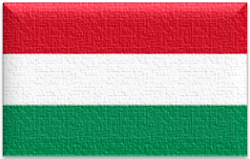
- Capital: Budapest
- National Day: August 20 (Saint Stephen’s Day), March 15 (1848 Revolution), October 23 (1956 Revolution)
- Counties: 19 Counties (Vármegyék) and 1 Capital City (Budapest)
- Religion: Christianity
- Motto: None (Historical: “With the help of God for Homeland and Freedom” — Cum Deo pro Patria et Libertate)
- Language: Hungarian (Magyar)
Hungary Country Profile Overview
Hungary, officially known as Hungary, is a landlocked country in Central Europe. It is bordered by Austria to the west, Slovakia to the north, Ukraine to the northeast, Romania to the east, Serbia to the south, Croatia and Slovenia to the southwest. The capital city, Budapest, is one of Europe’s most historically significant and architecturally rich capitals, situated along the Danube River.
Hungary has a long and complex history shaped by the Magyar settlement, medieval kingdoms, Ottoman rule, the Austro-Hungarian Empire, and modern European integration. Today, Hungary plays an important role in European politics, culture, and regional connectivity within the Carpathian Basin.
Importance of Hungary
Hungary is important due to its central European location, strong industrial and manufacturing base, and role as a transport and logistics hub linking Western and Eastern Europe. The country is also recognized for its contributions to science, education, music, and architecture.
Alliances and International Relations
Hungary is a member of the European Union (EU), North Atlantic Treaty Organization (NATO), United Nations (UN), Visegrád Group, Organization for Security and Co-operation in Europe (OSCE), and the World Trade Organization (WTO).
Independence and Political History
Hungary traces its statehood to 1000 AD with the coronation of King Stephen I. After centuries under foreign rule, modern Hungary became a sovereign republic in 1918, following the dissolution of the Austro-Hungarian Empire. It transitioned to a democratic system after 1989.
Global Contribution
Hungary has made significant global contributions in science, medicine, mathematics, music, and sports. Hungarian innovators have influenced modern technology, pharmaceuticals, and engineering, while Hungarian composers and artists have shaped European cultural heritage.
Region and Sub-Region
Region: Europe
Sub-Region: Central Europe
Hungary lies within the Carpathian Basin, a historically strategic and fertile region.
Religion, Ethnicity, and Society
Religion: Christianity (Roman Catholicism, Protestantism)
Ethnicity: Predominantly Hungarian (Magyar), with minority communities
Hungarian national identity is strongly linked to its language, history, and cultural traditions.
Languages and Culture
Official Language: Hungarian
Hungarian culture is distinct within Europe due to its Uralic language roots, unique folklore, traditional cuisine, classical music heritage, and thermal bath traditions.
Key Facts About Hungary
Capital: Budapest
Currency: Hungarian forint (HUF)
Government: Republic
Geography: Plains, rivers, lakes
Economy: Manufacturing, automotive industry, services
Conclusion
Hungary is a historically rich and strategically positioned European nation. Its cultural legacy, scientific achievements, and role within the European Union continue to shape its national and global relevance.
Frequently Asked Questions (FAQs)
Q1: Where is Hungary located?
Hungary is located in Central Europe.
Q2: What is Hungary known for?
Hungary is known for Budapest, thermal baths, music, and scientific contributions.
Q3: When did Hungary become independent?
Modern Hungary became independent in 1918.
Q4: What language is spoken in Hungary?
Hungarian is the official language.
Q5: Is Hungary part of the European Union?
Yes, Hungary is a member of the EU.
Sources :