Greece
Greece Country Profile Overview and Facts
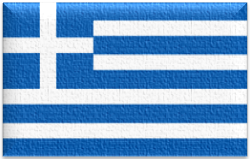
- Capital: Athens
- Independence Day: March 25, 1821 (from the Ottoman Empire)
- Regions: 13 Administrative Regions and 1 Autonomous Monastic State (Mount Athos)
- Religion: Christianity (predominantly Greek Orthodox)
- Motto: “Freedom or Death” (Eleftheria i thanatos)
- Language: Greek
Greece Profile Overview
Greece, officially the Hellenic Republic, is a country located in Southeastern Europe, at the crossroads of Europe, Asia, and Africa. It shares land borders with Albania, North Macedonia, Bulgaria, and Turkey, and has extensive coastlines along the Aegean Sea, Ionian Sea, and Mediterranean Sea. The capital city is Athens, one of the world’s oldest continuously inhabited cities.
Greece is known as the birthplace of democracy, Western philosophy, and the Olympic Games. Its geography includes mountain ranges, fertile valleys, and over 6,000 islands, many of which are globally famous tourist destinations. The Greek economy relies on tourism, shipping, agriculture, energy, and services, making Greece a key Mediterranean nation.
Importance of Greece
Greece holds major historical and cultural importance as a foundation of Western civilization. Today, it remains a strategic player in European politics, maritime trade, tourism, and regional security, especially in the Eastern Mediterranean.
Alliances and International Relations
Greece is a member of the United Nations (UN), European Union (EU), NATO, Council of Europe, OECD, World Trade Organization (WTO), and the Eurozone. It maintains strong diplomatic relations across Europe, the Middle East, and the Balkans.
Independence and Political History
Modern Greece gained independence from the Ottoman Empire in 1830, following the Greek War of Independence. Greece operates as a parliamentary republic, with a long tradition of democratic governance rooted in ancient history.
Global Contribution
Greece contributes globally through maritime shipping, cultural heritage, tourism, archaeology, education, and diplomacy. The Greek shipping industry is among the largest in the world, supporting global trade.
Region and Sub-Region
Region: Europe
Sub-Region: Southern Europe
Greece’s island geography enhances its role in Mediterranean trade and tourism.
Religion, Ethnicity, and Society
Religion: Eastern Orthodox Christianity (majority)
Ethnicity: Predominantly Greek
Greek society values family, hospitality, tradition, and national heritage.
Languages and Culture
Official Language: Greek
Greek culture has influenced art, literature, science, philosophy, architecture, and politics worldwide. Traditional music, dance, and cuisine remain central to national identity.
Key Facts About Greece
Capital: Athens
Currency: Euro (EUR)
Government: Parliamentary republic
Geography: Mountains, islands, long coastline
Economy: Tourism, shipping, agriculture, services
Conclusion
Greece is a historically influential and culturally rich European nation. Its ancient legacy, modern democratic system, and strategic Mediterranean position ensure its lasting global significance.
Frequently Asked Questions (FAQs)
Q1: Where is Greece located?
Greece is located in Southeastern Europe with coastlines on three seas.
Q2: What is Greece famous for?
Greece is famous for ancient civilization, philosophy, islands, and tourism.
Q3: When did Greece gain independence?
Greece gained independence in 1830 from Ottoman rule.
Q4: What language is spoken in Greece?
Greek is the official language.
Q5: Is Greece part of the European Union?
Yes, Greece is a member of the European Union and the Eurozone.
Sources :