Democratic Republic Of The Congo
Democratic Republic Of The Congo Country Profile Overview and Facts
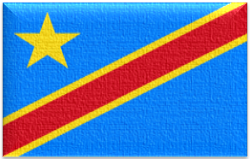
- Capital: Kinshasa
- Independence Day: June 30, 1960 (from Belgium)
- Provinces: 26 (including the city-province of Kinshasa)
- Religion: Christianity
- Motto: “Justice, Peace, Work” (Justice, Paix, Travail)
- Languages: French (Official); Kikongo ya leta, Lingala, Swahili, and Tshiluba (National)
Democratic Republic of the Congo Profile Overview
The Democratic Republic of the Congo (DRC) is a vast country located in Central Africa and is the second-largest country in Africa by land area. It is bordered by nine countries, including Angola, the Republic of the Congo, Central African Republic, South Sudan, Uganda, Rwanda, Burundi, Tanzania, and Zambia, and has a short coastline along the Atlantic Ocean. The capital and largest city is Kinshasa, one of Africa’s largest metropolitan areas.
The Democratic Republic of the Congo is endowed with exceptional natural resources, including vast mineral deposits, dense rainforests, and extensive river systems. The Congo River, the second-longest river in Africa, is central to transportation, agriculture, and hydroelectric potential. Despite its immense natural wealth, the country faces developmental challenges while remaining a key player in Africa’s economic and environmental future.
Importance of the Democratic Republic of the Congo
The Democratic Republic of the Congo is critically important due to its strategic mineral reserves, including cobalt, copper, coltan, and diamonds, which are essential for global technology, renewable energy, and industrial production. The country is also vital to global climate stability because the Congo Basin rainforest is the second-largest tropical rainforest in the world.
Alliances and International Relations
The DRC is a member of the United Nations (UN), African Union (AU), Southern African Development Community (SADC), Economic Community of Central African States (ECCAS), International Monetary Fund (IMF), World Bank, and World Trade Organization (WTO). It engages with international partners on peacekeeping, development assistance, and environmental protection.
Independence and Political History
The Democratic Republic of the Congo gained independence from Belgium on June 30, 1960. Since independence, the country has experienced periods of political transition and reform. It operates as a semi-presidential republic, with ongoing efforts toward institutional stability, democratic governance, and national development.
Global Contribution
The DRC contributes globally through the supply of critical minerals, hydroelectric potential, biodiversity conservation, and peacekeeping participation. Its resources are fundamental to global supply chains, particularly in electronics, electric vehicles, and renewable energy technologies.
Region and Sub-Region
Region: Africa
Sub-Region: Central Africa
The country’s central location enhances its influence on continental trade routes, environmental policy, and regional cooperation.
Religion, Ethnicity, and Society
Religion: Christianity (predominantly Roman Catholic and Protestant), indigenous beliefs, Islam
Ethnicity: Over 200 ethnic groups, including Luba, Kongo, Mongo, and others
The Democratic Republic of the Congo is one of Africa’s most ethnically and culturally diverse societies.
Languages and Culture
Official Language: French
National Languages: Lingala, Swahili, Kikongo, Tshiluba
Congolese culture is globally influential through music, art, fashion, oral traditions, and community-based social life.
Key Facts About the Democratic Republic of the Congo
Capital: Kinshasa
Currency: Congolese Franc (CDF)
Government: Semi-presidential republic
Geography: Rainforests, rivers, plateaus, mineral-rich regions
Economy: Mining, agriculture, hydropower, trade
Conclusion
The Democratic Republic of the Congo is a nation of immense potential and global importance. Its natural resources, environmental significance, and cultural richness make it a cornerstone of Africa’s future development and global sustainability efforts.
Frequently Asked Questions (FAQs)
Q1: Where is the Democratic Republic of the Congo located?
It is located in Central Africa with a short Atlantic coastline.
Q2: When did the DRC gain independence?
The DRC gained independence on June 30, 1960.
Q3: What is the Democratic Republic of the Congo known for?
It is known for mineral wealth, the Congo River, and rainforest biodiversity.
Q4: What languages are spoken in the DRC?
French is the official language, with Lingala, Swahili, Kikongo, and Tshiluba widely spoken.
Q5: Is the DRC the same as the Republic of the Congo?
No, they are separate countries with different governments and capitals.
Sources :