Australia
Australia Country Profile Overview and Facts
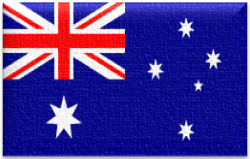
- Capital: Canberra
- Independence Day: January 1, 1901
- Provinces/States: 6 States and 10 Territories
- Religion: Secular (predominantly Christianity)
- Motto: None (formerly Advance Australia)
- Language: English
| 1 | Capital City | Canberra |
|---|---|---|
| 2 | Total Area | 7,741,220.00 (km²) |
| 3 | Land Area | 7,682,300.00 (km²) |
| 4 | Water Area | 58,920.00 (km²) |
| 5 | Population | 27,094,726 |
| 6 | Largest City | Melbourne |
| 7 | Currency | Australian dollars (AUD) |
| 8 | Density | 3.51 (km²) |
| 9 | Name | Commonwealth of Australia |
| 10 | Location | Oceania |
| 11 | Region | Australia and New Zealand |
| 12 | Bordering Countries | NA |
| 13 | Phone Codes | 61 |
| 14 | Iso Code | AU / AUS |
| 15 | National Dishes | Roast Lamb Rules |
| 16 | National Animals | Red kangaroo |
| 17 | NO Of National Park | 685 |
| 18 | National Park Area | 335062 (km²) |
Australia Profile Overview
Australia is a sovereign country and continent located in the Southern Hemisphere, bordered by the Indian Ocean and Pacific Ocean. It is the sixth-largest country in the world by land area and is known for its unique biodiversity, vast landscapes, and stable democratic system. Australia’s geography includes deserts, tropical rainforests, mountain ranges, fertile plains, and one of the world’s longest coastlines.
Australia’s history is shaped by Indigenous Aboriginal and Torres Strait Islander cultures, which date back over 60,000 years, followed by British colonization in the late 18th century. Today, Australia is a highly developed nation with a strong economy driven by natural resources, education, tourism, agriculture, and technology. Major cities such as Canberra, Sydney, Melbourne, Brisbane, and Perth play key political, economic, and cultural roles.
Importance of Australia
Australia holds global importance due to its economic stability, strategic location in the Asia-Pacific region, and strong diplomatic influence. It acts as a bridge between Western nations and Asia, contributing to regional security, trade, and environmental initiatives. Australia is also a major exporter of minerals, energy, and agricultural products, supporting global supply chains.
Alliances and International Relations
Australia is an active member of the United Nations (UN), Commonwealth of Nations, G20, Asia-Pacific Economic Cooperation (APEC), and World Trade Organization (WTO). It maintains strong alliances with countries such as the United States, United Kingdom, Japan, and regional Asia-Pacific partners, focusing on defense cooperation, trade agreements, and regional stability.
Independence and Political History
Australia became a unified nation on January 1, 1901, with the federation of six British colonies. While Australia remains a constitutional monarchy with the British monarch as head of state, it operates as a fully sovereign country with an independent parliamentary democracy. Australia Day is celebrated annually on January 26.
Global Contribution
Australia contributes globally through education, scientific research, peacekeeping missions, environmental conservation, and humanitarian aid. It is a leading destination for international students and a strong voice in climate research, medical innovation, and sustainable development. Australian culture, sports, and media also have global reach.
Region and Sub-Region
Region: Oceania
Sub-Region: Australia and New Zealand
This regional placement highlights Australia’s leadership role in Pacific affairs and global maritime cooperation.
Religion, Ethnicity, and Society
Religion: Christianity, with growing representation of Islam, Buddhism, Hinduism, and non-religious communities
Ethnic Groups: Predominantly European descent, with significant Asian, Indigenous, and multicultural populations
Australian society values diversity, equality, freedom, and democratic principles, supported by strong institutions and social cohesion.
Languages and Culture
Official Language: English
Indigenous Languages: Over 250 Aboriginal and Torres Strait Islander languages
Australian culture blends Indigenous heritage with British and multicultural influences, expressed through arts, music, film, sports, and cuisine. Outdoor lifestyle, creativity, and innovation are key cultural characteristics.
Key Facts About Australia
Capital: Canberra
Currency: Australian Dollar (AUD)
Government: Federal parliamentary constitutional monarchy
Geography: Deserts, forests, mountains, coastlines
Economy: Mining, agriculture, education, tourism, services
Conclusion
Australia is a highly developed nation with significant global influence. Its strong economy, political stability, cultural diversity, and strategic position in the Asia-Pacific region make it a key contributor to global affairs. Australia continues to play an important role in international cooperation, innovation, and sustainable development.
Frequently Asked Questions (FAQs)
Q1: Where is Australia located?
Australia is located in the Southern Hemisphere between the Indian and Pacific Oceans.
Q2: When did Australia become independent?
Australia became a federated nation in 1901, gaining full legislative independence later through constitutional developments.
Q3: What language is spoken in Australia?
English is the primary language, with many Indigenous and immigrant languages also spoken.
Q4: What is Australia known for globally?
Australia is known for its natural landscapes, education system, biodiversity, and economic stability.
Q5: What is the main religion in Australia?
Christianity is the largest religion, alongside growing religious diversity.
Sources :