
China
China Country Profile Overview and Facts
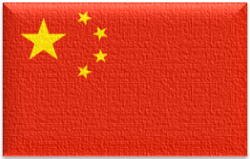
- Capital: Beijing
- National Day: October 1 (Commemorating the founding of the People’s Republic of China in 1949)
- Administrative Divisions: 34 provincial-level divisions, including 23 provinces, 5 autonomous regions (Guangxi, Inner Mongolia, Ningxia, Tibet, Xinjiang), 4 municipalities (Beijing, Chongqing, Shanghai, Tianjin), and 2 Special Administrative Regions (Hong Kong, Macau).
- Religion: Formally atheist; however, Buddhism, Taoism, Islam, and Christianity are officially recognized and practiced.
- Motto: None official (though “Serve the People”
- Language: Standard Chinese (Mandarin/Putonghua).
China Country Profile Overview
China, officially the People’s Republic of China (PRC), is the world’s most populous country and a major geopolitical power in East Asia. It is bordered by 14 countries, including India, Russia, Mongolia, Pakistan, and Vietnam, and has a long eastern coastline along the Pacific Ocean. The capital city is Beijing, while other major cities include Shanghai, Guangzhou, and Shenzhen.
China is one of the world’s oldest continuous civilizations, with a history spanning over 5,000 years. It has made profound contributions to philosophy, science, technology, art, and governance, including the invention of paper, printing, gunpowder, and the compass.
Importance of China
China is globally important due to its massive population, economic power, technological innovation, and geopolitical influence. It is a permanent member of the UN Security Council, a leading global exporter, and a central actor in international trade, finance, and diplomacy. China’s Belt and Road Initiative further strengthens its role in global infrastructure and connectivity.
Alliances and International Relations
China is a member of the United Nations (UN), World Trade Organization (WTO), BRICS, Shanghai Cooperation Organization (SCO), and G20. It maintains strategic partnerships with countries in Asia, Africa, Europe, and Latin America, balancing global diplomacy with regional influence.
Independence and Political History
Modern China was established in 1949 after the Chinese Civil War, led by the Communist Party under Mao Zedong, forming the People’s Republic of China. The country has a single-party system with significant central governance, while maintaining a unique economic model combining state and market elements.
Global Contribution
China contributes globally through manufacturing, technology, infrastructure, medicine, education, and culture. Historically, China introduced inventions such as papermaking, gunpowder, printing, and the compass, which transformed the world. Today, it is a leader in high-speed rail, renewable energy, electronics, and AI research.
Region and Sub-Region
Region: Asia
Sub-Region: East Asia
China’s geography ranges from mountains, plateaus, and deserts in the west to fertile plains and rivers like the Yangtze and Yellow River in the east, supporting dense populations.
Religion, Ethnicity, and Society
Religion: Buddhism, Taoism, Islam, Christianity, folk religions
Ethnicity: Han Chinese (~91%), plus 55 recognized minority groups including Zhuang, Hui, Manchu, Uyghur, and Tibetan
China’s society emphasizes family values, education, innovation, and national unity, with diverse ethnic and cultural traditions.
Languages and Culture
Official Language: Mandarin Chinese (Putonghua)
Other Languages: Cantonese, Shanghainese, Tibetan, Uyghur, and regional dialects
Chinese culture has had a global influence through philosophy (Confucianism, Taoism), cuisine, literature, art, martial arts, and traditional medicine.
Key Facts About China
Capital: Beijing
Currency: Renminbi (Yuan, CNY)
Government: Single-party socialist republic
Geography: Mountains, plateaus, deserts, rivers, and coastlines
Economy: Manufacturing, technology, agriculture, exports, services
Conclusion
China is a global powerhouse with deep historical roots, immense cultural heritage, and significant economic and geopolitical influence. Its leadership in innovation, trade, and diplomacy continues to shape global affairs.
Frequently Asked Questions (FAQs)
Q1: Where is China located?
China is located in East Asia, bordering 14 countries and the Pacific Ocean.
Q2: What is China known for?
China is known for its ancient civilization, inventions, economic strength, and cultural influence.
Q3: When was the People’s Republic of China established?
China was established as the PRC in 1949.
Q4: What languages are spoken in China?
Mandarin is the official language, with many regional dialects and minority languages.
Q5: Is China a member of the UN Security Council?
Yes, China is a permanent member of the UN Security Council.
Sources :