
Indonesia
Indonesia Country Profile Overview and Facts
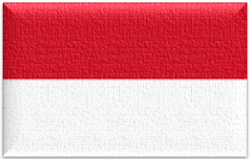
- Capital: Jakarta (new planned capital, Nusantara)
- Independence Day: August 17, 1945 (from the Netherlands/Japan)
- Provinces: 38 (including special autonomous regions like Aceh, Yogyakarta, and Papua)
- Religion: Islam
- Motto: “Unity in Diversity”
- Language: Indonesian (Bahasa Indonesia)
Indonesia Country Profile Overview
Indonesia, officially the Republic of Indonesia, is the world’s largest archipelagic country, located in Southeast Asia and Oceania. It consists of over 17,000 islands stretching between the Indian Ocean and the Pacific Ocean. Indonesia is bordered by Malaysia, Papua New Guinea, East Timor, and maritime neighbors including Australia, Singapore, and the Philippines. The capital city is Jakarta, while the country’s planned administrative capital is Nusantara in East Kalimantan.
Indonesia is the fourth most populous country in the world and holds a central position in global trade routes, biodiversity, and cultural diversity. Its strategic location along major sea lanes makes it one of the most influential nations in the Indo-Pacific region.
Importance of Indonesia
Indonesia is critically important due to its geopolitical position, control over key maritime chokepoints such as the Strait of Malacca, vast natural resources, and large domestic market. It is a regional leader in Southeast Asia and a major voice among emerging economies.
Alliances and International Relations
Indonesia is a founding member of the Association of Southeast Asian Nations (ASEAN) and is also a member of the United Nations (UN), G20, World Trade Organization (WTO), Non-Aligned Movement, Organization of Islamic Cooperation (OIC), and Asia-Pacific Economic Cooperation (APEC).
Independence and Political History
Indonesia declared independence from the Netherlands on 17 August 1945, following the end of World War II. After international recognition in 1949, Indonesia developed into a unitary presidential republic based on democratic principles.
Global Contribution
Indonesia contributes globally through regional stability, peacekeeping missions, energy and mineral exports, maritime trade, and environmental conservation. It is home to some of the world’s richest marine and terrestrial biodiversity.
Region and Sub-Region
Region: Asia
Sub-Region: Southeast Asia
Indonesia also bridges Asia and Oceania, making it a key Indo-Pacific nation.
Religion, Ethnicity, and Society
Religion: Islam, Christianity, Hinduism, Buddhism, Confucianism
Ethnicity: Javanese, Sundanese, Malay, Papuan, Batak, and hundreds of Indigenous groups
Indonesia is the largest Muslim-majority country in the world and is known for religious coexistence and cultural pluralism.
Languages and Culture
Official Language: Indonesian (Bahasa Indonesia)
Indonesian culture is shaped by ancient kingdoms, Islamic heritage, colonial history, and Indigenous traditions expressed through music, dance, textiles, and architecture.
Key Facts About Indonesia
Capital: Jakarta
Currency: Indonesian rupiah (IDR)
Government: Presidential republic
Geography: Islands, volcanoes, rainforests
Economy: Manufacturing, agriculture, mining, services
Conclusion
Indonesia is a globally influential archipelagic nation with strategic maritime importance, immense cultural diversity, and growing economic power. Its leadership role in Southeast Asia and the Indo-Pacific continues to expand.
Frequently Asked Questions (FAQs)
Q1: Where is Indonesia located?
Indonesia is located in Southeast Asia between the Indian and Pacific Oceans.
Q2: Why is Indonesia important globally?
Indonesia controls key sea routes and has a large economy and population.
Q3: When did Indonesia gain independence?
Indonesia declared independence in 1945.
Q4: What is the main religion in Indonesia?
Islam is the dominant religion.
Q5: How many islands does Indonesia have?
Indonesia has over 17,000 islands.
Sources :